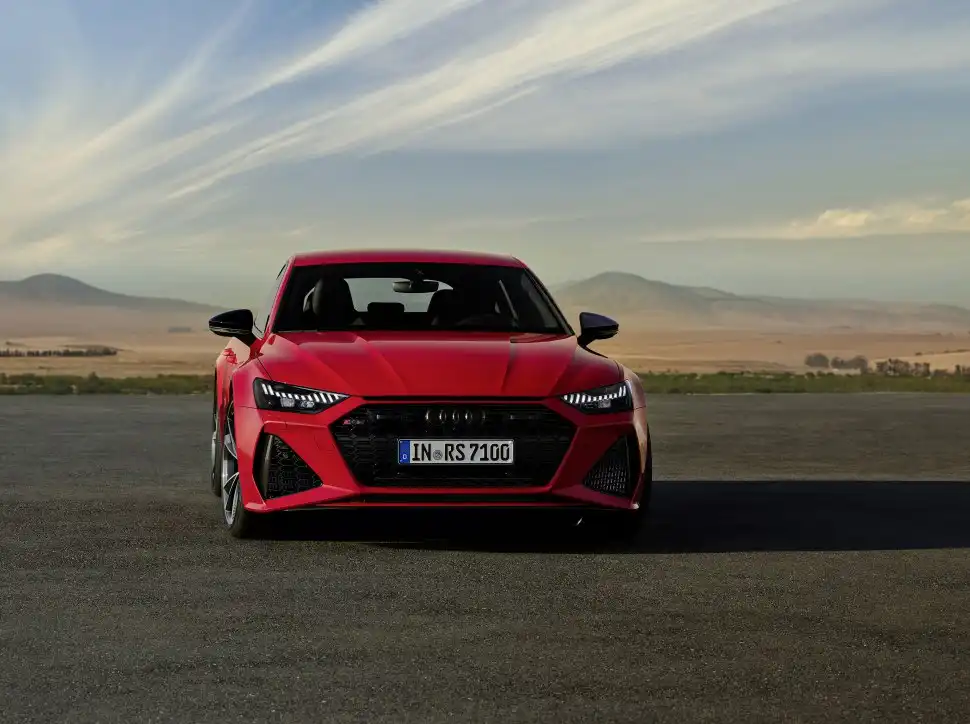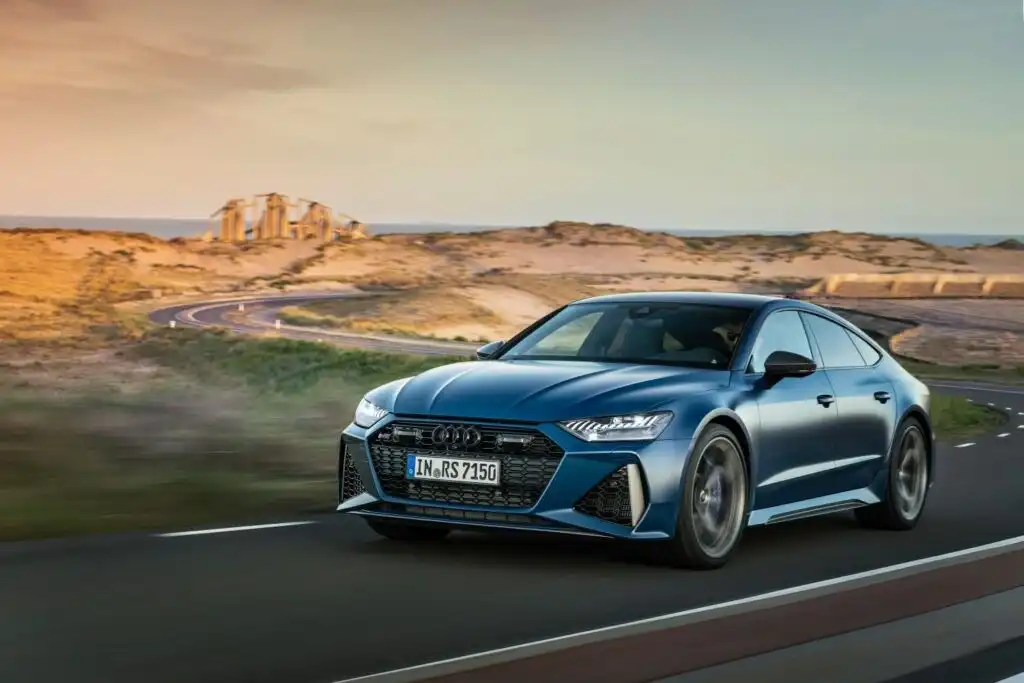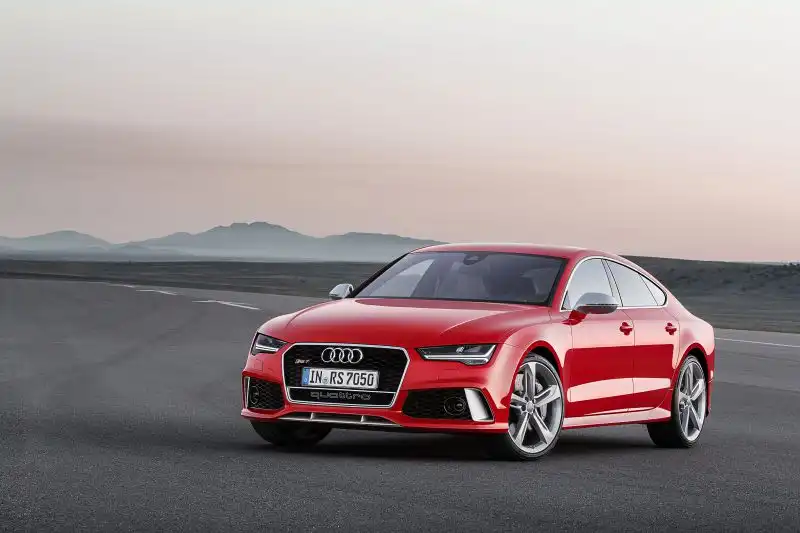
The Audi RS7 Sportback (C7) 4.0 TFSI V8, produced between 2013 and 2017, represents the high-performance variant of Audi’s striking five-door coupe. Positioned as the flagship of the RS7 line, it offered a compelling blend of luxury, blistering speed, and practicality. Built on the Audi A7 Sportback platform (C7), which itself was based on the Volkswagen Group’s MLB platform, the RS7 aimed to compete with high-performance offerings from Porsche and Mercedes-Benz. This particular configuration, featuring the 4.0-liter twin-turbocharged V8 engine paired with the eight-speed Tiptronic automatic transmission and quattro all-wheel drive, was the sole powertrain option for the RS7 during its production run, solidifying its status as a no-compromise performance machine.
Technical Specifications
| Brand | Audi |
| Model | RS7 |
| Generation | RS7 Sportback (C7) |
| Type (Engine) | 4.0 TFSI V8 (560 Hp) quattro Tiptronic |
| Start of production | 2013 |
| End of production | 2017 |
| Powertrain Architecture | Internal Combustion engine |
| Body type | Liftback |
| Seats | 4 |
| Doors | 5 |
| Fuel consumption (economy) – urban | 13.9 l/100 km (16.9 US mpg, 20.3 UK mpg, 7.2 km/l) |
| Fuel consumption (economy) – extra urban | 7.5 l/100 km (31.4 US mpg, 37.7 UK mpg, 13.3 km/l) |
| Fuel consumption (economy) – combined | 9.8 l/100 km (24 US mpg, 28.8 UK mpg, 10.2 km/l) |
| CO2 emissions | 221-229 g/km |
| Fuel Type | Petrol (Gasoline) |
| Acceleration 0 – 100 km/h | 3.9 sec |
| Acceleration 0 – 62 mph | 3.9 sec |
| Acceleration 0 – 60 mph | 3.7 sec |
| Maximum speed | 250 km/h (155.34 mph) |
| Emission standard | Euro 6 |
| Weight-to-power ratio | 3.4 kg/Hp, 290.2 Hp/tonne |
| Weight-to-torque ratio | 2.8 kg/Nm, 362.7 Nm/tonne |
| Power | 560 Hp @ 5700-6600 rpm |
| Power per litre | 140.2 Hp/l |
| Torque | 700 Nm @ 1750-5500 rpm (516.29 lb.-ft. @ 1750-5500 rpm) |
| Engine layout | Front, Longitudinal |
| Engine Model/Code | CRDB, CWUB |
| Engine displacement | 3993 cm3 (243.67 cu. in.) |
| Number of cylinders | 8 |
| Engine configuration | V-engine |
| Cylinder Bore | 84.5 mm (3.33 in.) |
| Piston Stroke | 89 mm (3.5 in.) |
| Compression ratio | 9.3:1 |
| Number of valves per cylinder | 4 |
| Fuel injection system | Direct injection |
| Engine aspiration | BiTurbo, Intercooler |
| Valvetrain | DOHC |
| Engine oil capacity | 8.7 l (9.19 US qt | 7.65 UK qt) |
| Coolant | 15 l (15.85 US qt | 13.2 UK qt) |
| Kerb Weight | 1930 kg (4254.92 lbs.) |
| Max. weight | 2515 kg (5544.63 lbs.) |
| Max load | 585 kg (1289.7 lbs.) |
| Trunk (boot) space – minimum | 535 l (18.89 cu. ft.) |
| Trunk (boot) space – maximum | 1390 l (49.09 cu. ft.) |
| Fuel tank capacity | 65 l (17.17 US gal | 14.3 UK gal) |
| Max. roof load | 100 kg (220.46 lbs.) |
| Length | 5012 mm (197.32 in.) |
| Width | 1911 mm (75.24 in.) |
| Width including mirrors | 2139 mm (84.21 in.) |
| Height | 1419 mm (55.87 in.) |
| Wheelbase | 2915 mm (114.76 in.) |
| Front track | 1634 mm (64.33 in.) |
| Rear (Back) track | 1625 mm (63.98 in.) |
| Drag coefficient (Cd) | 0.30 |
| Minimum turning circle (turning diameter) | 11.9 m (39.04 ft.) |
| Drive wheel | All wheel drive (4×4) |
| Number of gears and type of gearbox | 8 gears, automatic transmission Tiptronic |
| Front suspension | Independent multi-link suspension |
| Rear suspension | Independent on trapezoidal lever |
| Front brakes | Ventilated discs |
| Rear brakes | Ventilated discs |
| Assisting systems | ABS (Anti-lock braking system) |
| Steering type | Steering rack and pinion |
| Power steering | Electric Steering |
| Tires size | 275/35 R20 |
| Wheel rims size | 9J x 20 |
Powertrain & Engine Architecture
At the heart of the RS7 Sportback (C7) lies the 4.0 TFSI V8 engine, designated with engine codes CRDB and CWUB depending on minor specification variations. This engine is a masterpiece of engineering, featuring a 90-degree V8 configuration with aluminum alloy block and cylinder heads. The key to its prodigious power output is a pair of twin-scroll turbochargers, strategically positioned within the V to minimize turbo lag and optimize exhaust gas flow. Direct fuel injection, operating at pressures up to 200 bar, ensures precise fuel delivery and efficient combustion. The engine also incorporates Audi’s cylinder-on-demand (COD) technology, which shuts down four cylinders during low-load cruising to improve fuel economy. The eight-speed Tiptronic automatic transmission, a staple of Audi’s performance models, provides smooth and rapid gear changes. It features a torque converter lockup clutch for improved efficiency and a sport program for more aggressive shifting. The quattro all-wheel-drive system, with its electronically controlled multi-plate clutch, distributes torque between the front and rear axles as needed, providing exceptional traction and stability.
Driving Characteristics
The RS7 Sportback 4.0 TFSI with the Tiptronic transmission delivers a driving experience that is both exhilarating and refined. While not as raw or visceral as a manual transmission, the Tiptronic gearbox offers incredibly quick and seamless shifts, allowing the driver to fully exploit the engine’s immense power. The 0-60 mph sprint takes just 3.7 seconds, and the car feels incredibly stable at high speeds thanks to the quattro all-wheel-drive system. The engine’s broad torque curve, peaking at 700 Nm (516 lb-ft) between 1750 and 5500 rpm, provides effortless acceleration in any gear. Compared to the standard A7, the RS7 benefits from a more aggressively tuned suspension, providing a firmer ride and reduced body roll. However, the adaptive dampers allow the driver to adjust the suspension settings for a more comfortable ride when desired. The steering is precise and well-weighted, providing excellent feedback.
Equipment & Trim Levels
The RS7 Sportback came exceptionally well-equipped as standard. Interior features included Valcona leather upholstery, heated and ventilated front sport seats with massage function, carbon fiber trim, and a flat-bottomed steering wheel. Standard technology included Audi’s MMI navigation plus system with a high-resolution touchscreen display, a Bang & Olufsen sound system, and a suite of driver-assistance features such as adaptive cruise control, blind-spot monitoring, and a rearview camera. Optional extras included ceramic brakes, dynamic ride control (Audi’s active roll stabilization system), and a head-up display. The exterior featured a unique RS7-specific body kit, including a redesigned front bumper, side skirts, and rear diffuser.
Chassis & Braking
The RS7 Sportback’s chassis was specifically tuned to handle the increased power and performance. The suspension features stiffer springs and dampers compared to the standard A7, along with a lowered ride height. The front suspension utilizes a five-link design, while the rear suspension employs a trapezoidal-link setup. Braking duties are handled by large, ventilated discs at all four corners, providing ample stopping power. The RS7 also features Audi’s electronic stability control (ESC) system, which helps to maintain control in challenging driving conditions.
Market Reception & Comparison
The Audi RS7 Sportback (C7) was widely praised by automotive critics for its stunning design, exceptional performance, and luxurious interior. It was often compared to rivals such as the Porsche Panamera and Mercedes-Benz CLS 63 AMG. While the RS7 offered a slightly less focused driving experience than the Porsche, it was generally considered to be more practical and comfortable. Compared to the standard A7, the RS7 offered a significant performance upgrade, but at a considerable price premium. Fuel economy, while respectable for a high-performance vehicle, was not a strong point, with combined fuel consumption averaging around 9.8 l/100 km (24 US mpg).
Legacy
The Audi RS7 Sportback (C7) 4.0 TFSI V8 has established itself as a modern classic. The 4.0 TFSI engine, while complex, has proven to be relatively reliable when properly maintained. Common issues include carbon buildup on the intake valves, which can reduce performance over time. However, this can be addressed with a professional cleaning service. Today, the RS7 (C7) remains a highly sought-after vehicle in the used car market, commanding premium prices due to its performance, luxury, and exclusivity. Its blend of practicality and performance continues to appeal to enthusiasts seeking a high-performance vehicle that can also serve as a comfortable and stylish daily driver.