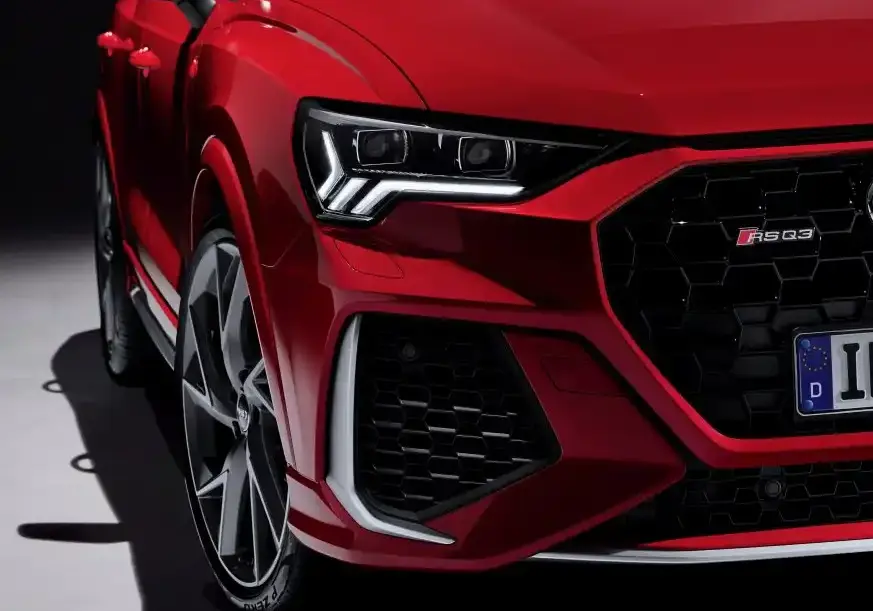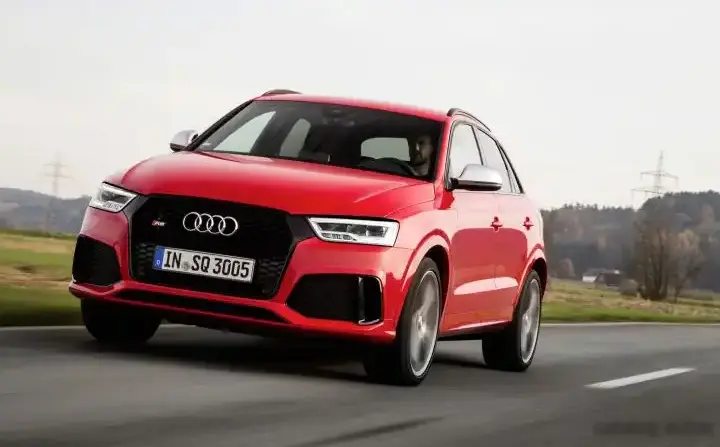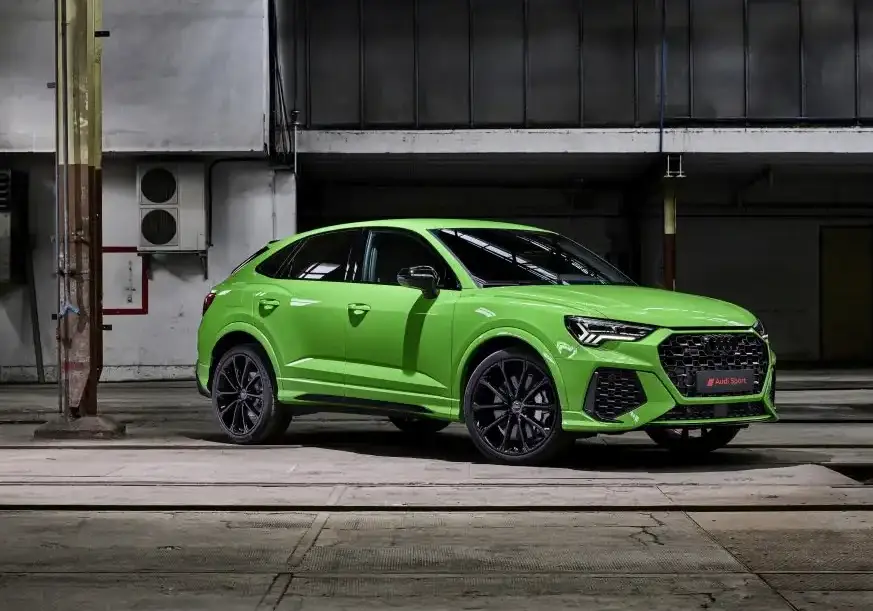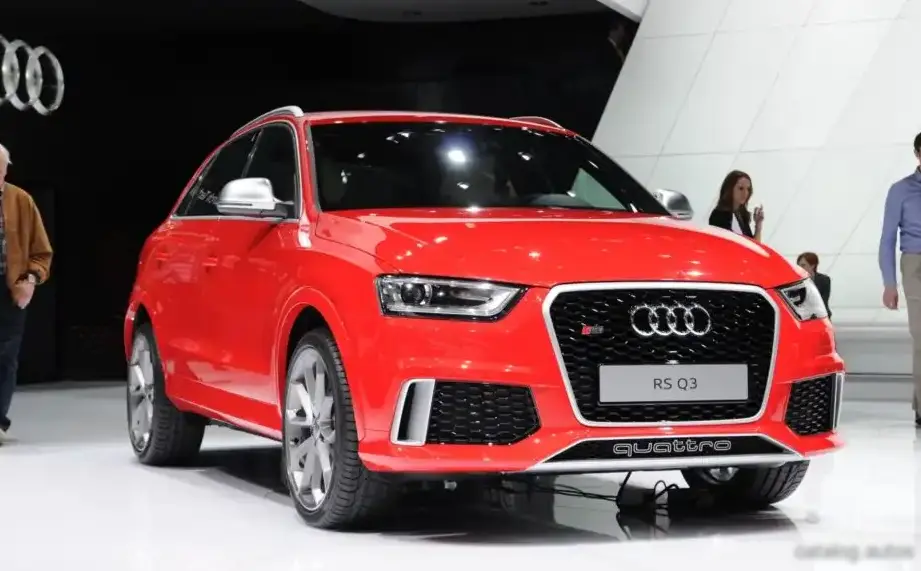
The Audi RS Q3 2.5 TFSI quattro S tronic represents Audi’s foray into the high-performance compact SUV segment. Produced from May 2013 through 2014, this variant occupied the top echelon of the RS Q3 lineup, offering a significant performance upgrade over the standard Q3 models. It was primarily marketed in Europe and Asia, where the demand for compact, yet potent, luxury SUVs was growing. The RS Q3 2.5 TFSI utilized the Volkswagen Group’s PQ25 platform, also known as the A3 platform (1HX0/A3), and aimed to deliver a blend of everyday practicality and exhilarating driving dynamics.
Technical Specifications
| Brand | Audi |
| Model | RS Q3 |
| Generation | RS Q3 |
| Type (Engine) | 2.5 TFSI (310 Hp) quattro S tronic |
| Start of production | May, 2013 |
| End of production | 2014 |
| Powertrain Architecture | Internal Combustion engine |
| Body type | SUV |
| Seats | 5 |
| Doors | 5 |
| Fuel consumption (economy) – urban | 12.2 l/100 km (19.3 US mpg, 23.2 UK mpg, 8.2 km/l) |
| Fuel consumption (economy) – extra urban | 6.9 l/100 km (34.1 US mpg, 40.9 UK mpg, 14.5 km/l) |
| Fuel consumption (economy) – combined | 8.8 l/100 km (26.7 US mpg, 32.1 UK mpg, 11.4 km/l) |
| CO2 emissions | 206 g/km |
| Fuel Type | Petrol (Gasoline) |
| Acceleration 0 – 100 km/h | 5.2 sec |
| Acceleration 0 – 62 mph | 5.2 sec |
| Acceleration 0 – 60 mph | 4.9 sec |
| Maximum speed | 250 km/h (155.34 mph) |
| Emission standard | Euro 5 |
| Weight-to-power ratio | 5.3 kg/Hp, 187.3 Hp/tonne |
| Weight-to-torque ratio | 3.9 kg/Nm, 253.8 Nm/tonne |
| Power | 310 Hp @ 5200-6700 rpm |
| Power per litre | 125 Hp/l |
| Torque | 420 Nm @ 1500-5200 rpm (309.78 lb.-ft. @ 1500-5200 rpm) |
| Engine layout | Front, Transverse |
| Engine Model/Code | CTSA |
| Engine displacement | 2480 cm3 (151.34 cu. in.) |
| Number of cylinders | 5 |
| Engine configuration | Inline |
| Cylinder Bore | 82.5 mm (3.25 in.) |
| Piston Stroke | 92.8 mm (3.65 in.) |
| Compression ratio | 10:1 |
| Number of valves per cylinder | 4 |
| Fuel injection system | Direct injection |
| Engine aspiration | Turbocharger, Intercooler |
| Valvetrain | DOHC |
| Engine oil capacity | 6.5 l (6.87 US qt | 5.72 UK qt) |
| Kerb Weight | 1655 kg (3648.65 lbs.) |
| Max. weight | 2215 kg (4883.24 lbs.) |
| Max load | 560 kg (1234.59 lbs.) |
| Trunk (boot) space – minimum | 356 l (12.57 cu. ft.) |
| Trunk (boot) space – maximum | 1261 l (44.53 cu. ft.) |
| Fuel tank capacity | 64 l (16.91 US gal | 14.08 UK gal) |
| Max. roof load | 75 kg (165.35 lbs.) |
| Permitted trailer load with brakes (8%) | 1900 kg (4188.78 lbs.) |
| Permitted trailer load with brakes (12%) | 1900 kg (4188.78 lbs.) |
| Permitted trailer load without brakes | 750 kg (1653.47 lbs.) |
| Permitted towbar download | 80 kg (176.37 lbs.) |
| Length | 4410 mm (173.62 in.) |
| Width | 1841 mm (72.48 in.) |
| Width including mirrors | 2019 mm (79.49 in.) |
| Height | 1580 mm (62.2 in.) |
| Wheelbase | 2603 mm (102.48 in.) |
| Front track | 1571 mm (61.85 in.) |
| Rear (Back) track | 1577 mm (62.09 in.) |
| Front overhang | 926 mm (36.46 in.) |
| Rear overhang | 881 mm (34.69 in.) |
| Minimum turning circle (turning diameter) | 11.8 m (38.71 ft.) |
| Drive wheel | All wheel drive (4×4) |
| Number of gears and type of gearbox | 7 gears, automatic transmission S tronic |
| Front suspension | Independent type McPherson |
| Rear suspension | Independent multi-link suspension |
| Front brakes | Ventilated discs |
| Rear brakes | Ventilated discs |
| Assisting systems | ABS (Anti-lock braking system) |
| Steering type | Steering rack and pinion |
| Power steering | Electric Steering |
| Tires size | 255/40 R19 |
| Wheel rims size | 8.5J x 19 |
Powertrain & Engine Architecture
The heart of the RS Q3 2.5 TFSI is the CTSA engine, a 2.5-liter inline-five cylinder gasoline engine. This engine is a derivative of the unit found in the Audi TT RS and RS3, renowned for its distinctive sound and robust performance. The engine utilizes direct fuel injection and a single twin-scroll turbocharger with an intercooler to deliver 310 horsepower at 5200-6700 rpm and 420 Nm (309.78 lb-ft) of torque between 1500-5200 rpm. The engine’s architecture features a cast iron block with an aluminum cylinder head, incorporating a dual overhead camshaft (DOHC) valvetrain with four valves per cylinder. The S tronic seven-speed dual-clutch transmission is standard, providing rapid and seamless gear changes. This transmission is known for its efficiency and responsiveness, contributing to the RS Q3’s quick acceleration.
Driving Characteristics
The RS Q3 2.5 TFSI delivers a noticeably more engaging driving experience compared to the standard Q3 models. The 0-60 mph sprint takes approximately 4.9 seconds, and it boasts a limited top speed of 155 mph. The S tronic transmission plays a crucial role in this performance, offering quick shifts and allowing the engine to remain in its optimal power band. While the automatic transmission provides convenience, it doesn’t quite match the engagement offered by a manual gearbox. The quattro all-wheel-drive system ensures excellent traction and stability, particularly in adverse weather conditions. The suspension is tuned for a balance between comfort and handling, providing a firm but not overly harsh ride.
Equipment & Trim Levels
The RS Q3 2.5 TFSI came generously equipped as standard. Interior features included sport seats upholstered in a combination of leather and Alcantara, a flat-bottomed steering wheel, and aluminum pedal caps. Exterior styling cues included a unique RS front bumper with large air intakes, flared wheel arches, a rear diffuser, and a roof spoiler. Optional extras included a panoramic sunroof, a Bang & Olufsen sound system, and various customization options for interior trim and exterior paint colors. The overall interior design emphasized a sporty and premium aesthetic.
Chassis & Braking
The RS Q3’s chassis was specifically tuned to handle the increased power output. It features an independent McPherson strut suspension at the front and a multi-link suspension at the rear. The suspension setup was lowered compared to the standard Q3, improving handling and stability. Braking duties are handled by ventilated discs on all four wheels, providing ample stopping power. The ABS (Anti-lock Braking System) is standard, enhancing safety and control during emergency braking situations. The steering is a rack and pinion system with electric power assistance, offering precise and responsive steering feel.
Market Reception & Comparison
The RS Q3 2.5 TFSI was generally well-received by automotive critics. It was praised for its potent engine, engaging driving dynamics, and stylish design. However, some critics noted that the automatic transmission, while quick, lacked the involvement of a manual gearbox. Compared to other trims in the Q3 lineup, the RS Q3 offered a significant performance upgrade but came at a higher price point. Fuel economy was also lower than the more economical Q3 variants, reflecting the increased power output. Against competitors like the BMW X1 and Porsche Macan (later models), the RS Q3 offered a compelling combination of performance and practicality.
Legacy
The Audi RS Q3 2.5 TFSI quattro S tronic remains a desirable vehicle in the used car market. The CTSA engine is known for its reliability, provided it is properly maintained. Regular oil changes and adherence to the manufacturer’s recommended service intervals are crucial. The S tronic transmission, while generally robust, can require more frequent servicing than a traditional automatic transmission. Overall, the RS Q3 2.5 TFSI represents a unique and enjoyable driving experience, offering a blend of performance, luxury, and practicality in a compact SUV package. Its distinctive engine note and capable all-wheel-drive system continue to appeal to enthusiasts seeking a high-performance crossover.