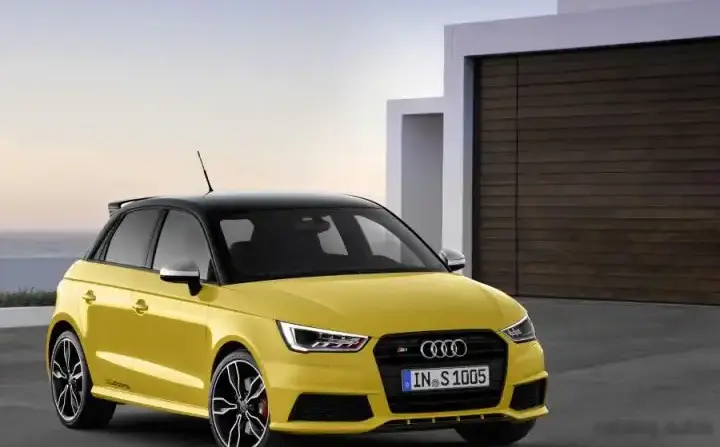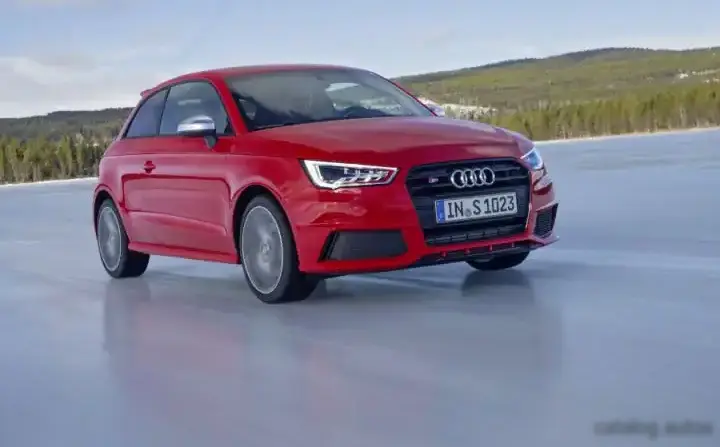
The Audi S1 2.0 TFSI quattro, produced between 2014 and 2018, represents the high-performance variant of the Audi A1 Sportback. Positioned as the entry point into Audi’s ‘S’ model range, it brought quattro all-wheel drive and a potent turbocharged engine to the supermini segment. Built on the Volkswagen Group’s PQ25 platform (A1/Ibiza/Polo generation), the S1 aimed to deliver a compelling blend of everyday usability and engaging driving dynamics. This specific 231 horsepower version was the primary offering throughout its production run, establishing a distinct performance niche within the A1 lineup.
Technical Specifications
| Brand | Audi |
| Model | S1 |
| Generation | S1 |
| Type (Engine) | 2.0 TFSI (231 Hp) quattro |
| Start of production | 2014 |
| End of production | 2018 |
| Powertrain Architecture | Internal Combustion engine |
| Body type | Hatchback |
| Seats | 5 |
| Doors | 3 |
| Fuel consumption (urban) | 9.1-9.2 l/100 km (25.8 – 25.6 US mpg) |
| Fuel consumption (extra urban) | 5.8-5.9 l/100 km (40.6 – 39.9 US mpg) |
| Fuel consumption (combined) | 7-7.1 l/100 km (33.6 – 33.1 US mpg) |
| CO2 emissions | 162-166 g/km |
| Fuel Type | Petrol (Gasoline) |
| Acceleration 0 – 100 km/h | 5.8 sec |
| Acceleration 0 – 62 mph | 5.8 sec |
| Acceleration 0 – 60 mph | 5.5 sec |
| Maximum speed | 250 km/h (155.34 mph) – Electronically limited |
| Emission standard | Euro 6 |
| Weight-to-power ratio | 5.7 kg/Hp |
| Weight-to-torque ratio | 3.6 kg/Nm |
| Power | 231 Hp @ 6000 rpm |
| Torque | 370 Nm @ 1600-3000 rpm (272.9 lb.-ft. @ 1600-3000 rpm) |
| Engine layout | Front, Transverse |
| Engine Model/Code | EA888 / CWZA |
| Engine displacement | 1984 cm3 (121.07 cu. in.) |
| Number of cylinders | 4 |
| Engine configuration | Inline |
| Cylinder Bore | 82.5 mm (3.25 in.) |
| Piston Stroke | 92.8 mm (3.65 in.) |
| Compression ratio | 9.3:1 |
| Number of valves per cylinder | 4 |
| Fuel injection system | Direct injection and Multi-port manifold injection |
| Engine aspiration | Turbocharger, Intercooler |
| Valvetrain | DOHC |
| Engine oil capacity | 5.8 l (6.13 US qt | 5.1 UK qt) |
| Coolant | 8.6 l (9.09 US qt | 7.57 UK qt) |
| Kerb Weight | 1315 kg (2899.08 lbs.) |
| Max. weight | 1765 kg (3891.16 lbs.) |
| Max load | 450 kg (992.08 lbs.) |
| Trunk (boot) space – minimum | 210 l (7.42 cu. ft.) |
| Trunk (boot) space – maximum | 860 l (30.37 cu. ft.) |
| Fuel tank capacity | 45 l (11.89 US gal | 9.9 UK gal) |
| Max. roof load | 75 kg (165.35 lbs.) |
| Length | 3975 mm (156.5 in.) |
| Width | 1740 mm (68.5 in.) |
| Width including mirrors | 1906 mm (75.04 in.) |
| Height | 1417 mm (55.79 in.) |
| Wheelbase | 2469 mm (97.2 in.) |
| Front track | 1474 mm (58.03 in.) |
| Rear (Back) track | 1452 mm (57.17 in.) |
| Front overhang | 816 mm (32.13 in.) |
| Rear overhang | 690 mm (27.17 in.) |
| Drag coefficient (Cd) | 0.34 |
| Minimum turning circle | 10.6 m (34.78 ft.) |
| Drivetrain Architecture | All wheel drive (4×4) |
| Number of gears and type of gearbox | 6 gears, manual transmission |
| Front suspension | Independent, type McPherson with coil spring and anti-roll bar |
| Rear suspension | Independent multi-link spring suspension with stabilizer |
| Front brakes | Ventilated discs |
| Rear brakes | Disc |
| Assisting systems | ABS (Anti-lock braking system) |
| Steering type | Steering rack and pinion |
| Power steering | Electric Steering |
| Tires size | 215/40 R17; 225/35 R18 |
| Wheel rims size | 7.5J x 17; 7.5J x 18 |
INTRODUCTION
The Audi S1 2.0 TFSI quattro, launched in 2014, filled a unique space in the premium hatchback market. It was designed to appeal to enthusiasts seeking a compact, yet potent, all-wheel-drive vehicle. Based on the Audi A1 Sportback, the S1 distinguished itself with a more aggressive aesthetic, a significantly upgraded engine, and the renowned quattro all-wheel-drive system. The model ran through 2018, becoming a popular choice for those wanting a fun-to-drive, practical, and relatively affordable performance car. It was a key offering within the Volkswagen Group’s strategy to broaden the appeal of its performance models.
Powertrain & Engine Architecture
At the heart of the S1 lies the EA888 2.0-liter turbocharged four-cylinder engine, specifically the CWZA variant. This engine is a direct-injection, turbocharged unit featuring an aluminum alloy block and head. The CWZA version produces 231 horsepower at 6000 rpm and 370 Nm (272.9 lb-ft) of torque between 1600 and 3000 rpm. The engine utilizes a combination of direct and multi-point fuel injection to optimize combustion efficiency and reduce emissions. The valvetrain employs a dual overhead camshaft (DOHC) configuration with four valves per cylinder, enhancing breathing and power delivery. The turbocharger is an integral part of the engine’s performance, providing significant boost across a wide rev range. The standard transmission was a six-speed manual, although a seven-speed S tronic dual-clutch transmission was also available as an option. The S tronic offered quicker shifts and enhanced efficiency, but the manual was favored by purists.
Driving Characteristics
The S1 2.0 TFSI quattro delivers a surprisingly engaging driving experience. The combination of the turbocharged engine and all-wheel drive provides excellent traction and acceleration. The 0-60 mph sprint takes approximately 5.5 seconds, making it a genuinely quick hatchback. The quattro system distributes power between the front and rear axles as needed, maximizing grip in various conditions. The manual transmission offers a precise and satisfying shift feel, while the S tronic provides seamless gear changes. Compared to the standard A1 models, the S1 features a more responsive throttle and a sportier suspension setup. While not as raw or focused as some dedicated performance cars, the S1 strikes a good balance between performance and everyday usability. The gear ratios are tuned for acceleration, providing strong pull throughout the rev range.
Equipment & Trim Levels
The S1 came well-equipped as standard, reflecting its position as the performance flagship of the A1 range. Standard features included sport seats upholstered in a combination of cloth and leather, a leather-wrapped steering wheel, and aluminum interior trim. Infotainment was provided by Audi’s MMI system with a 6.5-inch display screen. Exterior styling cues included a unique front bumper with larger air intakes, side skirts, a rear diffuser, and a roof spoiler. Optional extras included LED headlights, a panoramic sunroof, and a premium sound system. The interior color schemes were typically darker and more sporty than those offered on the standard A1 models, with options for black, grey, and red accents.
Chassis & Braking
The S1’s chassis was specifically tuned to handle the increased power and performance. The suspension features stiffer springs and dampers compared to the standard A1, resulting in reduced body roll and improved handling. The front suspension utilizes a McPherson strut setup, while the rear employs a multi-link configuration. Brakes consist of ventilated discs all around, providing ample stopping power. The ABS (Anti-lock Braking System) is standard, enhancing safety and stability. The S1’s steering is precise and well-weighted, providing good feedback to the driver. The car’s relatively low weight (1315 kg / 2899.08 lbs) contributes to its agile handling characteristics.
Market Reception & Comparison
The Audi S1 2.0 TFSI quattro was generally well-received by automotive critics. It was praised for its performance, handling, and all-wheel-drive system. Some reviewers noted that the interior, while well-built, lacked the premium feel of larger Audi models. Compared to other hot hatchbacks of the time, such as the Volkswagen Polo GTI and the Renault Clio RS, the S1 offered a more sophisticated driving experience and the added benefit of quattro all-wheel drive. Fuel economy was respectable for a performance car, averaging around 33.6 mpg in combined driving. Reliability was generally good, although some owners reported minor issues with the turbocharger and the direct-injection system.
Legacy
The Audi S1 2.0 TFSI quattro has established a loyal following among enthusiasts. Its combination of performance, practicality, and all-wheel-drive capability makes it a desirable used car. The EA888 engine is known for its durability and tunability, and the quattro system provides excellent traction in all weather conditions. While no direct successor has been produced, the S1 remains a popular choice for those seeking a compact, yet capable, performance hatchback. The car’s enduring appeal is a testament to its well-rounded design and engaging driving dynamics. Well-maintained examples continue to command reasonable prices on the used car market, reflecting their desirability and relative rarity.