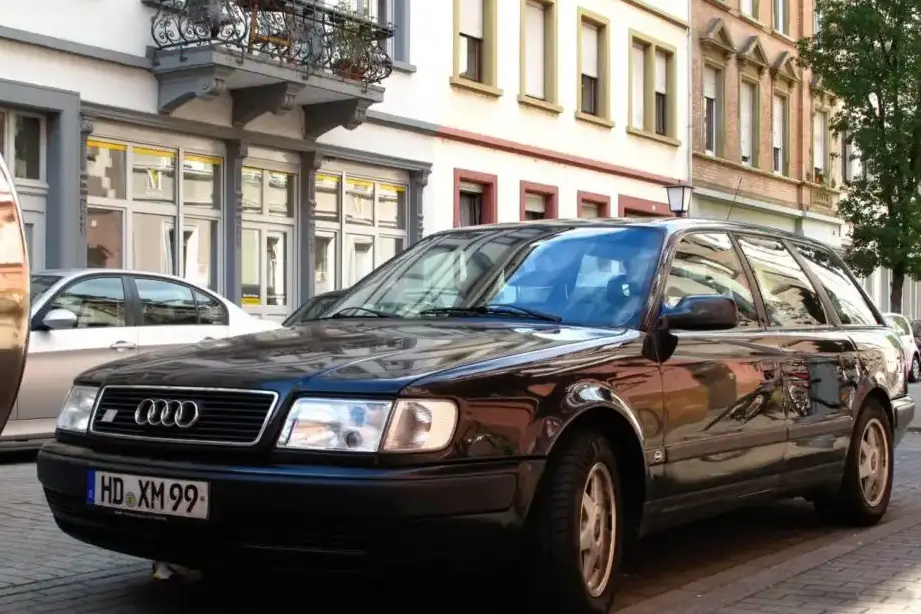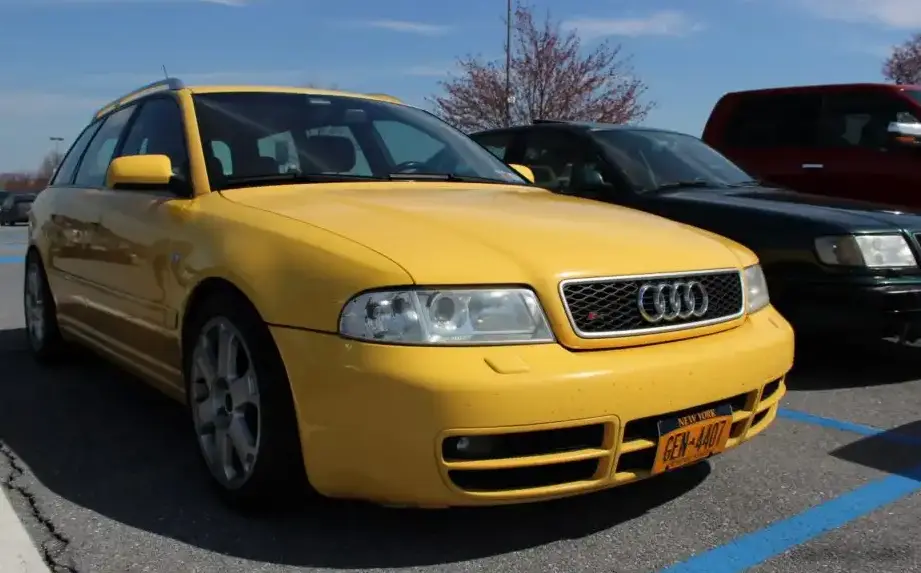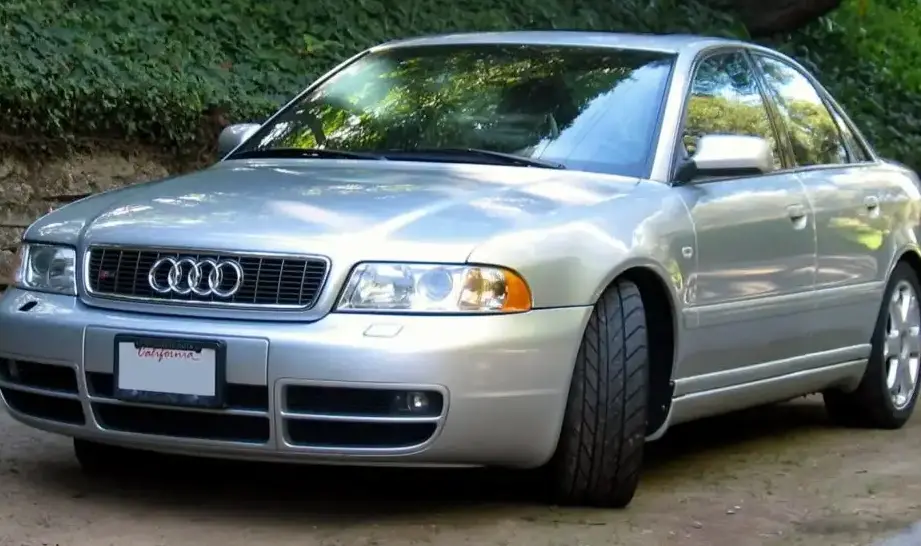
The Audi S4 (8D, B5) 2.7 BiTurbo V6 quattro, produced from October 1997 to September 2001, represents a pivotal moment in Audi’s performance lineage. Positioned as the high-performance variant of the B5 Audi A4, the S4 aimed to deliver a compelling blend of luxury, practicality, and exhilarating performance. This specific iteration, equipped with the 2.7-liter BiTurbo V6 engine and a six-speed manual transmission, was the flagship model, offering the highest power output within the B5 S4 range. It established Audi as a serious contender in the sports sedan segment, particularly in Europe where it found a strong following among enthusiasts seeking a refined yet capable performance car.
Technical Specifications
| Brand | Audi |
| Model | S4 |
| Generation | S4 (8D,B5) |
| Type (Engine) | 2.7 BiTurbo V6 (265 Hp) quattro |
| Start of production | October, 1997 |
| End of production | September, 2001 |
| Powertrain Architecture | Internal Combustion engine |
| Body type | Sedan |
| Seats | 5 |
| Doors | 4 |
| Fuel consumption (economy) – urban | 15.8 l/100 km (14.9 US mpg, 17.9 UK mpg, 6.3 km/l) |
| Fuel consumption (economy) – extra urban | 8.7 l/100 km (27 US mpg, 32.5 UK mpg, 11.5 km/l) |
| Fuel consumption (economy) – combined | 11.3 l/100 km (20.8 US mpg, 25 UK mpg, 8.8 km/l) |
| CO2 emissions | 271 g/km |
| Fuel Type | Petrol (Gasoline) |
| Acceleration 0 – 100 km/h | 5.6 sec |
| Acceleration 0 – 62 mph | 5.6 sec |
| Acceleration 0 – 60 mph | 5.3 sec |
| Maximum speed | 250 km/h (155.34 mph) |
| Weight-to-power ratio | 5.7 kg/Hp, 175.5 Hp/tonne |
| Weight-to-torque ratio | 3.8 kg/Nm, 264.9 Nm/tonne |
| Power | 265 Hp @ 5800 rpm |
| Power per litre | 99.2 Hp/l |
| Torque | 400 Nm @ 1850-3600 rpm (295.02 lb.-ft. @ 1850-3600 rpm) |
| Engine layout | Front, Longitudinal |
| Engine Model/Code | AGB, AZB |
| Engine displacement | 2671 cm3 (162.99 cu. in.) |
| Number of cylinders | 6 |
| Engine configuration | V-engine |
| Cylinder Bore | 81 mm (3.19 in.) |
| Piston Stroke | 86.4 mm (3.4 in.) |
| Compression ratio | 9.3:1 |
| Number of valves per cylinder | 5 |
| Fuel injection system | Multi-port manifold injection |
| Engine aspiration | BiTurbo, Intercooler |
| Valvetrain | DOHC |
| Engine oil capacity | 6 l (6.34 US qt | 5.28 UK qt) |
| Coolant | 6 l (6.34 US qt | 5.28 UK qt) |
| Kerb Weight | 1510 kg (3328.98 lbs.) |
| Max. weight | 2060 kg (4541.52 lbs.) |
| Max load | 550 kg (1212.54 lbs.) |
| Trunk (boot) space – minimum | 440 l (15.54 cu. ft.) |
| Fuel tank capacity | 62 l (16.38 US gal | 13.64 UK gal) |
| Max. roof load | 75 kg (165.35 lbs.) |
| Permitted trailer load with brakes (8%) | 1800 kg (3968.32 lbs.) |
| Permitted trailer load with brakes (12%) | 1700 kg (3747.86 lbs.) |
| Permitted trailer load without brakes | 750 kg (1653.47 lbs.) |
| Permitted towbar download | 75 kg (165.35 lbs.) |
| Length | 4483 mm (176.5 in.) |
| Width | 1733 mm (68.23 in.) |
| Height | 1396 mm (54.96 in.) |
| Wheelbase | 2607 mm (102.64 in.) |
| Front track | 1498 mm (58.98 in.) |
| Rear (Back) track | 1490 mm (58.66 in.) |
| Drag coefficient (Cd) | 0.31 |
| Minimum turning circle (turning diameter) | 11.4 m (37.4 ft.) |
| Drive wheel | All wheel drive (4×4) |
| Number of gears and type of gearbox | 6 gears, manual transmission |
| Front suspension | Independent multi-link suspension |
| Rear suspension | Double wishbone |
| Front brakes | Ventilated discs |
| Rear brakes | Disc |
| Assisting systems | ABS (Anti-lock braking system) |
| Steering type | Steering rack and pinion |
| Power steering | Hydraulic Steering |
| Tires size | 225/45 R17 |
| Wheel rims size | 7.5J x 17 |
INTRODUCTION
The Audi S4 (8D, B5) 2.7 BiTurbo V6 quattro, launched in 1997, was a significant step forward for Audi’s performance division, quattro GmbH. Built on the B5 A4 platform (internally designated 8D), the S4 aimed to bridge the gap between the standard A4 and the more focused RS4 that would follow. The 2.7-liter BiTurbo engine, coupled with Audi’s renowned quattro all-wheel-drive system, provided a potent combination of power and all-weather capability. This variant represented the pinnacle of performance for the B5 S4 range, offering a substantial increase in horsepower and torque over the naturally aspirated 2.8-liter V6 models.
Powertrain & Engine Architecture
The heart of the S4 2.7 BiTurbo is the AGB or AZB engine code, a 2.7-liter 90-degree V6 engine. What sets this engine apart is its use of two turbochargers – one for each bank of cylinders – providing a broad and flat torque curve. The engine utilizes a Bosch Motronic engine management system and multi-port fuel injection. The valvetrain employs double overhead camshafts (DOHC) with five valves per cylinder (three intake, two exhaust), contributing to its high specific output. The six-speed manual transmission, sourced from Getrag, was the standard offering, providing precise shifts and allowing the driver to fully exploit the engine’s power. The transmission’s gear ratios were carefully selected to balance acceleration and fuel efficiency, with a relatively short final drive to enhance responsiveness.
Driving Characteristics
The S4 2.7 BiTurbo delivers a distinctly different driving experience compared to its naturally aspirated siblings. The twin-turbochargers provide a noticeable surge of power from around 1800 rpm, continuing to build strongly through the rev range. While not exhibiting the immediate throttle response of a naturally aspirated engine, the BiTurbo setup offers a substantial increase in overall performance. The quattro all-wheel-drive system provides exceptional traction, particularly in adverse weather conditions, inspiring confidence during spirited driving. The six-speed manual transmission allows for precise control, and the relatively short gear ratios contribute to brisk acceleration. Compared to the 2.8L V6, the BiTurbo S4 feels significantly more powerful and responsive, while the manual transmission offers a more engaging driving experience than the available automatic option.
Equipment & Trim Levels
The S4 2.7 BiTurbo came generously equipped, reflecting its position as the flagship model. Standard features included sport seats upholstered in leather, a leather-wrapped steering wheel and shift knob, automatic climate control, and a premium audio system. Exterior features included unique S4 badging, a subtle rear spoiler, and larger alloy wheels. Optional extras included sunroof, navigation system, and upgraded audio options. The interior trim was typically finished in dark wood or aluminum accents, adding to the car’s sporty yet luxurious ambiance.
Chassis & Braking
The S4 featured a sport-tuned suspension with stiffer springs and dampers compared to the standard A4. The front suspension utilized independent multi-link technology, while the rear employed a double wishbone setup. Larger ventilated disc brakes were fitted at all four corners, providing ample stopping power. ABS (Anti-lock Braking System) was standard. The S4’s chassis was designed to handle the increased power output, offering a balanced and controlled ride.
Market Reception & Comparison
The S4 2.7 BiTurbo was generally well-received by automotive critics, who praised its performance, handling, and all-weather capability. However, some criticisms were leveled at its relatively high price and the complexity of the twin-turbo system, which raised concerns about long-term reliability. Compared to rivals like the BMW M3, the S4 offered a more refined and comfortable driving experience, but lacked the ultimate track focus of the BMW. Fuel economy was reasonable for a performance car of its era, but the 2.7 BiTurbo consumed significantly more fuel than the 2.8-liter V6 models.
Legacy
The Audi S4 (8D, B5) 2.7 BiTurbo V6 quattro has become a sought-after classic among Audi enthusiasts. While the twin-turbo system can require more maintenance than simpler engines, the car’s performance and driving dynamics continue to impress. Well-maintained examples command a premium in the used car market. The engine, while complex, is generally considered robust when properly maintained, and parts availability remains reasonable. The B5 S4 established Audi as a serious player in the high-performance sedan segment and paved the way for future generations of S and RS models.