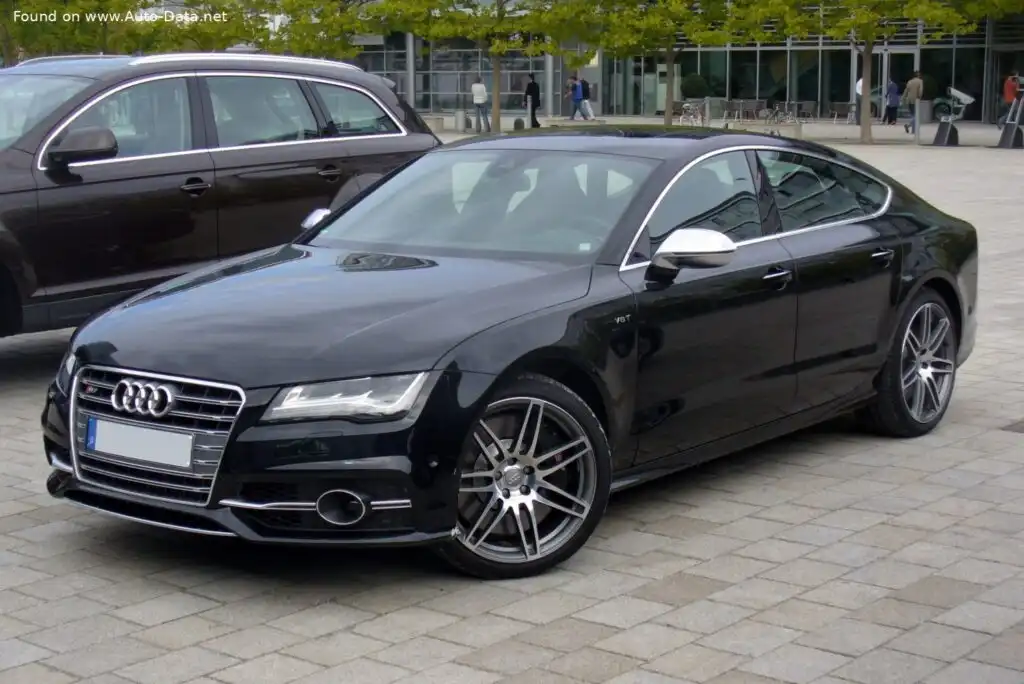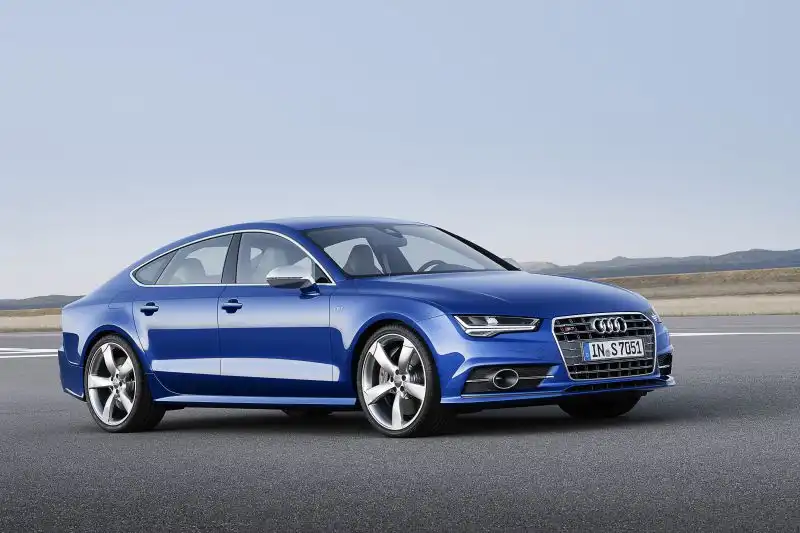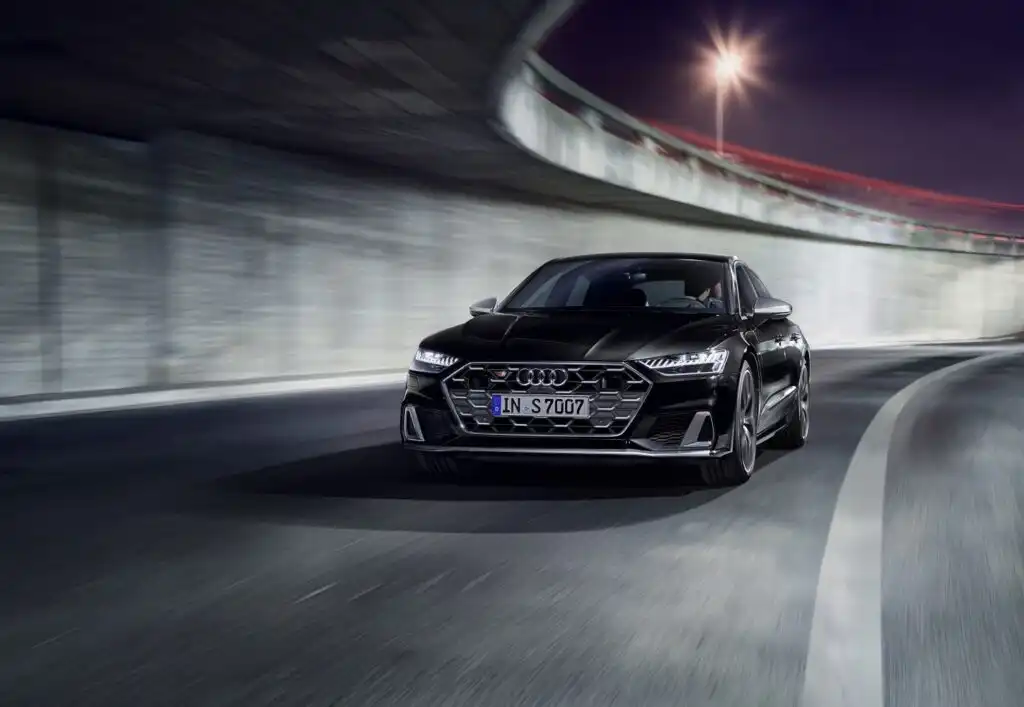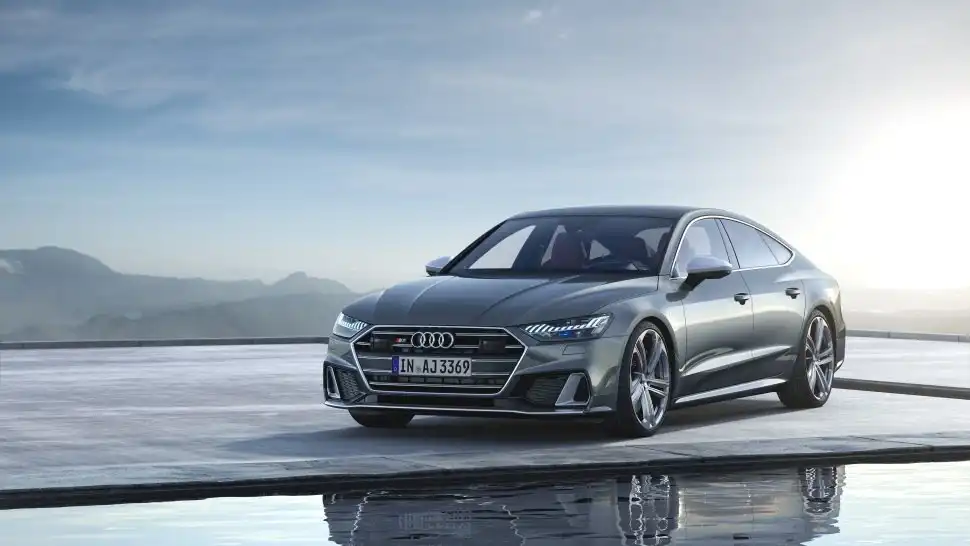
The Audi S7 Sportback (C8) 3.0 TDI V6, produced from April 2019 to November 2020, represents a compelling blend of performance, luxury, and efficiency within the Audi S7 lineup. Positioned as a diesel-powered alternative to the gasoline variants, this model catered to European markets prioritizing fuel economy and torque. It falls within the C8 generation of the S7 Sportback, built on the Volkswagen Group’s MLB Evo platform (1HX0/A3). This variant distinguished itself through its potent 3.0-liter TDI engine, mild-hybrid technology, and standard quattro all-wheel drive, offering a unique driving experience compared to its gasoline-powered siblings.
Technical Specifications
| Brand | Audi |
| Model | S7 |
| Generation | S7 Sportback (C8) |
| Type (Engine) | 3.0 TDI V6 (349 Hp) Mild Hybrid quattro tiptronic |
| Start of production | April, 2019 |
| End of production | November, 2020 |
| Powertrain Architecture | MHEV (Mild Hybrid Electric Vehicle) |
| Body type | Liftback |
| Seats | 5 |
| Doors | 5 |
| Fuel consumption (urban) | 7.7 l/100 km (30.5 US mpg) |
| Fuel consumption (extra urban) | 5.8 l/100 km (40.6 US mpg) |
| Fuel consumption (combined) | 6.5 l/100 km (36.2 US mpg) |
| CO2 emissions | 170 g/km |
| Fuel Type | Diesel |
| Acceleration 0 – 100 km/h | 5.1 sec |
| Acceleration 0 – 62 mph | 5.1 sec |
| Acceleration 0 – 60 mph | 4.8 sec |
| Maximum speed | 250 km/h (155.34 mph) |
| Emission standard | Euro 6d-TEMP-EVAP-ISC |
| Weight-to-power ratio | 5.8 kg/Hp |
| Weight-to-torque ratio | 2.9 kg/Nm |
| Net battery capacity | 0.5 kWh |
| Battery voltage | 48 V |
| Battery technology | Lithium-ion (Li-Ion) |
| Battery weight | 10 kg (22.05 lbs) |
| Battery location | Under the trunk |
| Recuperation output | 8 kW |
| Power | 349 Hp @ 3850 rpm |
| Torque | 700 Nm @ 2500-3100 rpm (516.29 lb.-ft.) |
| Engine layout | Front, Longitudinal |
| Engine Model/Code | EA897evo2 / DEWA |
| Engine displacement | 2967 cm3 (181.06 cu. in.) |
| Number of cylinders | 6 |
| Engine configuration | V-engine |
| Cylinder Bore | 83 mm (3.27 in.) |
| Piston Stroke | 91.4 mm (3.6 in.) |
| Compression ratio | 15.5:1 |
| Number of valves per cylinder | 4 |
| Fuel injection system | Diesel Commonrail |
| Engine aspiration | Turbocharger and Electric Powered Compressor, Intercooler |
| Valvetrain | DOHC |
| Engine oil capacity | 6.1 l (6.45 US qt) |
| Coolant capacity | 13.6 l (14.37 US qt) |
| Kerb Weight | 2010 kg (4431.29 lbs) |
| Max. weight | 2635 kg (5809.18 lbs) |
| Max load | 625 kg (1377.89 lbs) |
| Trunk (boot) space – minimum | 525 l (18.54 cu. ft.) |
| Trunk (boot) space – maximum | 1380 l (48.73 cu. ft.) |
| Fuel tank capacity | 63 l (16.64 US gal) |
| AdBlue tank | 12 l (3.17 US gal) |
| Max. roof load | 90 kg (198.42 lbs) |
| Permitted trailer load with brakes (8%) | 2100 kg (4629.71 lbs) |
| Permitted trailer load without brakes | 750 kg (1653.47 lbs) |
| Length | 4979 mm (196.02 in.) |
| Width | 1908 mm (75.12 in.) |
| Height | 1417 mm (55.79 in.) |
| Wheelbase | 2928 mm (115.28 in.) |
| Front track | 1646 mm (64.8 in.) |
| Rear track | 1629 mm (64.13 in.) |
| Front overhang | 927 mm (36.5 in.) |
| Rear overhang | 1124 mm (44.25 in.) |
| Drag coefficient (Cd) | 0.31 |
| Minimum turning circle | 12.2 m (40.03 ft) |
| Number of gears | 8 |
| Gearbox type | Automatic transmission tiptronic |
Powertrain & Engine Architecture
The heart of the S7 Sportback 3.0 TDI is Audi’s EA897evo2 3.0-liter V6 diesel engine, designated with the code DEWA. This engine benefits from a sophisticated turbocharging system, incorporating both a conventional exhaust gas turbocharger and an electrically powered compressor (EPC). The EPC effectively eliminates turbo lag, providing near-instantaneous boost at low engine speeds, enhancing responsiveness. Fuel is delivered via a high-pressure common rail diesel injection system, optimized for efficient combustion and reduced emissions. The engine produces 349 horsepower at 3850 rpm and a substantial 700 Nm (516 lb-ft) of torque between 2500 and 3100 rpm. This engine is paired with an 8-speed tiptronic automatic transmission, known for its smooth and quick shifts. The mild-hybrid system, utilizing a 48V lithium-ion battery and a belt alternator-starter (BAS), enables features like extended engine-off coasting and a smoother start-stop function, contributing to improved fuel economy.
Driving Characteristics
The 3.0 TDI automatic combination delivers a refined and powerful driving experience. While not as overtly sporty as the gasoline-powered S7 variants, the diesel offers a broader, more accessible powerband. The EPC effectively mitigates turbo lag, providing strong acceleration from a standstill and during overtaking maneuvers. The 8-speed tiptronic transmission is well-tuned, offering seamless gear changes and contributing to a comfortable ride. The quattro all-wheel-drive system provides excellent traction in all weather conditions. Compared to manual transmission versions (not commonly offered with this engine), the automatic prioritizes ease of use and comfort. Against the higher-output gasoline engines, the TDI offers less peak horsepower but significantly more torque, resulting in strong mid-range acceleration and effortless cruising.
Equipment & Trim Levels
The S7 Sportback 3.0 TDI typically came well-equipped as standard. Interior features included sport seats upholstered in a combination of leather and Alcantara, brushed aluminum trim, and a three-spoke multifunction steering wheel. Standard technology included Audi’s virtual cockpit digital instrument cluster, a large infotainment touchscreen with navigation, and a premium sound system. Optional extras included features like adaptive cruise control, a head-up display, massaging front seats, and a panoramic sunroof. The S7 Sportback generally didn’t have drastically different trim levels; options were largely added individually, allowing buyers to customize their vehicle to their preferences.
Chassis & Braking
The S7 Sportback features an independent multi-link suspension setup at both the front and rear axles, providing a comfortable yet controlled ride. The suspension is tuned to balance performance and comfort, offering a good compromise for everyday driving. Braking duties are handled by ventilated disc brakes on all four wheels, with larger discs at the front (400mm) compared to the rear (350mm). The braking system is augmented by ABS, electronic brake-force distribution, and brake assist. Many models were equipped with optional 4-wheel steering, enhancing agility at low speeds and stability at high speeds.
Market Reception & Comparison
The S7 Sportback 3.0 TDI was generally well-received by automotive critics, particularly in Europe where diesel engines were more prevalent. Reviewers praised the engine’s strong torque, refined performance, and impressive fuel economy. The mild-hybrid system was also noted for its contribution to efficiency. Compared to the gasoline-powered S7 variants, the TDI offered a more economical option without sacrificing a significant amount of performance. However, some critics noted that the diesel engine lacked the responsiveness and sound of the gasoline engines. Reliability has generally been good, although diesel particulate filter (DPF) maintenance is a consideration for owners.
Legacy
The Audi S7 Sportback 3.0 TDI V6 represents a significant offering in the executive car segment, showcasing Audi’s expertise in diesel engine technology and mild-hybrid systems. On the used car market, these models continue to be sought after for their blend of performance, luxury, and fuel efficiency. The EA897evo2 engine is known for its durability, provided it has been properly maintained. Regular servicing, including DPF regeneration and oil changes, is crucial for long-term reliability. As emissions regulations tighten, the availability of clean diesel vehicles like the S7 TDI is becoming increasingly limited, potentially increasing their desirability among enthusiasts.