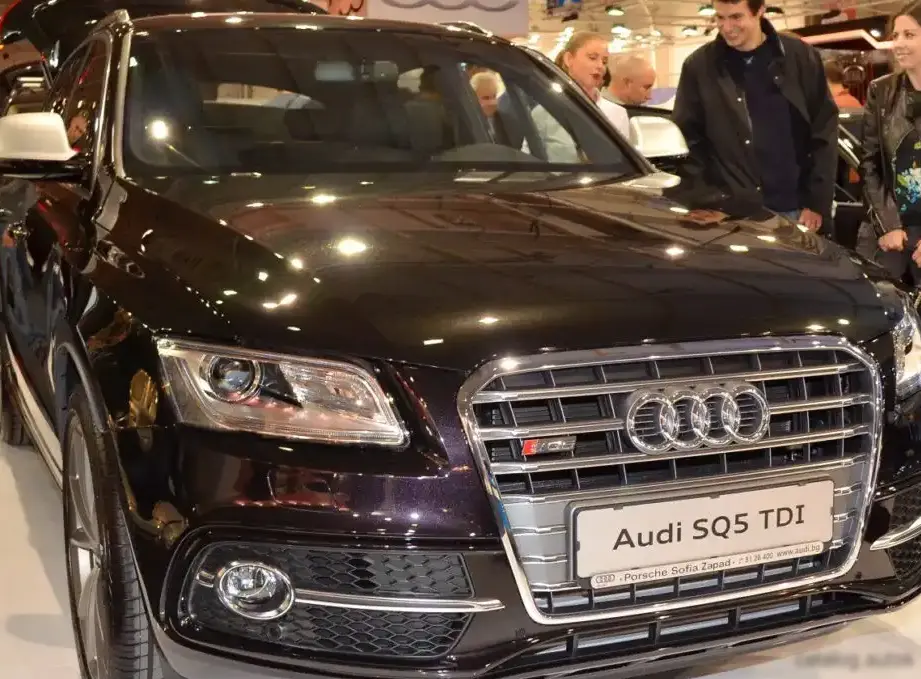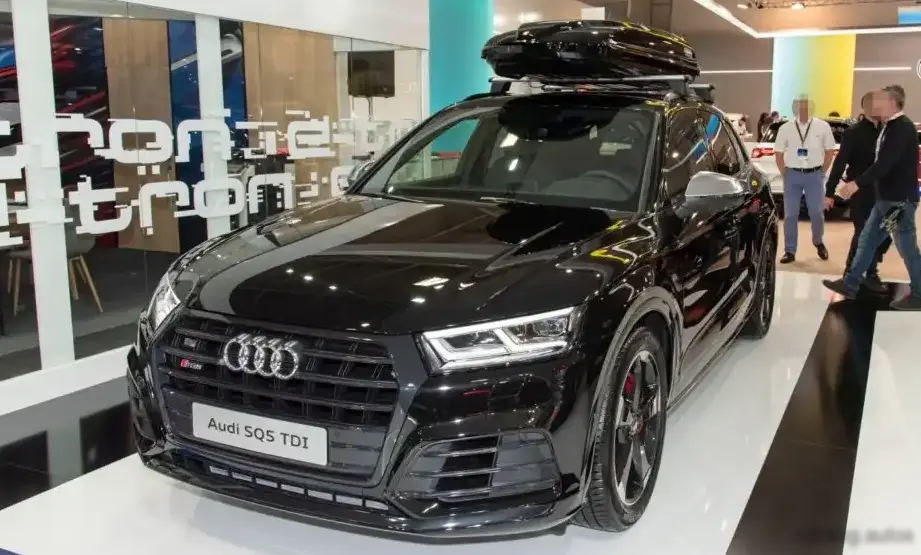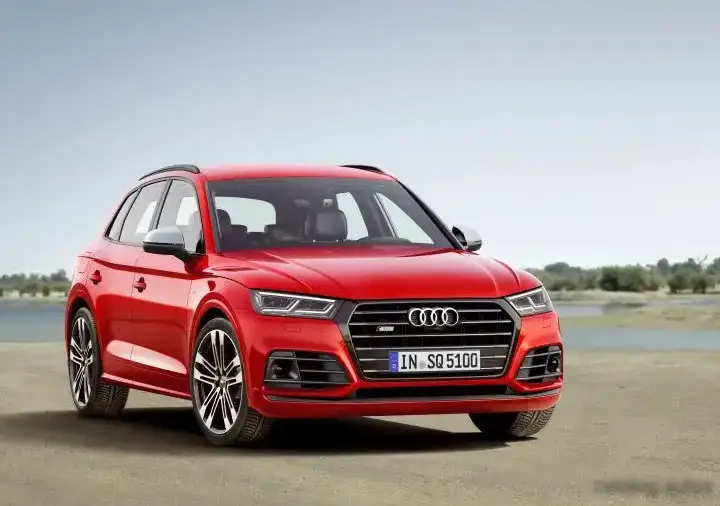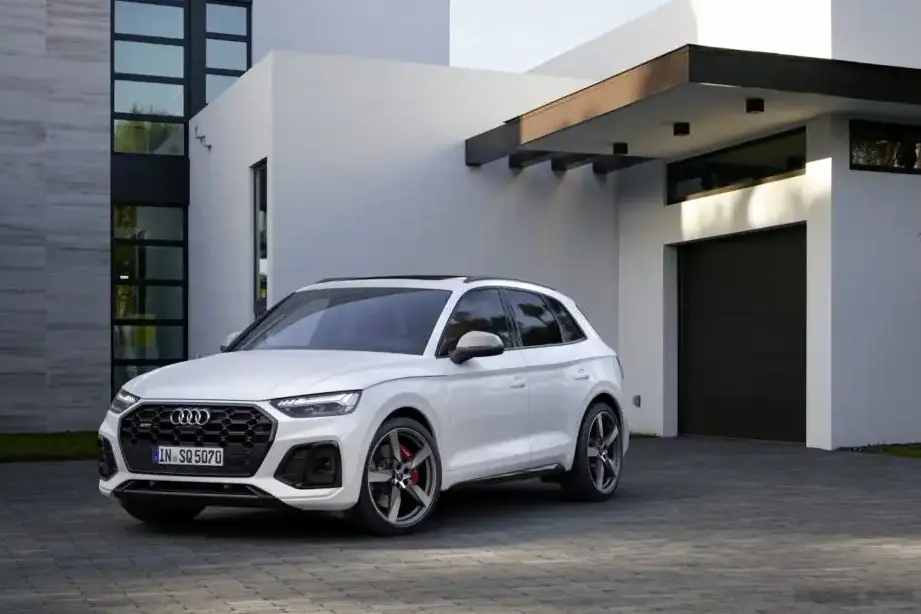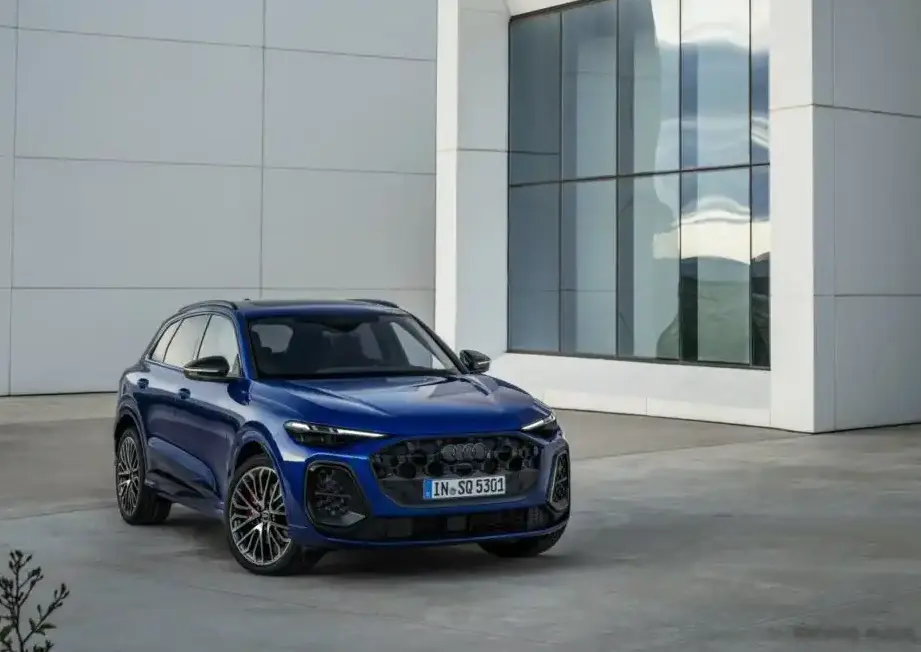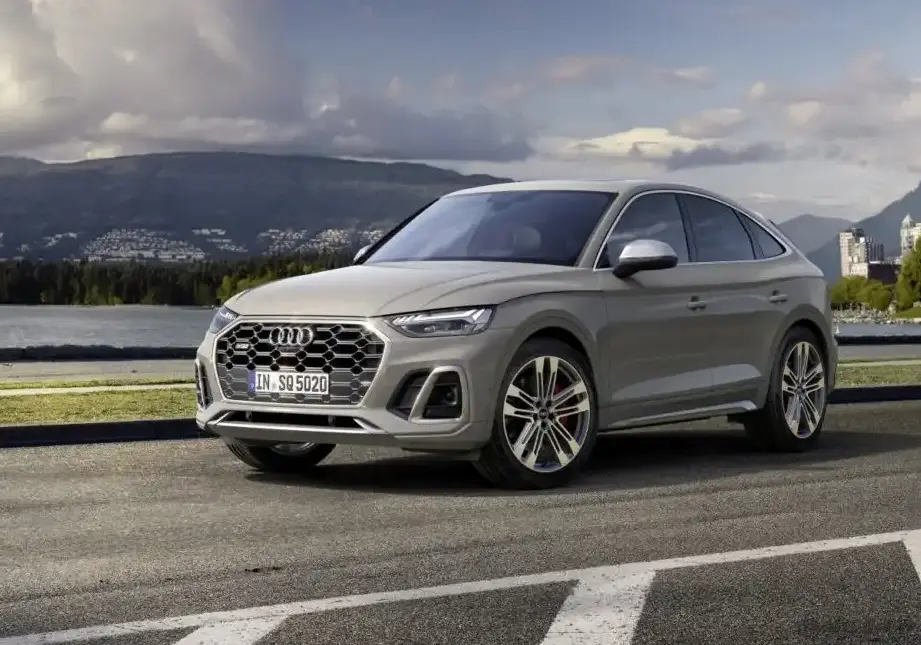
The Audi SQ5 II Sportback (FY, facelift 2020) 3.0 TFSI V6 (354 Hp) quattro tiptronic represents a performance-oriented iteration of Audi’s popular compact luxury SUV. Introduced as part of the FY facelift in 2020 and continuing through the 2024 model year, this variant combines a potent turbocharged V6 engine with Audi’s renowned quattro all-wheel-drive system and a smooth-shifting eight-speed tiptronic automatic transmission. Positioned as a premium offering within the SQ5 lineup, it caters to buyers seeking a blend of everyday practicality, sporty driving dynamics, and sophisticated technology. The Sportback body style, featuring a sloping roofline, further distinguishes it from the standard SQ5 SUV.
Technical Specifications
| Brand | Audi |
| Model | SQ5 |
| Generation | SQ5 II Sportback (FY, facelift 2020) |
| Type (Engine) | 3.0 TFSI V6 (354 Hp) quattro tiptronic |
| Start of production | 2020 |
| End of production | 2024 |
| Powertrain Architecture | Internal Combustion engine |
| Body type | SUV |
| Seats | 5 |
| Doors | 5 |
| Fuel consumption (economy) – urban (EPA) | 12.4-13.1 l/100 km (19 – 18 US mpg, 22.8 – 21.6 UK mpg, 8.1 – 7.6 km/l) |
| Fuel consumption (economy) – extra urban (EPA) | 9.8 l/100 km (24 US mpg, 28.8 UK mpg, 10.2 km/l) |
| Fuel consumption (economy) – combined (EPA) | 11.2-11.8 l/100 km (21 – 19.9 US mpg, 25.2 – 23.9 UK mpg, 8.9 – 8.5 km/l) |
| Fuel Type | Petrol (Gasoline) |
| Acceleration 0 – 100 km/h | 4.9 sec |
| Acceleration 0 – 62 mph | 4.9 sec |
| Acceleration 0 – 60 mph | 4.7 sec |
| Maximum speed | 250 km/h (155.34 mph), Electronically limited |
| Emission standard | Euro 6 |
| Weight-to-power ratio | 5.3 kg/Hp, 189.8 Hp/tonne |
| Weight-to-torque ratio | 3.7 kg/Nm, 268.1 Nm/tonne |
| Power | 354 Hp @ 5400-6400 rpm |
| Power per litre | 118.2 Hp/l |
| Torque | 500 Nm @ 1370-4500 rpm (368.78 lb.-ft. @ 1370-4500 rpm) |
| Engine layout | Front, Longitudinal |
| Engine Model/Code | EA839 / CWGD |
| Engine displacement | 2995 cm3 (182.77 cu. in.) |
| Number of cylinders | 6 |
| Engine configuration | V-engine |
| Cylinder Bore | 84.5 mm (3.33 in.) |
| Piston Stroke | 89 mm (3.5 in.) |
| Compression ratio | 11.2:1 |
| Number of valves per cylinder | 4 |
| Fuel injection system | Direct injection |
| Engine aspiration | Twin-scroll turbo, Intercooler |
| Valvetrain | DOHC |
| Engine oil capacity | 7.3 l (7.71 US qt | 6.42 UK qt) |
| Coolant | 10 l (10.57 US qt | 8.8 UK qt) |
| Kerb Weight | 1865-2130 kg (4111.62 – 4695.85 lbs.) |
| Trunk (boot) space – minimum | 500 l (17.66 cu. ft.) |
| Trunk (boot) space – maximum | 1470 l (51.91 cu. ft.) |
| Fuel tank capacity | 70 l (18.49 US gal | 15.4 UK gal) |
| Max. roof load | 75 kg (165.35 lbs.) |
| Permitted trailer load with brakes (12%) | 1996 kg (4400.43 lbs.) |
| Length | 4689 mm (184.61 in.) |
| Width | 1893 mm (74.53 in.) |
| Width including mirrors | 2140 mm (84.25 in.) |
| Height | 1633 mm (64.29 in.) |
| Wheelbase | 2824 mm (111.18 in.) |
| Front track | 1624 mm (63.94 in.) |
| Rear (Back) track | 1612 mm (63.46 in.) |
| Front overhang | 910 mm (35.83 in.) |
| Rear overhang | 955 mm (37.6 in.) |
| Drag coefficient (Cd) | 0.33 |
| Minimum turning circle (turning diameter) | 11.8 m (38.71 ft.) |
| Drivetrain Architecture | The Internal combustion engine (ICE) drives permanently the four wheels of the vehicle. |
| Drive wheel | All wheel drive (4×4) |
| Number of gears and type of gearbox | 8 gears, automatic transmission tiptronic |
| Front suspension | Coil spring, Independent multi-link suspension, Transverse stabilizer, Air Suspension – Optional |
| Rear suspension | Independent multi-link spring suspension with stabilizer, Air Suspension – Optional |
| Front brakes | Ventilated discs, 350 mm |
| Rear brakes | Ventilated discs, 330 mm |
| Assisting systems | ABS (Anti-lock braking system) |
| Steering type | Steering rack and pinion |
| Power steering | Electric Steering |
| Tires size | 255/45 R20; 255/40 R21 |
| Wheel rims size | 8J x 20; 8.5J x 21 |
INTRODUCTION
The Audi SQ5 II Sportback (FY, facelift 2020) 3.0 TFSI V6 (354 Hp) quattro tiptronic is a high-performance variant of the second-generation Q5 Sportback. The FY series, representing the second generation of the Q5, underwent a significant facelift in 2020, bringing updated styling, enhanced technology, and refinements to the powertrain. This particular version, equipped with the 3.0-liter turbocharged V6 engine and the eight-speed tiptronic transmission, occupies a sweet spot in the lineup, offering a substantial performance upgrade over the base 2.0-liter four-cylinder models while remaining more accessible than the even more potent RS Q5. It was sold in the US market and globally, appealing to buyers who desired a sporty and luxurious SUV with all-weather capability.
Powertrain & Engine Architecture
At the heart of the SQ5 Sportback is Audi’s EA839 3.0-liter V6 engine, designated as the CWGD code. This engine utilizes a direct injection fuel system, delivering fuel directly into the combustion chambers for improved efficiency and power. It’s equipped with a twin-scroll turbocharger and an intercooler to maximize boost and reduce intake air temperatures. The engine produces 354 horsepower at 5400-6400 rpm and 368.78 lb-ft of torque between 1370 and 4500 rpm. The eight-speed tiptronic automatic transmission is a torque-converter type, known for its smooth and responsive shifts. It allows for both automatic operation and manual gear selection via steering wheel-mounted paddles. The quattro all-wheel-drive system employs a self-locking center differential, distributing torque between the front and rear axles as needed to optimize traction.
Driving Characteristics
The 3.0 TFSI V6 and tiptronic combination delivers brisk acceleration, with a 0-60 mph time of around 4.7 seconds. The broad torque curve ensures strong pulling power throughout the rev range, making it effortless for highway passing and merging. While the tiptronic transmission isn’t as overtly sporty as a dual-clutch transmission, it provides smooth and quick shifts, particularly in dynamic mode. Compared to the 2.0-liter four-cylinder Q5, the SQ5 offers a significantly more engaging driving experience, with noticeably stronger acceleration and a more refined engine note. The Sportback’s suspension, typically featuring a sport-tuned setup, provides a good balance between comfort and handling, although the optional air suspension further enhances ride quality and allows for adjustable ride height.
Equipment & Trim Levels
The SQ5 Sportback (FY, facelift 2020) typically came well-equipped as standard. Features included leather upholstery, heated and power-adjustable front seats, a panoramic sunroof, a premium sound system, and Audi’s Virtual Cockpit digital instrument cluster. The infotainment system featured a touchscreen display with navigation, Apple CarPlay, and Android Auto compatibility. Optional extras included adaptive cruise control, a head-up display, massaging front seats, and various cosmetic enhancements. Interior trim options ranged from brushed aluminum to wood veneers, allowing buyers to personalize the cabin to their preferences.
Chassis & Braking
The SQ5 Sportback utilizes a sophisticated chassis design featuring an independent multi-link suspension at both the front and rear. The front suspension incorporates coil springs and a transverse stabilizer bar, while the rear suspension also features a stabilizer bar. Larger brakes compared to the standard Q5 are standard, with ventilated discs measuring 350mm at the front and 330mm at the rear, providing ample stopping power. The optional air suspension system allows for adjustable ride height and damping, further enhancing both comfort and handling.
Market Reception & Comparison
The SQ5 Sportback was generally well-received by automotive critics, who praised its powerful engine, refined interior, and engaging driving dynamics. It was often compared to rivals such as the Porsche Macan, BMW X3 M40i, and Mercedes-AMG GLC 43. While the SQ5 offered a compelling combination of performance and luxury, some reviewers noted that its fuel economy was not class-leading. Compared to the standard Q5, the SQ5 offered a significant performance upgrade, but at a higher price point. The 1.8L and 2.0L trims were more fuel efficient but lacked the power and sporty character of the V6.
Legacy
The EA839 3.0 TFSI V6 engine has proven to be a reliable and durable powerplant when properly maintained. The eight-speed tiptronic transmission is also generally considered to be robust. However, as with any complex modern vehicle, preventative maintenance is crucial. Common issues reported by owners include carbon buildup on the intake valves (a characteristic of direct-injection engines) and occasional oil consumption. On the used car market, the SQ5 Sportback (FY, facelift 2020) 3.0 TFSI V6 quattro tiptronic holds its value well, reflecting its desirable combination of performance, luxury, and practicality. It remains a popular choice for buyers seeking a sporty and capable luxury SUV.