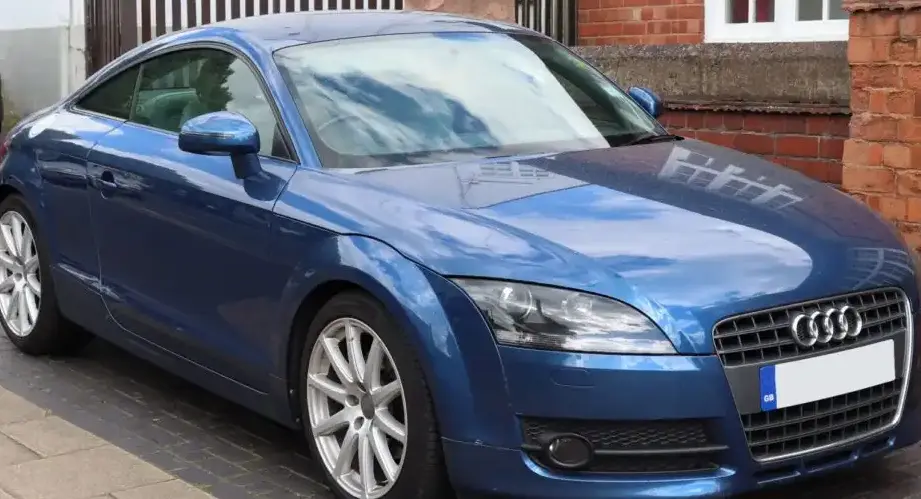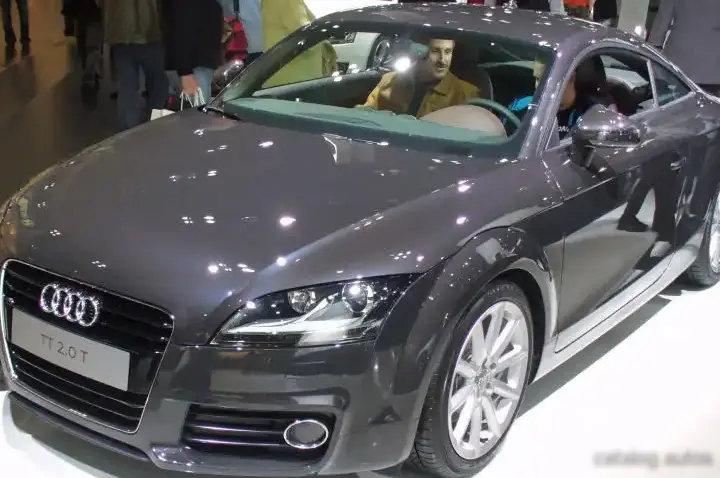
The Audi TT Coupe (8J facelift) 1.8 TFSI, produced from 2010 to June 2014, represented a key entry point into the second-generation TT lineup. Positioned as a more accessible alternative to the higher-performance 2.0 TFSI and 3.2 V6 models, this variant aimed to broaden the TT’s appeal with a balance of style, efficiency, and reasonable performance. The 8J facelift brought revised styling cues, interior refinements, and updated engine technology compared to the original 8J released in 2006. This model sat within the broader Volkswagen Group A5 (or PQ35) platform family, sharing components with vehicles like the Volkswagen Golf Mk5 and Mk6, and the Škoda Octavia.
Technical Specifications
| Brand | Audi |
| Model | TT |
| Generation | TT Coupe (8J, facelift 2010) |
| Type (Engine) | 1.8 TFSI (160 Hp) |
| Start of production | 2010 |
| End of production | June, 2014 |
| Powertrain Architecture | Internal Combustion engine |
| Body type | Coupe |
| Seats | 4 |
| Doors | 3 |
| Fuel consumption (urban) | 8.5 l/100 km (27.7 US mpg, 33.2 UK mpg, 11.8 km/l) |
| Fuel consumption (extra urban) | 5.2 l/100 km (45.2 US mpg, 54.3 UK mpg, 19.2 km/l) |
| Fuel consumption (combined) | 6.4 l/100 km (36.8 US mpg, 44.1 UK mpg, 15.6 km/l) |
| CO2 emissions | 149 g/km |
| Fuel Type | Petrol (Gasoline) |
| Acceleration 0 – 100 km/h | 7.2 sec |
| Acceleration 0 – 62 mph | 7.2 sec |
| Acceleration 0 – 60 mph | 6.8 sec |
| Maximum speed | 226 km/h (140.43 mph) |
| Emission standard | Euro 5 |
| Weight-to-power ratio | 7.8 kg/Hp, 129 Hp/tonne |
| Weight-to-torque ratio | 5 kg/Nm, 201.6 Nm/tonne |
| Power | 160 Hp @ 4500-6200 rpm |
| Power per litre | 89 Hp/l |
| Torque | 250 Nm @ 1500-4500 rpm (184.39 lb.-ft. @ 1500-4500 rpm) |
| Engine layout | Front, Transverse |
| Engine Model/Code | CDAA |
| Engine displacement | 1798 cm3 (109.72 cu. in.) |
| Number of cylinders | 4 |
| Engine configuration | Inline |
| Cylinder Bore | 82.5 mm (3.25 in.) |
| Piston Stroke | 84.1 mm (3.31 in.) |
| Compression ratio | 9.6:1 |
| Number of valves per cylinder | 4 |
| Fuel injection system | Direct injection |
| Engine aspiration | Turbocharger, Intercooler |
| Valvetrain | DOHC |
| Engine oil capacity | 4.6 l (4.86 US qt | 4.05 UK qt) |
| Coolant | 8.1 l (8.56 US qt | 7.13 UK qt) |
| Kerb Weight | 1240 kg (2733.73 lbs.) |
| Max. weight | 1640 kg (3615.58 lbs.) |
| Max load | 400 kg (881.85 lbs.) |
| Trunk (boot) space – minimum | 292 l (10.31 cu. ft.) |
| Trunk (boot) space – maximum | 700 l (24.72 cu. ft.) |
| Fuel tank capacity | 55 l (14.53 US gal | 12.1 UK gal) |
| Max. roof load | 75 kg (165.35 lbs.) |
| Length | 4198 mm (165.28 in.) |
| Width | 1842 mm (72.52 in.) |
| Width including mirrors | 1952 mm (76.85 in.) |
| Height | 1353 mm (53.27 in.) |
| Wheelbase | 2468 mm (97.17 in.) |
| Front track | 1562 mm (61.5 in.) |
| Rear (Back) track | 1548 mm (60.94 in.) |
| Front overhang | 911 mm (35.87 in.) |
| Rear overhang | 819 mm (32.24 in.) |
| Drag coefficient (Cd) | 0.30 |
| Minimum turning circle | 10.96 m (35.96 ft.) |
| Drivetrain Architecture | The Internal combustion engine (ICE) drives the front wheels of the vehicle. |
| Drive wheel | Front wheel drive |
| Number of gears and type of gearbox | 6 gears, manual transmission |
| Front suspension | Independent, type McPherson with coil spring and anti-roll bar |
| Rear suspension | Independent multi-link spring suspension with stabilizer |
| Front brakes | Ventilated discs |
| Rear brakes | Disc |
| Assisting systems | ABS (Anti-lock braking system) |
| Steering type | Steering rack and pinion |
| Tires size | 225/55 R16 |
| Wheel rims size | 7.5J x 16 |
INTRODUCTION
The Audi TT Coupe (8J facelift) 1.8 TFSI, launched in 2010, offered a compelling blend of Audi’s signature design and technology at a more accessible price point. This variant was a significant part of the 8J TT’s success, appealing to buyers who desired the TT’s sporty aesthetic and driving experience without the higher costs associated with the more powerful engine options. The facelift brought subtle but important changes to the exterior, including revised headlights and grille, and interior updates focused on material quality and ergonomics. The 1.8 TFSI engine, a mainstay of the Volkswagen Group’s offerings, provided a good balance of performance and fuel economy.
Powertrain & Engine Architecture
At the heart of the 1.8 TFSI variant lies the CDAA engine code, a 1.8-liter inline-four cylinder powerplant. This engine is a key member of Volkswagen Group’s EA888 family, known for its robust design and tuning potential. The “TFSI” designation stands for Turbocharged Fuel Stratified Injection, highlighting the engine’s key technologies. Direct injection delivers fuel directly into the combustion chamber, improving efficiency and reducing emissions. A single turbocharger, coupled with an intercooler, provides forced induction, boosting power output. The engine utilizes a dual overhead camshaft (DOHC) valvetrain with four valves per cylinder, optimizing airflow for improved performance. The 1.8 TFSI typically paired with a 6-speed manual transmission, although a 7-speed S tronic dual-clutch transmission was also available as an option. The S tronic offered quicker shifts and a more engaging driving experience, but at an additional cost.
Driving Characteristics
The 160 horsepower and 184 lb-ft of torque produced by the 1.8 TFSI engine provided adequate performance for everyday driving. Acceleration from 0-60 mph took around 6.8 to 7.2 seconds, depending on transmission and testing conditions. While not as rapid as the 2.0 TFSI, the 1.8 TFSI offered a more relaxed and fuel-efficient driving experience. The turbocharger provided a noticeable boost in power during acceleration, but turbo lag was present, particularly at lower engine speeds. The 6-speed manual transmission offered precise shifts and allowed drivers to maintain control over the engine’s power delivery. The front-wheel-drive configuration provided good traction in most conditions, but could exhibit torque steer under hard acceleration. The suspension, tuned for a balance of comfort and handling, provided a reasonably sporty ride without being overly harsh.
Equipment & Trim Levels
The 1.8 TFSI variant of the Audi TT Coupe typically came equipped with a respectable level of standard features. These included air conditioning, power windows and locks, a multi-function steering wheel, and an audio system with CD player. Upholstery was typically cloth, although leather options were available. Optional extras included a panoramic sunroof, navigation system, premium sound system, and sport seats. The TT’s interior design was characterized by its minimalist aesthetic and high-quality materials. The dashboard featured a clean layout with circular air vents, a hallmark of the TT design. Trim levels varied depending on the market, but generally offered progressively more features and customization options.
Chassis & Braking
The Audi TT Coupe (8J) utilized a McPherson strut front suspension and a multi-link rear suspension, providing a good balance of handling and ride comfort. The front suspension incorporated a stabilizer bar to reduce body roll during cornering. Braking duties were handled by ventilated discs at the front and solid discs at the rear. Anti-lock braking system (ABS) was standard, enhancing safety and control. The chassis was designed to be lightweight and rigid, contributing to the TT’s sporty handling characteristics. The steering system employed a rack-and-pinion setup, providing precise and responsive steering feel.
Market Reception & Comparison
The 1.8 TFSI variant of the Audi TT Coupe was generally well-received by automotive critics. It was praised for its stylish design, comfortable interior, and reasonable performance. However, some critics noted that the engine lacked the outright punch of the 2.0 TFSI. Compared to the 2.0 TFSI, the 1.8 TFSI offered better fuel economy and lower running costs. Compared to the 3.2 V6, the 1.8 TFSI was significantly more affordable and fuel-efficient, but lacked the V6’s power and refinement. The 1.8 TFSI appealed to buyers who prioritized style and efficiency over outright performance.
Legacy
The 1.8 TFSI engine proved to be a reliable and durable powerplant, with many examples still on the road today. While not without its potential issues (such as carbon buildup on the intake valves, a common issue with direct-injection engines), the engine is generally considered to be relatively trouble-free with proper maintenance. The 8J TT, including the 1.8 TFSI variant, has become a popular choice among enthusiasts and collectors, appreciated for its distinctive design and engaging driving experience. On the used car market, the 1.8 TFSI variant typically commands a lower price than the 2.0 TFSI, making it an attractive option for buyers seeking an affordable and stylish coupe.