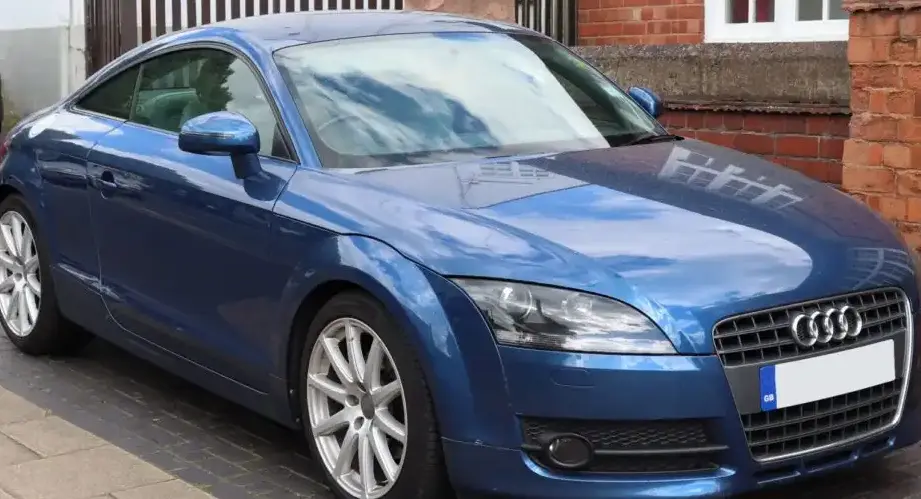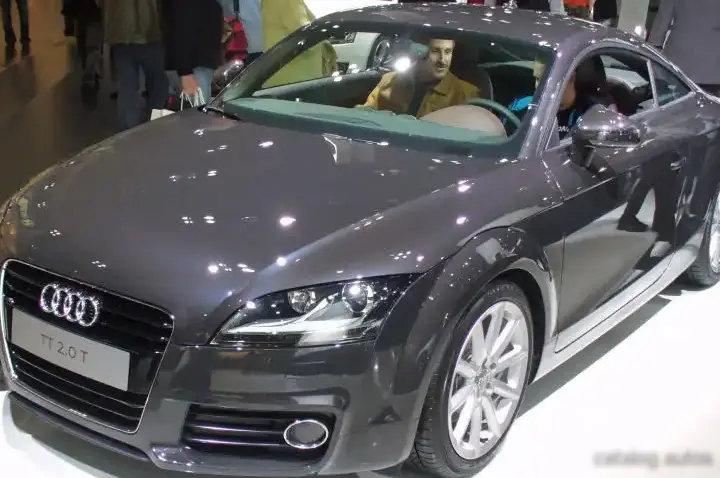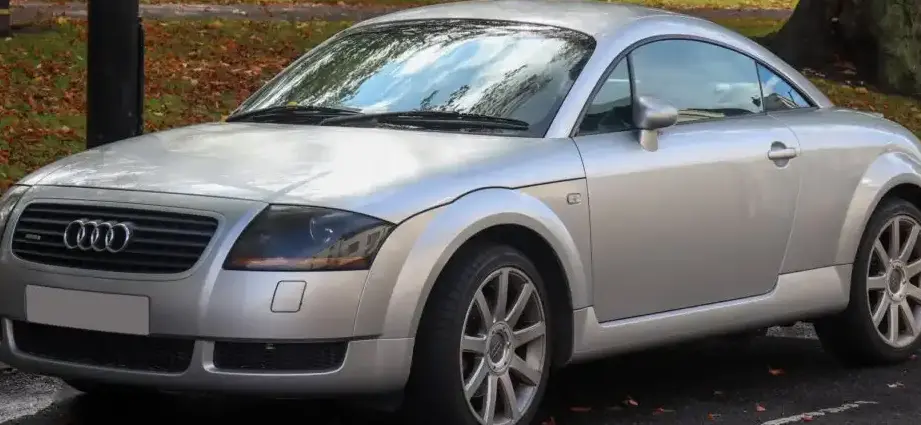
The Audi TT Coupe (8N) 1.8T, producing 180 horsepower, represented a pivotal entry point into the first generation of Audi’s iconic sports coupe. Introduced in October 1998 and remaining in production through 2000, this variant played a significant role in establishing the TT’s design language and sporty character. Built on the Volkswagen Group’s A4-based 1HX0/A3 platform, the 1.8T offered a compelling blend of performance, style, and relative affordability within the TT lineup. It served as the gateway model, attracting a broader audience than the more expensive and powerful 225 horsepower 1.8T quattro or the later 3.2-liter VR6 versions.
Technical Specifications
| Brand | Audi |
| Model | TT |
| Generation | TT Coupe (8N) |
| Type (Engine) | 1.8 T (180 Hp) |
| Start of production | October, 1998 |
| End of production | 2000 |
| Powertrain Architecture | Internal Combustion engine |
| Body type | Coupe |
| Seats | 4 |
| Doors | 3 |
| Fuel consumption (urban) | 11 l/100 km (21.4 US mpg, 25.7 UK mpg, 9.1 km/l) |
| Fuel consumption (extra urban) | 6.4 l/100 km (36.8 US mpg, 44.1 UK mpg, 15.6 km/l) |
| Fuel consumption (combined) | 8.1 l/100 km (29 US mpg, 34.9 UK mpg, 12.3 km/l) |
| CO2 emissions | 194 g/km |
| Fuel Type | Petrol (Gasoline) |
| Acceleration 0 – 100 km/h | 7.5 sec |
| Acceleration 0 – 62 mph | 7.5 sec |
| Acceleration 0 – 60 mph | 7.1 sec |
| Maximum speed | 228 km/h (141.67 mph) |
| Emission standard | Euro 3 |
| Weight-to-power ratio | 6.9 kg/Hp, 145.2 Hp/tonne |
| Weight-to-torque ratio | 5.3 kg/Nm, 189.5 Nm/tonne |
| Power | 180 Hp @ 5500 rpm |
| Power per litre | 101.1 Hp/l |
| Torque | 235 Nm @ 1950 rpm (173.33 lb.-ft. @ 1950 rpm) |
| Engine layout | Front, Transverse |
| Engine Model/Code | AJQ, APP, ATC, AUQ |
| Engine displacement | 1781 cm3 (108.68 cu. in.) |
| Number of cylinders | 4 |
| Engine configuration | Inline |
| Cylinder Bore | 81 mm (3.19 in.) |
| Piston Stroke | 86.4 mm (3.4 in.) |
| Compression ratio | 9.5:1 |
| Number of valves per cylinder | 5 |
| Fuel injection system | Multi-port manifold injection |
| Engine aspiration | Turbocharger |
| Valvetrain | DOHC |
| Engine oil capacity | 4.5 l (4.76 US qt | 3.96 UK qt) |
| Coolant | 7 l (7.4 US qt | 6.16 UK qt) |
| Kerb Weight | 1240 kg (2733.73 lbs.) |
| Max. weight | 1610 kg (3549.44 lbs.) |
| Max load | 370 kg (815.71 lbs.) |
| Trunk (boot) space – minimum | 270 l (9.53 cu. ft.) |
| Trunk (boot) space – maximum | 540 l (19.07 cu. ft.) |
| Fuel tank capacity | 55 l (14.53 US gal | 12.1 UK gal) |
| Max. roof load | 100 kg (220.46 lbs.) |
| Length | 4041 mm (159.09 in.) |
| Width | 1764 mm (69.45 in.) |
| Height | 1346 mm (52.99 in.) |
| Wheelbase | 2422 mm (95.35 in.) |
| Front track | 1528 mm (60.16 in.) |
| Rear (Back) track | 1513 mm (59.57 in.) |
| Drag coefficient (Cd) | 0.34 |
| Minimum turning circle | 10.5 m (34.45 ft.) |
| Drivetrain Architecture | The Internal combustion engine (ICE) drives the front wheels of the vehicle. |
| Drive wheel | Front wheel drive |
| Number of gears | 5 gears, manual transmission |
| Front suspension | Independent, type McPherson with coil spring and anti-roll bar |
| Rear suspension | Independent multi-link spring suspension with stabilizer |
| Front brakes | Ventilated discs |
| Rear brakes | Disc |
| Assisting systems | ABS (Anti-lock braking system) |
| Steering type | Steering rack and pinion |
| Power steering | Hydraulic Steering |
| Tires size | 205/55 R16 |
| Wheel rims size | 7J x 16 |
Powertrain & Engine Architecture
The heart of the 1.8T 180 hp TT was the Audi-developed 1.8-liter inline-four cylinder engine, specifically utilizing engine codes like AJQ, APP, ATC, and AUQ depending on the production year and market. This engine was a member of the EA827 family, known for its robust construction and tuning potential. A key feature was its single turbocharger with an intercooler, providing forced induction to boost power output. Fuel delivery was managed by a multi-port fuel injection system, ensuring precise fuel atomization. The engine employed a double overhead camshaft (DOHC) valvetrain with five valves per cylinder (three intake, two exhaust), optimizing airflow for improved performance. The 180 hp version featured a slightly smaller turbocharger and revised engine management software compared to the 225 hp variant, prioritizing a broader, more accessible powerband. The standard transmission was a 5-speed manual, but a 4-speed automatic transmission was also offered, though less common and often criticized for its slower shift times.
Driving Characteristics
The 1.8T 180 hp TT offered a respectable driving experience, though noticeably different from its more powerful siblings. Acceleration from 0-60 mph took around 7.1 to 7.5 seconds, making it competitive with other sports coupes of the era. The turbocharger provided a noticeable surge of power in the mid-range, offering good overtaking capability. However, the engine lacked the outright punch of the 225 hp version, and the automatic transmission, when equipped, further dulled the responsiveness. The front-wheel-drive configuration, while contributing to lighter weight, could exhibit torque steer under hard acceleration. The chassis, however, was well-balanced, providing a stable and predictable handling experience. The steering was precise, and the suspension offered a good compromise between comfort and control.
Equipment & Trim Levels
The 1.8T 180 hp TT typically came with a fairly comprehensive standard equipment list. This included power windows, power locks, air conditioning, and a basic audio system. Interior upholstery was typically cloth, though leather options were available. Dashboard trim was often finished in a metallic or wood-grain effect. Optional extras included a sunroof, upgraded audio systems, heated seats, and xenon headlights. The TT’s interior design was a standout feature, characterized by its minimalist aesthetic and high-quality materials. The instrument cluster featured a distinctive aluminum finish and easy-to-read gauges.
Chassis & Braking
The TT’s chassis featured an independent McPherson strut suspension in the front and an independent multi-link suspension in the rear. This setup provided a comfortable ride while maintaining good handling characteristics. Stabilizer bars were fitted to both axles to reduce body roll during cornering. Braking duties were handled by ventilated discs at the front and solid discs at the rear. Anti-lock braking system (ABS) was standard. The suspension tuning was geared towards a balance between sporty handling and everyday usability, making the 1.8T a comfortable daily driver.
Market Reception & Comparison
The 1.8T 180 hp TT was generally well-received by automotive critics. It was praised for its striking design, engaging handling, and relatively affordable price point. However, some critics noted that the engine lacked the outright performance of its more powerful counterparts. Compared to the 225 hp 1.8T quattro, the 180 hp version offered less acceleration and a less engaging driving experience, but it was also more fuel-efficient and less expensive to insure. The 1.8T automatic was often criticized for its sluggish shifting and reduced fuel economy compared to the manual transmission.
Legacy
The Audi TT Coupe (8N) 1.8T 180 hp remains a popular choice among enthusiasts today. The engine, while not the most powerful in the TT lineup, is known for its reliability and durability. Properly maintained examples can provide years of enjoyable driving. The 1.8T engine is also relatively easy to modify, making it a popular platform for tuners. The TT’s iconic design has ensured its continued desirability in the used car market, and well-preserved examples are often sought after by collectors. The 1.8T 180 hp variant represents a sweet spot in the TT lineup, offering a compelling blend of style, performance, and affordability.