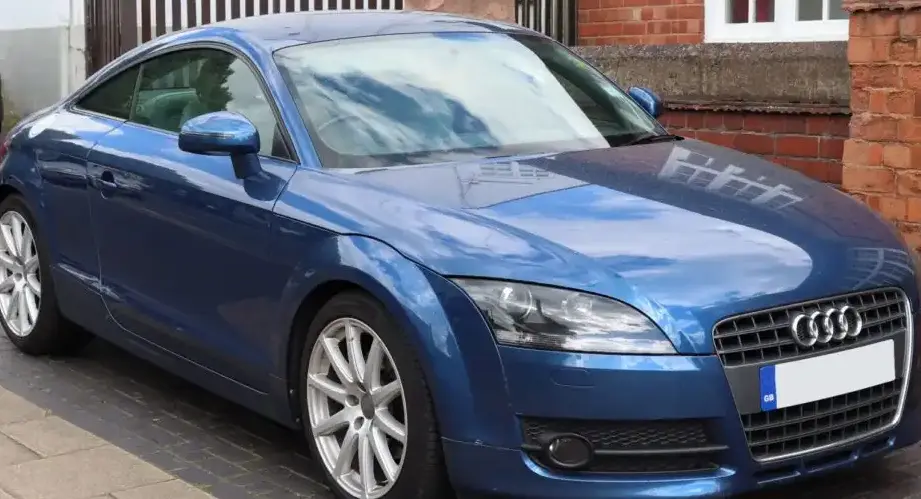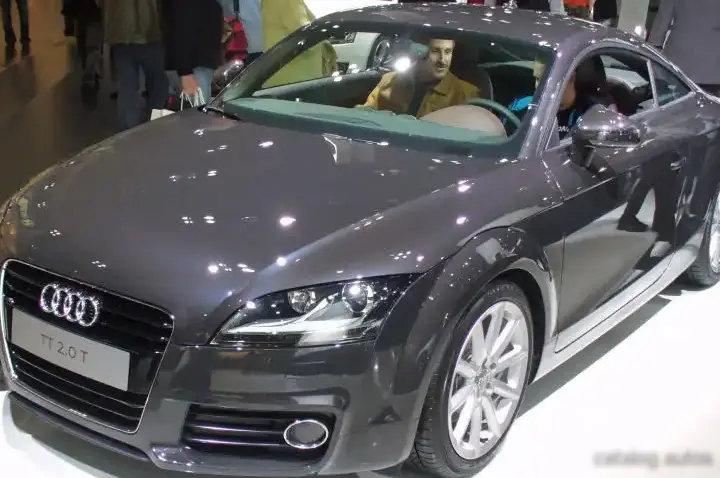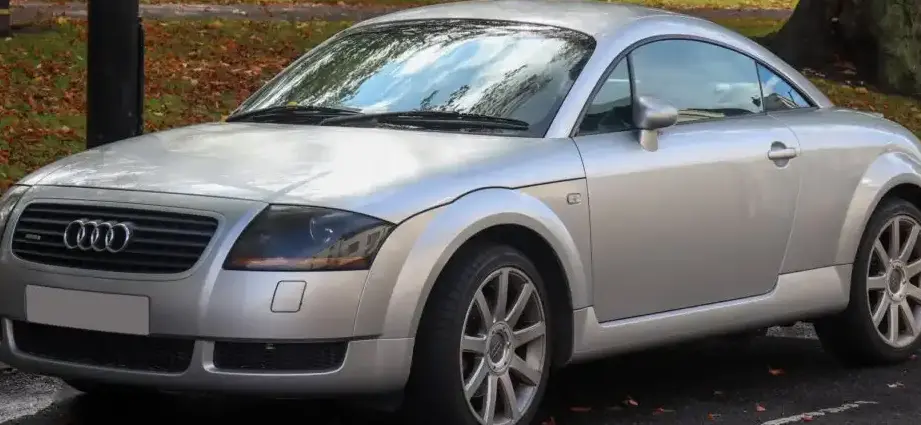
The Audi TT Coupe (8N) 1.8T quattro, produced from October 1998 to 2000, marked a significant departure for Audi, showcasing a bold design language and a focus on sporty handling. This variant occupied a mid-range position within the first-generation (8N) TT lineup, bridging the gap between the entry-level 1.8T front-wheel-drive model and the higher-performance 225 hp version. It appealed to buyers desiring a stylish coupe with the added security and enhanced grip of Audi’s renowned quattro all-wheel-drive system. The 8N platform, shared with other Volkswagen Group vehicles like the Volkswagen Golf Mk4 and Audi A3, provided a robust foundation for the TT’s distinctive aesthetics and dynamic capabilities.
Technical Specifications
| Brand | Audi |
| Model | TT |
| Generation | TT Coupe (8N) |
| Type (Engine) | 1.8 T quattro |
| Start of production | October, 1998 |
| End of production | 2000 |
| Powertrain Architecture | Internal Combustion engine |
| Body type | Coupe |
| Seats | 4 |
| Doors | 3 |
| Fuel consumption (economy) – urban | 12.3 l/100 km (19.1 US mpg, 23 UK mpg, 8.1 km/l) |
| Fuel consumption (economy) – extra urban | 7.3 l/100 km (32.2 US mpg, 38.7 UK mpg, 13.7 km/l) |
| Fuel consumption (economy) – combined | 9.2 l/100 km (25.6 US mpg, 30.7 UK mpg, 10.9 km/l) |
| CO2 emissions | 221 g/km |
| Fuel Type | Petrol (Gasoline) |
| Acceleration 0 – 100 km/h | 6.4 sec |
| Acceleration 0 – 62 mph | 6.4 sec |
| Acceleration 0 – 60 mph | 6.1 sec |
| Maximum speed | 243 km/h (150.99 mph) |
| Emission standard | Euro 3 |
| Weight-to-power ratio | 6.2 kg/Hp, 161.3 Hp/tonne |
| Weight-to-torque ratio | 5 kg/Nm, 200.7 Nm/tonne |
| Power | 225 Hp @ 5900 rpm |
| Power per litre | 126.3 Hp/l |
| Torque | 280 Nm @ 2200 rpm (206.52 lb.-ft. @ 2200 rpm) |
| Engine layout | Front, Transverse |
| Engine Model/Code | APX, BAM |
| Engine displacement | 1781 cm3 (108.68 cu. in.) |
| Number of cylinders | 4 |
| Engine configuration | Inline |
| Cylinder Bore | 81 mm (3.19 in.) |
| Piston Stroke | 86.4 mm (3.4 in.) |
| Compression ratio | 8.9:1 |
| Number of valves per cylinder | 5 |
| Fuel injection system | Multi-port manifold injection |
| Engine aspiration | Turbocharger |
| Valvetrain | DOHC |
| Engine oil capacity | 4.5 l (4.76 US qt | 3.96 UK qt) |
| Coolant | 5 l (5.28 US qt | 4.4 UK qt) |
| Kerb Weight | 1395 kg (3075.45 lbs.) |
| Max. weight | 1765 kg (3891.16 lbs.) |
| Max load | 370 kg (815.71 lbs.) |
| Trunk (boot) space – minimum | 220 l (7.77 cu. ft.) |
| Trunk (boot) space – maximum | 490 l (17.3 cu. ft.) |
| Fuel tank capacity | 62 l (16.38 US gal | 13.64 UK gal) |
| Max. roof load | 75 kg (165.35 lbs.) |
| Length | 4041 mm (159.09 in.) |
| Width | 1764 mm (69.45 in.) |
| Height | 1345 mm (52.95 in.) |
| Wheelbase | 2429 mm (95.63 in.) |
| Front track | 1528 mm (60.16 in.) |
| Rear (Back) track | 1505 mm (59.25 in.) |
| Drag coefficient (Cd) | 0.35 |
| Minimum turning circle | 10.5 m (34.45 ft.) |
| Drive wheel | All wheel drive (4×4) |
| Number of gears and type of gearbox | 6 gears, manual transmission |
| Front suspension | Independent, type McPherson with coil spring and anti-roll bar |
| Rear suspension | Independent multi-link spring suspension with stabilizer |
| Front brakes | Ventilated discs |
| Rear brakes | Ventilated discs |
| Assisting systems | ABS (Anti-lock braking system) |
| Steering type | Steering rack and pinion |
| Power steering | Hydraulic Steering |
| Tires size | 225/45 R17 |
| Wheel rims size | 7.5J X 17 |
Powertrain & Engine Architecture
The 1.8T quattro’s engine is a 1781cc, inline-four cylinder unit, designated with engine codes APX and BAM. A single turbocharger, coupled with an intercooler, elevates the engine’s output to 225 horsepower and 280 Nm (206.52 lb-ft) of torque. The engine utilizes multi-port fuel injection and a double overhead camshaft (DOHC) valvetrain featuring five valves per cylinder – three intake and two exhaust – contributing to its responsive character. The turbocharger delivers substantial low-end torque, making the car feel quicker than its displacement suggests. A six-speed manual transmission, standard on this model, boasts closely spaced ratios designed to keep the engine operating within its peak power range. The quattro all-wheel-drive system employs a Torsen differential, dynamically distributing power between the front and rear axles based on available traction.
Driving Characteristics
The 1.8T quattro provides a well-rounded driving experience. While not as aggressively quick as the later 225 hp iterations, it offers ample power for spirited driving. Some turbocharger lag is noticeable, particularly at lower engine speeds, but once the turbo spools up, the engine delivers strong acceleration. The six-speed manual transmission allows drivers to maintain optimal control and extract maximum performance. The quattro system provides exceptional grip in various weather conditions, fostering confidence on both dry and wet surfaces. Compared to the front-wheel-drive 1.8T, the quattro version exhibits significantly reduced understeer and improved stability. The gear ratios are effectively matched to the engine’s power delivery, providing robust acceleration in each gear.
Equipment & Trim Levels
The 1.8T quattro typically included a comprehensive array of standard features. The interior featured sport seats upholstered in cloth or optional leather, a leather-wrapped steering wheel, and aluminum trim accents. Standard equipment also encompassed automatic climate control, power windows and locks, and an upgraded audio system. Optional extras included xenon headlights, a sunroof, and a premium Bose sound system. The dashboard layout is characteristic of Audi, presenting a clean and functional design. The TT’s interior, though compact, is well-constructed and offers a driver-centric environment.
Chassis & Braking
The 8N TT’s chassis incorporates independent suspension on all four wheels. The front utilizes a McPherson strut setup with coil springs and an anti-roll bar, while the rear employs a more sophisticated multi-link suspension, also with a stabilizer bar. This configuration strikes a balance between ride comfort and handling precision. Braking is provided by ventilated disc brakes on all four wheels, delivering ample stopping power. The anti-lock braking system (ABS) is standard, enhancing safety and control during emergency braking maneuvers. The quattro system further enhances stability under braking, particularly on slippery surfaces.
Market Reception & Comparison
The Audi TT Coupe (8N) 1.8T quattro received generally positive reviews from automotive critics. It was lauded for its striking design, engaging driving dynamics, and all-weather capability. Compared to the base 1.8T, the quattro model was considered a substantial upgrade, offering superior handling and traction. Fuel economy was reasonable for a performance coupe, averaging around 25.6 US mpg in combined driving. Reliability was generally good, although some owners reported issues with the turbocharger and electronic systems. The 1.8T quattro presented a compelling alternative to competitors like the BMW Z3 and Porsche Boxster, offering a more affordable and practical option.
Legacy
The Audi TT (8N) 1.8T quattro has evolved into a desirable modern classic. The 1.8T engine, while not the most powerful in the TT range, is recognized for its durability and potential for tuning. The quattro all-wheel-drive system remains a valuable asset, especially in regions experiencing inclement weather. Well-maintained examples of the 1.8T quattro are retaining their value, and the car continues to appeal to enthusiasts seeking a stylish and engaging driving experience. The 8N TT established Audi as a leader in the compact coupe segment and laid the groundwork for subsequent generations of the TT.