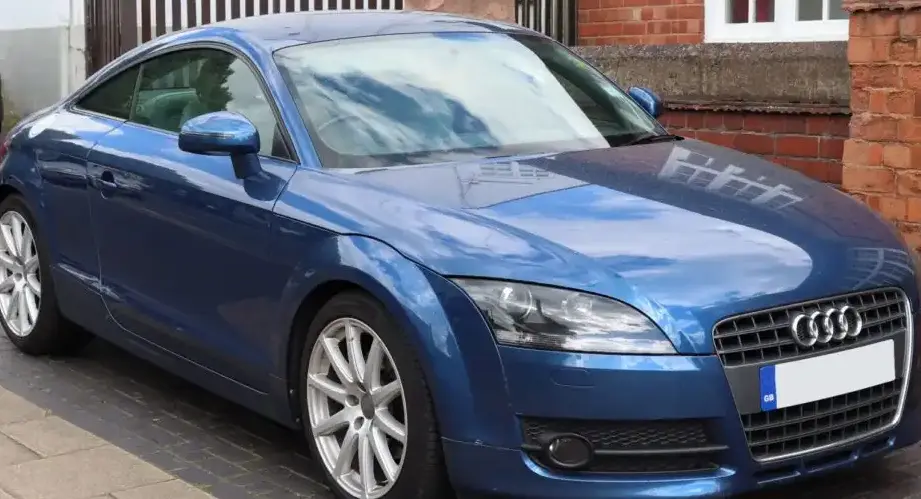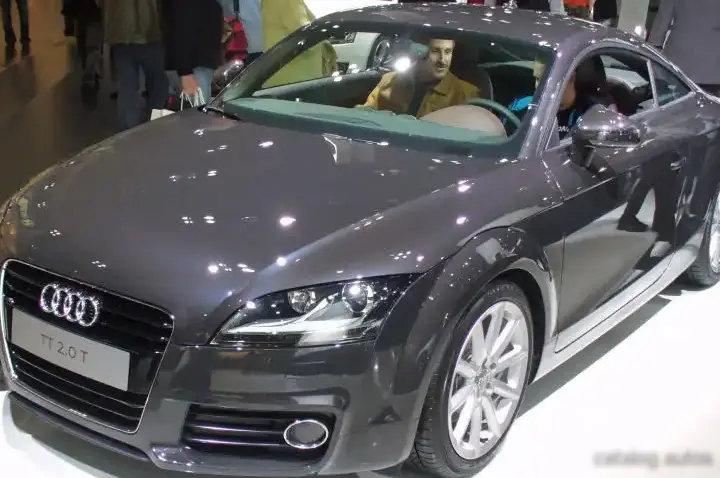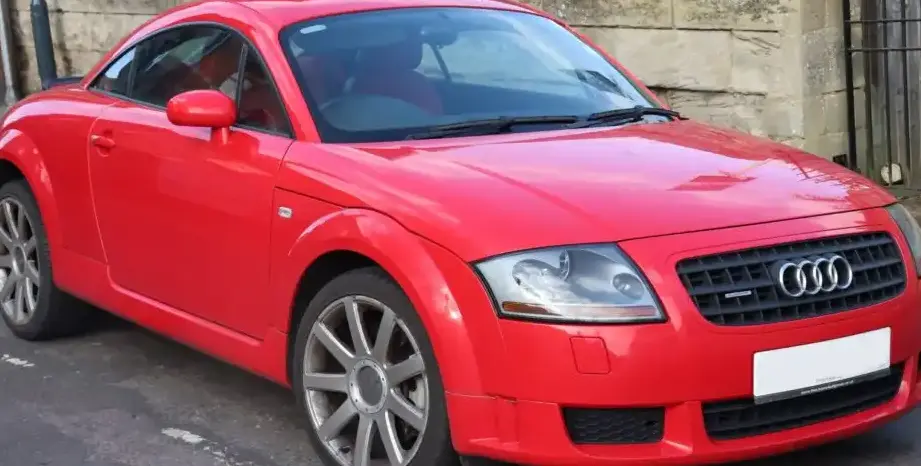
The Audi TT Coupe (8N facelift), specifically the 1.8T variant producing 163 horsepower, represents a key iteration of Audi’s groundbreaking sports coupe. Introduced in late 2000 as part of the 8N facelift, production continued through 2006. This model occupied a middle ground within the 8N TT lineup, offering a balance between performance and affordability, appealing to a broader customer base than the more potent 225 horsepower 1.8T quattro or the range-topping 3.2-liter V6 models. It was positioned as a stylish and accessible entry point into the TT experience, particularly in markets where all-wheel drive wasn’t a necessity.
Technical Specifications
| Brand | Audi |
| Model | TT |
| Generation | TT Coupe (8N, facelift 2000) |
| Type (Engine) | 1.8 T (163 Hp) |
| Start of production | September, 2005 |
| End of production | June, 2006 |
| Powertrain Architecture | Internal Combustion engine |
| Body type | Coupe |
| Seats | 4 |
| Doors | 3 |
| Fuel consumption (urban) | 11.1 l/100 km (21.2 US mpg) |
| Fuel consumption (extra urban) | 6.3 l/100 km (37.3 US mpg) |
| Fuel consumption (combined) | 8.1 l/100 km (29 US mpg) |
| CO2 emissions | 194 g/km |
| Fuel Type | Petrol (Gasoline) |
| Acceleration 0 – 100 km/h | 8 sec |
| Acceleration 0 – 62 mph | 8 sec |
| Acceleration 0 – 60 mph | 7.6 sec |
| Maximum speed | 224 km/h (139.19 mph) |
| Emission standard | Euro 4 |
| Weight-to-power ratio | 7.9 kg/Hp |
| Weight-to-torque ratio | 5.7 kg/Nm |
| Power | 163 Hp @ 5700 rpm |
| Torque | 225 Nm @ 1950 rpm (165.95 lb.-ft. @ 1950 rpm) |
| Engine layout | Front, Transverse |
| Engine Model/Code | BVP |
| Engine displacement | 1781 cm3 (108.68 cu. in.) |
| Number of cylinders | 4 |
| Engine configuration | Inline |
| Cylinder Bore | 81 mm (3.19 in.) |
| Piston Stroke | 86.4 mm (3.4 in.) |
| Compression ratio | 9.5:1 |
| Number of valves per cylinder | 5 |
| Fuel injection system | Multi-port manifold injection |
| Engine aspiration | Turbocharger, Intercooler |
| Valvetrain | DOHC |
| Engine oil capacity | 4.6 l (4.86 US qt | 4.05 UK qt) |
| Coolant | 5 l (5.28 US qt | 4.4 UK qt) |
| Kerb Weight | 1280 kg (2821.92 lbs.) |
| Max. weight | 1665 kg (3670.7 lbs.) |
| Max load | 385 kg (848.78 lbs.) |
| Trunk (boot) space – minimum | 270 l (9.53 cu. ft.) |
| Trunk (boot) space – maximum | 540 l (19.07 cu. ft.) |
| Fuel tank capacity | 55 l (14.53 US gal | 12.1 UK gal) |
| Max. roof load | 75 kg (165.35 lbs.) |
| Length | 4041 mm (159.09 in.) |
| Width | 1764 mm (69.45 in.) |
| Height | 1346 mm (52.99 in.) |
| Wheelbase | 2422 mm (95.35 in.) |
| Front track | 1528 mm (60.16 in.) |
| Rear (Back) track | 1513 mm (59.57 in.) |
| Drag coefficient (Cd) | 0.32 |
| Minimum turning circle | 10.6 m (34.78 ft.) |
| Drivetrain Architecture | Front wheel drive |
| Number of gears | 5 |
| Gearbox type | Manual transmission |
| Front suspension | Independent, type McPherson with coil spring and anti-roll bar |
| Rear suspension | Independent torsion suspension |
| Front brakes | Ventilated discs |
| Rear brakes | Disc |
| Assisting systems | ABS (Anti-lock braking system) |
| Steering type | Steering rack and pinion |
| Tires size | 205/55 R16 |
| Wheel rims size | 7J x 16 |
INTRODUCTION
The Audi TT Coupe (8N facelift) 1.8T 163 hp model, produced from 2005 to 2006, built upon the success of the original 8N TT launched in 1998. The facelift brought subtle but significant cosmetic changes, including revised headlights and taillights, along with minor interior refinements. This variant was primarily sold in Europe and other markets where front-wheel drive was a common preference. It offered a compelling package for buyers seeking a stylish, sporty coupe without the higher price tag of the quattro or V6 models. The 8N TT, as a whole, was a pivotal car for Audi, demonstrating a willingness to embrace a more design-focused and emotionally driven approach to automotive engineering.
Powertrain & Engine Architecture
At the heart of this TT variant lies the 1.8-liter turbocharged four-cylinder engine, designated the BVP engine code. This engine is a member of the EA888 family, known for its robust construction and tuning potential. The BVP utilizes a single overhead camshaft (SOHC) design for the intake valves and a dual overhead camshaft (DOHC) for the exhaust valves, a configuration that optimizes gas flow. Fuel delivery is managed by a multi-port fuel injection system, ensuring precise fuel metering. The turbocharger, coupled with an intercooler, provides a significant boost in power output. The 163 hp version differs from the earlier 180 hp version through revised engine mapping and a slightly smaller turbocharger, prioritizing fuel efficiency and smoother power delivery. The engine is transversely mounted, driving the front wheels through a five-speed manual transmission. This transmission is known for its relatively short throws and precise engagement, contributing to a more engaging driving experience.
Driving Characteristics
The 1.8T 163 hp TT offers a respectable level of performance, achieving 0-60 mph in approximately 7.6 seconds and a top speed of 139 mph. While not as exhilarating as the higher-powered variants, the 163 hp engine provides ample torque for everyday driving and spirited acceleration. The turbocharger delivers a noticeable surge of power between 1950 and 5700 rpm, making overtaking maneuvers relatively effortless. The front-wheel drive configuration, while offering good traction in most conditions, can exhibit torque steer under hard acceleration. The five-speed manual transmission is well-matched to the engine’s characteristics, providing a good balance between performance and fuel economy. Compared to the 180 hp version, the 163 hp model feels slightly less urgent in its acceleration, but offers a more refined and predictable driving experience.
Equipment & Trim Levels
The 1.8T 163 hp TT typically came equipped with a generous array of standard features. These included air conditioning, power windows and locks, a CD stereo system, and alloy wheels. Interior upholstery was typically cloth, although leather options were available. The dashboard featured a minimalist design, characteristic of the 8N TT, with a focus on driver ergonomics. Optional extras included a sunroof, heated seats, and a premium sound system. The trim level was generally considered a mid-range offering, bridging the gap between the base models and the more luxurious versions.
Chassis & Braking
The 8N TT utilizes a McPherson strut front suspension and a torsion beam rear suspension. This setup provides a good balance between ride comfort and handling precision. The front suspension incorporates a stabilizer bar to reduce body roll during cornering. Braking duties are handled by ventilated discs at the front and solid discs at the rear, equipped with ABS (Anti-lock Braking System) as standard. The braking system provides adequate stopping power for everyday driving, although the higher-powered models benefited from larger brakes.
Market Reception & Comparison
The 1.8T 163 hp TT was generally well-received by automotive critics. It was praised for its stylish design, engaging driving dynamics, and relatively affordable price point. Fuel economy was considered to be good for a sports coupe, averaging around 29 US mpg in combined driving. Compared to the 180 hp version, the 163 hp model offered slightly better fuel economy and a smoother power delivery, but at the expense of outright performance. The quattro models, while more expensive, provided superior traction and handling, particularly in inclement weather. The V6 models offered significantly more power and a more luxurious interior, but came with a substantial price premium.
Legacy
The Audi TT 8N, including the 1.8T 163 hp variant, has become a modern classic. The BVP engine, while not without its quirks, is generally considered to be reliable when properly maintained. Common issues include turbocharger failure and oil leaks. Today, these cars are sought after by enthusiasts for their distinctive styling and engaging driving experience. The 1.8T 163 hp model represents a sweet spot in the 8N TT lineup, offering a good balance between performance, affordability, and reliability, making it a popular choice in the used car market.