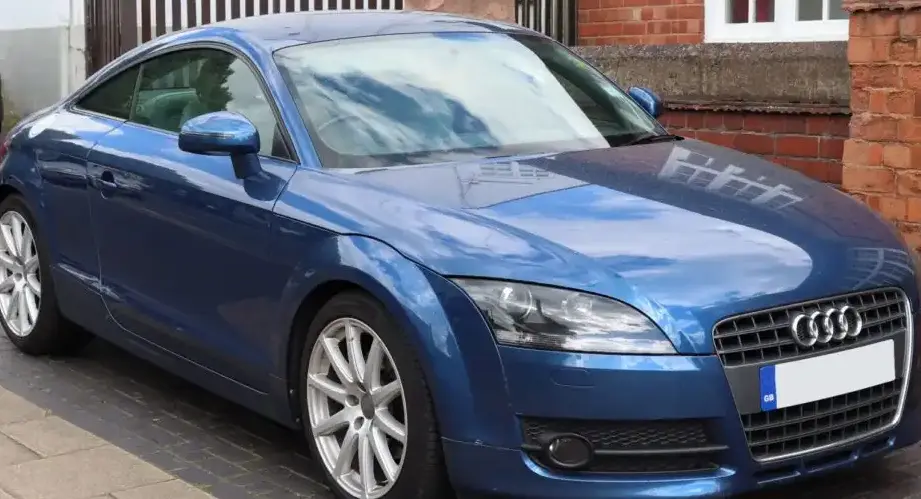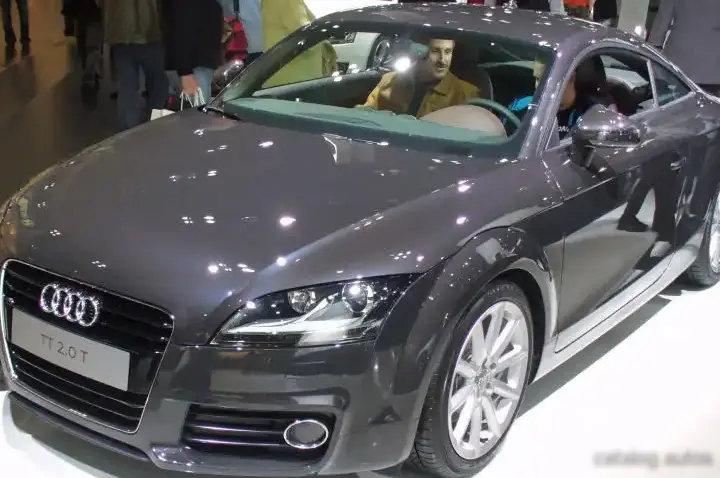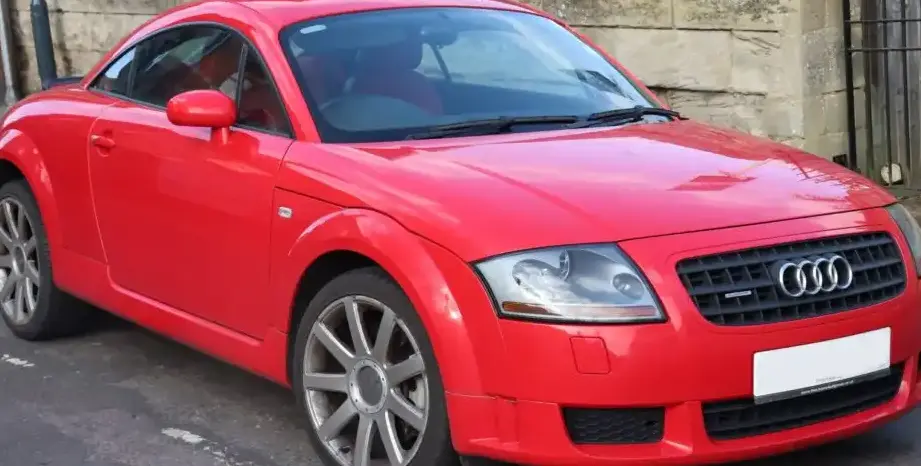
The Audi TT Coupe (8N facelift), specifically the 1.8T 190 hp variant equipped with the Tiptronic automatic transmission, represents a compelling blend of sporty styling and accessible performance within the first-generation TT lineup. Produced from 2005 to 2006, this model occupied a middle ground in the 8N range, offering a step up in power and refinement from the base 1.8T non-turbo models, while remaining more attainable than the flagship 3.2-liter V6. It was a key offering in Audi’s attempt to broaden the TT’s appeal beyond the enthusiast market, providing a comfortable and stylish entry point into the Audi sports coupe world.
Technical Specifications
| Brand | Audi |
| Model | TT |
| Generation | TT Coupe (8N, facelift 2000) |
| Type (Engine) | 1.8 T (190 Hp) Tiptronic |
| Start of production | September, 2005 |
| End of production | June, 2006 |
| Powertrain Architecture | Internal Combustion engine |
| Body type | Coupe |
| Seats | 4 |
| Doors | 3 |
| Fuel consumption (urban) | 13.2 l/100 km (17.8 US mpg, 21.4 UK mpg, 7.6 km/l) |
| Fuel consumption (extra urban) | 6.8 l/100 km (34.6 US mpg, 41.5 UK mpg, 14.7 km/l) |
| Fuel consumption (combined) | 9.1 l/100 km (25.8 US mpg, 31 UK mpg, 11 km/l) |
| CO2 emissions | 218 g/km |
| Fuel Type | Petrol (Gasoline) |
| Acceleration 0 – 100 km/h | 7.7 sec |
| Acceleration 0 – 62 mph | 7.7 sec |
| Acceleration 0 – 60 mph | 7.3 sec |
| Maximum speed | 232 km/h (144.16 mph) |
| Emission standard | Euro 4 |
| Weight-to-power ratio | 6.9 kg/Hp, 143.9 Hp/tonne |
| Weight-to-torque ratio | 5.5 kg/Nm, 181.8 Nm/tonne |
| Power | 190 Hp @ 5700 rpm |
| Power per litre | 106.7 Hp/l |
| Torque | 240 Nm @ 1980-5400 rpm (177.01 lb.-ft. @ 1980-5400 rpm) |
| Engine layout | Front, Transverse |
| Engine Model/Code | BVR |
| Engine displacement | 1781 cm3 (108.68 cu. in.) |
| Number of cylinders | 4 |
| Engine configuration | Inline |
| Cylinder Bore | 81 mm (3.19 in.) |
| Piston Stroke | 86.4 mm (3.4 in.) |
| Compression ratio | 9.5:1 |
| Number of valves per cylinder | 5 |
| Fuel injection system | Multi-port manifold injection |
| Engine aspiration | Turbocharger, Intercooler |
| Valvetrain | DOHC |
| Engine oil capacity | 4.6 l (4.86 US qt | 4.05 UK qt) |
| Coolant | 7 l (7.4 US qt | 6.16 UK qt) |
| Kerb Weight | 1320 kg (2910.1 lbs.) |
| Max. weight | 1705 kg (3758.88 lbs.) |
| Max load | 385 kg (848.78 lbs.) |
| Trunk (boot) space – minimum | 270 l (9.53 cu. ft.) |
| Trunk (boot) space – maximum | 540 l (19.07 cu. ft.) |
| Fuel tank capacity | 55 l (14.53 US gal | 12.1 UK gal) |
| Length | 4041 mm (159.09 in.) |
| Width | 1764 mm (69.45 in.) |
| Height | 1346 mm (52.99 in.) |
| Wheelbase | 2422 mm (95.35 in.) |
| Front track | 1528 mm (60.16 in.) |
| Rear (Back) track | 1513 mm (59.57 in.) |
| Drag coefficient (Cd) | 0.32 |
| Minimum turning circle | 10.6 m (34.78 ft.) |
| Drivetrain Architecture | The Internal combustion engine (ICE) drives the front wheels of the vehicle. |
| Drive wheel | Front wheel drive |
| Number of gears and type of gearbox | 6 gears, automatic transmission Tiptronic |
| Front suspension | Independent, type McPherson with coil spring and anti-roll bar |
| Rear suspension | independent torsion suspension |
| Front brakes | Ventilated discs |
| Rear brakes | Disc |
| Assisting systems | ABS (Anti-lock braking system) |
| Steering type | Steering rack and pinion |
| Tires size | 205/55 R16 |
| Wheel rims size | 7J x 16 |
INTRODUCTION
The Audi TT Coupe (8N) facelift, launched in 2000, brought subtle but significant revisions to the original TT design. The 1.8T Tiptronic variant, produced from 2005-2006, was a key part of this updated range. It utilized the 8N platform (shared with the Volkswagen Golf Mk4, Bora/Jetta, New Beetle, and Skoda Octavia) and aimed to deliver a more refined and accessible sports coupe experience. The facelift included revised headlights, grille, and interior trim, enhancing the car’s overall aesthetic and perceived quality. This particular configuration was positioned as a mid-range option, appealing to buyers who desired a balance between performance, comfort, and price.
Powertrain & Engine Architecture
At the heart of the 1.8T Tiptronic lies the Audi-developed 1.8-liter turbocharged inline-four cylinder engine, specifically the BVR engine code. This engine featured multi-port fuel injection and a sophisticated turbocharging system with an intercooler to manage intake air temperature. The engine’s DOHC (Dual Overhead Camshaft) valvetrain, with five valves per cylinder, contributed to its efficient breathing and power output. The Tiptronic transmission is a 6-speed automatic with a manual shift mode, allowing drivers some control over gear selection. This transmission utilizes torque converter technology for smooth shifts, but can feel less responsive than a traditional manual gearbox. The engine produces 190 horsepower at 5700 rpm and 240 Nm (177 lb-ft) of torque between 1980 and 5400 rpm.
Driving Characteristics
The 1.8T Tiptronic offered a comfortable and capable driving experience. While not as overtly sporty as the manual transmission or 3.2 V6 models, it provided adequate acceleration for everyday driving and highway cruising. The Tiptronic transmission, while smooth, did introduce some power loss compared to the manual, resulting in a 0-60 mph time of around 7.3-7.7 seconds. The gear ratios were tuned for a balance of fuel efficiency and responsiveness. The turbocharger provided a noticeable boost in power, but turbo lag was present, particularly at lower engine speeds. The front-wheel-drive configuration offered good traction in most conditions, but could exhibit some torque steer under hard acceleration.
Equipment & Trim Levels
The 1.8T Tiptronic typically came equipped with a respectable level of standard features. These included air conditioning, power windows and locks, a multi-function steering wheel, and a basic audio system. Interior upholstery was typically cloth, although leather options were available. Optional extras included a premium audio system, sunroof, heated seats, and upgraded alloy wheels. The facelifted 8N TT also benefited from improved interior materials and a more modern dashboard design compared to the earlier models.
Chassis & Braking
The 8N TT utilized a McPherson strut front suspension and a torsion beam rear suspension. This setup provided a good balance of ride comfort and handling. The 1.8T Tiptronic models typically featured ventilated disc brakes at the front and solid disc brakes at the rear. ABS (Anti-lock Braking System) was standard. The suspension was tuned to be slightly softer than the more performance-oriented V6 models, prioritizing ride comfort over ultimate handling precision. Stabilizer bars were fitted front and rear to reduce body roll during cornering.
Market Reception & Comparison
The 1.8T Tiptronic was generally well-received by automotive critics as a stylish and accessible entry point into the TT range. It was praised for its comfortable ride, refined interior, and attractive design. However, some critics noted that the Tiptronic transmission lacked the engagement of a manual gearbox and that the engine, while capable, wasn’t as thrilling as the V6. Compared to the 1.8T manual, the Tiptronic offered convenience but sacrificed some performance and fuel economy. The V6 offered significantly more power and a more sporting driving experience, but at a higher price point.
Legacy
The 1.8T engine, in various iterations, proved to be remarkably reliable. The Tiptronic transmission, while not without its potential issues (such as occasional solenoid failures), generally held up well with proper maintenance. Today, the 8N TT 1.8T Tiptronic remains a popular choice in the used car market, offering a stylish and affordable way to experience Audi’s iconic coupe design. Its relatively simple mechanicals and readily available parts make it a relatively easy car to maintain, although preventative maintenance, particularly regarding the turbocharger and cooling system, is crucial to ensure long-term reliability. The 8N TT, in all its forms, helped establish Audi as a premium sports coupe brand and paved the way for the subsequent generations of the TT.