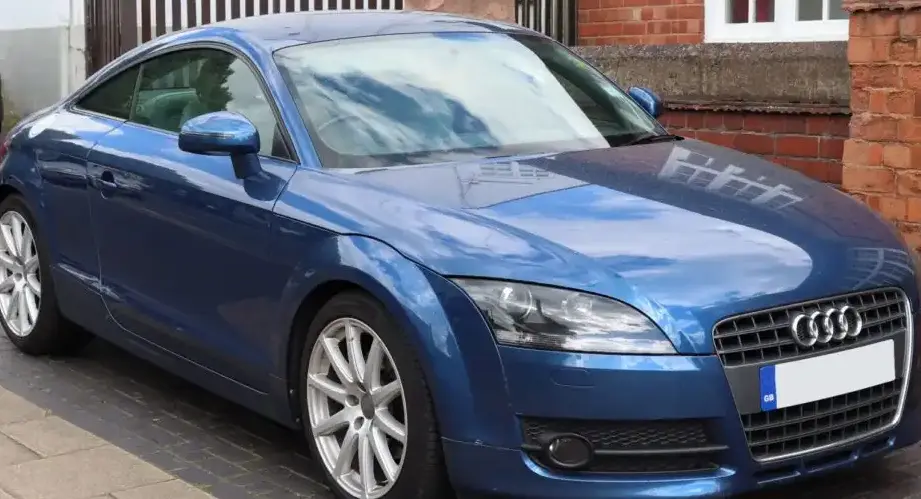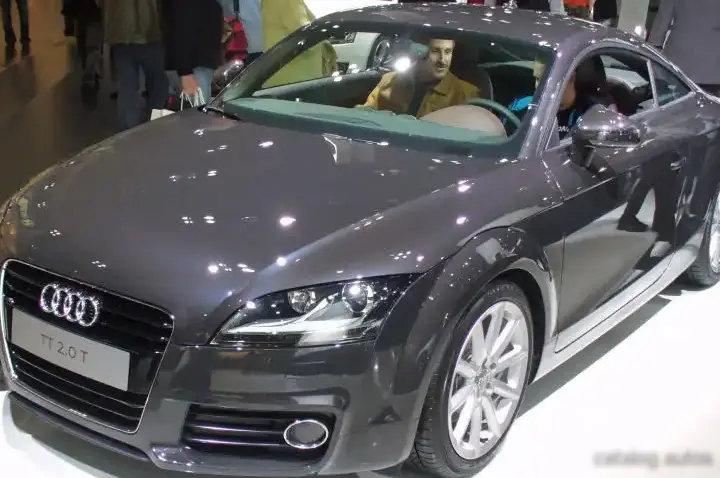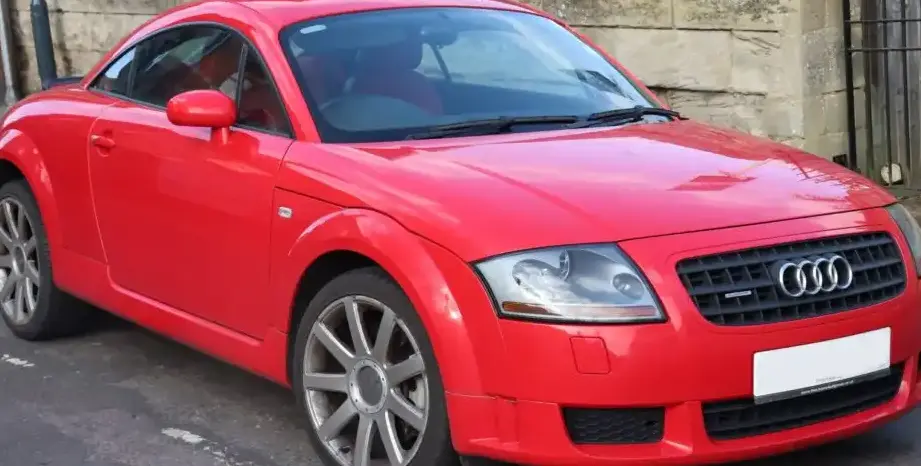
The Audi TT Coupe (8N facelift), specifically the 3.2i V6 24V quattro Automatic variant, represents the pinnacle of performance for the first-generation TT. Introduced in July 2003 and continuing through June 2006, this model combined the iconic TT design with a potent, naturally aspirated V6 engine and Audi’s renowned quattro all-wheel-drive system. It occupied the top-tier position in the 8N TT lineup, offering a more refined and powerful alternative to the 1.8-liter turbocharged four-cylinder models. This variant was primarily marketed in Europe and North America to enthusiasts seeking a sporty, yet sophisticated, coupe experience.
Technical Specifications
| Brand | Audi |
| Model | TT |
| Generation | TT Coupe (8N, facelift 2000) |
| Type (Engine) | 3.2i V6 24V (250 Hp) quattro Automatic |
| Start of production | July, 2003 |
| End of production | June, 2006 |
| Powertrain Architecture | Internal Combustion engine |
| Body type | Coupe |
| Seats | 4 |
| Doors | 3 |
| Fuel consumption (urban) | 14.9 l/100 km (15.8 US mpg / 19 UK mpg) |
| Fuel consumption (extra urban) | 8.1 l/100 km (29 US mpg / 34.9 UK mpg) |
| Fuel consumption (combined) | 10.6 l/100 km (22.2 US mpg / 26.6 UK mpg) |
| Fuel Type | Petrol (Gasoline) |
| Acceleration 0 – 100 km/h | 6.4 sec |
| Acceleration 0 – 62 mph | 6.4 sec |
| Acceleration 0 – 60 mph | 6.1 sec |
| Maximum speed | 235 km/h (146.02 mph) |
| Weight-to-power ratio | 6.1 kg/Hp |
| Weight-to-torque ratio | 4.8 kg/Nm |
| Power | 250 Hp |
| Power per litre | 78.4 Hp/l |
| Torque | 320 Nm @ 2800-3200 rpm (236.02 lb.-ft. @ 2800-3200 rpm) |
| Engine layout | Front, Transverse |
| Engine Model/Code | BHE, BPF |
| Engine displacement | 3189 cm3 (194.6 cu. in.) |
| Number of cylinders | 6 |
| Engine configuration | V-engine |
| Cylinder Bore | 84 mm (3.31 in.) |
| Piston Stroke | 95.9 mm (3.78 in.) |
| Compression ratio | 11.3:1 |
| Number of valves per cylinder | 4 |
| Fuel injection system | Multi-port manifold injection |
| Engine aspiration | Naturally aspirated engine |
| Valvetrain | DOHC |
| Engine oil capacity | 5.5 l (5.81 US qt | 4.84 UK qt) |
| Coolant | 7 l (7.4 US qt | 6.16 UK qt) |
| Kerb Weight | 1520 kg (3351.03 lbs.) |
| Max. weight | 1905 kg (4199.81 lbs.) |
| Max load | 385 kg (848.78 lbs.) |
| Trunk (boot) space – minimum | 220 l (7.77 cu. ft.) |
| Trunk (boot) space – maximum | 490 l (17.3 cu. ft.) |
| Fuel tank capacity | 62 l (16.38 US gal | 13.64 UK gal) |
| Length | 4041 mm (159.09 in.) |
| Width | 1764 mm (69.45 in.) |
| Height | 1345 mm (52.95 in.) |
| Wheelbase | 2429 mm (95.63 in.) |
| Front track | 1528 mm (60.16 in.) |
| Rear (Back) track | 1505 mm (59.25 in.) |
| Drive wheel | All wheel drive (4×4) |
| Number of gears and type of gearbox | 6 gears, automatic transmission |
| Front suspension | Spring Strut |
| Rear suspension | Coil spring |
| Front brakes | Ventilated discs |
| Rear brakes | Disc |
| Assisting systems | ABS (Anti-lock braking system) |
| Steering type | Steering rack and pinion |
| Power steering | Hydraulic Steering |
| Tires size | 225/45 R17 |
| Wheel rims size | 7.5 x 17 |
Powertrain & Engine Architecture
The heart of the 3.2i quattro automatic is the BHE or BPF engine code, a 3.2-liter naturally aspirated V6. This engine utilizes a 60-degree V-angle, contributing to a smoother power delivery and reduced vibrations. It features multi-port fuel injection and a double overhead camshaft (DOHC) valvetrain with four valves per cylinder. The engine produces 250 horsepower and 236 lb-ft of torque, peaking at 2800-3200 rpm. The engine’s design prioritized smooth, linear power delivery over outright peak performance, making it well-suited to the automatic transmission. Paired with the V6 is a six-speed Tiptronic automatic transmission, offering both fully automatic operation and the ability for the driver to manually select gears. This transmission was specifically tuned to handle the higher torque output of the V6 engine compared to the 1.8T models.
Driving Characteristics
The 3.2i quattro automatic delivers a distinctly different driving experience compared to the 1.8T variants. While the turbocharged four-cylinder offered quicker initial acceleration thanks to its turbo boost, the V6 provides a more consistent and readily available powerband. The automatic transmission, while smooth, does slightly diminish the sense of direct control offered by the manual gearbox. However, the Tiptronic function allows for a degree of driver involvement. The quattro all-wheel-drive system provides excellent traction and stability, particularly in adverse weather conditions. The 0-60 mph time of around 6.1 seconds was respectable for the early 2000s, placing it firmly in the sports coupe category. The gear ratios were optimized for a balance of acceleration and highway cruising, making it a comfortable grand tourer as well as a capable sports car.
Equipment & Trim Levels
The 3.2i quattro automatic typically came well-equipped as the range-topping model. Standard features included leather upholstery, automatic climate control, a premium sound system, and xenon headlights. Optional extras included navigation system, sunroof, and upgraded alloy wheels. Interior trim was generally executed with high-quality materials, reflecting Audi’s commitment to a premium feel. The dashboard layout was consistent with other 8N TT models, featuring a minimalist design focused on the driver.
Chassis & Braking
The 3.2i quattro automatic utilized a fully independent suspension system, with spring struts at the front and a coil spring setup at the rear. The suspension was tuned to provide a balance between sporty handling and ride comfort. Braking duties were handled by ventilated discs at the front and solid discs at the rear, equipped with ABS. The increased weight of the V6 engine and quattro system necessitated a slightly stiffer suspension setup compared to the lighter 1.8T models.
Market Reception & Comparison
The 3.2i quattro automatic was generally well-received by automotive critics. It was praised for its smooth engine, refined ride, and excellent all-weather capability. However, some reviewers noted that the automatic transmission slightly dulled the driving experience compared to the manual version. Fuel economy was a common criticism, as the V6 engine consumed significantly more fuel than the 1.8T. Compared to the 1.8T models, the 3.2i offered a more luxurious and powerful experience, but at a higher price point. The 3.2i also proved to be more reliable than some of the earlier turbocharged models, with fewer reports of turbocharger failures.
Legacy
The Audi TT 3.2i V6 quattro automatic remains a desirable used car today, particularly among enthusiasts who appreciate its unique combination of style, performance, and all-wheel-drive capability. The 3.2-liter V6 engine is known for its durability, although regular maintenance is essential. The Tiptronic transmission, while generally reliable, can be susceptible to wear and tear with high mileage. Overall, the 3.2i quattro automatic represents a high point in the first-generation TT’s evolution, offering a compelling alternative to more common sports coupes of the era.