Technical Specifications
| Brand | Audi |
| Model | TT |
| Generation | TT Coupe (8S) |
| Type (Engine) | 2.0 TDI ultra (184 Hp) |
| Start of production | 2014 |
| End of production | 2018 |
| Powertrain Architecture | Internal Combustion engine |
| Body type | Coupe |
| Seats | 4 |
| Doors | 3 |
| Fuel consumption (urban) | 4.9-5.1 l/100 km (48 – 46.1 US mpg, 57.6 – 55.4 UK mpg, 20.4 – 19.6 km/l) |
| Fuel consumption (extra urban) | 3.7-3.9 l/100 km (63.6 – 60.3 US mpg, 76.3 – 72.4 UK mpg, 27 – 25.6 km/l) |
| Fuel consumption (combined) | 4.2-4.4 l/100 km (56 – 53.5 US mpg, 67.3 – 64.2 UK mpg, 23.8 – 22.7 km/l) |
| CO2 emissions | 110-114 g/km |
| Fuel Type | Diesel |
| Acceleration 0 – 100 km/h | 7.1 sec |
| Acceleration 0 – 62 mph | 7.1 sec |
| Acceleration 0 – 60 mph | 6.7 sec |
| Maximum speed | 241 km/h (149.75 mph) |
| Emission standard | Euro 6 |
| Weight-to-power ratio | 6.9 kg/Hp, 145.5 Hp/tonne |
| Weight-to-torque ratio | 3.3 kg/Nm, 300.4 Nm/tonne |
| Power | 184 Hp @ 3500-4000 rpm |
| Power per litre | 93.5 Hp/l |
| Torque | 380 Nm @ 1750-3250 rpm (280.27 lb.-ft. @ 1750-3250 rpm) |
| Engine layout | Front, Transverse |
| Engine Model/Code | CUNA |
| Engine displacement | 1968 cm3 (120.09 cu. in.) |
| Number of cylinders | 4 |
| Engine configuration | Inline |
| Cylinder Bore | 81 mm (3.19 in.) |
| Piston Stroke | 95.5 mm (3.76 in.) |
| Compression ratio | 15.8:1 |
| Number of valves per cylinder | 4 |
| Fuel injection system | Diesel Commonrail |
| Engine aspiration | Turbocharger, Intercooler |
| Valvetrain | DOHC |
| Engine oil capacity | 4.6 l (4.86 US qt | 4.05 UK qt) |
| Coolant | 12 l (12.68 US qt | 10.56 UK qt) |
| Kerb Weight | 1265 kg (2788.85 lbs.) |
| Max. weight | 1665 kg (3670.7 lbs.) |
| Max load | 400 kg (881.85 lbs.) |
| Trunk (boot) space – minimum | 305 l (10.77 cu. ft.) |
| Trunk (boot) space – maximum | 712 l (25.14 cu. ft.) |
| Fuel tank capacity | 50 l (13.21 US gal | 11 UK gal) |
| Max. roof load | 75 kg (165.35 lbs.) |
| Length | 4177 mm (164.45 in.) |
| Width | 1832 mm (72.13 in.) |
| Width including mirrors | 1966 mm (77.4 in.) |
| Height | 1353 mm (53.27 in.) |
| Wheelbase | 2505 mm (98.62 in.) |
| Front track | 1572 mm (61.89 in.) |
| Rear (Back) track | 1552 mm (61.1 in.) |
| Front overhang | 884 mm (34.8 in.) |
| Rear overhang | 788 mm (31.02 in.) |
| Drag coefficient (Cd) | 0.30 |
| Minimum turning circle | 10.96 m (35.96 ft.) |
| Drivetrain Architecture | The Internal combustion engine (ICE) drives the front wheels of the vehicle. |
| Drive wheel | Front wheel drive |
| Number of gears and type of gearbox | 6 gears, manual transmission |
| Front suspension | Independent, type McPherson with coil spring and anti-roll bar |
| Rear suspension | Independent multi-link suspension |
| Front brakes | Ventilated discs |
| Rear brakes | Ventilated discs |
| Assisting systems | ABS (Anti-lock braking system) |
| Steering type | Steering rack and pinion |
| Power steering | Electric Steering |
| Tires size | 225/50 R17 |
| Wheel rims size | 8J x 17 |
The Audi TT Coupe (8S) 2.0 TDI ultra, produced between 2014 and 2018, represented a compelling blend of sporty styling and diesel efficiency within the broader third-generation (8S) TT lineup. Positioned as a fuel-conscious alternative to the petrol-powered variants, the 2.0 TDI ultra aimed to broaden the TT’s appeal, particularly in European markets where diesel engines held significant popularity. This variant distinguished itself through its focus on maximizing fuel economy without entirely sacrificing the engaging driving experience characteristic of the TT. It occupied a mid-range position in the 8S TT portfolio, offering a balance between performance and running costs, slotting below the more powerful 2.0 TFSI models and above the base-level engine options.
Powertrain & Engine Architecture
At the heart of the 2.0 TDI ultra lay the CUNA engine code, a 2.0-liter inline-four cylinder diesel engine. This engine was a member of the Volkswagen Group’s modular engine family, known for its compact dimensions and efficiency. The CUNA featured a common rail direct injection system, delivering fuel at extremely high pressures for optimized combustion. A turbocharger with an intercooler was employed to boost power output and improve torque across a wide rev range. The engine utilized a Dual Overhead Camshaft (DOHC) valvetrain with four valves per cylinder, enhancing breathing and contributing to its performance. The high compression ratio of 15.8:1 was typical for diesel engines, aiding in thermal efficiency. The engine was transversely mounted in the front of the vehicle, driving the front wheels. The 6-speed manual transmission was standard, providing precise gear changes and contributing to the driver engagement expected of the TT.
Driving Characteristics
The 2.0 TDI ultra offered a distinctly different driving experience compared to the petrol-powered TT variants. While it didn’t possess the outright acceleration of the 2.0 TFSI, it delivered a substantial 380 Nm (280 lb-ft) of torque from as low as 1750 rpm. This resulted in strong mid-range pull, making it well-suited for everyday driving and overtaking maneuvers. The manual transmission, while engaging, had gear ratios tuned for efficiency rather than outright performance. The 0-60 mph time of around 6.7 seconds was respectable, but the focus was more on providing a relaxed and economical cruising experience. The engine was relatively quiet and refined for a diesel, minimizing the typical diesel clatter.
Equipment & Trim Levels
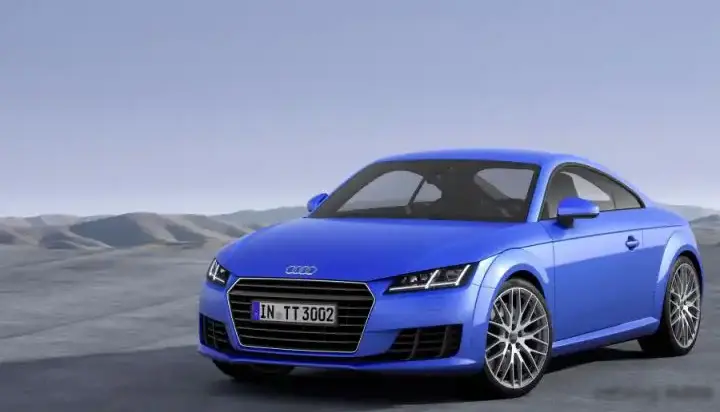
The 2.0 TDI ultra typically came equipped with a generous level of standard features. Interior appointments included cloth upholstery, a leather-wrapped steering wheel, and aluminum trim accents. Standard technology included Audi’s MMI infotainment system with a central display screen, Bluetooth connectivity, and a sound system. Optional extras included leather upholstery, a navigation system, parking sensors, and a panoramic sunroof. The exterior styling was largely consistent with other 8S TT models, featuring the signature circular headlights and sporty coupe silhouette. Specific trim packages could add features like upgraded wheels, sport suspension, and unique interior finishes.
Chassis & Braking
The 2.0 TDI ultra utilized a McPherson strut front suspension and a multi-link rear suspension, providing a good balance between ride comfort and handling precision. The suspension was tuned to complement the engine’s characteristics, offering a stable and controlled ride. Ventilated disc brakes were fitted on all four wheels, providing ample stopping power. Anti-lock Braking System (ABS) was standard, enhancing safety and control during emergency braking situations. The weight distribution was optimized to enhance handling balance, contributing to the TT’s agile feel.
Market Reception & Comparison
The Audi TT Coupe 2.0 TDI ultra was generally well-received by automotive critics, who praised its fuel efficiency and comfortable ride. It was seen as a practical and sensible option for buyers who wanted the TT’s style and driving dynamics without the higher running costs of the petrol variants. Compared to the 2.0 TFSI models, the TDI ultra offered significantly better fuel economy, making it a more attractive choice for long-distance drivers. However, it lacked the TFSI’s outright performance and responsiveness. Reliability was generally good, with the TDI engine proving to be durable and long-lasting.
Legacy
The 2.0 TDI ultra powertrain has proven to be relatively reliable in the long term, with many examples still on the road today. The CUNA engine, while requiring regular maintenance like any diesel, is known for its robustness. On the used car market, the 2.0 TDI ultra represents a good value proposition, offering a stylish and well-equipped coupe at a reasonable price. Its fuel efficiency and relatively low maintenance costs make it an appealing option for buyers seeking a practical and enjoyable sports coupe. The 8S TT 2.0 TDI ultra remains a testament to Audi’s ability to blend performance, efficiency, and style in a compelling package.