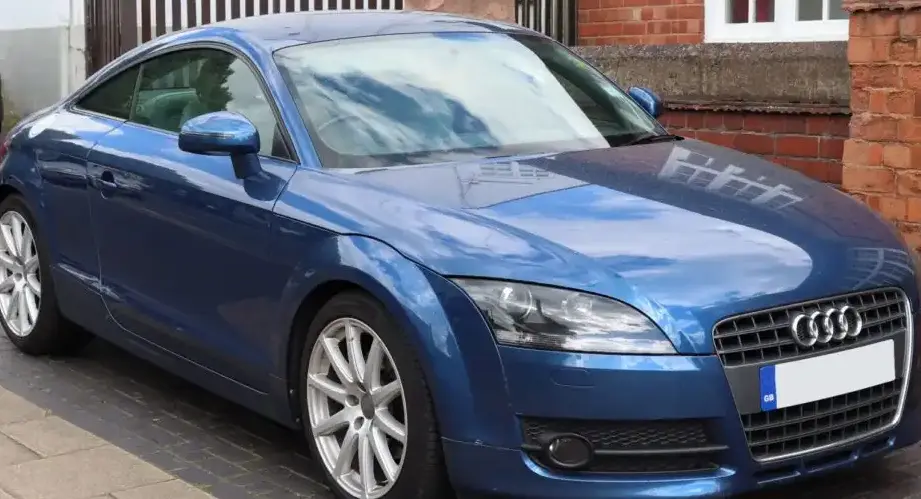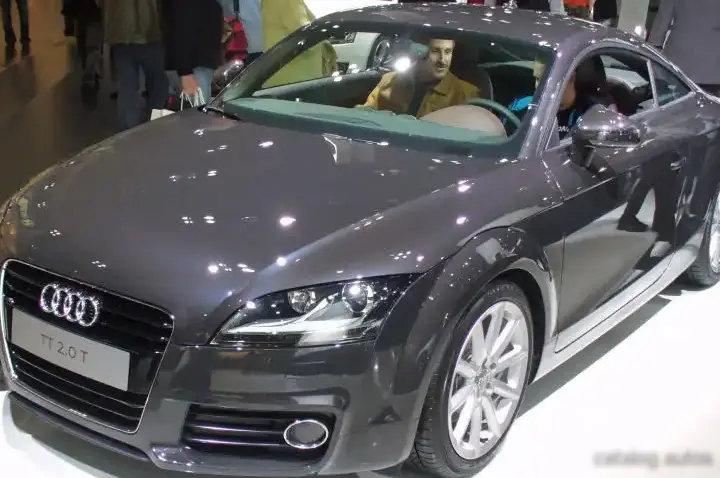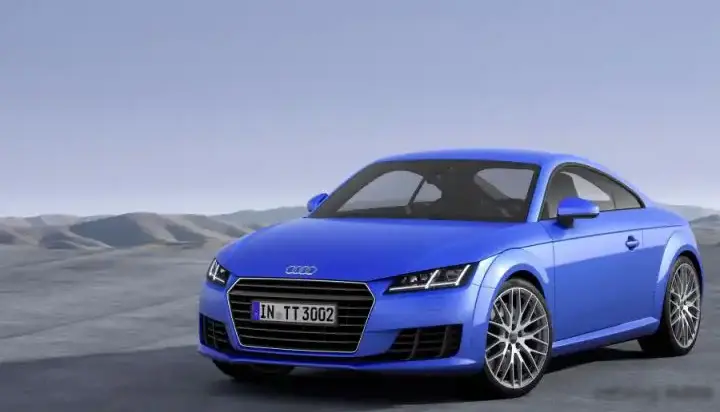
The Audi TT Coupe (8S) 2.0 TFSI, producing 230 horsepower, represents a significant iteration of Audi’s iconic sports coupe. Introduced in 2014 as part of the 8S generation (2015-2018 model years), this variant aimed to balance performance with everyday usability. Positioned as a mid-range offering within the TT lineup, it slotted between the entry-level 1.8 TFSI and the more potent TTS models. The 8S generation marked a shift towards a more angular and technologically advanced design language for the TT, and the 2.0 TFSI model was a key driver of sales, appealing to buyers seeking a sporty and stylish coupe without the higher price tag of the TTS.
Technical Specifications
| Brand | Audi |
| Model | TT |
| Generation | TT Coupe (8S) |
| Type (Engine) | 2.0 TFSI (230 Hp) |
| Start of production | 2014 |
| End of production | 2018 |
| Powertrain Architecture | Internal Combustion engine |
| Body type | Coupe |
| Seats | 4 |
| Doors | 3 |
| Fuel consumption (urban) | 7.3-7.5 l/100 km (32.2 – 31.4 US mpg) |
| Fuel consumption (extra urban) | 5-5.2 l/100 km (47 – 45.2 US mpg) |
| Fuel consumption (combined) | 5.9-6.1 l/100 km (39.9 – 38.6 US mpg) |
| CO2 emissions | 137-141 g/km |
| Fuel Type | Petrol (Gasoline) |
| Acceleration 0 – 100 km/h | 6 sec |
| Acceleration 0 – 62 mph | 6 sec |
| Acceleration 0 – 60 mph | 5.7 sec |
| Maximum speed | 250 km/h (155.34 mph) – Electronically limited |
| Emission standard | Euro 6 |
| Weight-to-power ratio | 5.3 kg/Hp |
| Weight-to-torque ratio | 3.3 kg/Nm |
| Power | 230 Hp @ 4500-6200 rpm |
| Torque | 370 Nm @ 1600-4300 rpm (272.9 lb.-ft. @ 1600-4300 rpm) |
| Engine layout | Front, Transverse |
| Engine Model/Code | EA888 / CHHC |
| Engine displacement | 1984 cm3 (121.07 cu. in.) |
| Number of cylinders | 4 |
| Engine configuration | Inline |
| Cylinder Bore | 82.5 mm (3.25 in.) |
| Piston Stroke | 92.8 mm (3.65 in.) |
| Compression ratio | 9.6:1 |
| Number of valves per cylinder | 4 |
| Fuel injection system | Direct injection and Multi-port manifold injection |
| Engine aspiration | Turbocharger, Intercooler |
| Valvetrain | DOHC |
| Engine oil capacity | 5.7 l (6.02 US qt | 5.02 UK qt) |
| Coolant | 9 l (9.51 US qt | 7.92 UK qt) |
| Kerb Weight | 1230 kg (2711.69 lbs.) |
| Max. weight | 1630 kg (3593.53 lbs.) |
| Max load | 400 kg (881.85 lbs.) |
| Trunk (boot) space – minimum | 305 l (10.77 cu. ft.) |
| Trunk (boot) space – maximum | 712 l (25.14 cu. ft.) |
| Fuel tank capacity | 50 l (13.21 US gal | 11 UK gal) |
| Max. roof load | 75 kg (165.35 lbs.) |
| Length | 4177 mm (164.45 in.) |
| Width | 1832 mm (72.13 in.) |
| Width including mirrors | 1966 mm (77.4 in.) |
| Height | 1353 mm (53.27 in.) |
| Wheelbase | 2505 mm (98.62 in.) |
| Front track | 1572 mm (61.89 in.) |
| Rear (Back) track | 1552 mm (61.1 in.) |
| Front overhang | 884 mm (34.8 in.) |
| Rear overhang | 788 mm (31.02 in.) |
| Drag coefficient (Cd) | 0.30 |
| Minimum turning circle | 10.96 m (35.96 ft.) |
| Drivetrain Architecture | Front wheel drive |
| Number of gears | 6 |
| Type of gearbox | Manual transmission |
| Front suspension | Independent, type McPherson with coil spring and anti-roll bar |
| Rear suspension | Independent multi-link spring suspension with stabilizer |
| Front brakes | Ventilated discs |
| Rear brakes | Disc |
| Assisting systems | ABS (Anti-lock braking system) |
| Steering type | Steering rack and pinion |
| Power steering | Electric Steering |
| Tires size | 225/50 R17 |
| Wheel rims size | 8J x 17 |
Powertrain & Engine Architecture
At the heart of the 2.0 TFSI variant lies the EA888 engine, specifically the CHHC code. This 1984cc, turbocharged inline-four engine utilizes direct injection combined with multi-point fuel injection, optimizing both power delivery and fuel efficiency. The engine features a single-scroll turbocharger with an intercooler, boosting output to 230 hp at 4500-6200 rpm and 370 Nm (272.9 lb-ft) of torque between 1600-4300 rpm. The engine employs a dual overhead camshaft (DOHC) valvetrain with four valves per cylinder, contributing to its responsive nature. The 6-speed manual transmission was standard, providing precise gear changes and enhancing the driving experience. A dual-mass flywheel helps to mitigate engine vibrations, improving refinement.
Driving Characteristics
The 2.0 TFSI with the manual transmission delivers a balanced driving experience. Acceleration from 0-60 mph takes approximately 5.7 seconds, making it a genuinely quick coupe. The turbocharger provides a noticeable surge of power in the mid-range, offering strong acceleration for overtaking and merging. While not as brutally fast as the TTS, the 2.0 TFSI offers ample power for spirited driving. The manual gearbox is well-matched to the engine’s characteristics, with precise shifts and a relatively short throw. The front-wheel-drive configuration provides good traction in most conditions, although torque steer can be felt under hard acceleration. The suspension setup provides a good compromise between comfort and handling, allowing for confident cornering without sacrificing ride quality.
Equipment & Trim Levels
The 2.0 TFSI typically came equipped with standard features such as Audi’s Multi Media Interface (MMI) infotainment system with a 6.5-inch display, automatic climate control, and sport seats. Optional extras included a larger MMI screen, navigation, Bang & Olufsen sound system, leather upholstery, and various styling packages. The interior design was minimalist and driver-focused, with high-quality materials and a clean layout. The TT’s signature feature, the turbine-style air vents, added a touch of visual flair. Exterior options included various wheel designs, paint colors, and aerodynamic enhancements.
Chassis & Braking
The 8S TT Coupe utilizes a McPherson strut front suspension and a multi-link rear suspension, providing a stable and controlled ride. The chassis is relatively lightweight, contributing to the car’s agility. Ventilated front disc brakes and solid rear discs provide adequate stopping power. ABS (Anti-lock Braking System) is standard. The steering is electrically assisted, offering precise and responsive control. The car’s relatively low center of gravity further enhances its handling characteristics.
Market Reception & Comparison
The Audi TT Coupe 2.0 TFSI was generally well-received by automotive critics. It was praised for its stylish design, engaging driving dynamics, and refined interior. Compared to the 1.8 TFSI, the 2.0 TFSI offered a significant performance boost, making it a more appealing option for driving enthusiasts. However, it was more expensive than the base model. Compared to the TTS, the 2.0 TFSI offered a more affordable entry point into the TT range, albeit with less power and performance. Fuel economy was respectable, averaging around 39.9-38.6 US mpg in combined driving.
Legacy
The EA888 engine, in its various iterations, has proven to be a reliable and durable powerplant. The 2.0 TFSI variant in the 8S TT Coupe is generally considered to be a robust engine, although regular maintenance is crucial. Common issues include carbon buildup on the intake valves, which can affect performance over time. The 8S TT Coupe, including the 2.0 TFSI variant, has maintained a strong following in the used car market, appreciated for its combination of style, performance, and practicality. Well-maintained examples continue to command reasonable prices, making it a desirable option for buyers seeking a sporty and stylish coupe.