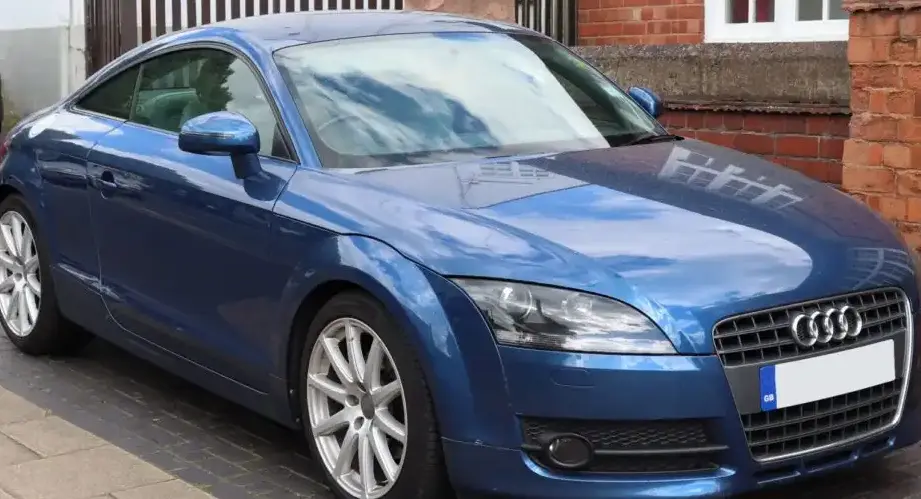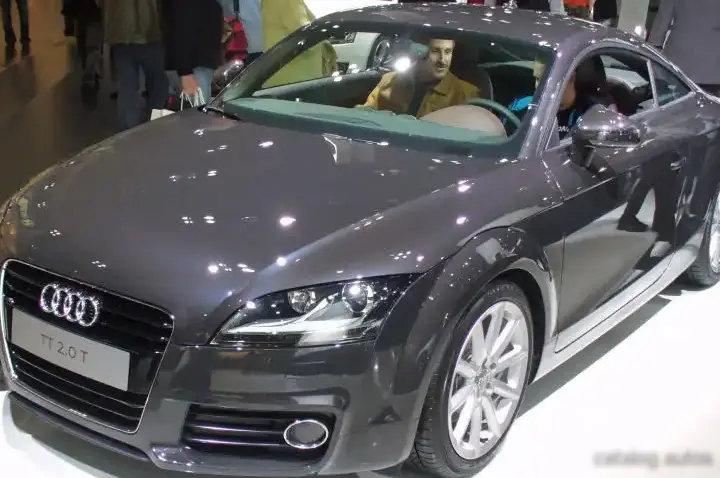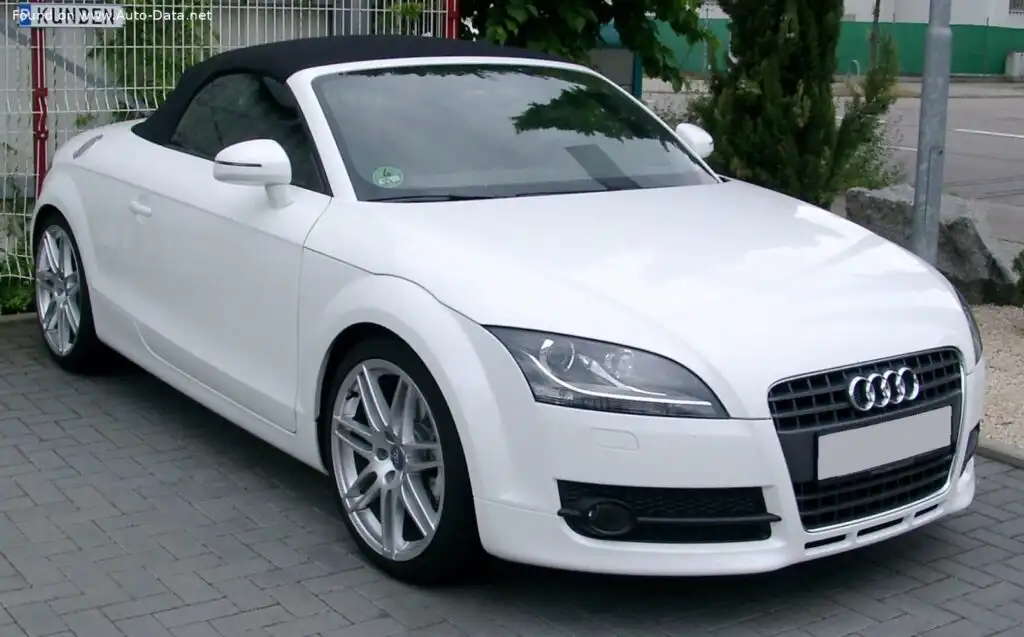
The Audi TT Roadster (8J) 2.0 TDI quattro, produced from June 2008 to June 2010, represented a unique offering within the second-generation TT (8J) lineup. Positioned as a fuel-efficient and all-weather performance option, it combined the TT’s iconic styling with a diesel engine and Audi’s quattro all-wheel drive system. This variant aimed to broaden the TT’s appeal, attracting buyers who desired a sporty roadster experience without the higher running costs typically associated with gasoline engines. It was built on the Volkswagen Group’s A5 (or B7) platform, shared with models like the Volkswagen Golf Mk5 and Audi A3.
Technical Specifications
| Brand | Audi |
| Model | TT |
| Generation | TT Roadster (8J) |
| Type (Engine) | 2.0 TDI (170 Hp) quattro |
| Start of production | June, 2008 |
| End of production | June, 2010 |
| Powertrain Architecture | Internal Combustion engine |
| Body type | Roadster |
| Seats | 2 |
| Doors | 2 |
| Fuel consumption (urban) | 7.2 l/100 km (32.7 US mpg, 39.2 UK mpg, 13.9 km/l) |
| Fuel consumption (extra urban) | 4.5 l/100 km (52.3 US mpg, 62.8 UK mpg, 22.2 km/l) |
| Fuel consumption (combined) | 5.5 l/100 km (42.8 US mpg, 51.4 UK mpg, 18.2 km/l) |
| CO2 emissions | 144 g/km |
| Fuel Type | Diesel |
| Acceleration 0 – 100 km/h | 7.7 sec |
| Acceleration 0 – 62 mph | 7.7 sec |
| Acceleration 0 – 60 mph | 7.3 sec |
| Maximum speed | 223 km/h (138.57 mph) |
| Emission standard | Euro 5 |
| Weight-to-power ratio | 8.3 kg/Hp, 120.1 Hp/tonne |
| Weight-to-torque ratio | 4 kg/Nm, 247.3 Nm/tonne |
| Power | 170 Hp @ 4200 rpm |
| Power per litre | 86.4 Hp/l |
| Torque | 350 Nm @ 1750-2500 rpm (258.15 lb.-ft. @ 1750-2500 rpm) |
| Engine layout | Front, Transverse |
| Engine Model/Code | CBBB, CFGB |
| Engine displacement | 1968 cm3 (120.09 cu. in.) |
| Number of cylinders | 4 |
| Engine configuration | Inline |
| Cylinder Bore | 81 mm (3.19 in.) |
| Piston Stroke | 95.5 mm (3.76 in.) |
| Compression ratio | 16.5:1 |
| Number of valves per cylinder | 4 |
| Fuel injection system | Diesel Commonrail |
| Engine aspiration | Turbocharger, Intercooler |
| Valvetrain | DOHC |
| Engine oil capacity | 4.3 l (4.54 US qt | 3.78 UK qt) |
| Coolant | 8.7 l (9.19 US qt | 7.65 UK qt) |
| Kerb Weight | 1415 kg (3119.54 lbs.) |
| Max. weight | 1735 kg (3825.02 lbs.) |
| Max load | 320 kg (705.48 lbs.) |
| Trunk (boot) space – minimum | 250 l (8.83 cu. ft.) |
| Fuel tank capacity | 60 l (15.85 US gal | 13.2 UK gal) |
| Length | 4178 mm (164.49 in.) |
| Width | 1842 mm (72.52 in.) |
| Height | 1358 mm (53.46 in.) |
| Wheelbase | 2468 mm (97.17 in.) |
| Front track | 1572 mm (61.89 in.) |
| Rear (Back) track | 1558 mm (61.34 in.) |
| Drag coefficient (Cd) | 0.32 |
| Minimum turning circle | 10.9 m (35.76 ft.) |
| Drive wheel | All wheel drive (4×4) |
| Number of gears | 6 gears, manual transmission |
| Front suspension | Independent, type McPherson with coil spring and anti-roll bar |
| Rear suspension | Independent multi-link spring suspension with stabilizer |
| Front brakes | Ventilated discs |
| Rear brakes | Disc |
| Assisting systems | ABS (Anti-lock braking system) |
| Steering type | Steering rack and pinion |
| Power steering | Hydraulic Steering |
| Tires size | 225/55 R16 |
| Wheel rims size | 7.5J x 16 |
Powertrain & Engine Architecture
The heart of the TT Roadster 2.0 TDI quattro is the Volkswagen Group’s 1968cc inline-four cylinder diesel engine, designated either CBBB or CFGB depending on the specific production date and market. This engine utilizes a common rail direct injection system, delivering fuel at extremely high pressure for optimized combustion. A turbocharger with an intercooler further enhances performance, boosting power and torque. The engine features a double overhead camshaft (DOHC) valvetrain with four valves per cylinder, contributing to its efficient operation. The high compression ratio of 16.5:1 is typical for diesel engines, maximizing energy extraction from the fuel. The engine was paired with a six-speed manual transmission, sending power to all four wheels via Audi’s renowned quattro all-wheel drive system. This system employs a multi-plate clutch to distribute torque between the front and rear axles, providing enhanced traction and stability, particularly in adverse weather conditions.
Driving Characteristics
The 2.0 TDI quattro offered a distinctly different driving experience compared to the gasoline-powered TT variants. While lacking the outright acceleration of the 2.0 TFSI models, it provided a strong and usable surge of torque from low engine speeds. The 350 Nm (258 lb-ft) of torque available between 1750 and 2500 rpm made it surprisingly capable in everyday driving situations, offering effortless overtaking and comfortable cruising. The six-speed manual transmission was well-matched to the engine’s characteristics, allowing drivers to keep the engine within its optimal power band. Compared to the higher-horsepower TT models, the 2.0 TDI felt more relaxed and refined, prioritizing fuel efficiency and drivability over outright performance. The quattro all-wheel drive system provided excellent grip and stability, inspiring confidence on both dry and wet roads.
Equipment & Trim Levels
The 2.0 TDI quattro Roadster typically came equipped with a generous level of standard features. These included climate control, a multi-function steering wheel, alloy wheels, and Audi’s Concert audio system. Interior upholstery was typically cloth, although leather options were available. Optional extras included navigation systems, upgraded audio systems, heated seats, and parking sensors. The trim level generally sat in the mid-range of the TT lineup, offering a good balance of features and affordability. It was positioned above the base 1.8 TFSI models but below the more powerful 2.0 TFSI and 3.2 V6 variants.
Chassis & Braking
The TT Roadster 2.0 TDI quattro utilized an independent suspension setup at all four corners. The front suspension employed McPherson struts with coil springs and an anti-roll bar, while the rear featured a more sophisticated multi-link suspension system, also with a stabilizer bar. This configuration provided a good balance of ride comfort and handling precision. Braking duties were handled by ventilated discs at the front and solid discs at the rear, assisted by an Anti-lock Braking System (ABS). The chassis was designed to accommodate the added weight of the diesel engine and quattro drivetrain, ensuring stable and predictable handling characteristics.
Market Reception & Comparison
The Audi TT Roadster 2.0 TDI quattro was generally well-received by automotive critics. It was praised for its fuel efficiency, comfortable ride, and all-weather capability. However, some reviewers noted that it lacked the sporty character and exhilarating performance of the gasoline-powered TT models. Compared to the 2.0 TFSI variant, the TDI offered significantly better fuel economy but slightly slower acceleration. The TDI also tended to be more expensive to purchase initially, but the lower running costs could offset this over the long term. Reliability was generally good, although diesel engines can be more susceptible to issues with the fuel injection system and particulate filter.
Legacy
The Audi TT Roadster 2.0 TDI quattro represents an interesting chapter in the TT’s history. It demonstrated Audi’s commitment to offering fuel-efficient alternatives without compromising on style or driving enjoyment. In the used car market today, these models are often sought after by buyers who prioritize fuel economy and all-weather capability. The 2.0 TDI engine, when properly maintained, is known for its durability and longevity. However, potential buyers should be aware of the potential costs associated with maintaining the diesel particulate filter and fuel injection system. The combination of the TT’s iconic design, the efficiency of the TDI engine, and the security of quattro all-wheel drive continues to make this variant a compelling option for those seeking a unique and practical roadster experience.