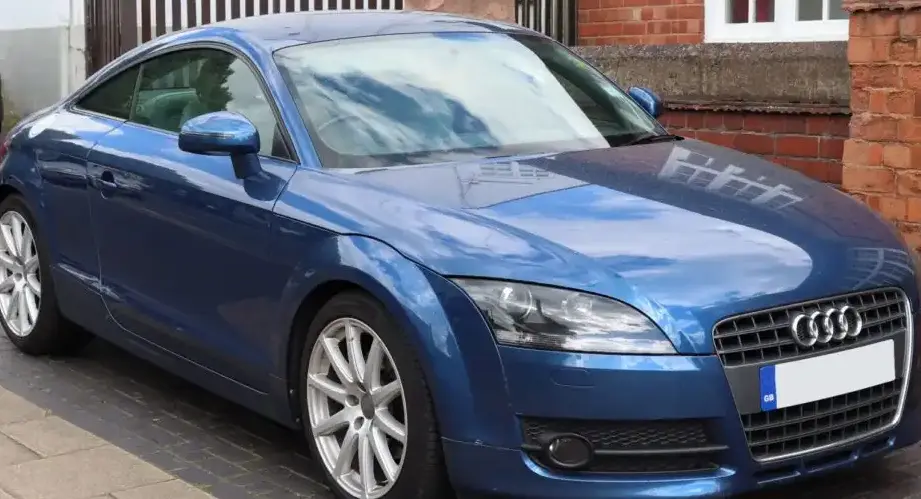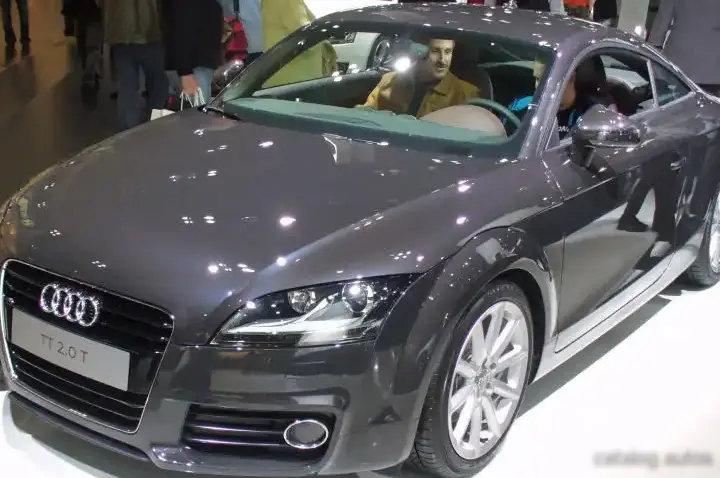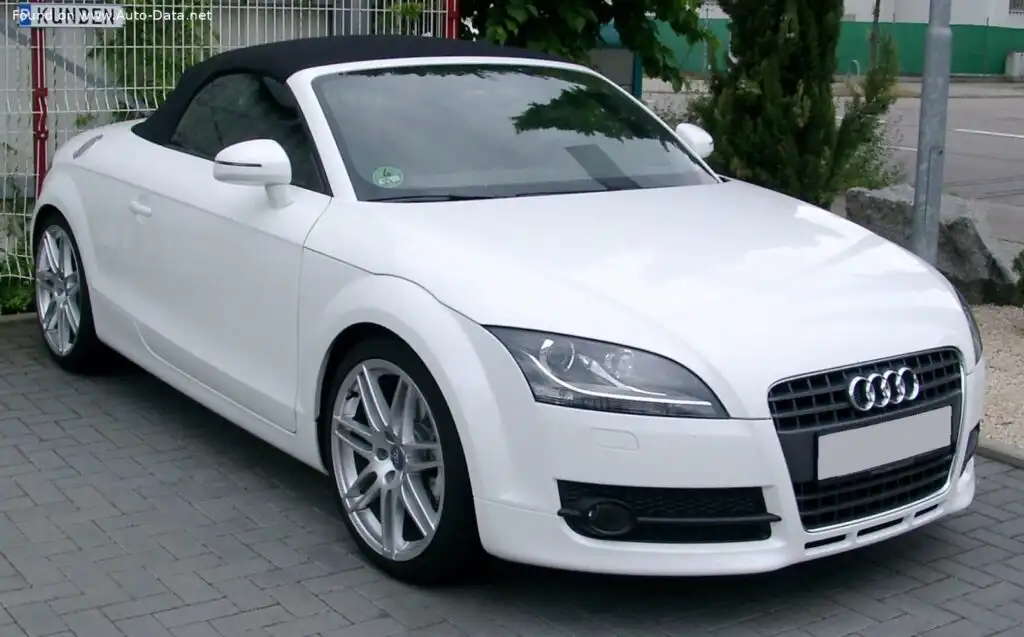
The Audi TT Roadster (8J) 2.0 TFSI S tronic, produced from May 2006 to June 2010, represents a compelling blend of sporty handling and accessible performance within the second-generation TT lineup. Positioned as a mid-range offering, it bridged the gap between the base 1.8 TFSI models and the more potent 3.2 V6 variants. This roadster, built on the Volkswagen Group’s A5 (or 8J) platform – shared with models like the Volkswagen Golf Mk5 and Audi A3 – aimed to deliver an open-top driving experience without sacrificing the TT’s signature style or technological sophistication. The 2.0 TFSI S tronic was a popular choice, offering a balance of power, efficiency, and the convenience of an automatic transmission.
Technical Specifications
| Brand | Audi |
| Model | TT |
| Generation | TT Roadster (8J) |
| Type (Engine) | 2.0 TFSI (200 Hp) S tronic |
| Start of production | May, 2006 |
| End of production | June, 2010 |
| Powertrain Architecture | Internal Combustion engine |
| Body type | Roadster |
| Seats | 2 |
| Doors | 2 |
| Fuel consumption (urban) | 10.8 l/100 km (21.8 US mpg, 26.2 UK mpg, 9.3 km/l) |
| Fuel consumption (extra urban) | 6.1 l/100 km (38.6 US mpg, 46.3 UK mpg, 16.4 km/l) |
| Fuel consumption (combined) | 7.8 l/100 km (30.2 US mpg, 36.2 UK mpg, 12.8 km/l) |
| CO2 emissions | 186 g/km |
| Fuel Type | Petrol (Gasoline) |
| Acceleration 0 – 100 km/h | 6.5 sec |
| Acceleration 0 – 62 mph | 6.5 sec |
| Acceleration 0 – 60 mph | 6.2 sec |
| Maximum speed | 237 km/h (147.26 mph) |
| Emission standard | Euro 4 |
| Weight-to-power ratio | 6.6 kg/Hp, 152.1 Hp/tonne |
| Weight-to-torque ratio | 4.7 kg/Nm, 212.9 Nm/tonne |
| Power | 200 Hp @ 5100-6000 rpm |
| Power per litre | 100.8 Hp/l |
| Torque | 280 Nm @ 1800-5000 rpm (206.52 lb.-ft. @ 1800-5000 rpm) |
| Engine layout | Front, Transverse |
| Engine Model/Code | BWA, CCZA |
| Engine displacement | 1984 cm3 (121.07 cu. in.) |
| Number of cylinders | 4 |
| Engine configuration | Inline |
| Cylinder Bore | 82.5 mm (3.25 in.) |
| Piston Stroke | 92.8 mm (3.65 in.) |
| Compression ratio | 10.3:1 |
| Number of valves per cylinder | 4 |
| Fuel injection system | Direct injection |
| Engine aspiration | Turbocharger, Intercooler |
| Valvetrain | DOHC |
| Engine oil capacity | 4.6 l (4.86 US qt | 4.05 UK qt) |
| Coolant | 8.6 l (9.09 US qt | 7.57 UK qt) |
| Kerb Weight | 1315 kg (2899.08 lbs.) |
| Max. weight | 1635 kg (3604.56 lbs.) |
| Max load | 320 kg (705.48 lbs.) |
| Trunk (boot) space – minimum | 250 l (8.83 cu. ft.) |
| Fuel tank capacity | 55 l (14.53 US gal | 12.1 UK gal) |
| Length | 4178 mm (164.49 in.) |
| Width | 1842 mm (72.52 in.) |
| Height | 1358 mm (53.46 in.) |
| Wheelbase | 2468 mm (97.17 in.) |
| Front track | 1572 mm (61.89 in.) |
| Rear (Back) track | 1558 mm (61.34 in.) |
| Drag coefficient (Cd) | 0.32 |
| Minimum turning circle | 10.96 m (35.96 ft.) |
| Drivetrain Architecture | Front wheel drive |
| Number of gears and type of gearbox | 6 gears, automatic transmission S tronic |
| Front suspension | Independent, type McPherson with coil spring and anti-roll bar |
| Rear suspension | Independent multi-link spring suspension with stabilizer |
| Front brakes | Ventilated discs |
| Rear brakes | Disc |
| Assisting systems | ABS (Anti-lock braking system) |
| Steering type | Steering rack and pinion |
| Power steering | Hydraulic Steering |
| Tires size | 225/55 R16 |
| Wheel rims size | 7.5J x 16 |
Powertrain & Engine Architecture
At the heart of the 2.0 TFSI S tronic Roadster lies the BWA or CCZA engine code, a 1.984-liter (121.07 cubic inches) inline-four cylinder gasoline engine. This engine utilizes direct fuel injection (FSI) and a turbocharger with an intercooler to deliver a potent 200 horsepower at 5100-6000 rpm and 280 Nm (206.52 lb.-ft.) of torque between 1800-5000 rpm. The direct injection system allows for precise fuel delivery, enhancing both power and efficiency. The engine features a dual overhead camshaft (DOHC) valvetrain with four valves per cylinder, optimizing airflow for improved performance. The S tronic transmission, a six-speed dual-clutch gearbox, provides rapid and smooth gear changes, contributing to the car’s sporty driving experience. This transmission differs significantly from a traditional torque-converter automatic, offering quicker shifts and a more direct connection to the engine.
Driving Characteristics
The 2.0 TFSI S tronic Roadster delivers a noticeably different driving experience compared to the base 1.8 TFSI or the higher-performance 3.2 V6 models. While not as brutally fast as the V6, the 2.0 TFSI provides ample power for spirited driving, with the turbocharger providing a noticeable boost in acceleration. The S tronic transmission’s quick shifts contribute to a responsive feel. The gear ratios are tuned for a balance between acceleration and fuel economy. Compared to a manual transmission, the S tronic offers convenience, especially in urban environments, but some purists might miss the direct control of a manual gearbox. The front-wheel-drive configuration provides good traction in most conditions, but can exhibit some torque steer under hard acceleration.
Equipment & Trim Levels
The 2.0 TFSI S tronic Roadster typically came equipped with a generous array of standard features. These included leather upholstery, automatic climate control, a multi-function steering wheel, and an Audi Concert audio system. Optional extras were plentiful, allowing buyers to personalize their vehicles. Popular options included the Audi Navigation Plus system, heated seats, parking sensors, and upgraded alloy wheels. The interior design was typically finished in black or silver tones, with aluminum trim accents. The Roadster’s electrically operated soft top provided a convenient open-air experience, and could be raised or lowered in a matter of seconds.
Chassis & Braking
The TT Roadster’s chassis features an independent McPherson strut suspension at the front and a multi-link suspension at the rear, providing a comfortable yet sporty ride. Stabilizer bars are fitted to both axles to reduce body roll during cornering. The braking system consists of ventilated discs at the front and solid discs at the rear, providing adequate stopping power. Anti-lock braking system (ABS) is standard. The suspension tuning is geared towards providing a balance between comfort and handling, making the car enjoyable to drive on both smooth highways and winding roads.
Market Reception & Comparison
The Audi TT Roadster 2.0 TFSI S tronic was generally well-received by automotive critics. It was praised for its stylish design, engaging driving dynamics, and refined interior. Fuel economy was considered respectable for a performance roadster, averaging around 30.2 US mpg in combined driving. Compared to the 1.8 TFSI model, the 2.0 TFSI offered a significant performance upgrade, while remaining more affordable than the 3.2 V6. Reliability was generally good, although some owners have reported issues with the turbocharger and the S tronic transmission over the long term.
Legacy
Today, the Audi TT Roadster (8J) 2.0 TFSI S tronic remains a desirable used car. Its combination of style, performance, and relative reliability has ensured its continued popularity. The 2.0 TFSI engine, while not without its potential issues, is generally considered robust when properly maintained. The S tronic transmission, however, can require more frequent servicing than a traditional automatic. These cars represent a sweet spot in the TT lineup, offering a compelling blend of driving enjoyment and everyday usability. Finding well-maintained examples is key, as preventative maintenance and addressing any known issues promptly will ensure years of enjoyable open-top motoring.