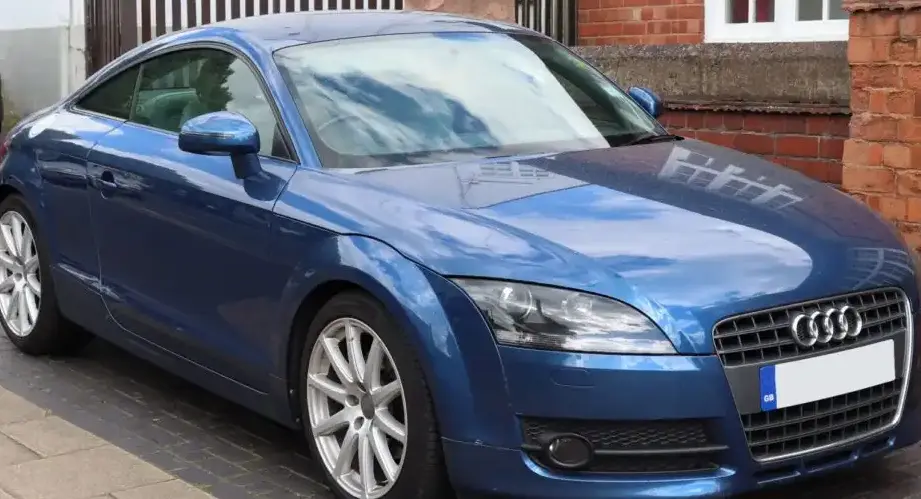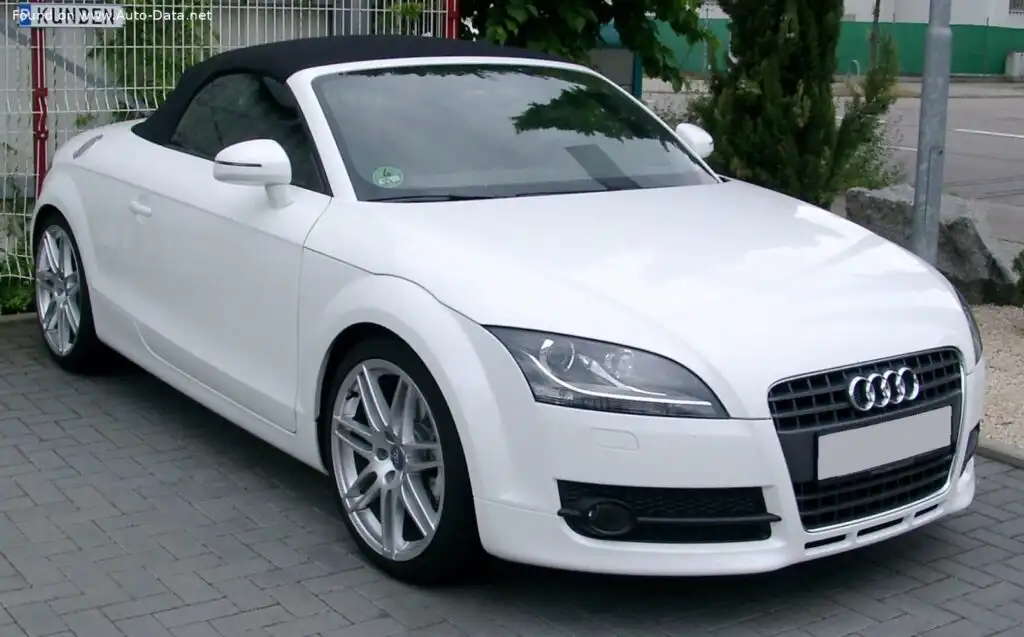
The Audi TT Roadster (8J) 3.2i V6 24V quattro S tronic represents a compelling blend of performance and open-air driving enjoyment within the second-generation TT lineup. Produced from May 2006 to June 2010, this variant occupied the premium position within the Roadster range, offering a significant step up in power and sophistication compared to the 1.8L and 2.0L models. It was a key component of the 8J platform, sharing its underpinnings with the Volkswagen Golf Mk5 and other vehicles within the Volkswagen Group’s A platform family. The 3.2i model aimed to deliver a more visceral driving experience while retaining the TT’s signature style and relatively compact dimensions.
Technical Specifications
| Brand | Audi |
| Model | TT |
| Generation | TT Roadster (8J) |
| Type (Engine) | 3.2i V6 24V (250 Hp) quattro S tronic |
| Start of production | May, 2006 |
| End of production | June, 2010 |
| Powertrain Architecture | Internal Combustion engine |
| Body type | Roadster |
| Seats | 2 |
| Doors | 2 |
| Fuel consumption (urban) | 13 l/100 km (18.1 US mpg, 21.7 UK mpg, 7.7 km/l) |
| Fuel consumption (extra urban) | 7.4 l/100 km (31.8 US mpg, 38.2 UK mpg, 13.5 km/l) |
| Fuel consumption (combined) | 9.5 l/100 km (24.8 US mpg, 29.7 UK mpg, 10.5 km/l) |
| CO2 emissions | 227 g/km |
| Fuel Type | Petrol (Gasoline) |
| Acceleration 0 – 100 km/h | 5.9 sec |
| Acceleration 0 – 62 mph | 5.9 sec |
| Acceleration 0 – 60 mph | 5.6 sec |
| Maximum speed | 250 km/h (155.34 mph) |
| Emission standard | Euro 4 |
| Weight-to-power ratio | 6 kg/Hp, 167.8 Hp/tonne |
| Weight-to-torque ratio | 4.7 kg/Nm, 214.8 Nm/tonne |
| Power | 250 Hp @ 6300 rpm |
| Power per litre | 78.4 Hp/l |
| Torque | 320 Nm @ 2500-3000 rpm (236.02 lb.-ft. @ 2500-3000 rpm) |
| Engine layout | Front, Transverse |
| Engine Model/Code | BUB |
| Engine displacement | 3189 cm3 (194.6 cu. in.) |
| Number of cylinders | 6 |
| Engine configuration | V-engine |
| Cylinder Bore | 84 mm (3.31 in.) |
| Piston Stroke | 95.9 mm (3.78 in.) |
| Compression ratio | 11.3:1 |
| Number of valves per cylinder | 4 |
| Fuel injection system | Multi-port manifold injection |
| Engine aspiration | Naturally aspirated engine |
| Valvetrain | DOHC |
| Engine oil capacity | 5.5 l (5.81 US qt | 4.84 UK qt) |
| Coolant | 12.7 l (13.42 US qt | 11.17 UK qt) |
| Kerb Weight | 1490 kg (3284.89 lbs.) |
| Max. weight | 1810 kg (3990.37 lbs.) |
| Max load | 320 kg (705.48 lbs.) |
| Trunk (boot) space – minimum | 250 l (8.83 cu. ft.) |
| Fuel tank capacity | 60 l (15.85 US gal | 13.2 UK gal) |
| Length | 4178 mm (164.49 in.) |
| Width | 1842 mm (72.52 in.) |
| Height | 1358 mm (53.46 in.) |
| Wheelbase | 2468 mm (97.17 in.) |
| Front track | 1572 mm (61.89 in.) |
| Rear (Back) track | 1558 mm (61.34 in.) |
| Drag coefficient (Cd) | 0.32 |
| Minimum turning circle | 10.96 m (35.96 ft.) |
| Drive wheel | All wheel drive (4×4) |
| Number of gears | 6 |
| Gearbox type | automatic transmission S tronic |
| Front suspension | Independent, type McPherson with coil spring and anti-roll bar |
| Rear suspension | Independent multi-link spring suspension with stabilizer |
| Front brakes | Ventilated discs |
| Rear brakes | Disc |
| Assisting systems | ABS (Anti-lock braking system) |
| Steering type | Steering rack and pinion |
| Power steering | Hydraulic Steering |
| Tires size | 245/45 R17 |
| Wheel rims size | 8.5J x 17 |
INTRODUCTION
The Audi TT Roadster (8J) 3.2i V6 24V quattro S tronic, launched in 2006, represented the pinnacle of performance for the second-generation TT Roadster. Positioned above the 1.8 TFSI and 2.0 TFSI models, it offered a significant power increase and the added security of Audi’s quattro all-wheel-drive system. This variant aimed to appeal to drivers seeking a more engaging and refined open-top experience. The 8J TT Roadster, built on the A5 (PQ35) platform, was a departure from the original TT’s more radical Bauhaus design, adopting a more mature and sophisticated aesthetic while retaining the iconic circular headlights and overall sporty proportions.
Powertrain & Engine Architecture
At the heart of the 3.2i Roadster lies the BUB engine code, a naturally aspirated 3.2-liter V6 engine. This engine, a member of Audi’s VR6 family, features a narrow-angle V6 configuration (15 degrees between cylinder banks) which allows it to be relatively compact for a six-cylinder engine. It utilizes multi-port fuel injection and a double overhead camshaft (DOHC) valvetrain with four valves per cylinder. The engine produces 250 horsepower at 6300 rpm and 320 Nm (236 lb-ft) of torque between 2500 and 3000 rpm. Paired with this engine is Audi’s S tronic six-speed dual-clutch transmission, offering quick and seamless gear changes. The S tronic transmission contributes significantly to the car’s acceleration and overall driving experience. The quattro all-wheel-drive system distributes power between the front and rear axles, enhancing traction and stability, particularly in adverse weather conditions.
Driving Characteristics
The 3.2i V6 S tronic combination delivers a noticeably more spirited driving experience than the lower-powered TT Roadster variants. Acceleration from 0 to 60 mph takes approximately 5.6 seconds, and the car feels responsive and eager throughout the rev range. The S tronic transmission provides rapid shifts, minimizing power interruption during acceleration. The quattro all-wheel-drive system provides excellent grip, allowing for confident cornering and stable handling. While not as raw or focused as some dedicated sports cars, the 3.2i Roadster strikes a good balance between performance and everyday usability. The gear ratios are tuned for a blend of acceleration and cruising efficiency, making it a comfortable grand tourer as well as a capable sports car.
Equipment & Trim Levels
The 3.2i quattro S tronic Roadster typically came well-equipped as standard. Features included leather upholstery, automatic climate control, a multi-function steering wheel, and a premium audio system. Optional extras included navigation system, heated seats, parking sensors, and upgraded alloy wheels. Interior trim options allowed for some personalization, with choices in leather colors and dashboard finishes. The overall interior design was modern and driver-focused, with a clean layout and high-quality materials.
Chassis & Braking
The 8J TT Roadster features a McPherson strut front suspension and a multi-link rear suspension. The suspension is tuned to provide a balance between comfort and handling. Stabilizer bars are fitted to both the front and rear axles to reduce body roll during cornering. Braking duties are handled by ventilated discs at the front and solid discs at the rear, with ABS (Anti-lock Braking System) as standard. The braking system provides ample stopping power for spirited driving.
Market Reception & Comparison
The 3.2i V6 quattro S tronic Roadster was generally well-received by automotive critics. It was praised for its strong performance, refined handling, and comfortable ride. Compared to the 1.8 TFSI and 2.0 TFSI models, the 3.2i offered a significant power advantage, but at a higher price point. Fuel economy was understandably lower than the turbocharged four-cylinder variants, averaging around 24.8 US mpg in combined driving. Reliability was generally good, although the S tronic transmission required more diligent maintenance than a traditional automatic gearbox.
Legacy
The Audi TT Roadster (8J) 3.2i V6 24V quattro S tronic remains a desirable used car today. The BUB engine is known for its durability, provided it receives regular maintenance, including oil changes and timing belt replacements. The S tronic transmission, while sophisticated, can be prone to issues if not properly serviced. These cars are often sought after by enthusiasts who appreciate the combination of performance, style, and open-air driving enjoyment. The 3.2i variant represents a sweet spot in the 8J TT Roadster lineup, offering a compelling blend of power, refinement, and all-weather capability.