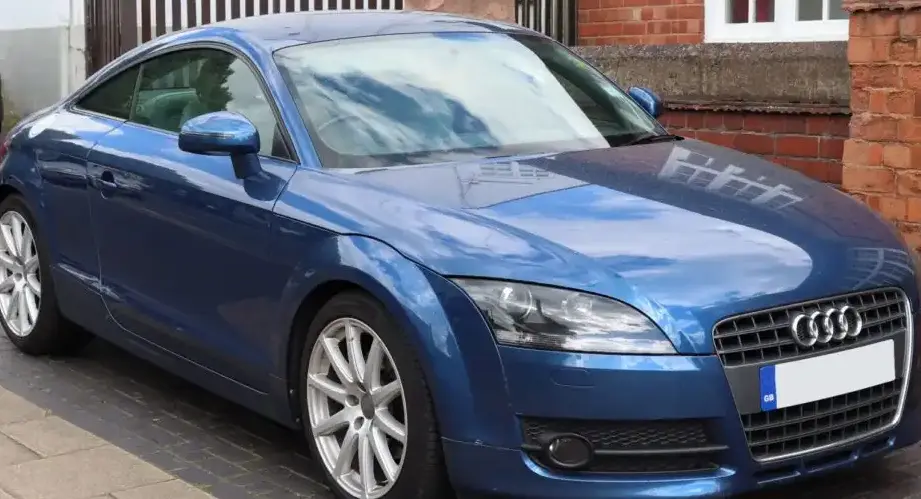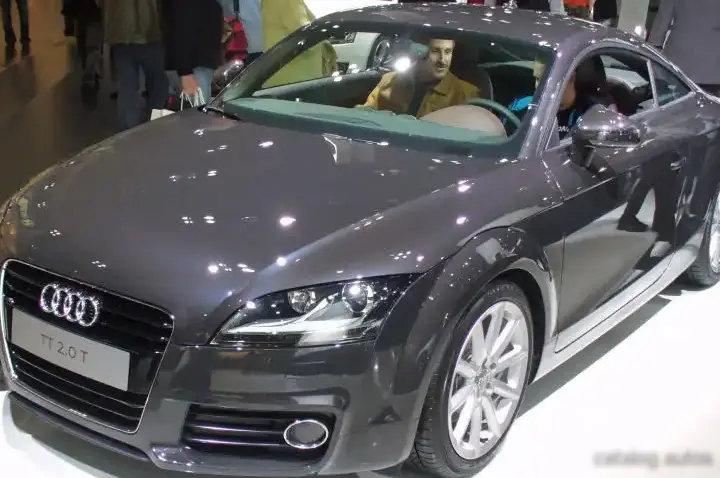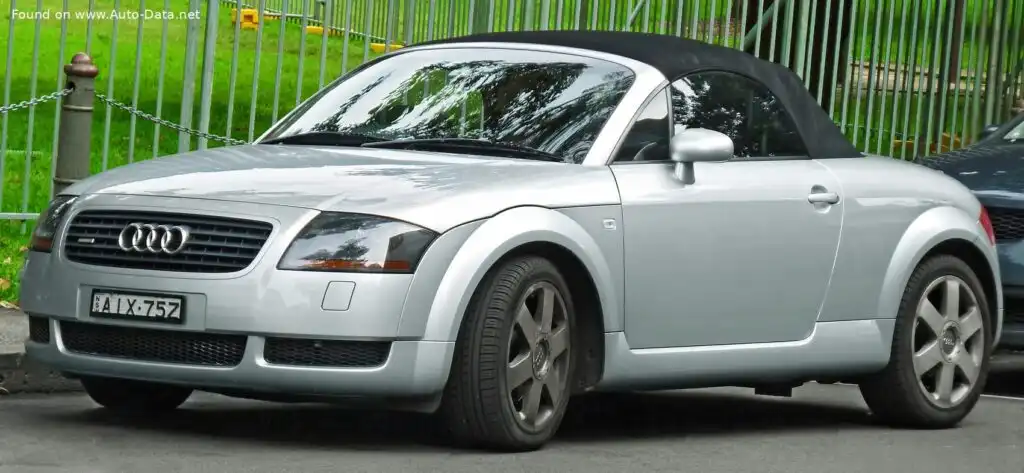
The Audi TT Roadster (8N) 1.8T quattro, produced from October 1998 to 2000, represents a pivotal entry point into the first-generation TT lineup. Positioned as a performance-oriented variant within the 8N series – which itself was based on the Volkswagen Group’s A4/Golf platform (PL45/1HX0) – this model combined the TT’s striking Bauhaus-inspired design with a potent turbocharged engine and Audi’s renowned quattro all-wheel-drive system. It aimed to deliver a sporty, engaging driving experience in a compact, stylish package. The Roadster body style, a two-seat convertible, further emphasized the TT’s focus on driver enjoyment and open-air motoring.
Technical Specifications
| Brand | Audi |
| Model | TT |
| Generation | TT Roadster (8N) |
| Type (Engine) | 1.8 T (225 Hp) quattro |
| Start of production | October, 1998 |
| End of production | 2000 |
| Powertrain Architecture | Internal Combustion engine |
| Body type | Roadster |
| Seats | 2 |
| Doors | 2 |
| Fuel consumption (economy) – urban | 12.6 l/100 km (18.7 US mpg, 22.4 UK mpg, 7.9 km/l) |
| Fuel consumption (economy) – extra urban | 7.6 l/100 km (30.9 US mpg, 37.2 UK mpg, 13.2 km/l) |
| Fuel consumption (economy) – combined | 9.4 l/100 km (25 US mpg, 30.1 UK mpg, 10.6 km/l) |
| CO2 emissions | 226 g/km |
| Fuel Type | Petrol (Gasoline) |
| Acceleration 0 – 100 km/h | 6.4 sec |
| Acceleration 0 – 62 mph | 6.4 sec |
| Acceleration 0 – 60 mph | 6.1 sec |
| Maximum speed | 243 km/h (150.99 mph) |
| Emission standard | Euro 3 |
| Weight-to-power ratio | 6.6 kg/Hp, 152.5 Hp/tonne |
| Weight-to-torque ratio | 5.3 kg/Nm, 189.8 Nm/tonne |
| Power | 225 Hp @ 5900 rpm |
| Power per litre | 126.3 Hp/l |
| Torque | 280 Nm @ 2200 rpm (206.52 lb.-ft. @ 2200 rpm) |
| Engine layout | Front, Transverse |
| Engine Model/Code | APX, BAM |
| Engine displacement | 1781 cm3 (108.68 cu. in.) |
| Number of cylinders | 4 |
| Engine configuration | Inline |
| Cylinder Bore | 81 mm (3.19 in.) |
| Piston Stroke | 86.4 mm (3.4 in.) |
| Compression ratio | 9:1 |
| Number of valves per cylinder | 5 |
| Fuel injection system | Multi-port manifold injection |
| Engine aspiration | Turbocharger |
| Valvetrain | DOHC |
| Engine oil capacity | 4.5 l (4.76 US qt | 3.96 UK qt) |
| Coolant | 5 l (5.28 US qt | 4.4 UK qt) |
| Kerb Weight | 1475 kg (3251.82 lbs.) |
| Max. weight | 1775 kg (3913.21 lbs.) |
| Max load | 300 kg (661.39 lbs.) |
| Trunk (boot) space – minimum | 180 l (6.36 cu. ft.) |
| Fuel tank capacity | 62 l (16.38 US gal | 13.64 UK gal) |
| Length | 4041 mm (159.09 in.) |
| Width | 1764 mm (69.45 in.) |
| Height | 1348 mm (53.07 in.) |
| Wheelbase | 2429 mm (95.63 in.) |
| Front track | 1528 mm (60.16 in.) |
| Rear (Back) track | 1505 mm (59.25 in.) |
| Drag coefficient (Cd) | 0.37 |
| Minimum turning circle | 10.5 m (34.45 ft.) |
| Drive wheel | All wheel drive (4×4) |
| Number of gears and type of gearbox | 6 gears, manual transmission |
| Front suspension | Independent, type McPherson with coil spring and anti-roll bar |
| Rear suspension | Independent multi-link spring suspension with stabilizer |
| Front brakes | Ventilated discs |
| Rear brakes | Ventilated discs |
| Assisting systems | ABS (Anti-lock braking system) |
| Steering type | Steering rack and pinion |
| Power steering | Hydraulic Steering |
| Tires size | 225/45 R17 |
| Wheel rims size | 7.5J x 17 |
Powertrain & Engine Architecture
At the heart of the 1.8T quattro Roadster lay the Audi-developed 1.8-liter inline-four cylinder engine. Specifically, the APX and BAM engine codes were commonly found in this variant. This engine was a significant evolution of the earlier 1.8L non-turbocharged units, benefitting from a Bosch Motronic engine management system and multi-port fuel injection. The key to its performance was a K04 turbocharger, providing forced induction and boosting power output to 225 horsepower. The engine featured a dual overhead camshaft (DOHC) valvetrain with five valves per cylinder (three intake, two exhaust), optimizing breathing and contributing to a broad powerband. The six-speed manual transmission was standard, providing precise gear changes and allowing the driver to fully exploit the engine’s capabilities. The quattro all-wheel-drive system, utilizing a Torsen differential, distributed power between the front and rear axles, enhancing traction and stability, particularly in adverse weather conditions.
Driving Characteristics
The 1.8T quattro Roadster offered a compelling blend of performance and handling. While not as brutally fast as the later 2.0T or the TT’s V6 variants, the 1.8T provided ample power for spirited driving. Acceleration from 0-60 mph took approximately 6.1 seconds, making it a quick car for its time. The turbocharger did introduce a degree of turbo lag, but once spooled up, it delivered a strong surge of torque. The six-speed manual transmission was well-matched to the engine, with closely spaced gear ratios allowing the driver to keep the engine in its optimal power range. The quattro system provided excellent grip, inspiring confidence in corners. Compared to the front-wheel-drive TT models, the quattro version offered significantly improved handling balance and stability. The Roadster’s convertible top, while adding some weight, did not significantly detract from the driving experience, offering a more engaging and visceral connection to the road.
Equipment & Trim Levels
The 1.8T quattro Roadster typically came well-equipped, reflecting Audi’s reputation for quality and refinement. Standard features included leather upholstery, power windows and locks, air conditioning, and a premium audio system. Optional extras included heated seats, a wind deflector for open-top driving, and upgraded alloy wheels. The interior design was minimalist and modern, with a focus on ergonomics and driver comfort. The dashboard featured a clean layout with easy-to-read gauges. Audi offered a range of customization options, allowing buyers to personalize their TT Roadster with different interior colors and trim materials.
Chassis & Braking
The TT Roadster’s chassis was designed to provide a balance of rigidity and agility. The front suspension utilized McPherson struts with coil springs and an anti-roll bar, while the rear suspension employed a multi-link setup with a stabilizer bar. This configuration provided a comfortable ride while maintaining precise handling. Braking duties were handled by ventilated disc brakes on all four wheels, providing ample stopping power. Anti-lock braking system (ABS) was standard, enhancing safety and control. The steering was a rack-and-pinion system with hydraulic power assistance, offering precise and responsive steering feel.
Market Reception & Comparison
The Audi TT Roadster (8N) 1.8T quattro was generally well-received by automotive critics. It was praised for its striking design, engaging driving dynamics, and high-quality interior. However, some critics noted the turbo lag and the relatively high price compared to other roadsters in its class. Compared to the 1.8T front-wheel-drive version, the quattro model offered superior handling and traction, justifying the price premium for many buyers. The 225 hp 1.8T quattro sat between the base 1.8L models and the more powerful 3.2L V6 versions in terms of performance and price, appealing to buyers who wanted a sporty and capable roadster without the expense of the V6.
Legacy
The Audi TT Roadster (8N) 1.8T quattro has proven to be a relatively reliable and durable vehicle. The 1.8T engine, while requiring regular maintenance, is generally considered to be robust and long-lasting. The quattro all-wheel-drive system is also known for its reliability. Today, the 8N TT Roadster is a popular choice among enthusiasts and collectors, appreciated for its iconic design and engaging driving experience. Well-maintained examples command a premium in the used car market, and the car continues to be a symbol of Audi’s innovative design and engineering prowess.