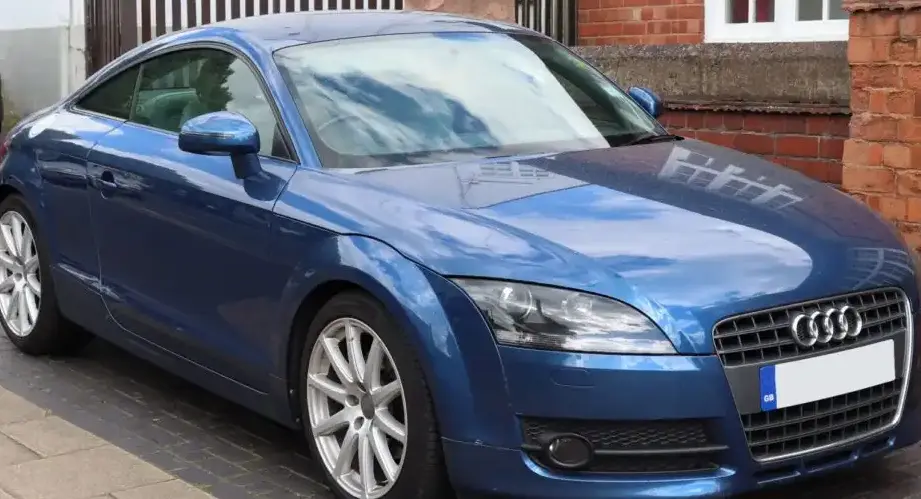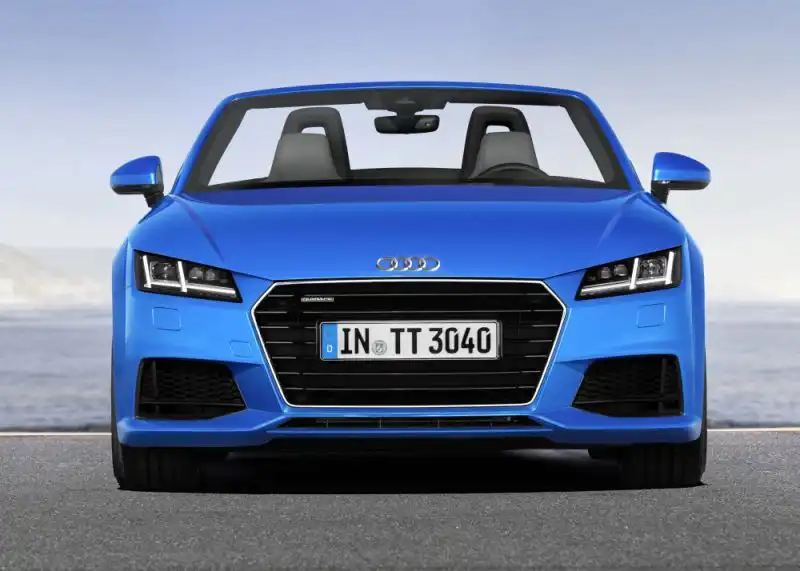
The Audi TT Roadster (8S) 2.0 TFSI, produced from 2014 to 2018, represents the second generation of Audi’s iconic two-seater sports car. Positioned as a premium offering within the TT lineup, the 2.0 TFSI variant delivered a balance of performance and everyday usability. It sat above the base 1.8 TFSI models and below the more potent TTS, appealing to drivers seeking a sporty roadster experience without the higher price tag or track-focused nature of the TTS. The 8S generation marked a significant evolution for the TT, incorporating a more angular design language and a technologically advanced interior. This model played a key role in solidifying the TT’s position as a desirable and relatively accessible entry point into the premium sports car segment.
Technical Specifications
| Brand | Audi |
| Model | TT |
| Generation | TT Roadster (8S) |
| Type (Engine) | 2.0 TFSI (230 Hp) |
| Start of production | 2014 |
| End of production | 2018 |
| Powertrain Architecture | Internal Combustion engine |
| Body type | Roadster |
| Seats | 2 |
| Doors | 2 |
| Fuel consumption (urban) | 7.5-7.7 l/100 km (31.4 – 30.5 US mpg) |
| Fuel consumption (extra urban) | 5.2-5.4 l/100 km (45.2 – 43.6 US mpg) |
| Fuel consumption (combined) | 6-6.2 l/100 km (39.2 – 37.9 US mpg) |
| CO2 emissions | 140-144 g/km |
| Fuel Type | Petrol (Gasoline) |
| Acceleration 0 – 100 km/h | 6.2 sec |
| Acceleration 0 – 62 mph | 6.2 sec |
| Acceleration 0 – 60 mph | 5.9 sec |
| Maximum speed | 250 km/h (155.34 mph) – Electronically limited |
| Emission standard | Euro 6 |
| Weight-to-power ratio | 5.7 kg/Hp |
| Weight-to-torque ratio | 3.6 kg/Nm |
| Power | 230 Hp @ 4500-6200 rpm |
| Torque | 370 Nm @ 1600-4300 rpm (272.9 lb.-ft. @ 1600-4300 rpm) |
| Engine layout | Front, Transverse |
| Engine Model/Code | EA888 / CHHC |
| Engine displacement | 1984 cm3 (121.07 cu. in.) |
| Number of cylinders | 4 |
| Engine configuration | Inline |
| Cylinder Bore | 82.5 mm (3.25 in.) |
| Piston Stroke | 92.8 mm (3.65 in.) |
| Compression ratio | 9.6:1 |
| Number of valves per cylinder | 4 |
| Fuel injection system | Direct injection and Multi-port manifold injection |
| Engine aspiration | Turbocharger, Intercooler |
| Valvetrain | DOHC |
| Engine oil capacity | 5.7 l (6.02 US qt | 5.02 UK qt) |
| Kerb Weight | 1320 kg (2910.1 lbs.) |
| Max. weight | 1640 kg (3615.58 lbs.) |
| Max load | 320 kg (705.48 lbs.) |
| Trunk (boot) space – minimum | 280 l (9.89 cu. ft.) |
| Fuel tank capacity | 50 l (13.21 US gal | 11 UK gal) |
| Length | 4177 mm (164.45 in.) |
| Width | 1832 mm (72.13 in.) |
| Width including mirrors | 1966 mm (77.4 in.) |
| Height | 1355 mm (53.35 in.) |
| Wheelbase | 2505 mm (98.62 in.) |
| Front track | 1572 mm (61.89 in.) |
| Rear (Back) track | 1552 mm (61.1 in.) |
| Front overhang | 884 mm (34.8 in.) |
| Rear overhang | 788 mm (31.02 in.) |
| Drag coefficient (Cd) | 0.32 |
| Minimum turning circle | 10.96 m (35.96 ft.) |
| Drivetrain Architecture | Front wheel drive |
| Number of gears | 6 gears, manual transmission |
| Front suspension | Independent, type McPherson with coil spring and anti-roll bar |
| Rear suspension | Independent multi-link spring suspension with stabilizer |
| Front brakes | Ventilated discs |
| Rear brakes | Disc |
| Assisting systems | ABS (Anti-lock braking system) |
| Steering type | Steering rack and pinion |
| Power steering | Electric Steering |
| Tires size | 225/50 R17 |
| Wheel rims size | 8J x 17 |
Powertrain & Engine Architecture
The heart of the 2.0 TFSI Roadster is the EA888 engine, specifically the CHHC variant. This 1984cc, turbocharged inline-four engine utilizes direct fuel injection combined with multi-point injection, optimizing both power delivery and fuel efficiency. The engine features a single-scroll turbocharger with an intercooler, boosting output to 230 horsepower at 4500-6200 rpm and 273 lb-ft of torque between 1600-4300 rpm. A dual overhead camshaft (DOHC) valvetrain with four valves per cylinder ensures efficient gas exchange. The engine’s relatively high compression ratio of 9.6:1 contributes to its responsiveness. The 6-speed manual transmission was standard, providing precise gear changes and engaging driver control. The engine also incorporated Audi’s Start & Stop system to further enhance fuel economy.
Driving Characteristics
The 2.0 TFSI Roadster offered a compelling driving experience. While not as brutally fast as the TTS, the 230 hp engine provided ample power for spirited driving on both winding roads and open highways. The turbocharger delivers a noticeable surge of torque, making overtaking maneuvers effortless. The manual transmission’s gear ratios were well-matched to the engine’s powerband, allowing for quick acceleration. Compared to the base 1.8 TFSI, the 2.0 TFSI offered a significantly more engaging and rewarding driving experience, with noticeably quicker acceleration and a more responsive feel. The front-wheel-drive configuration provided good traction in most conditions, although torque steer could be felt under hard acceleration.
Equipment & Trim Levels
The 2.0 TFSI Roadster came standard with a generous array of features, including leather upholstery, automatic climate control, a multi-function steering wheel, and Audi’s MMI infotainment system with a 6.5-inch display screen. Standard exterior features included 17-inch alloy wheels, xenon headlights, and a power-operated soft top. Optional extras included Audi’s S line package, which added sportier styling cues, upgraded interior trim, and larger wheels. Other available options included a Bang & Olufsen sound system, navigation system, and parking sensors. The interior design was minimalist and driver-focused, with a high-quality feel and excellent build quality.
Chassis & Braking
The TT Roadster’s chassis was designed to provide a balance of agility and comfort. The front suspension utilized a McPherson strut setup with coil springs and an anti-roll bar, while the rear suspension employed a multi-link design with a stabilizer bar. This configuration delivered precise handling and good ride quality. The braking system consisted of ventilated discs at the front and solid discs at the rear, providing ample stopping power. ABS (Anti-lock Braking System) was standard. The car’s relatively low weight contributed to its nimble handling characteristics.
Market Reception & Comparison
The Audi TT Roadster 2.0 TFSI was generally well-received by automotive critics. It was praised for its stylish design, engaging driving dynamics, and high-quality interior. Critics noted that the 2.0 TFSI offered a significant performance upgrade over the base 1.8 TFSI model, making it the more desirable choice for driving enthusiasts. Fuel economy was considered respectable for a sports car, averaging around 39 mpg in combined driving. Compared to rivals such as the BMW Z4 and Porsche Boxster, the TT Roadster offered a more affordable entry point into the premium roadster segment.
Legacy
The EA888 2.0 TFSI engine has proven to be a remarkably durable and reliable powerplant. With proper maintenance, these engines can easily exceed 150,000 miles. The 8S TT Roadster, including the 2.0 TFSI variant, has maintained a strong following in the used car market. Its combination of style, performance, and relative affordability makes it a popular choice for buyers seeking a fun and engaging sports car. Common maintenance items include regular oil changes, spark plug replacements, and occasional turbocharger inspections. The 8S TT Roadster represents a significant chapter in Audi’s history, solidifying the TT’s status as a modern classic.