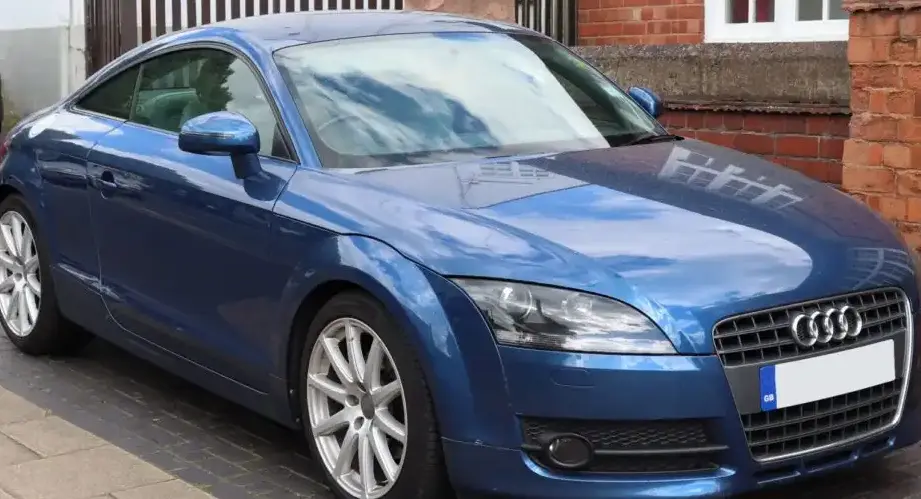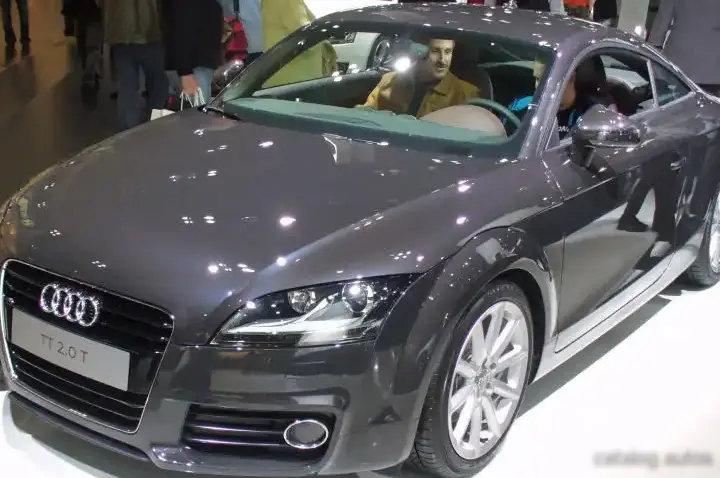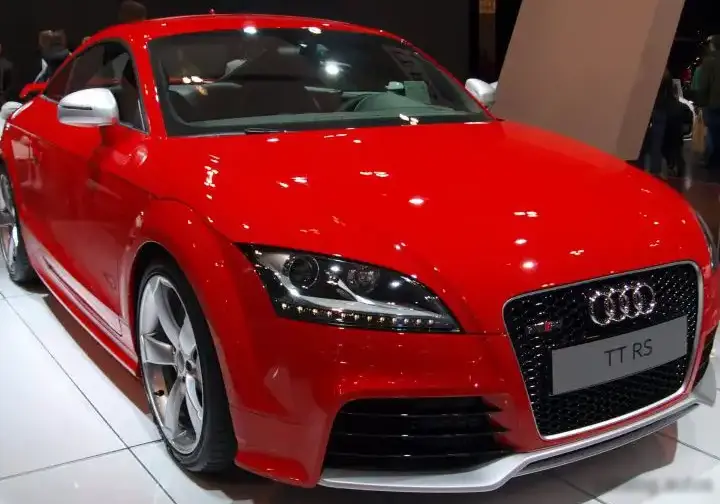
The Audi TT RS Coupe (8J, facelift) with the 2.5 TFSI 340 horsepower quattro drivetrain represents the pinnacle of performance for the second-generation TT. Introduced in 2010 as part of a mid-cycle refresh of the 8J platform, this variant aimed to deliver uncompromising performance in a compact, stylish package. Production continued through 2014, solidifying its position as a highly sought-after enthusiast vehicle. The facelift brought subtle cosmetic changes, but the core mechanical upgrades focused on enhancing the already potent 2.5-liter five-cylinder engine and refining the quattro all-wheel-drive system.
Technical Specifications
| Brand | Audi |
| Model | TT |
| Generation | TT RS Coupe (8J, facelift 2010) |
| Type (Engine) | 2.5 TFSI (340 Hp) quattro |
| Start of production | 2010 |
| End of production | 2014 |
| Powertrain Architecture | Internal Combustion engine |
| Body type | Coupe |
| Seats | 4 |
| Doors | 3 |
| Fuel consumption (economy) – urban | 12.6 l/100 km (18.7 US mpg, 22.4 UK mpg, 7.9 km/l) |
| Fuel consumption (economy) – extra urban | 6.8 l/100 km (34.6 US mpg, 41.5 UK mpg, 14.7 km/l) |
| Fuel consumption (economy) – combined | 9 l/100 km (26.1 US mpg, 31.4 UK mpg, 11.1 km/l) |
| CO2 emissions | 209 g/km |
| Fuel Type | Petrol (Gasoline) |
| Acceleration 0 – 100 km/h | 4.6 sec |
| Acceleration 0 – 62 mph | 4.6 sec |
| Acceleration 0 – 60 mph | 4.4 sec |
| Maximum speed | 250 km/h (155.34 mph) |
| Emission standard | Euro 5 |
| Weight-to-power ratio | 4.3 kg/Hp, 234.5 Hp/tonne |
| Weight-to-torque ratio | 3.2 kg/Nm, 310.3 Nm/tonne |
| Power | 340 Hp @ 5400-6500 rpm |
| Power per litre | 137.1 Hp/l |
| Torque | 450 Nm @ 1600-5300 rpm (331.9 lb.-ft. @ 1600-5300 rpm) |
| Engine layout | Front, Transverse |
| Engine Model/Code | CEPA |
| Engine displacement | 2480 cm3 (151.34 cu. in.) |
| Number of cylinders | 5 |
| Engine configuration | Inline |
| Cylinder Bore | 82.5 mm (3.25 in.) |
| Piston Stroke | 92.8 mm (3.65 in.) |
| Compression ratio | 10:1 |
| Number of valves per cylinder | 4 |
| Fuel injection system | Direct injection |
| Engine aspiration | Turbocharger, Intercooler |
| Valvetrain | DOHC |
| Engine oil capacity | 6.5 l (6.87 US qt | 5.72 UK qt) |
| Coolant | 10 l (10.57 US qt | 8.8 UK qt) |
| Kerb Weight | 1450 kg (3196.7 lbs.) |
| Max. weight | 1850 kg (4078.55 lbs.) |
| Max load | 400 kg (881.85 lbs.) |
| Trunk (boot) space – minimum | 290 l (10.24 cu. ft.) |
| Trunk (boot) space – maximum | 700 l (24.72 cu. ft.) |
| Fuel tank capacity | 60 l (15.85 US gal | 13.2 UK gal) |
| Length | 4198 mm (165.28 in.) |
| Width | 1842 mm (72.52 in.) |
| Width including mirrors | 1952 mm (76.85 in.) |
| Height | 1342 mm (52.83 in.) |
| Wheelbase | 2468 mm (97.17 in.) |
| Front track | 1555 mm (61.22 in.) |
| Rear (Back) track | 1546 mm (60.87 in.) |
| Front overhang | 911 mm (35.87 in.) |
| Rear overhang | 819 mm (32.24 in.) |
| Drag coefficient (Cd) | 0.32 |
| Minimum turning circle (turning diameter) | 10.7 m (35.1 ft.) |
| Drive wheel | All wheel drive (4×4) |
| Number of gears and type of gearbox | 6 gears, manual transmission |
| Front suspension | Independent, type McPherson with coil spring and anti-roll bar |
| Rear suspension | Independent multi-link spring suspension with stabilizer |
| Front brakes | Ventilated discs |
| Rear brakes | Ventilated discs |
| Assisting systems | ABS (Anti-lock braking system) |
| Steering type | Steering rack and pinion |
| Power steering | Electric Steering |
| Tires size | 245/40 R18 |
| Wheel rims size | 9J x 18 |
INTRODUCTION
The Audi TT RS Coupe (8J, facelift) 2.5 TFSI quattro is a high-performance variant of the Audi TT, built on the Volkswagen Group’s PQ35 (A5) platform, also known as the 8J series. Introduced in 2010, it represented a significant upgrade over the original 8J TT RS, focusing on increased power and refined handling. Positioned as the flagship model within the TT range, it offered a more focused driving experience than the standard TT or even the S-Line models. The facelift brought minor styling revisions, but the core appeal remained its potent engine and all-wheel-drive system.
Powertrain & Engine Architecture
At the heart of the TT RS is the 2.5-liter inline-five cylinder engine, designated the CEPA engine code. This engine is a descendant of the unit originally used in the Audi Sport Quattro of the 1980s, and it’s renowned for its unique sound and strong performance. The CEPA features direct fuel injection (FSI) and a BorgWarner twin-scroll turbocharger with an intercooler, producing 340 horsepower at 5400-6500 rpm and 450 Nm (331.9 lb-ft) of torque between 1600 and 5300 rpm. The engine utilizes a dual overhead camshaft (DOHC) valvetrain with four valves per cylinder. The 6-speed manual transmission was standard, delivering power to all four wheels via Audi’s renowned quattro all-wheel-drive system. The quattro system employs a multi-plate clutch to distribute torque between the front and rear axles, optimizing traction in various conditions.
Driving Characteristics
The 2.5 TFSI engine delivers a thrilling driving experience. The turbocharger provides strong mid-range punch, with minimal turbo lag, making it responsive in everyday driving situations. The 0-60 mph sprint takes approximately 4.4 seconds, and the car is electronically limited to a top speed of 155 mph. The manual transmission offers precise shifts, and the quattro system provides exceptional grip, allowing for confident cornering. Compared to the standard TT, the RS model features a more aggressive suspension setup, resulting in a firmer ride. While not as comfortable for long journeys as the standard TT, the RS offers a significantly more engaging and dynamic driving experience. The engine’s distinctive five-cylinder exhaust note is a defining characteristic, adding to the overall driving enjoyment.
Equipment & Trim Levels
The TT RS Coupe came generously equipped as standard. Key features included sport seats upholstered in Nappa leather with embossed RS logos, a flat-bottomed steering wheel, aluminum interior trim, and a driver information system. Exterior features included a unique RS front bumper, side skirts, rear diffuser, and a rear spoiler. Optional extras included a Bang & Olufsen sound system, navigation system, and various customization options for interior and exterior trim. The interior design was focused on a sporty aesthetic, with a clear emphasis on the driver.
Chassis & Braking
The TT RS featured a fully independent suspension system, with McPherson struts at the front and a multi-link setup at the rear. The suspension was tuned for performance, with stiffer springs and dampers compared to the standard TT. Braking duties were handled by ventilated disc brakes on all four wheels, providing ample stopping power. The ABS (Anti-lock Braking System) was standard, enhancing safety and stability. The car’s relatively low weight (1450 kg / 3196.7 lbs) contributed to its agile handling characteristics.
Market Reception & Comparison
The Audi TT RS Coupe was widely praised by automotive critics for its performance, handling, and distinctive engine. It was often compared to rivals such as the Porsche Cayman and BMW Z4. While the Cayman offered a more focused driving experience, the TT RS provided a more practical and versatile package, with a usable rear seat and a larger trunk. Compared to the standard TT and the TT S, the RS model offered a significant performance upgrade, justifying its higher price tag. Fuel economy was reasonable for a high-performance car, averaging around 26.1 US mpg in combined driving. Reliability was generally good, although some owners reported minor issues with the turbocharger and exhaust system.
Legacy
The Audi TT RS Coupe (8J, facelift) remains a highly desirable car in the used market. Its combination of performance, style, and practicality has made it a popular choice among enthusiasts. The 2.5 TFSI engine is known for its durability, although regular maintenance is essential. The car’s distinctive design and engaging driving experience have ensured its place as a modern classic. Values have remained relatively strong, reflecting the car’s enduring appeal and limited production numbers. The TT RS continues to be celebrated for its unique character and its ability to deliver a thrilling driving experience.