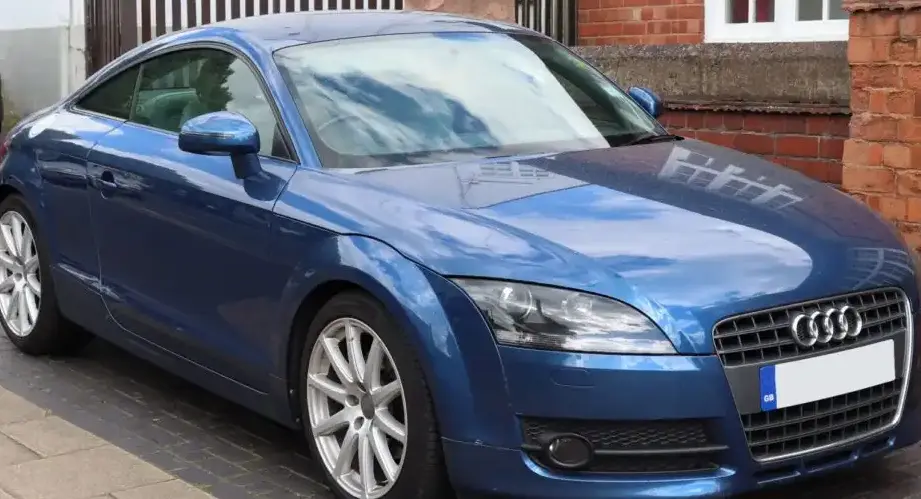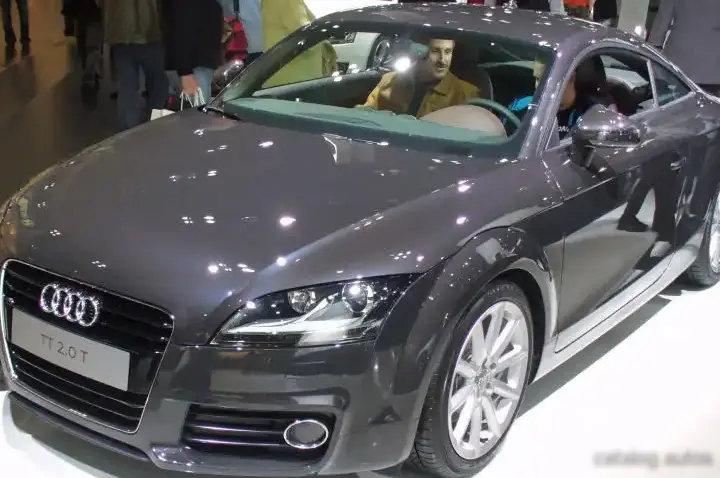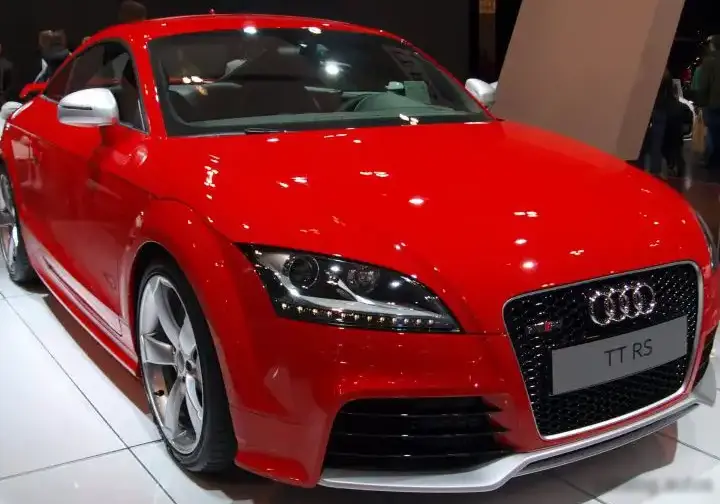
The Audi TT RS Coupe (8J, facelift) with the 2.5 TFSI 340 horsepower engine and S tronic dual-clutch transmission represents the high-performance pinnacle of the second-generation TT lineup. Produced from 2010 to 2014, this variant was positioned as Audi’s direct competitor to models like the Porsche Cayman and BMW Z4, offering a compelling blend of everyday usability and track-focused performance. It built upon the foundation of the 8J platform (shared with the Volkswagen Golf Mk5 and Audi A3) but significantly elevated the driving experience through its potent engine, all-wheel-drive system, and sophisticated transmission.
Technical Specifications
| Brand | Audi |
| Model | TT |
| Generation | TT RS Coupe (8J, facelift 2010) |
| Type (Engine) | 2.5 TFSI (340 Hp) quattro S tronic |
| Start of production | 2010 |
| End of production | 2014 |
| Powertrain Architecture | Internal Combustion engine |
| Body type | Coupe |
| Seats | 4 |
| Doors | 3 |
| Fuel consumption (economy) – urban | 12.3 l/100 km (19.1 US mpg, 23 UK mpg, 8.1 km/l) |
| Fuel consumption (economy) – extra urban | 6.3 l/100 km (37.3 US mpg, 44.8 UK mpg, 15.9 km/l) |
| Fuel consumption (economy) – combined | 8.5 l/100 km (27.7 US mpg, 33.2 UK mpg, 11.8 km/l) |
| CO2 emissions | 197 g/km |
| Fuel Type | Petrol (Gasoline) |
| Acceleration 0 – 100 km/h | 4.3 sec |
| Acceleration 0 – 62 mph | 4.3 sec |
| Acceleration 0 – 60 mph | 4.1 sec |
| Maximum speed | 250 km/h (155.34 mph) |
| Emission standard | Euro 5 |
| Weight-to-power ratio | 4.3 kg/Hp, 230.5 Hp/tonne |
| Weight-to-torque ratio | 3.3 kg/Nm, 305.1 Nm/tonne |
| Power | 340 Hp @ 5400-6500 rpm |
| Power per litre | 137.1 Hp/l |
| Torque | 450 Nm @ 1600-5300 rpm (331.9 lb.-ft. @ 1600-5300 rpm) |
| Engine layout | Front, Transverse |
| Engine Model/Code | CEPA |
| Engine displacement | 2480 cm3 (151.34 cu. in.) |
| Number of cylinders | 5 |
| Engine configuration | Inline |
| Cylinder Bore | 82.5 mm (3.25 in.) |
| Piston Stroke | 92.8 mm (3.65 in.) |
| Compression ratio | 10:1 |
| Number of valves per cylinder | 4 |
| Fuel injection system | Direct injection |
| Engine aspiration | Turbocharger, Intercooler |
| Valvetrain | DOHC |
| Engine oil capacity | 6.5 l (6.87 US qt | 5.72 UK qt) |
| Coolant | 10 l (10.57 US qt | 8.8 UK qt) |
| Kerb Weight | 1475 kg (3251.82 lbs.) |
| Max. weight | 1875 kg (4133.67 lbs.) |
| Max load | 400 kg (881.85 lbs.) |
| Trunk (boot) space – minimum | 290 l (10.24 cu. ft.) |
| Trunk (boot) space – maximum | 700 l (24.72 cu. ft.) |
| Fuel tank capacity | 60 l (15.85 US gal | 13.2 UK gal) |
| Length | 4198 mm (165.28 in.) |
| Width | 1842 mm (72.52 in.) |
| Width including mirrors | 1952 mm (76.85 in.) |
| Height | 1342 mm (52.83 in.) |
| Wheelbase | 2468 mm (97.17 in.) |
| Front track | 1555 mm (61.22 in.) |
| Rear (Back) track | 1546 mm (60.87 in.) |
| Front overhang | 911 mm (35.87 in.) |
| Rear overhang | 819 mm (32.24 in.) |
| Drag coefficient (Cd) | 0.32 |
| Minimum turning circle | 10.7 m (35.1 ft.) |
| Drive wheel | All wheel drive (4×4) |
| Number of gears and type of gearbox | 7 gears, automatic transmission S tronic |
| Front suspension | Independent, type McPherson with coil spring and anti-roll bar |
| Rear suspension | Independent multi-link spring suspension with stabilizer |
| Front brakes | Ventilated discs |
| Rear brakes | Ventilated discs |
| Assisting systems | ABS (Anti-lock braking system) |
| Steering type | Steering rack and pinion |
| Power steering | Electric Steering |
| Tires size | 245/40 R18 |
| Wheel rims size | 9J x 18 |
INTRODUCTION
The Audi TT RS Coupe (8J, facelift) 2.5 TFSI quattro S tronic is a high-performance variant of the second-generation Audi TT. Introduced in 2010 as part of a mid-cycle refresh of the 8J series, it represented a significant leap in performance over the standard TT models. The “RS” designation, standing for “RennSport” (racing sport), signifies Audi’s commitment to creating a track-capable vehicle while maintaining a degree of everyday usability. This model occupied the top tier of the TT lineup, offering a more focused driving experience than the standard TT or even the TTS.
Powertrain & Engine Architecture
At the heart of the TT RS is the 2.5-liter inline-five cylinder engine, designated as the CEPA engine code. This engine is a unique offering within the Audi/Volkswagen group, known for its distinctive sound and robust performance. It features direct fuel injection (FSI) and a low-inertia twin-scroll turbocharger, allowing for rapid spool-up and minimal turbo lag. The engine produces 340 horsepower at 5400-6500 rpm and 450 Nm (331.9 lb-ft) of torque between 1600 and 5300 rpm. The S tronic 7-speed dual-clutch transmission is standard, providing incredibly fast and smooth gear changes. This transmission allows for both fully automatic operation and manual gear selection via steering wheel-mounted paddles. The engine’s transverse layout contributes to the car’s balanced handling characteristics.
Driving Characteristics
The 2.5 TFSI engine delivers a thrilling driving experience. The combination of the turbocharger and the dual-clutch transmission results in immediate throttle response and strong acceleration. The 0-60 mph sprint is achieved in approximately 4.1 seconds, and the car is electronically limited to a top speed of 155 mph. The S tronic transmission’s quick shifts contribute to the car’s impressive acceleration. Compared to the standard TT’s 2.0-liter four-cylinder engine, the TT RS offers significantly more power and torque throughout the rev range. While the standard TT prioritizes fuel efficiency and comfort, the TT RS is geared towards performance enthusiasts. The all-wheel-drive quattro system provides excellent traction, particularly in challenging conditions, and contributes to the car’s neutral handling balance.
Equipment & Trim Levels
The TT RS came generously equipped as standard. Interior features included sport seats upholstered in Nappa leather with embossed RS logos, a flat-bottomed steering wheel, aluminum pedal caps, and unique RS-specific interior trim. Exterior styling cues included a distinctive front bumper with large air intakes, a rear spoiler, and quad exhaust outlets. Optional extras included a Bang & Olufsen sound system, carbon fiber interior trim, and various exterior styling packages. The overall interior design focused on a driver-centric layout, emphasizing the car’s sporty character.
Chassis & Braking
The TT RS features a sport-tuned suspension with McPherson struts at the front and a multi-link setup at the rear. The suspension is firmer than that of the standard TT, providing improved handling and reduced body roll. Larger ventilated disc brakes are fitted at all four corners, providing ample stopping power. The braking system is further enhanced by ABS (Anti-lock Braking System) and electronic stability control. The car’s relatively low weight (1475 kg / 3251.82 lbs) contributes to its agile handling characteristics.
Market Reception & Comparison
The Audi TT RS Coupe was generally well-received by automotive critics. It was praised for its powerful engine, engaging driving dynamics, and stylish design. Compared to the standard TT and TTS models, the RS offered a significant performance upgrade, but at a higher price point. Fuel economy, while respectable for a high-performance car, was lower than that of the less powerful TT variants. The TT RS competed directly with the Porsche Cayman and BMW Z4, offering a compelling alternative with its unique five-cylinder engine and all-wheel-drive system.
Legacy
The 2.5 TFSI engine in the TT RS has proven to be a robust and reliable powertrain when properly maintained. While the engine’s complexity requires regular servicing, major mechanical issues are relatively uncommon. The S tronic transmission is also generally reliable, but requires fluid changes at the recommended intervals. On the used car market, the TT RS Coupe (8J) remains a desirable and sought-after model, particularly among enthusiasts who appreciate its unique engine and engaging driving experience. Its combination of performance, style, and practicality has ensured its place as a modern classic.