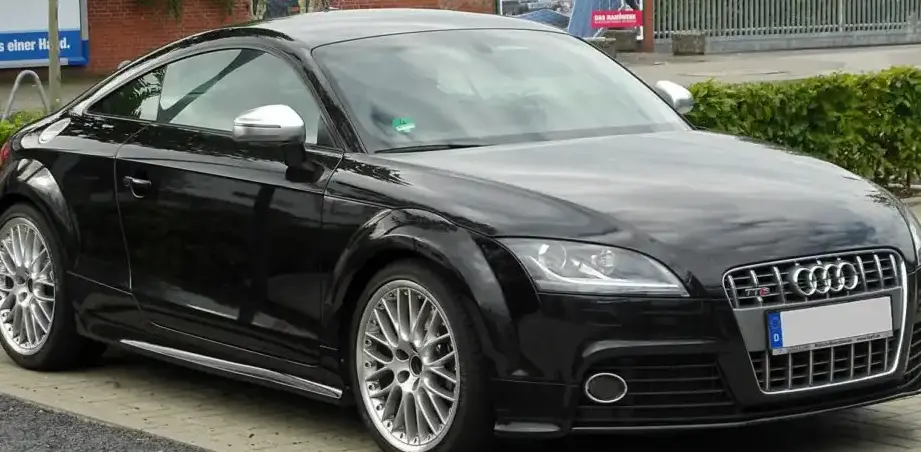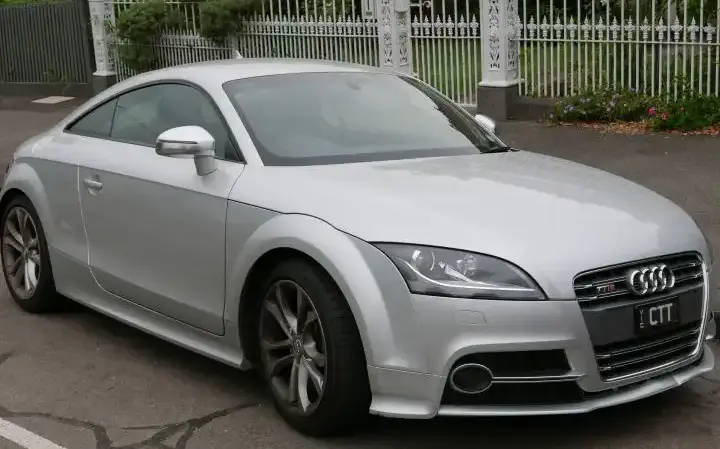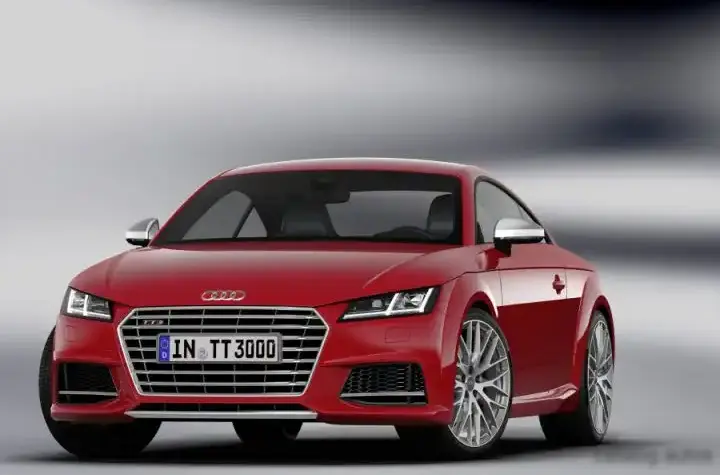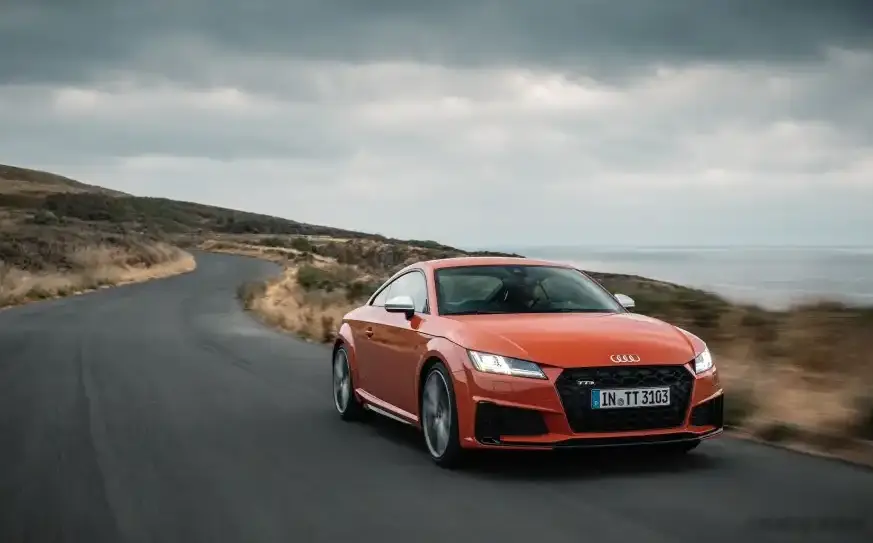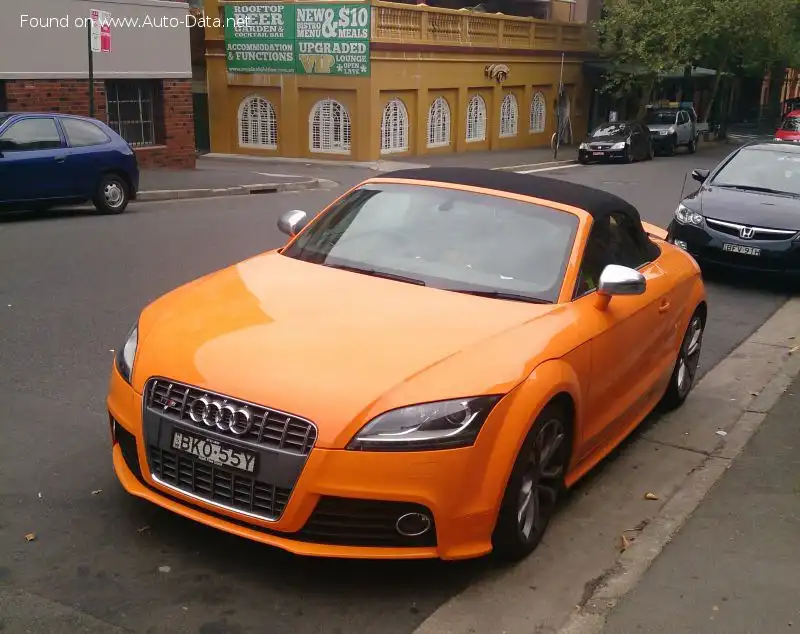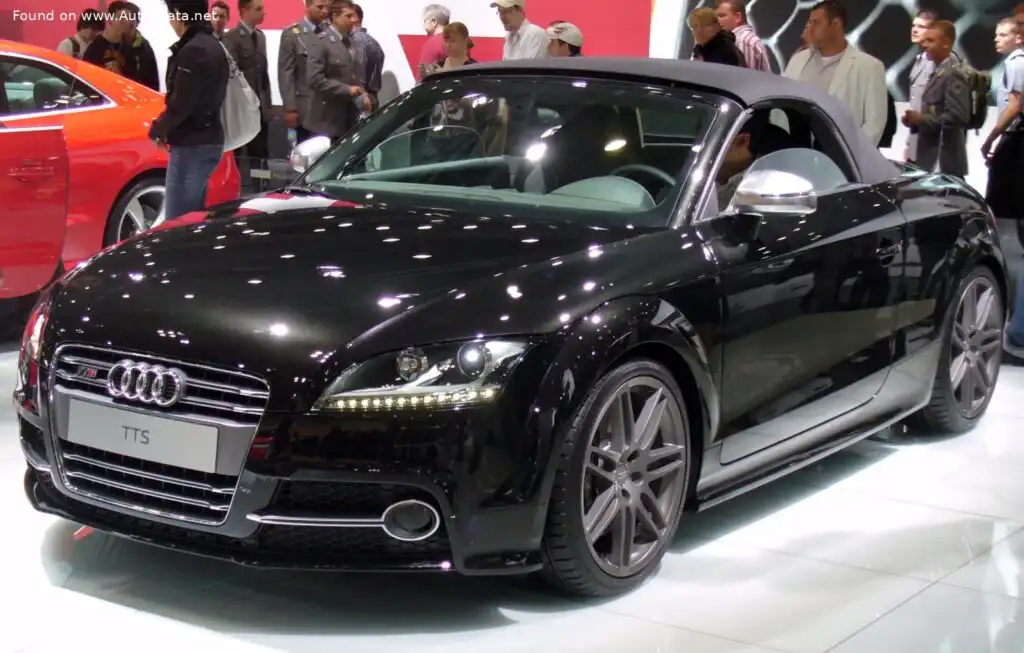
The Audi TTS Roadster (8J, facelift) with the 2.0 TFSI 272 horsepower engine and quattro all-wheel drive represents a compelling blend of performance and open-air driving enjoyment. Produced from 2010 to 2014, this variant occupied the upper echelon of the 8J TT Roadster lineup, positioned above the base 2.0 TFSI models and below the even more potent TT RS. It was a key offering in Audi’s strategy to provide a diverse range of sports cars catering to different performance preferences within the compact roadster segment, primarily targeting the European and North American markets.
Technical Specifications
| Brand | Audi |
| Model | TT |
| Generation | TTS Roadster (8J, facelift 2010) |
| Type (Engine) | 2.0 TFSI (272 Hp) quattro |
| Start of production | 2010 |
| End of production | 2014 |
| Powertrain Architecture | Internal Combustion engine |
| Body type | Roadster |
| Seats | 2 |
| Doors | 2 |
| Fuel consumption (economy) – urban (NEDC) | 10.9 l/100 km (21.6 US mpg, 25.9 UK mpg, 9.2 km/l) |
| Fuel consumption (economy) – extra urban (NEDC) | 6.4 l/100 km (36.8 US mpg, 44.1 UK mpg, 15.6 km/l) |
| Fuel consumption (economy) – combined (NEDC) | 8.1 l/100 km (29 US mpg, 34.9 UK mpg, 12.3 km/l) |
| CO2 emissions (NEDC) | 189 g/km |
| Fuel Type | Petrol (Gasoline) |
| Acceleration 0 – 100 km/h | 5.6 sec |
| Acceleration 0 – 62 mph | 5.6 sec |
| Acceleration 0 – 60 mph | 5.3 sec |
| Maximum speed | 250 km/h (155.34 mph), Electronically limited |
| Emission standard | Euro 5 |
| Weight-to-power ratio | 5.3 kg/Hp, 186.9 Hp/tonne |
| Weight-to-torque ratio | 4.2 kg/Nm, 240.5 Nm/tonne |
| Power | 272 Hp @ 6000 rpm |
| Power per litre | 137.1 Hp/l |
| Torque | 350 Nm @ 2500-5000 rpm (258.15 lb.-ft. @ 2500-5000 rpm) |
| Engine layout | Front, Transverse |
| Engine Model/Code | EA113 / CDLB |
| Engine displacement | 1984 cm3 (121.07 cu. in.) |
| Number of cylinders | 4 |
| Engine configuration | Inline |
| Cylinder Bore | 82.5 mm (3.25 in.) |
| Piston Stroke | 92.8 mm (3.65 in.) |
| Compression ratio | 9.8:1 |
| Number of valves per cylinder | 4 |
| Fuel injection system | Direct injection |
| Engine aspiration | Turbocharger, Intercooler |
| Valvetrain | DOHC |
| Engine oil capacity | 4.6 l (4.86 US qt | 4.05 UK qt) |
| Coolant | 8.6 l (9.09 US qt | 7.57 UK qt) |
| Kerb Weight | 1455 kg (3207.73 lbs.) |
| Max. weight | 1775 kg (3913.21 lbs.) |
| Max load | 320 kg (705.48 lbs.) |
| Trunk (boot) space – minimum | 250 l (8.83 cu. ft.) |
| Fuel tank capacity | 60 l (15.85 US gal | 13.2 UK gal) |
| Length | 4198 mm (165.28 in.) |
| Width | 1842 mm (72.52 in.) |
| Width including mirrors | 1952 mm (76.85 in.) |
| Height | 1350 mm (53.15 in.) |
| Wheelbase | 2468 mm (97.17 in.) |
| Front track | 1555 mm (61.22 in.) |
| Rear (Back) track | 1546 mm (60.87 in.) |
| Front overhang | 911 mm (35.87 in.) |
| Rear overhang | 819 mm (32.24 in.) |
| Drag coefficient (Cd) | 0.33 |
| Minimum turning circle (turning diameter) | 10.96 m (35.96 ft.) |
| Drivetrain Architecture | All wheel drive (4×4). Internal Combustion engine. The Internal combustion engine (ICE) drives the front wheels permanently, and the rear wheels are driven through an electrically or mechanically operated clutch if necessary. |
| Drive wheel | All wheel drive (4×4) |
| Number of gears and type of gearbox | 6 gears, manual transmission |
| Front suspension | Independent, type McPherson with coil spring and anti-roll bar |
| Rear suspension | Independent multi-link spring suspension with stabilizer |
| Front brakes | Ventilated discs, 340 mm |
| Rear brakes | Ventilated discs, 310 mm |
| Assisting systems | ABS (Anti-lock braking system) |
| Steering type | Steering rack and pinion |
| Power steering | Electric Steering |
| Tires size | 245/40 R18; 255/35 R19 |
| Wheel rims size | 9J x 18; 9J x 19 |
INTRODUCTION
The Audi TTS Roadster (8J, facelift) 2.0 TFSI quattro, launched in 2010 as part of the 8J generation’s mid-cycle refresh, built upon the success of the original TTS Roadster. The 8J platform, shared with the Volkswagen Golf Mk5 and other models, provided a solid foundation for a compact, sporty roadster. The facelift brought subtle styling updates, improved efficiency, and refinements to the already capable powertrain. This particular variant, with its 272 horsepower engine and quattro all-wheel drive, aimed to deliver a more engaging and refined driving experience than the standard TT Roadster, appealing to enthusiasts seeking a premium open-top sports car.
Powertrain & Engine Architecture
At the heart of the TTS Roadster lies the EA113 2.0-liter turbocharged four-cylinder engine, specifically the CDLB engine code. This engine is a direct-injection powerplant, utilizing Audi’s FSI (Fuel Stratified Injection) technology for precise fuel delivery and improved combustion efficiency. The engine features a single turbocharger with an intercooler to manage intake air temperature, boosting power output to 272 hp at 6000 rpm and 350 Nm (258 lb-ft) of torque available from 2500 to 5000 rpm. The engine employs a dual overhead camshaft (DOHC) valvetrain with four valves per cylinder. The 6-speed manual transmission was standard, delivering power to all four wheels via Audi’s renowned quattro all-wheel-drive system. This system utilizes a multi-plate clutch to distribute torque between the front and rear axles, enhancing traction and stability, particularly in challenging conditions.
Driving Characteristics
The 272 hp TTS Roadster offered a noticeably more spirited driving experience compared to the base TT Roadster. Acceleration from 0 to 60 mph was achieved in approximately 5.3 seconds, and the electronically limited top speed of 155 mph provided ample performance for both road and track. The quattro all-wheel-drive system provided exceptional grip, allowing for confident cornering and acceleration even on less-than-ideal surfaces. The manual transmission offered precise shifts and a direct connection to the engine, enhancing driver engagement. While the turbocharger did introduce a slight degree of lag, the broad torque curve ensured strong pull throughout the rev range. Compared to the higher-performance TT RS, the TTS Roadster offered a more accessible and balanced driving experience, prioritizing everyday usability alongside sporty performance.
Equipment & Trim Levels
The TTS Roadster came generously equipped as standard. Interior features included sport seats upholstered in a combination of leather and Alcantara, a flat-bottomed steering wheel, and aluminum trim accents. Standard exterior features included 18-inch alloy wheels, xenon headlights, and a power-operated soft top. Optional extras included a premium sound system, navigation system, parking sensors, and a variety of interior customization options. The TTS trim level was positioned as the premium offering within the TT Roadster range, offering a more luxurious and refined experience than the base models.
Chassis & Braking
The TTS Roadster featured a fully independent suspension system, with McPherson struts at the front and a multi-link setup at the rear. This configuration provided a good balance between ride comfort and handling precision. Stabilizer bars were fitted to both axles to reduce body roll during cornering. The braking system consisted of ventilated disc brakes on all four wheels, providing ample stopping power. ABS (Anti-lock Braking System) was standard, enhancing safety and control. The chassis was specifically tuned to complement the increased power output of the TTS engine, resulting in a more responsive and engaging driving experience.
Market Reception & Comparison
The Audi TTS Roadster was generally well-received by automotive critics, who praised its performance, handling, and refined interior. It was often compared to rivals such as the Porsche Boxster and BMW Z4. While the Boxster was often considered the more focused sports car, the TTS Roadster offered a more practical and user-friendly experience, with the added benefit of all-wheel drive. Fuel economy was respectable for a performance roadster, averaging around 29 mpg in combined driving. Reliability was generally good, although some owners reported minor issues with the turbocharger and direct-injection system.
Legacy
The Audi TTS Roadster (8J, facelift) 2.0 TFSI quattro remains a desirable used sports car today. The EA113 engine, while known for its potential for carbon buildup, is generally reliable with proper maintenance. The quattro all-wheel-drive system continues to be a significant selling point, particularly in regions with inclement weather. The TTS Roadster’s combination of performance, style, and practicality has ensured its enduring appeal among enthusiasts seeking a premium open-top driving experience. Its continued presence in the used car market reflects its status as a well-engineered and enjoyable sports car.