
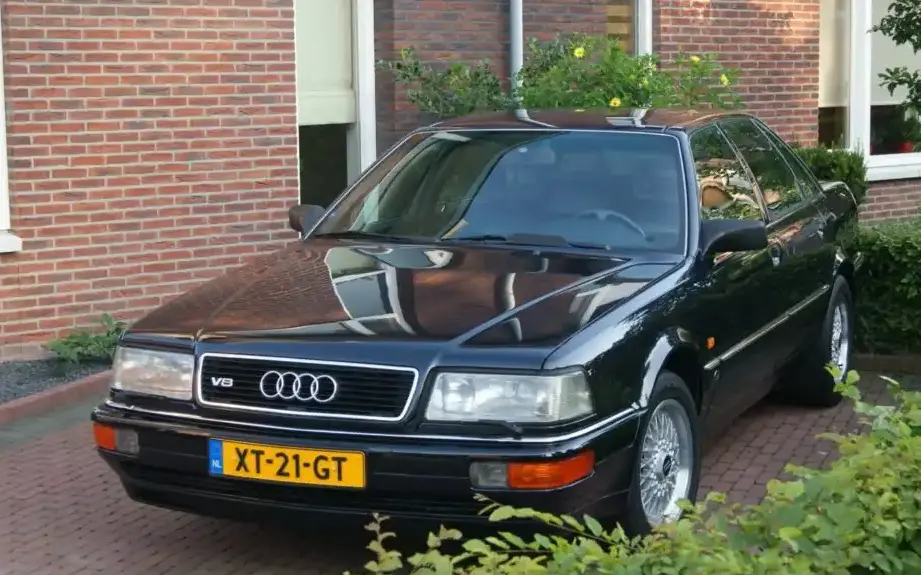
The Audi V8 (D11) 3.6 quattro Automatic, produced between October 1988 and November 1993, represented a significant step forward for Audi, showcasing their commitment to high-performance, technologically advanced sedans. Positioned as the flagship of the Audi range during its production run, this variant combined a potent 3.6-liter V8 engine with a four-speed automatic transmission and Audi’s renowned quattro all-wheel-drive system. It was a key model within the D11 generation, built on the Audi V8 platform, and aimed at buyers seeking a luxurious and capable grand tourer. This specific configuration occupied the premium end of the V8 lineup, offering a more relaxed driving experience compared to the manual transmission options while still delivering substantial performance.
Technical Specifications
| Brand | Audi |
| Model | V8 |
| Generation | V8 (D11) |
| Type (Engine) | 3.6 (250 Hp) quattro Automatic |
| Start of production | October, 1988 |
| End of production | November, 1993 |
| Powertrain Architecture | Internal Combustion engine |
| Body type | Sedan |
| Seats | 5 |
| Doors | 4 |
| Fuel consumption (urban) | 17.1 l/100 km (13.8 US mpg, 16.5 UK mpg, 5.8 km/l) |
| Fuel consumption (extra urban) | 8.9 l/100 km (26.4 US mpg, 31.7 UK mpg, 11.2 km/l) |
| Fuel consumption (combined) | 10.9 l/100 km (21.6 US mpg, 25.9 UK mpg, 9.2 km/l) |
| Fuel Type | Petrol (Gasoline) |
| Acceleration 0 – 100 km/h | 8.9 sec |
| Acceleration 0 – 62 mph | 8.9 sec |
| Acceleration 0 – 60 mph | 8.5 sec |
| Maximum speed | 235 km/h (146.02 mph) |
| Weight-to-power ratio | 6.8 kg/Hp, 146.2 Hp/tonne |
| Weight-to-torque ratio | 5 kg/Nm, 198.8 Nm/tonne |
| Power | 250 Hp @ 5800 rpm |
| Power per litre | 70.2 Hp/l |
| Torque | 340 Nm @ 4000 rpm (250.77 lb.-ft. @ 4000 rpm) |
| Engine layout | Front, Longitudinal |
| Engine Model/Code | PT |
| Engine displacement | 3562 cm3 (217.37 cu. in.) |
| Number of cylinders | 8 |
| Engine configuration | V-engine |
| Cylinder Bore | 81 mm (3.19 in.) |
| Piston Stroke | 86.4 mm (3.4 in.) |
| Compression ratio | 10.6:1 |
| Number of valves per cylinder | 4 |
| Fuel injection system | Multi-port manifold injection |
| Engine aspiration | Naturally aspirated engine |
| Valvetrain | DOHC |
| Engine oil capacity | 8 l (8.45 US qt | 7.04 UK qt) |
| Coolant | 10.5 l (11.1 US qt | 9.24 UK qt) |
| Kerb Weight | 1710 kg (3769.9 lbs.) |
| Max. weight | 2310 kg (5092.68 lbs.) |
| Max load | 600 kg (1322.77 lbs.) |
| Trunk (boot) space – minimum | 570 l (20.13 cu. ft.) |
| Fuel tank capacity | 80 l (21.13 US gal | 17.6 UK gal) |
| Length | 4874 mm (191.89 in.) |
| Width | 1814 mm (71.42 in.) |
| Height | 1420 mm (55.91 in.) |
| Wheelbase | 2702 mm (106.38 in.) |
| Front track | 1514 mm (59.61 in.) |
| Rear (Back) track | 1531 mm (60.28 in.) |
| Drag coefficient (Cd) | 0.35 |
| Minimum turning circle | 11.5 m (37.73 ft.) |
| Drive wheel | All wheel drive (4×4) |
| Number of gears and type of gearbox | 4 gears, automatic transmission |
| Front suspension | Wishbone |
| Rear suspension | Double wishbone |
| Front brakes | Ventilated discs |
| Rear brakes | Disc |
| Assisting systems | ABS (Anti-lock braking system) |
| Steering type | Steering rack and pinion |
| Power steering | Hydraulic Steering |
| Tires size | 215/60 R15 |
| Wheel rims size | 15 |
Powertrain & Engine Architecture
The heart of the V8 3.6 quattro Automatic is the PT engine, a 3.6-liter (3,562 cc) naturally aspirated V8. This engine utilized a cast iron block with aluminum cylinder heads, a configuration chosen for its balance of durability and weight reduction. The engine employed multi-port fuel injection, delivering fuel directly to each cylinder for improved efficiency and responsiveness. The double overhead camshaft (DOHC) valvetrain, with four valves per cylinder, further enhanced breathing and power output. The automatic transmission was a four-speed unit, designed to provide smooth and effortless gear changes. While not as sporty as a manual, it suited the grand touring nature of the car. The quattro all-wheel-drive system, a hallmark of Audi, distributed power to all four wheels, providing excellent traction and stability in various driving conditions.
Driving Characteristics
The 3.6-liter V8 with the automatic transmission delivered a refined and comfortable driving experience. Acceleration from 0-60 mph took approximately 8.5 seconds, respectable for the early 1990s, but noticeably slower than the manual transmission versions. The automatic transmission, while smooth, did result in some power loss compared to the manual. The quattro system provided confident handling, particularly in inclement weather. The gear ratios were tuned for comfortable cruising, prioritizing smooth transitions over outright performance. Compared to the later 2.8-liter V6 models, the V8 offered significantly more torque, resulting in effortless passing power, but at the cost of increased fuel consumption.
Equipment & Trim Levels
The V8 3.6 quattro Automatic was well-equipped for its time. Standard features typically included leather upholstery, power windows, power locks, a sunroof, and an upgraded audio system. Climate control was also a common feature. Optional extras included heated seats, a premium sound system, and upgraded interior trim. The interior design was characterized by a clean, functional layout with high-quality materials. The dashboard featured analog gauges and a central information display.
Chassis & Braking
The D11 chassis featured an independent suspension system with wishbone front suspension and a double wishbone rear setup. This provided a comfortable ride while maintaining good handling characteristics. The V8 3.6 quattro Automatic was equipped with ventilated disc brakes at the front and solid disc brakes at the rear. Anti-lock braking system (ABS) was standard, enhancing safety and control during hard braking. The steering was a rack-and-pinion system with hydraulic power assistance, providing precise and responsive steering feel.
Market Reception & Comparison
The Audi V8 3.6 quattro Automatic was generally well-received by automotive critics. It was praised for its refined engine, comfortable ride, and all-weather capability. However, the automatic transmission was sometimes criticized for detracting from the car’s performance potential. Fuel economy was also a concern, with the V8 engine consuming significantly more fuel than the smaller displacement engines offered in the V8 range. Compared to the 2.6-liter inline-six and 2.8-liter V6 models, the V8 offered a more luxurious and powerful experience, but at a higher price point and with increased running costs.
Legacy
The Audi V8 (D11) 3.6 quattro Automatic holds a significant place in Audi’s history as a pioneering luxury performance sedan. The PT engine, while not known for being exceptionally reliable, is generally durable with proper maintenance. Today, these cars are sought after by enthusiasts and collectors, particularly well-maintained examples. Parts availability can be a challenge, but a dedicated community of owners and specialists exists to support the preservation of these classic Audis. The V8’s influence can be seen in subsequent Audi models, particularly in the continued development of the quattro all-wheel-drive system and the emphasis on combining performance with luxury.
