
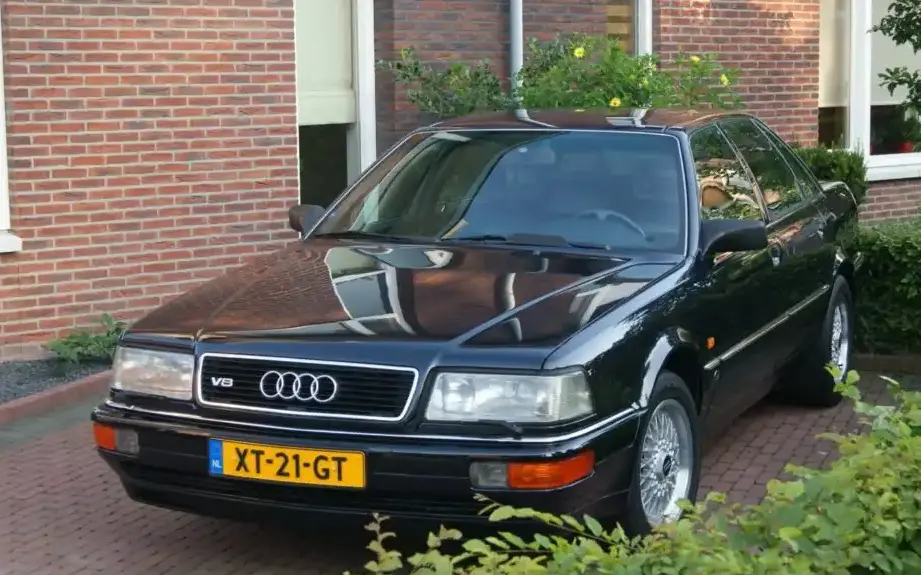
The Audi V8 (D11) 4.2 quattro Automatic, produced between October 1991 and November 1993, represented a significant step forward for Audi, showcasing their commitment to high-performance luxury sedans. This variant, equipped with the naturally aspirated 4.2-liter V8 engine and a four-speed automatic transmission, occupied the top echelon of the D11 V8 range. It was positioned as the flagship model, offering a blend of power, refinement, and all-weather capability through Audi’s renowned quattro all-wheel-drive system. The D11 platform itself was a pivotal development for Audi, laying the groundwork for the subsequent A8 generation and establishing a new benchmark for interior quality and technological innovation within the executive car segment.
Technical Specifications
| Brand | Audi |
| Model | V8 |
| Generation | V8 (D11) |
| Type (Engine) | 4.2 (280 Hp) quattro Automatic |
| Start of production | October, 1991 |
| End of production | November, 1993 |
| Powertrain Architecture | Internal Combustion engine |
| Body type | Sedan |
| Seats | 5 |
| Doors | 4 |
| Fuel Type | Petrol (Gasoline) |
| Acceleration 0 – 100 km/h | 7.7 sec |
| Acceleration 0 – 62 mph | 7.7 sec |
| Acceleration 0 – 60 mph | 7.3 sec |
| Maximum speed | 249 km/h (154.72 mph) |
| Weight-to-power ratio | 6.1 kg/Hp, 163.7 Hp/tonne |
| Weight-to-torque ratio | 4.3 kg/Nm, 233.9 Nm/tonne |
| Power | 280 Hp @ 5800 rpm |
| Power per litre | 67.1 Hp/l |
| Torque | 400 Nm @ 4000 rpm (295.02 lb.-ft. @ 4000 rpm) |
| Engine layout | Front, Longitudinal |
| Engine Model/Code | ABH |
| Engine displacement | 4172 cm3 (254.59 cu. in.) |
| Number of cylinders | 8 |
| Engine configuration | V-engine |
| Cylinder Bore | 84.5 mm (3.33 in.) |
| Piston Stroke | 93 mm (3.66 in.) |
| Compression ratio | 10.6:1 |
| Number of valves per cylinder | 4 |
| Fuel injection system | Multi-port manifold injection |
| Engine aspiration | Naturally aspirated engine |
| Engine oil capacity | 7.5 l (7.93 US qt | 6.6 UK qt) |
| Coolant | 8.5 l (8.98 US qt | 7.48 UK qt) |
| Kerb Weight | 1710 kg (3769.9 lbs.) |
| Max. weight | 2310 kg (5092.68 lbs.) |
| Max load | 600 kg (1322.77 lbs.) |
| Trunk (boot) space – minimum | 570 l (20.13 cu. ft.) |
| Fuel tank capacity | 80 l (21.13 US gal | 17.6 UK gal) |
| Length | 4874 mm (191.89 in.) |
| Width | 1814 mm (71.42 in.) |
| Height | 1420 mm (55.91 in.) |
| Wheelbase | 2702 mm (106.38 in.) |
| Front track | 1514 mm (59.61 in.) |
| Rear (Back) track | 1531 mm (60.28 in.) |
| Drag coefficient (Cd) | 0.35 |
| Minimum turning circle | 11.5 m (37.73 ft.) |
| Drive wheel | All wheel drive (4×4) |
| Number of gears | 4 gears, automatic transmission |
| Front brakes | Ventilated discs |
| Rear brakes | Ventilated discs |
| Tires size | 215/60 R15 |
| Wheel rims size | 15 |
Powertrain & Engine Architecture
The heart of the V8 quattro Automatic is the ABH engine, a 4.2-liter naturally aspirated V8. This engine utilizes a cast iron block with aluminum cylinder heads, a configuration chosen for its balance of durability and weight reduction. The engine employs multi-port fuel injection, delivering fuel directly to each intake port for precise control and efficient combustion. The valvetrain consists of two overhead camshafts per cylinder bank, operating four valves per cylinder. This 4V per cylinder design contributes to the engine’s broad torque curve and high-end power. The four-speed automatic transmission, a ZF 4HP22 unit, was selected for its smoothness and reliability. While not offering the outright performance of a manual gearbox, it provided a more relaxed driving experience, perfectly suited to the V8’s grand touring character. The transmission features electronic control, adapting shift points based on throttle position and vehicle speed.
Driving Characteristics
The 4.2-liter V8 Automatic delivers a distinctly different driving experience compared to the five-cylinder or turbocharged variants of the D11. While the automatic transmission slightly diminishes acceleration figures (0-60 mph in approximately 7.3 seconds), it provides effortless cruising and a refined driving experience. The quattro all-wheel-drive system ensures excellent traction in all conditions, providing a secure and confident feel. The automatic transmission’s gear ratios are geared towards comfortable highway cruising, with a focus on smooth transitions rather than aggressive acceleration. Compared to the manual transmission, the automatic feels less engaging, but it offers a more accessible and user-friendly experience for a wider range of drivers. The engine’s torque output of 295 lb-ft allows for relaxed overtaking maneuvers, and the V8’s characteristic sound adds to the overall sense of luxury and performance.
Equipment & Trim Levels
The V8 4.2 quattro Automatic came generously equipped as standard. Interior features included leather upholstery, power-adjustable front seats with memory function, climate control, and a high-quality sound system. Exterior features included alloy wheels, a sunroof, and fog lights. Optional extras included a premium sound system, upgraded leather trim, and a rear window sunshade. The interior design emphasized luxury and comfort, with wood trim accents and a well-laid-out dashboard. The V8 model also benefited from additional sound insulation, further enhancing the refined driving experience.
Chassis & Braking
The D11 V8 chassis features fully independent suspension, with double wishbones at the front and semi-trailing arms at the rear. The suspension is tuned for a balance of comfort and handling, providing a smooth ride while maintaining good body control. The V8 model is equipped with ventilated disc brakes on all four wheels, providing ample stopping power. Anti-lock braking system (ABS) is standard, enhancing safety and stability. The quattro all-wheel-drive system distributes power between the front and rear axles as needed, optimizing traction and handling. Stabilizer bars are fitted front and rear to reduce body roll during cornering.
Market Reception & Comparison
The Audi V8 4.2 quattro Automatic was generally well-received by automotive critics. It was praised for its powerful engine, refined driving experience, and luxurious interior. However, some critics noted that the automatic transmission slightly dulled the car’s performance compared to the manual version. Fuel economy was also a concern, with the V8 engine consuming a significant amount of fuel. Compared to the 2.8-liter V6 models, the V8 offered significantly more power and a more luxurious experience, but at a higher price point. Compared to the turbocharged five-cylinder models, the V8 provided a smoother, more linear power delivery, but lacked the five-cylinder’s distinctive character.
Legacy
The Audi V8 (D11) 4.2 quattro Automatic holds a significant place in Audi’s history. It established the brand as a serious contender in the luxury sedan segment and paved the way for the A8 generation. The ABH engine proved to be a durable and reliable powerplant, and many examples are still on the road today. While maintenance costs can be higher than those of more common vehicles, the V8’s robust construction and readily available parts supply ensure that it can be kept running for years to come. In the used car market, the V8 4.2 quattro Automatic is sought after by enthusiasts who appreciate its classic styling, powerful engine, and refined driving experience. It represents a unique blend of performance, luxury, and all-weather capability that remains appealing even decades after its production ended.
