
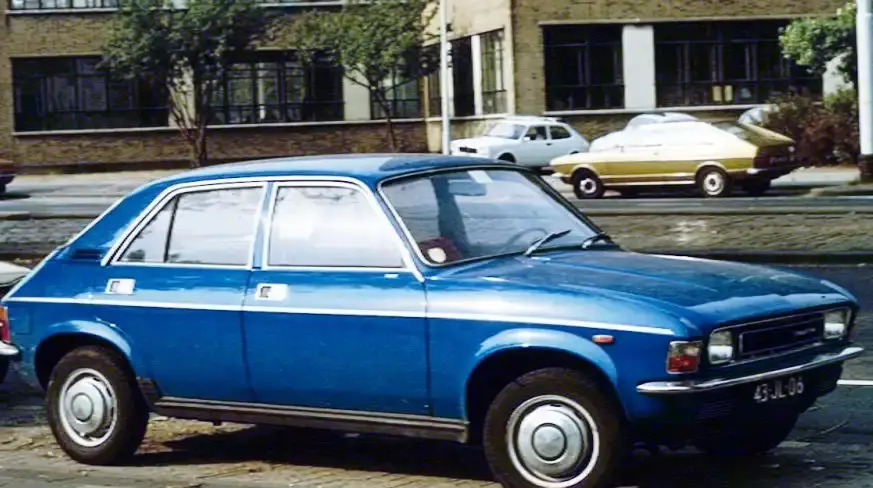
The Austin Allegro 1.1, produced between 1973 and 1981, represented a significant attempt by British Leyland to modernize its small car offerings. Part of the ADO67 (Amalgamated Drawing Office 67) project, the Allegro was intended to replace the Austin 1100 and 1300, offering a more contemporary design and improved practicality. The 1.1-liter variant served as the entry-level model in the Allegro range, aimed at budget-conscious buyers and those prioritizing fuel economy over outright performance. It occupied a crucial position in the British automotive market during a period of significant economic and social change, and while not a commercial success on par with some of its rivals, it remains a notable example of 1970s British automotive engineering.
Technical Specifications
| Brand | Austin |
| Model | Allegro |
| Generation | Allegro (ADO67) |
| Type (Engine) | 1.1 (45 hp) |
| Start of Production | 1973 |
| End of Production | 1981 |
| Powertrain Architecture | Internal Combustion Engine |
| Body Type | Hatchback |
| Fuel Type | Petrol (Gasoline) |
| Power | 45 hp |
| Engine Aspiration | Naturally Aspirated |
Powertrain & Engine Architecture
The Austin Allegro 1.1 was powered by the A-series engine, specifically the 1100cc (1098cc to be precise) version. This engine, designated as the 12H series, was a four-cylinder, inline configuration with a cast iron block and cylinder head. It featured a single overhead valve (OHV) valvetrain, operated by a camshaft driven by a chain. The engine utilized a Zenith 36mm carburetor for fuel delivery, a relatively simple system common for the era. The 1.1-liter engine produced 45 horsepower at 5000 rpm and approximately 62 lb-ft of torque at 3000 rpm. The engine was mated to a four-speed manual gearbox as standard, although a three-speed automatic transmission was offered as an optional extra, albeit rarely selected due to its performance impact. The automatic transmission was a Borg-Warner Type 35 unit, known for its robustness but also for its relatively slow and imprecise shifts. The engine’s design prioritized reliability and low-end torque over high-speed performance, reflecting the intended use case of the vehicle.
Driving Characteristics
The Allegro 1.1’s driving experience was decidedly uninspiring, particularly when equipped with the automatic transmission. Acceleration was slow, taking approximately 18 seconds to reach 60 mph. The engine lacked the power to provide brisk overtaking maneuvers, and steep hills required significant downshifting. The four-speed manual transmission offered a slightly more engaging experience, allowing the driver to better utilize the engine’s limited power band. However, even with the manual gearbox, the Allegro 1.1 was not a performance-oriented vehicle. The suspension, featuring independent front suspension with hydrolastic units and a trailing arm rear suspension, provided a relatively comfortable ride, absorbing bumps and imperfections in the road surface reasonably well. However, the car exhibited noticeable body roll in corners, and the steering lacked precision. The overall driving experience was geared towards practicality and comfort rather than driver enjoyment.
Equipment & Trim Levels
The Allegro 1.1 was positioned as the base model in the range, and as such, it featured a relatively sparse equipment list. Standard features included cloth upholstery, a basic instrument panel with speedometer and fuel gauge, and a two-spoke steering wheel. The interior was functional but lacked the aesthetic appeal of some of its competitors. Optional extras included a radio, heated rear window, and upgraded upholstery. Trim levels were relatively simple, with the 1.1 typically identified by minimal exterior embellishments. Later models saw the introduction of minor cosmetic upgrades, such as different wheel covers and interior color schemes. The Allegro’s interior design was notable for its “quartz clock,” a digital clock that was prone to failure and became a symbol of the car’s reliability issues.
Chassis & Braking
The Allegro 1.1 utilized a monocoque chassis construction, providing a relatively lightweight and rigid platform. The front suspension employed independent units with hydrolastic spheres, a system designed to provide a comfortable and self-leveling ride. The rear suspension featured a trailing arm setup. Braking was initially provided by Girling hydraulic disc brakes on the front wheels and drum brakes on the rear. Later models saw the introduction of larger diameter drum brakes on the rear, improving stopping performance slightly. The braking system was adequate for the car’s performance capabilities but lacked the stopping power of more modern vehicles. Steering was by rack and pinion, providing reasonable maneuverability, although it lacked feedback and precision.
Market Reception & Comparison
The Austin Allegro 1.1 received a mixed reception from automotive critics. While praised for its spacious interior and comfortable ride, it was widely criticized for its lack of performance, unrefined engine, and questionable reliability. Compared to its rivals, such as the Ford Escort and Vauxhall Astra, the Allegro 1.1 felt underpowered and less sophisticated. Fuel economy was reasonable for the era, averaging around 35-40 mpg, but this was not enough to offset its other shortcomings. The automatic transmission version was particularly unpopular, as it significantly reduced performance and increased fuel consumption. The Allegro 1.1’s target audience was primarily budget-conscious buyers who prioritized practicality and affordability over driving pleasure. However, even within this segment, it struggled to compete with more established rivals.
Legacy
The Austin Allegro 1.1 ultimately failed to achieve the commercial success that British Leyland had hoped for. Its reputation for unreliability and lackluster performance contributed to its declining sales throughout the 1970s. While the Allegro platform continued in production with other engine variants, the 1.1-liter model was discontinued in 1981. Today, the Allegro 1.1 is a relatively rare sight on the roads, and well-maintained examples are sought after by classic car enthusiasts. The 1.1-liter engine, while not particularly powerful, proved to be relatively durable, and many examples are still running today. The Allegro 1.1 serves as a reminder of a challenging period in British automotive history, and a testament to the engineering compromises that were often necessary during a time of economic hardship. Its legacy is one of good intentions, but ultimately, a flawed execution.
