
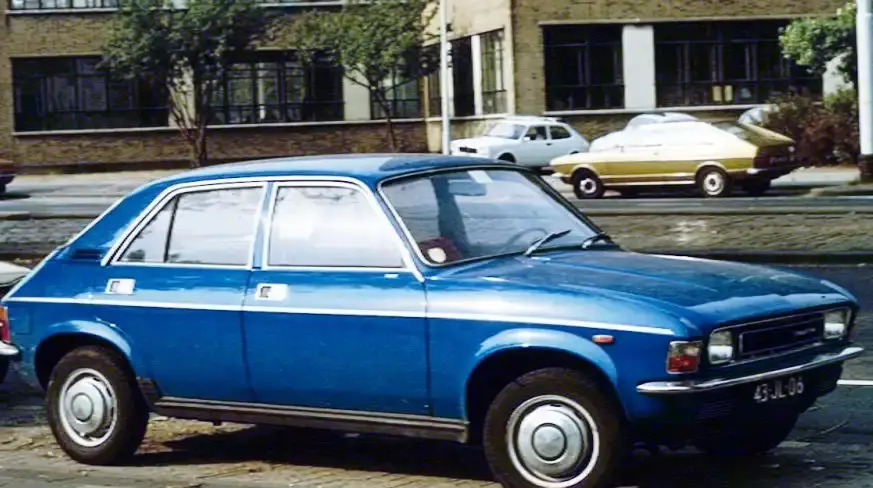
The Austin Allegro 1.3, produced between 1973 and 1982, represented a significant attempt by British Leyland to modernize its small car offerings. Part of the ADO67 (Amalgamated Drawing Office 67) project, the Allegro was intended to replace the Austin 1100 and 1300, offering a more contemporary design and improved practicality. The 1.3-liter variant, producing 54 horsepower, served as the entry-level model in the Allegro range, aimed at budget-conscious buyers and those prioritizing fuel economy over outright performance. It occupied a crucial position in the lineup, providing affordable transportation within a period of significant economic challenges in the United Kingdom.
Technical Specifications
| Brand | Austin |
| Model | Allegro |
| Generation | Allegro (ADO67) |
| Type (Engine) | 1.3 (54 Hp) |
| Start of Production | 1973 |
| End of Production | 1982 |
| Powertrain Architecture | Internal Combustion Engine |
| Body Type | Hatchback |
| Fuel Type | Petrol (Gasoline) |
| Power | 54 Hp |
| Engine Aspiration | Naturally Aspirated |
Powertrain & Engine Architecture
The Austin Allegro 1.3 was powered by the A-Series engine, a long-running and widely used inline-four cylinder unit. Specifically, it utilized the 1275cc version, detuned to produce 54 horsepower. This engine, while sharing a basic architecture with larger A-Series variants, featured a smaller bore and stroke, along with a reduced compression ratio to prioritize fuel efficiency and meet emissions standards of the time. The engine employed a single SU carburetor for fuel delivery, a relatively simple system known for its reliability, though not particularly sophisticated. The valvetrain consisted of a single overhead camshaft operating pushrods to actuate the valves. The engine was mounted transversely at the front of the vehicle, driving the front wheels – a configuration becoming increasingly common in the 1970s. The transmission was a four-speed manual gearbox, chosen for its cost-effectiveness and simplicity. An automatic transmission was offered as an option, though it was less common in the 1.3-liter models due to the engine’s limited torque.
Driving Characteristics
The Allegro 1.3’s driving experience was defined by its modest performance. With only 54 horsepower propelling a vehicle weighing around 1,800 pounds, acceleration was leisurely. The 0-60 mph time was approximately 18 seconds, making it unsuitable for drivers seeking spirited performance. However, the engine proved reasonably tractable around town, with adequate torque for everyday driving. The four-speed manual gearbox offered a relatively smooth shift action, although the ratios were widely spaced, requiring frequent gear changes to maintain optimal engine speed. The front-wheel-drive layout provided decent handling, although understeer was a noticeable characteristic when pushed hard. Compared to the 1.5-liter and 1.7-liter Allegro variants, the 1.3 felt noticeably slower, particularly when carrying passengers or luggage. The optional automatic transmission further diminished performance, resulting in even slower acceleration and a less engaging driving experience.
Equipment & Trim Levels
The Austin Allegro 1.3 was positioned as the base model, and as such, it featured a relatively sparse equipment list. Standard features included cloth upholstery, a basic instrument panel with speedometer and fuel gauge, and manually operated windows and door locks. The interior was functional but lacked the refinements found in higher-spec Allegro models. The dashboard featured a distinctive, horizontally-oriented design, intended to improve ergonomics. Optional extras included a radio, heated rear window, and upgraded upholstery. Trim levels were relatively simple, with the 1.3 typically identified by minimal exterior embellishments. Later models received some minor cosmetic updates, such as revised grille designs and interior trim materials.
Chassis & Braking
The Allegro 1.3 utilized a monocoque chassis construction, providing a reasonable level of structural rigidity. The front suspension consisted of independent, transverse-link suspension with coil springs and an anti-roll bar. The rear suspension employed a trailing arm setup with coil springs. This suspension configuration aimed to provide a comfortable ride, although it was not particularly sporty. Braking was initially provided by Girling hydraulic disc brakes on the front wheels and drum brakes on the rear. Later models saw the introduction of larger diameter drum brakes on the rear. The braking system was adequate for the vehicle’s performance, but lacked the stopping power of more modern cars. Steering was by rack and pinion, providing reasonably precise control.
Market Reception & Comparison
The Austin Allegro 1.3 received a mixed reception from automotive critics. While praised for its practicality and fuel economy, it was often criticized for its lackluster performance and somewhat dated design. Compared to rivals such as the Ford Escort and Vauxhall Astra, the Allegro 1.3 was generally considered to be less refined and less engaging to drive. However, its lower price point made it an attractive option for budget-conscious buyers. Fuel economy was a strong point, with the 1.3-liter engine achieving around 35-40 miles per gallon in typical driving conditions. Reliability was generally acceptable, although the Allegro suffered from a reputation for build quality issues, a common problem for British Leyland vehicles of the era. The 1.5 and 1.7-liter Allegro models offered significantly improved performance, but at a higher price. The automatic transmission version of the 1.3 was particularly criticized for its sluggishness and reduced fuel economy.
Legacy
The Austin Allegro 1.3, while not a resounding success, played an important role in the British automotive landscape of the 1970s. It provided affordable transportation for a large segment of the population during a period of economic hardship. Today, the Allegro 1.3 is a relatively rare sight on the roads, and well-maintained examples are becoming increasingly sought after by classic car enthusiasts. The A-Series engine, in its various forms, proved to be remarkably durable, and many Allegro 1.3s continue to operate today, testament to its inherent reliability. While not a performance icon, the Allegro 1.3 represents a significant chapter in British automotive history, embodying the challenges and compromises faced by British Leyland during a turbulent period.
