
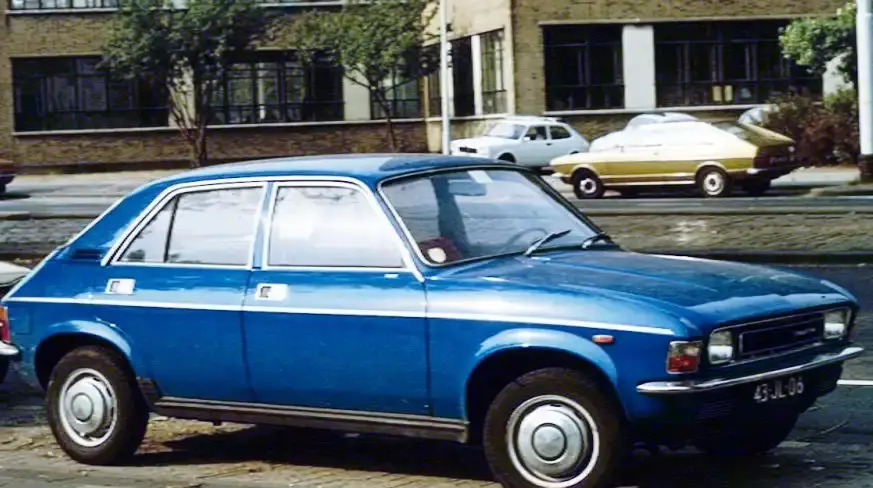
Technical Specifications
| Brand | Austin |
| Model | Allegro |
| Generation | Allegro (ADO67) |
| Type (Engine) | 1.3 (63 Hp) |
| Start of Production | 1979 |
| End of Production | 1983 |
| Powertrain Architecture | Internal Combustion Engine |
| Body Type | Hatchback |
| Fuel Type | Petrol (Gasoline) |
| Power | 63 Hp |
| Engine Aspiration | Naturally Aspirated |
The Austin Allegro 1.3, produced between 1979 and 1983, represented a key iteration of the ADO67 series, a British Leyland attempt to modernize and consolidate their small family car offerings. Positioned as the entry-level model within the Allegro range, the 1.3-liter variant aimed to provide affordable transportation for the UK market. It was intended to replace the aging Austin 1100 and 1300, offering a more contemporary design and improved practicality, though its reception was mixed. The Allegro, and specifically the 1.3 version, occupied a crucial space in British Leyland’s lineup during a period of significant economic and industrial challenges.
Powertrain & Engine Architecture
The Austin Allegro 1.3 was powered by the A-Series engine, a long-running and widely used inline-four cylinder unit. Specifically, it utilized the 1275cc version, though detuned to produce 63 horsepower. This engine, designated as the 1275cc, featured a cast iron block and cylinder head, with a single overhead valve (OHV) configuration. Fuel delivery was managed by a Zenith-Stromberg carburetor, a common setup for British cars of the era. The engine’s relatively low compression ratio and conservative tuning were aimed at maximizing fuel economy and reliability, rather than outright performance. The Allegro 1.3 was exclusively offered with a four-speed manual transmission. Automatic transmissions were available on higher-spec Allegro models, but the 1.3 was considered too underpowered to effectively utilize one. The transmission was a conventional setup, driving the front wheels. The A-Series engine, while robust, was known for requiring regular maintenance, including valve adjustments and carburetor tuning. The engine’s simplicity made it relatively easy to work on for home mechanics, but also meant it demanded consistent attention to maintain optimal performance.
Driving Characteristics
The driving experience in the Allegro 1.3 was characterized by its practicality and ease of use, rather than sporting prowess. With only 63 horsepower propelling a car weighing around 1,800 pounds, acceleration was modest. 0 to 60 mph times were typically in the 16-18 second range. The four-speed manual transmission offered a reasonable spread of gears, but the engine lacked significant torque, requiring frequent downshifts, particularly when tackling hills or overtaking. The steering was light and relatively precise, although some drivers found it lacked feel. The suspension, utilizing independent front suspension and a trailing arm rear suspension, provided a comfortable ride, absorbing bumps and imperfections in the road reasonably well. However, the car was prone to understeer when pushed hard. Compared to the 1.5-liter Allegro, the 1.3 felt noticeably slower and less refined. The larger engine offered a more relaxed cruising experience and better performance in everyday driving situations. The 1.3’s gear ratios were optimized for fuel efficiency rather than acceleration, contributing to its somewhat sluggish feel.
Equipment & Trim Levels
The Austin Allegro 1.3 was positioned as the base model, and as such, its standard equipment list was relatively sparse. It typically featured vinyl upholstery, basic instrumentation (speedometer, fuel gauge, and temperature gauge), and a heater. The interior was functional but lacked the aesthetic appeal of more expensive cars. Optional extras included a radio, upgraded upholstery, and a heated rear window. The dashboard layout was characterized by its distinctive, somewhat angular design, a hallmark of the Allegro range. The steering wheel was a large-diameter, plastic-rimmed affair. Trim levels were fairly basic, with limited choices in exterior colors. The focus was on providing a no-frills, affordable package. Even basic features like a cigarette lighter were often considered optional extras. The overall impression was one of utilitarian simplicity.
Chassis & Braking
The Allegro 1.3 utilized a monocoque chassis construction, providing a reasonable level of structural rigidity. The front suspension featured independent wishbones and coil springs, while the rear suspension employed a trailing arm setup with a transverse leaf spring. This configuration aimed to balance ride comfort with handling stability. The braking system consisted of front disc brakes and rear drum brakes. The brakes were adequate for normal driving conditions, but lacked the stopping power of more modern systems. The car’s relatively light weight helped to compensate for the limited braking performance. Stabilizer bars were not standard on the 1.3 model, contributing to a slightly increased tendency to roll in corners. The suspension geometry was tuned for comfort rather than aggressive handling, prioritizing a smooth ride over sporty cornering.
Market Reception & Comparison
The Austin Allegro 1.3 received a lukewarm reception from critics and the public. While it was praised for its practicality and affordability, it was often criticized for its lackluster performance, uninspired styling, and perceived lack of quality. Compared to rivals such as the Ford Escort and Vauxhall Astra, the Allegro 1.3 was often seen as falling short in terms of both driving experience and build quality. Fuel economy was reasonable for the time, averaging around 35-40 mpg. Reliability was a mixed bag; the A-Series engine was generally durable, but other components, such as the electrics and cooling system, were prone to issues. The 1.5-liter Allegro offered a significant improvement in performance and refinement, making it a more popular choice for buyers willing to spend a little more. The Allegro 1.3’s primary appeal lay in its low purchase price, making it accessible to budget-conscious buyers. Contemporary road tests often highlighted the car’s dated design and lack of modern features.
Legacy
The Austin Allegro 1.3, while not a resounding success, remains a significant vehicle in the history of British Leyland. It represents a period of decline for the company, marked by industrial unrest, poor quality control, and uninspired product design. Today, the Allegro 1.3 is a relatively rare sight on the roads, and well-maintained examples are sought after by classic car enthusiasts. The A-Series engine, however, continues to enjoy a strong following among enthusiasts, thanks to its simplicity, durability, and readily available parts. The Allegro 1.3 serves as a reminder of a challenging era for the British automotive industry, and a testament to the enduring appeal of affordable, practical transportation. Its relative simplicity also makes it a popular choice for restoration projects, and a good entry point for aspiring classic car mechanics. The car’s historical significance lies not in its brilliance, but in its representation of a pivotal moment in British automotive history.
