
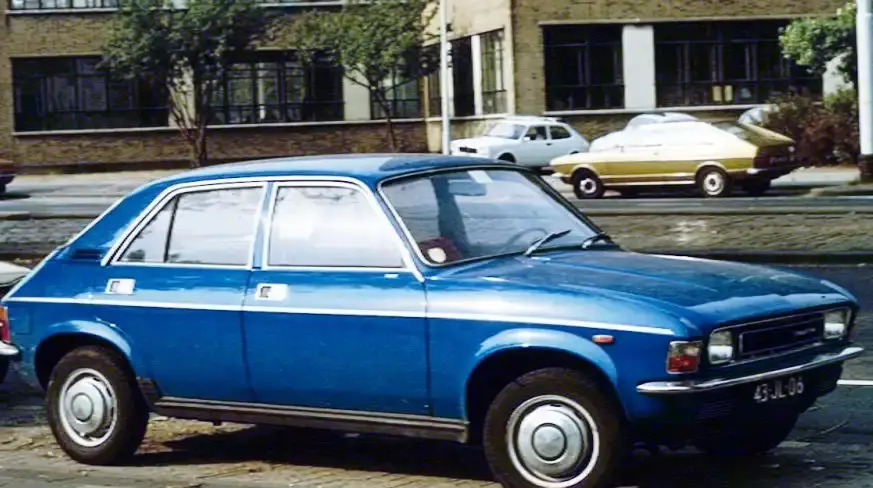
The Austin Allegro 1.5 Super, produced between 1973 and 1982, represented a significant attempt by British Leyland to modernize its small car offerings. Part of the ADO67 (Amalgamated Drawing Office 67) project, the Allegro was intended to replace the Austin 1100 and 1300, offering a more contemporary design and improved practicality. The 1.5 Super trim occupied a mid-range position within the Allegro lineup, positioned above the base models and below the more luxurious and powerful variants. It aimed to provide a balance of affordability, comfort, and reasonable performance for the average family motorist in the United Kingdom and export markets.
Technical Specifications
| Brand | Austin |
| Model | Allegro |
| Generation | Allegro (ADO67) |
| Type (Engine) | 1.5 Super (68 Hp) |
| Start of Production | 1973 |
| End of Production | 1982 |
| Powertrain Architecture | Internal Combustion Engine |
| Body Type | Hatchback |
| Fuel Type | Petrol (Gasoline) |
| Power | 68 Hp |
| Engine Aspiration | Naturally Aspirated |
Powertrain & Engine Architecture
The Austin Allegro 1.5 Super was powered by a 1485cc, inline-four cylinder engine. This engine, designated as the ‘E’ series, was a development of the earlier ‘A’ series engines, but with a larger displacement and improved features. It featured a cast iron block and cylinder head, with a single overhead camshaft operating the valves. The engine utilized a Zenith 36mm carburetor for fuel delivery, a relatively simple system for the time, prioritizing reliability and ease of maintenance over outright performance. The engine produced 68 horsepower at 5,000 rpm and 82 lb-ft of torque at 3,000 rpm. The 1.5 Super was typically equipped with a four-speed manual gearbox, although a three-speed automatic transmission, the Borg Warner Type 35, was offered as an option. The automatic transmission, while providing convenience, did noticeably impact the car’s acceleration and fuel economy. The engine’s design emphasized durability and low-end torque, making it suitable for everyday driving conditions.
Driving Characteristics
The Allegro 1.5 Super, even with the manual transmission, wasn’t known for its blistering performance. Acceleration from 0 to 60 mph took around 16 seconds, and the top speed was approximately 85 mph. The automatic version was even slower, adding a couple of seconds to the 0-60 time. The gear ratios in the manual gearbox were relatively widely spaced, prioritizing fuel efficiency over spirited driving. The automatic transmission, while smooth in operation, suffered from noticeable ‘hunting’ between gears, particularly on undulating roads. Handling was generally considered adequate, but not particularly engaging. The Allegro featured independent front suspension using coil springs and a trailing arm rear suspension. The steering, however, was a notable point of criticism, being heavy and lacking in feel. The car’s relatively soft suspension setup provided a comfortable ride, absorbing bumps and imperfections in the road surface reasonably well. The 1.5 Super offered a more refined driving experience than the base models, thanks to the larger engine and improved sound insulation.
Equipment & Trim Levels
The 1.5 Super trim level offered a step up in comfort and convenience compared to the more basic Allegro models. Standard features included cloth upholstery, a wood-effect dashboard trim, and a heated rear window. The seats were generally well-padded and offered reasonable support. Optional extras included a vinyl roof, a radio, and a sunroof. The interior design was characterized by its practicality and user-friendly layout, although the materials used were generally of a lower quality than those found in some of its European competitors. The dashboard featured a comprehensive array of gauges, including a speedometer, fuel gauge, temperature gauge, and ammeter. The steering wheel was a three-spoke design, and the gear lever was floor-mounted in manual versions.
Chassis & Braking
The Austin Allegro utilized a monocoque chassis construction, providing a good balance of strength and weight. The front suspension employed independent wishbones and coil springs, while the rear suspension featured a trailing arm setup with a transverse leaf spring. The braking system consisted of disc brakes on the front wheels and drum brakes on the rear wheels. The brakes were generally adequate for normal driving conditions, but lacked the stopping power of more modern systems. The steering was a rack and pinion system, but as mentioned previously, it was criticized for being heavy and lacking in feedback. The Allegro’s suspension was tuned for comfort, prioritizing ride quality over sharp handling. Stabilizer bars were not standard equipment on the 1.5 Super, contributing to a degree of body roll in corners.
Market Reception & Comparison
The Austin Allegro 1.5 Super received a mixed reception from automotive critics. While the car was praised for its spacious interior, comfortable ride, and practical hatchback design, it was also criticized for its lackluster performance, heavy steering, and somewhat dated styling. Compared to its rivals, such as the Ford Escort and Vauxhall Astra, the Allegro was often seen as being less refined and less engaging to drive. Fuel economy was reasonable for the time, averaging around 30-35 mpg. Reliability was a concern, with some owners reporting issues with the electrical system and the carburetor. The automatic transmission version was particularly criticized for its sluggish performance and poor fuel economy. The 1.5 Super offered a more compelling package than the base Allegro models, but it still struggled to compete with the more established players in the small car market.
Legacy
The Austin Allegro, despite its shortcomings, remains a significant vehicle in British automotive history. It represented a bold attempt to modernize British Leyland’s product range, but ultimately fell short of expectations. The 1.5 Super variant, while not the most desirable version of the Allegro, offered a reasonable balance of affordability, comfort, and practicality. Today, the Allegro 1.5 Super is a relatively rare sight on the roads, but it has gained a following among classic car enthusiasts. The ‘E’ series engine, while not particularly powerful, is known for its durability and relative simplicity, making it relatively easy to maintain. Parts availability can be a challenge, but a dedicated network of suppliers and enthusiasts helps to keep these cars running. The Allegro 1.5 Super serves as a reminder of a bygone era of British automotive engineering, and its legacy continues to be debated and appreciated by those who remember it.
