
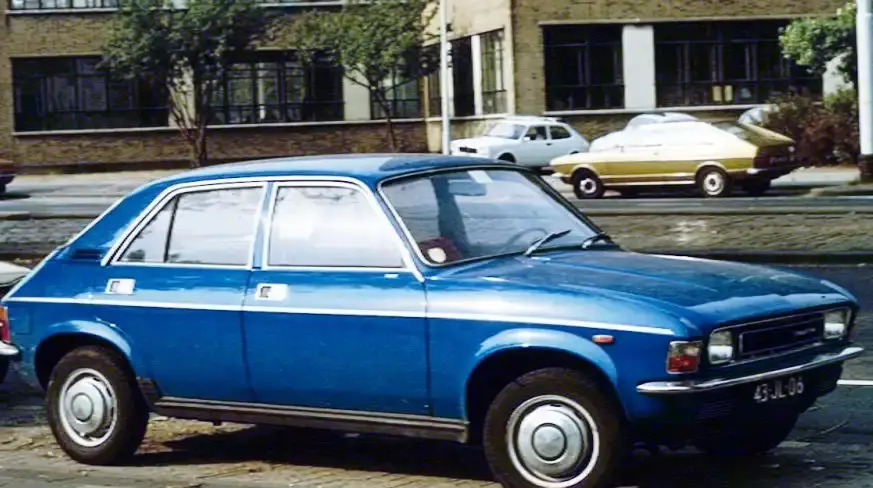
The Austin Allegro 1750, produced between 1975 and 1979, represented a mid-range offering within the ADO67 series of hatchbacks from British Leyland. Positioned above the 1275 and 1500 models, the 1750 aimed to provide a more refined and capable driving experience, appealing to buyers seeking a family car with improved performance for the era. The Allegro range itself was intended to modernize British Leyland’s small car offerings, replacing the aging Austin 1100 and 1300, and compete with increasingly sophisticated European rivals. The 1750, while not a high-volume seller, played a role in attempting to establish the Allegro as a viable contender in the competitive British automotive market.
Technical Specifications
| Brand | Austin |
| Model | Allegro |
| Generation | Allegro (ADO67) |
| Type (Engine) | 1750 (91 Hp) |
| Start of Production | 1975 |
| End of Production | 1979 |
| Powertrain Architecture | Internal Combustion Engine |
| Body Type | Hatchback |
| Fuel Type | Petrol (Gasoline) |
| Power | 91 Hp |
| Engine Aspiration | Naturally Aspirated |
Powertrain & Engine Architecture
The Austin Allegro 1750 was powered by the ‘E’ series 1750cc inline-four cylinder engine. This engine, designated as the 1750E, was a naturally aspirated unit producing 91 horsepower at 5,200 rpm and 109 lb-ft of torque at 3,000 rpm. It featured a single overhead camshaft (SOHC) design, a relatively modern configuration for its time, and utilized a Zenith-Stromberg 175CD carburetor for fuel delivery. The engine block was cast iron, while the cylinder head was aluminum alloy, contributing to a reasonable weight for its displacement. The 1750 engine was a development of the earlier 1500cc ‘E’ series, with an increased bore size to achieve the larger capacity. The transmission offered with the 1750 was a four-speed manual, or a three-speed automatic gearbox – the latter being a significant selling point for buyers prioritizing convenience over outright performance. The automatic transmission, while providing ease of use, was known to be somewhat sluggish in operation, impacting acceleration times.
Driving Characteristics
The Allegro 1750, particularly in automatic guise, offered a comfortable but not particularly sporty driving experience. Acceleration from 0 to 60 mph took around 14-15 seconds, which was adequate for the era but lagged behind some of its competitors. The automatic transmission’s gear ratios were geared towards fuel economy and smooth cruising rather than rapid acceleration. The manual transmission version offered slightly improved performance, but the Allegro was never intended to be a performance car. Handling was generally considered safe and predictable, with a MacPherson strut front suspension and a leaf spring rear suspension. The steering, however, was often criticized for being vague and lacking in feel. The 1750’s increased power compared to the lower-capacity models did provide a noticeable improvement in mid-range acceleration, making it more suitable for overtaking maneuvers and carrying a full load of passengers and luggage. The ride quality was generally good, absorbing bumps and imperfections in the road reasonably well.
Equipment & Trim Levels
The Austin Allegro 1750 was positioned as a mid-range model, offering a step up in equipment levels compared to the 1275 and 1500 variants. Standard features included reclining front seats, a heater, and a basic instrument panel. The interior trim was typically cloth upholstery, available in a range of colors. Optional extras included a radio, a vinyl roof, and upgraded interior trim materials. The Allegro 1750 was available in various trim levels, including the base model and the more luxurious ‘SS’ (Super Special) version. The SS trim added features such as a wood-effect dashboard, improved seat fabrics, and additional chrome trim. The dashboard layout was characterized by its distinctive, somewhat angular design, and featured a centrally mounted instrument cluster. The Allegro’s interior space was considered generous for its size, offering comfortable accommodation for four adults.
Chassis & Braking
The Austin Allegro 1750 utilized a monocoque chassis construction, providing a good balance of strength and weight. The front suspension featured MacPherson struts with lower wishbones and an anti-roll bar, while the rear suspension employed a leaf spring setup. Braking was initially provided by Girling disc brakes on the front wheels and drum brakes on the rear wheels. Later models saw the introduction of rear disc brakes on some variants. The braking system was hydraulically operated, providing adequate stopping power for normal driving conditions. Steering was of the rack and pinion type, but as mentioned previously, was often criticized for its lack of precision. The Allegro 1750’s suspension setup was tuned for comfort rather than outright handling performance, prioritizing a smooth ride over sharp cornering ability. The car’s relatively lightweight construction helped to offset the limitations of the suspension and braking systems.
Market Reception & Comparison
The Austin Allegro 1750 received a mixed reception from automotive critics. While the engine was praised for its smoothness and refinement, the car’s overall design and driving characteristics were often criticized. The Allegro’s styling was considered controversial, and the steering and handling were frequently described as vague and uninspiring. Compared to its rivals, such as the Ford Cortina and Vauxhall Cavalier, the Allegro 1750 lacked the same level of sophistication and driving appeal. However, the 1750 did offer a competitive price point and a relatively spacious interior. Fuel economy was reasonable for the time, averaging around 28-32 mpg. Reliability was a mixed bag, with some owners reporting issues with the electrics and cooling system. The 1750 was generally considered more reliable than the smaller-engined Allegro models, benefiting from the more robust ‘E’ series engine.
Legacy
The Austin Allegro 1750, while not a resounding success, remains a significant vehicle in British automotive history. It represents a period of transition for British Leyland, as the company attempted to modernize its product lineup and compete with increasingly sophisticated foreign rivals. Today, the Allegro 1750 is a relatively rare sight on the roads, and well-maintained examples are sought after by classic car enthusiasts. The ‘E’ series engine, in its various iterations, proved to be a durable and reliable unit, and many examples are still in service today. The Allegro 1750’s legacy is one of a well-intentioned but ultimately flawed attempt to create a modern and competitive family car. Its shortcomings highlighted the challenges faced by British Leyland during the 1970s, and contributed to the company’s eventual decline. The automatic transmission versions, while offering convenience, are generally less desirable among collectors due to their slower performance and potential for maintenance issues.
