
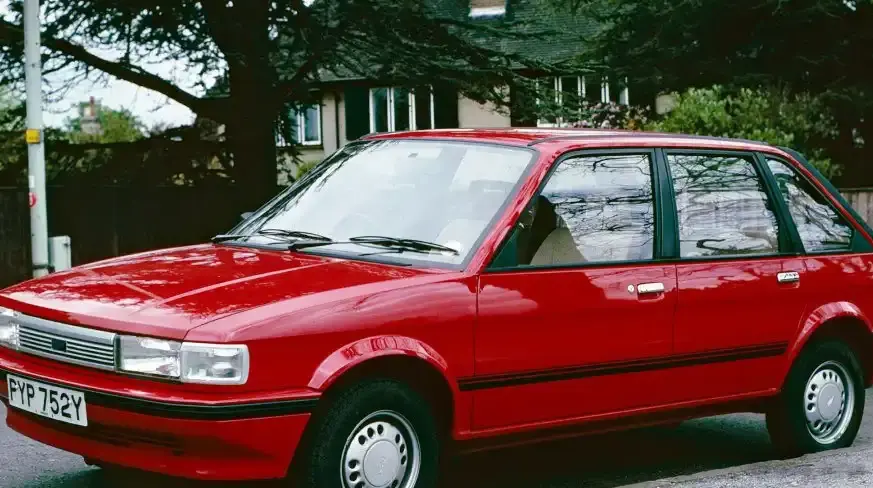
The Austin Maestro 1.3, produced between 1983 and 1985, represented a significant attempt by British Leyland to modernize its small family car offerings. Part of the XC series, the Maestro was intended to replace the aging Austin Allegro and Morris Ital, offering a more contemporary design, improved practicality, and a focus on driver comfort. The 1.3-liter variant served as the entry-level model in the Maestro range, aimed at budget-conscious buyers and those prioritizing fuel economy over outright performance. It was a crucial component of British Leyland’s strategy to compete in the increasingly competitive European hatchback market, though its reception was mixed, and the model ultimately faced challenges in terms of build quality and reliability.
Technical Specifications
| Brand | Austin |
| Model | Maestro |
| Generation | Maestro (XC) |
| Type (Engine) | 1.3 (63 Hp) |
| Start of Production | 1983 |
| End of Production | 1985 |
| Powertrain Architecture | Internal Combustion Engine |
| Body Type | Hatchback |
| Fuel Type | Petrol (Gasoline) |
| Power | 63 Hp |
| Engine Aspiration | Naturally Aspirated |
Powertrain & Engine Architecture
The Austin Maestro 1.3 was powered by the A-Series engine, a long-running and widely used inline-four cylinder petrol engine that had been a mainstay of British Leyland vehicles for decades. In this application, the engine displaced 1,275 cc (77.8 cubic inches) and produced 63 horsepower. The engine featured a cast iron block and cylinder head, with a single overhead valve (OHV) configuration. Fuel delivery was managed by a Zenith-Stromberg carburetor, a relatively simple and cost-effective system for the time. While not particularly sophisticated, the A-Series engine was known for its durability and ease of maintenance. The 1.3-liter engine was paired exclusively with a four-speed manual gearbox in the early models, later a five-speed manual became available. An optional three-speed automatic transmission was also offered, though it was less common and further reduced the car’s performance. The engine’s relatively low compression ratio and simple carburetor setup prioritized fuel economy and drivability over outright power.
Driving Characteristics
The Maestro 1.3 offered modest performance. With 63 horsepower on tap, acceleration was leisurely, and overtaking required careful planning. The 0-60 mph time was approximately 16 seconds, and the top speed hovered around 85 mph. The four-speed manual gearbox provided adequate control, but the gear ratios were spaced to favor fuel efficiency rather than spirited driving. The optional automatic transmission further dulled performance, resulting in sluggish acceleration and a noticeable lack of responsiveness. Handling was generally considered acceptable for a car of its class, with a MacPherson strut front suspension and a twist-beam rear axle. However, the Maestro’s relatively soft suspension setup and noticeable body roll limited its cornering ability. The steering was light and easy to use, making it well-suited for urban driving, but lacked the precision and feedback desired by more enthusiastic drivers. Compared to the higher-powered 1.6-liter versions of the Maestro, the 1.3 felt significantly underpowered, particularly when carrying passengers or luggage.
Equipment & Trim Levels
The Austin Maestro 1.3 was positioned as the entry-level model, and as such, it came with a relatively basic level of equipment. Standard features included cloth upholstery, a basic instrument panel, and a four-spoke steering wheel. The interior was functional but lacked the refinement of more expensive rivals. Optional extras included a radio, heated rear window, and upgraded upholstery. The Maestro range offered several trim levels, with the 1.3 typically being the base model. Later models saw the introduction of slightly more refined trims, offering features like central locking and electric windows, but these were generally reserved for the higher-specification variants. The dashboard layout was characterized by a large, centrally-mounted instrument cluster and a relatively simple control layout. The Maestro was designed with practicality in mind, offering a spacious interior and a large hatchback opening for easy access to the luggage compartment.
Chassis & Braking
The Austin Maestro utilized a front-wheel-drive layout, which was becoming increasingly common in the small family car segment during the 1980s. The front suspension consisted of MacPherson struts, while the rear suspension employed a twist-beam axle. This setup provided a reasonable balance between ride comfort and handling. Braking was initially provided by disc brakes on the front wheels and drum brakes on the rear wheels. Later models saw the introduction of disc brakes all around, improving braking performance. The Maestro’s braking system was adequate for normal driving conditions, but lacked the stopping power of more modern cars. The steering was rack and pinion, providing light and easy steering feel. The Maestro’s chassis was relatively lightweight, contributing to its fuel efficiency, but also compromising its structural rigidity.
Market Reception & Comparison
The Austin Maestro 1.3 received a mixed reception from critics. While its spacious interior and practical hatchback design were praised, concerns were raised about its build quality, reliability, and lackluster performance. The 1.3-liter engine was considered underpowered by many reviewers, and the optional automatic transmission was widely criticized for its sluggishness. Compared to rivals such as the Ford Escort, Vauxhall Astra, and Volkswagen Golf, the Maestro 1.3 lacked the refinement and overall quality of these established competitors. Fuel economy was a strong point for the 1.3-liter engine, achieving around 45-50 mpg in mixed driving conditions. However, this was often offset by the car’s frequent need for repairs and maintenance. The 1.6-liter Maestro offered a significantly more enjoyable driving experience, but came at a higher price point. The 1.3 was primarily targeted at buyers who prioritized affordability and fuel economy over performance and refinement.
Legacy
The Austin Maestro, despite its initial promise, ultimately failed to achieve the sales success that British Leyland had hoped for. Production ceased in 1987, and the model was replaced by the Rover 200. The Maestro 1.3, in particular, suffered from a reputation for unreliability and poor build quality. However, the A-Series engine proved to be remarkably durable, and many examples remain on the road today, often maintained by enthusiasts. In the used car market, the Maestro 1.3 is now considered a classic car, appealing to collectors and those seeking a nostalgic reminder of 1980s British motoring. While not a particularly desirable or valuable classic, it represents an important chapter in the history of British automotive manufacturing and a testament to the enduring legacy of the A-Series engine. Parts availability can be challenging, but a dedicated network of enthusiasts and specialist suppliers continues to support the model.
