
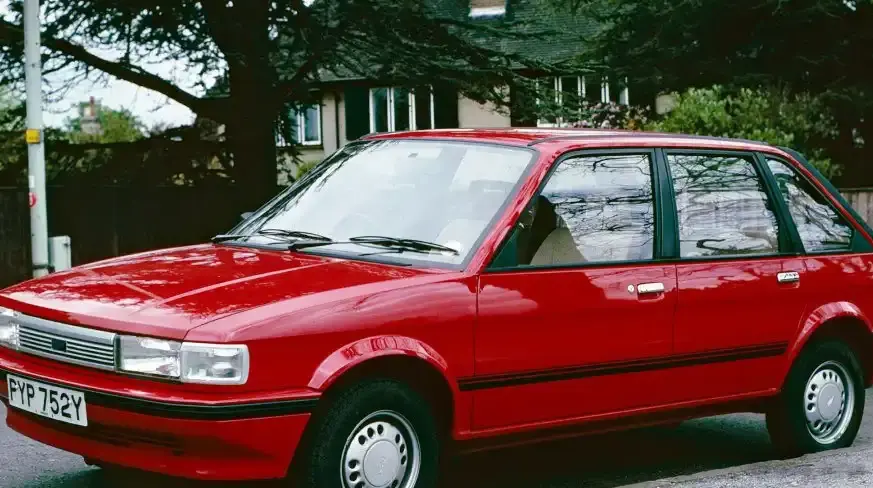
The Austin Maestro 1.6 Mayfair HLS, produced from 1983 to 1990, represented a significant attempt by British Leyland (later Austin Rover Group) to modernize its small family car offerings. Positioned as a mid-range trim level within the XC Maestro series, the 1.6 Mayfair HLS aimed to provide a balance of comfort, practicality, and affordability. It was intended to replace the aging Austin Allegro and Morris Ital, offering a more contemporary design and improved features. The Maestro, and specifically this variant, played a crucial role in the British automotive landscape of the 1980s, attempting to compete with increasingly sophisticated European and Japanese rivals.
Technical Specifications
| Brand | Austin |
| Model | Maestro |
| Generation | Maestro (XC) |
| Type | 1.6 Mayfair HLS (83 Hp) |
| Start of production | 1983 |
| End of production | 1990 |
| Powertrain Architecture | Internal Combustion engine |
| Body type | Hatchback |
| Seats | 5 |
| Doors | 5 |
| Fuel Type | Petrol (Gasoline) |
| Weight-to-power ratio | 11.1 kg/Hp |
| Power | 83 Hp |
| Power per litre | 51.9 Hp/l |
| Engine displacement | 1598 cm3 |
| Engine displacement (cu. in.) | 97.52 cu. in. |
| Number of cylinders | 4 |
| Engine configuration | Inline |
| Number of valves per cylinder | 2 |
| Fuel injection system | Carburettor |
| Engine aspiration | Naturally aspirated engine |
| Kerb Weight | 925 kg |
| Kerb Weight (lbs) | 2039.28 lbs. |
| Max. weight | 1440 kg |
| Max. weight (lbs) | 3174.66 lbs. |
| Max load | 515 kg |
| Max load (lbs) | 1135.38 lbs. |
| Fuel tank capacity | 50 l |
| Fuel tank capacity (US gal) | 13.21 US gal |
| Fuel tank capacity (UK gal) | 11 UK gal |
| Drivetrain Architecture | The Internal combustion engine (ICE) drives the front wheels of the vehicle. |
| Drive wheel | Front wheel drive |
| Number of gears | 5 |
| Type of gearbox | Manual transmission |
| Front suspension | Independent type McPherson |
| Rear suspension | Semi-independent suspension, longitudinal arms with transverse torsion shafts |
| Front brakes | Disc |
| Rear brakes | Drum |
| Steering type | Steering rack and pinion |
| Tires size | 165/85 R13 |
| Wheel rims size | 13 |
Powertrain & Engine Architecture
The Austin Maestro 1.6 Mayfair HLS was powered by the O-Series engine, a 1.6-liter (1598cc) inline-four cylinder petrol engine. This engine, designated as the 16V, produced 83 horsepower. It utilized a single Zenith-Stromberg 175CD carburetor for fuel delivery, a relatively simple system for the time. The engine featured a two-valve per cylinder configuration and a relatively low compression ratio, prioritizing reliability and fuel economy over outright performance. The engine was mounted transversely at the front of the vehicle, driving the front wheels. The five-speed manual transmission was a key component, offering a reasonable spread of gears for both urban driving and motorway cruising. The gearbox was not known for its particularly precise shift quality, but it was generally robust. The O-Series engine, while not cutting-edge, was a well-established design within British Leyland, known for its durability and ease of maintenance.
Driving Characteristics
The 1.6 Mayfair HLS offered a modest driving experience. With 83 horsepower propelling a car weighing around 925 kg (2039 lbs), acceleration was adequate but not brisk. 0-60 mph times were typically in the 12-13 second range. The carburetor meant that throttle response wasn’t particularly sharp, and the engine felt somewhat strained at higher revs. The five-speed gearbox helped to keep engine speeds reasonable on the highway, but the lack of fuel injection meant that fuel economy wasn’t class-leading. Compared to the more powerful 2.0-liter versions of the Maestro, the 1.6 felt noticeably slower. However, it offered a smoother and more refined driving experience than the smaller 1.3-liter models. The steering was light and easy, making it well-suited for city driving, but lacked significant feedback. The suspension, while comfortable, contributed to a noticeable amount of body roll in corners.
Equipment & Trim Levels
The Mayfair HLS trim level represented a step up from the base models. Standard equipment included cloth upholstery, a basic stereo system, and a more comprehensive instrument panel. The HLS designation indicated a higher level of trim, with features like door mirrors and upgraded interior plastics. Optional extras included a sunroof, central locking, and upgraded audio systems. The interior design was functional but somewhat dated, even for the 1980s. The dashboard layout was straightforward, with clearly labeled controls. The seats offered reasonable comfort for shorter journeys, but lacked significant bolstering. The Mayfair HLS aimed to provide a comfortable and practical interior without excessive luxury, appealing to family buyers.
Chassis & Braking
The Austin Maestro utilized a McPherson strut independent suspension at the front and a semi-independent torsion beam suspension at the rear. This setup provided a reasonable compromise between ride comfort and handling. The front brakes were disc brakes, offering adequate stopping power, while the rear brakes were drums, which were less effective. The steering was a rack and pinion system, providing light and easy steering. The Maestro’s suspension was tuned for comfort rather than sporty handling, resulting in a somewhat soft and wallowy ride. Tire size was 165/85 R13, a common size for the period, and contributed to the car’s relatively comfortable ride. The braking system, while adequate for normal driving, lacked the stopping power and feel of more modern systems.
Market Reception & Comparison
The Austin Maestro 1.6 Mayfair HLS received mixed reviews from automotive critics. It was generally praised for its practicality, spacious interior, and relatively affordable price. However, it was often criticized for its dated design, lackluster performance, and build quality issues. Compared to rivals like the Ford Escort and Vauxhall Astra, the Maestro felt less refined and less technologically advanced. Fuel economy was average for the time, and reliability was a concern for some owners. The 1.6-liter engine offered a better balance of performance and economy than the smaller 1.3-liter engine, but it lacked the punch of the 2.0-liter versions. The manual transmission was preferred by many drivers over the optional automatic, which was known to be sluggish. The Maestro struggled to gain significant market share against its more established competitors.
Legacy
The Austin Maestro, despite its shortcomings, remains a significant vehicle in British automotive history. It represented a final attempt by British Leyland to create a modern and competitive family car. While it ultimately failed to achieve widespread success, it paved the way for the Rover 200 series. The O-Series engine, used in the 1.6 Mayfair HLS, proved to be a durable and reliable unit, and continued to be used in other Rover Group vehicles for many years. Today, the Austin Maestro 1.6 Mayfair HLS is a relatively rare sight on the roads, and well-maintained examples are becoming increasingly collectible. Its simplicity and relatively low running costs make it an appealing option for classic car enthusiasts. However, finding parts can be challenging, and rust is a common problem. The Maestro serves as a reminder of a turbulent period in British automotive history, and a testament to the enduring appeal of classic British cars.
