
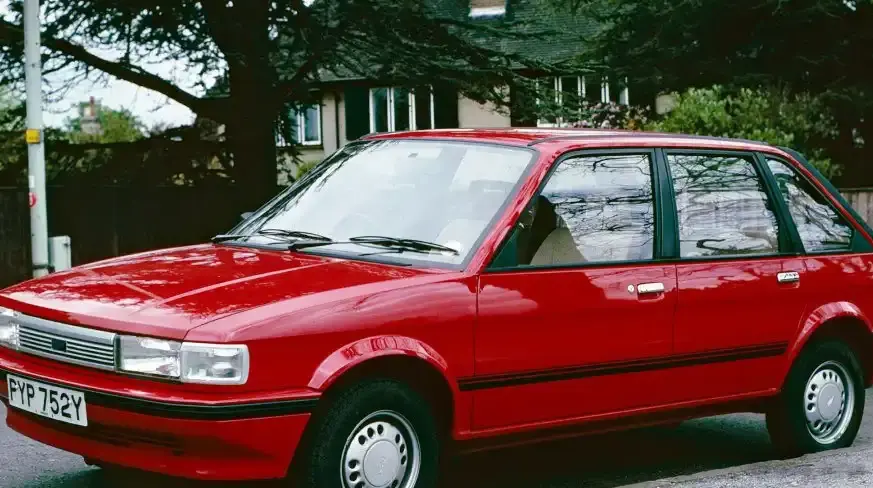
The Austin Maestro 1.6 Mayfair HLS Automatic, produced between 1983 and 1990, represented a mid-range offering within the XC series of the Maestro. Positioned as a comfortable and practical family hatchback, it aimed to provide a more refined experience than the base models while remaining accessible to a broad customer base. The Maestro, intended as a replacement for the aging Austin Allegro and Morris Ital, was a significant undertaking for British Leyland (later Austin Rover Group), representing a move towards more modern design and engineering principles. This particular variant, with its 1.6-liter engine and three-speed automatic transmission, was a popular choice for drivers prioritizing ease of use over outright performance.
Technical Specifications
| Brand | Austin |
| Model | Maestro |
| Generation | Maestro (XC) |
| Type (Engine) | 1.6 Mayfair HLS (83 Hp) Automatic |
| Start of production | 1983 |
| End of production | 1990 |
| Powertrain Architecture | Internal Combustion engine |
| Body type | Hatchback |
| Seats | 5 |
| Doors | 5 |
| Fuel Type | Petrol (Gasoline) |
| Weight-to-power ratio | 11.1 kg/Hp, 89.7 Hp/tonne |
| Power | 83 Hp |
| Power per litre | 51.9 Hp/l |
| Engine displacement | 1598 cm3 |
| Engine displacement (US) | 97.52 cu. in. |
| Number of cylinders | 4 |
| Engine configuration | Inline |
| Number of valves per cylinder | 2 |
| Fuel injection system | Carburettor |
| Engine aspiration | Naturally aspirated engine |
| Kerb Weight | 925 kg |
| Kerb Weight (lbs) | 2039.28 lbs. |
| Max. weight | 1440 kg |
| Max. weight (lbs) | 3174.66 lbs. |
| Max load | 515 kg |
| Max load (lbs) | 1135.38 lbs. |
| Fuel tank capacity | 50 l |
| Fuel tank capacity (US) | 13.21 US gal |
| Fuel tank capacity (UK) | 11 UK gal |
| Drivetrain Architecture | The Internal combustion engine (ICE) drives the front wheels of the vehicle. |
| Drive wheel | Front wheel drive |
| Number of gears | 3 |
| Type of gearbox | automatic transmission |
| Front suspension | Independent type McPherson |
| Rear suspension | Semi-independent suspension, longitudinal arms with transverse torsion shafts |
| Front brakes | Disc |
| Rear brakes | Drum |
| Steering type | Steering rack and pinion |
| Tires size | 165 R13 |
| Wheel rims size | 13 |
Powertrain & Engine Architecture
The heart of the Maestro 1.6 Mayfair HLS Automatic was the ‘O’ series 1.6-liter inline four-cylinder engine. This engine, designated as the OHC (Overhead Camshaft) unit, featured a single overhead camshaft operating two valves per cylinder. The engine relied on a Zenith-Stromberg 175CD carburetor for fuel delivery, a relatively common setup for the time, though less efficient and precise than fuel injection systems. The carburetor was tuned to provide a balance between fuel economy and acceptable performance for everyday driving. The engine produced 83 horsepower, a modest output but sufficient for the vehicle’s intended purpose. The three-speed automatic transmission, sourced from Borg Warner, was a key feature of this variant. It provided smooth, if not particularly rapid, gear changes, making it ideal for urban driving and less experienced drivers. The transmission’s gear ratios were optimized for acceleration and cruising, but it lacked the overdrive gear found in some contemporary automatics, impacting highway fuel economy.
Driving Characteristics
The Maestro 1.6 Mayfair HLS Automatic offered a comfortable, albeit uninspiring, driving experience. The automatic transmission eliminated the need for manual gear changes, simplifying operation, but at the cost of responsiveness. Acceleration was adequate for merging onto highways and overtaking slower traffic, but it wasn’t a particularly quick car. The three-speed automatic meant that the engine often operated at higher RPMs during cruising, contributing to increased fuel consumption and engine noise compared to a manual transmission version. The steering was light and easy, making it maneuverable in tight spaces, but lacked the feedback preferred by more enthusiastic drivers. Compared to the more powerful 2.0-liter versions of the Maestro, the 1.6 Automatic felt noticeably slower, particularly when fully loaded with passengers and luggage. However, it offered a smoother and more relaxed driving experience than the base 1.3-liter models.
Equipment & Trim Levels
The Mayfair HLS trim level represented a step up in terms of equipment and interior refinement. Standard features included cloth upholstery, a basic stereo system, and a more comprehensive instrument panel than the lower-spec models. The HLS also featured upgraded door cards and interior trim, providing a more pleasant cabin environment. Optional extras included a sunroof, central locking, and upgraded stereo systems. The dashboard layout was functional but somewhat dated, even for the 1980s. The seats offered reasonable comfort for long journeys, and the cabin was relatively spacious for a hatchback of its size. The Mayfair HLS aimed to provide a comfortable and well-equipped package for family buyers.
Chassis & Braking
The Maestro utilized a front-wheel-drive layout with independent McPherson strut suspension at the front and a semi-independent torsion beam suspension at the rear. This suspension setup provided a reasonable compromise between ride comfort and handling. The front brakes were disc brakes, offering adequate stopping power, while the rear brakes were drum brakes, a cost-saving measure that limited rear braking performance. The steering was rack and pinion, providing light and precise steering. The Maestro’s chassis was relatively lightweight, contributing to its fuel efficiency and maneuverability. Tire size was typically 165 R13, providing a reasonable balance between grip and ride comfort.
Market Reception & Comparison
The Austin Maestro 1.6 Mayfair HLS Automatic received mixed reviews from automotive critics. While praised for its comfort and practicality, it was often criticized for its lack of performance and somewhat dated design. Compared to rivals such as the Ford Escort and Vauxhall Astra, the Maestro was often seen as less refined and less engaging to drive. However, it offered a competitive price point and a spacious interior, making it an attractive option for budget-conscious buyers. Fuel economy was reasonable for the time, but not class-leading. Reliability was a concern for some owners, with reports of carburetor issues and electrical problems. The automatic transmission, while convenient, was also prone to occasional issues.
Legacy
The Austin Maestro, despite its shortcomings, remains a significant vehicle in British automotive history. It represented a final attempt by British Leyland to produce a modern and competitive family car. The 1.6 Mayfair HLS Automatic, while not the most desirable variant, offered a comfortable and practical option for drivers prioritizing ease of use. Today, the Maestro is a relatively rare sight on the roads, and well-maintained examples are becoming increasingly collectible. The ‘O’ series engine, while prone to certain issues, is generally considered to be a robust and reliable unit when properly maintained. The automatic transmission, however, remains a potential weak point. The Maestro serves as a reminder of a turbulent period in British automotive history and a testament to the enduring appeal of classic British cars.
