
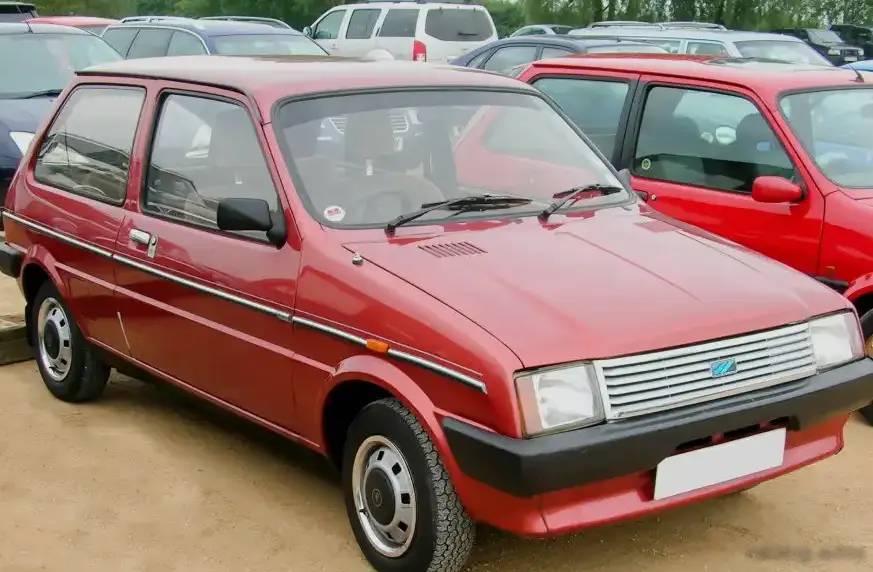
The Austin Metro 1.0, produced from 1980 to 1990, represents a significant chapter in British automotive history. This diminutive hatchback was intended as a modern replacement for the aging Austin Mini, offering a more spacious interior and improved practicality while retaining the affordability that made the Mini so popular. The 1.0-liter variant, producing 41 horsepower, served as the entry point to the Metro range, aimed at budget-conscious buyers and those seeking economical transportation. It was a key component of British Leyland’s (later Austin Rover Group) strategy to revitalize its small car offerings and compete with increasingly sophisticated rivals from Europe and Japan. The Metro, built on a completely new platform (ADO88), was a departure from the Mini’s traditional design, embracing a more conventional front-wheel-drive layout and a modern, though boxy, aesthetic.
Technical Specifications
| Brand | Austin |
| Model | Metro |
| Generation | Metro |
| Type (Engine) | 1.0 (41 Hp) |
| Start of production | 1980 |
| End of production | 1990 |
| Powertrain Architecture | Internal Combustion engine |
| Body type | Hatchback |
| Fuel Type | Petrol (Gasoline) |
| Power | 41 Hp |
| Engine configuration | Inline |
| Fuel injection system | Carburettor |
| Engine aspiration | Naturally aspirated engine |
| Drivetrain Architecture | Front wheel drive |
| Front brakes | Ventilated discs |
| Rear brakes | Drum |
| Steering type | Steering rack and pinion |
Powertrain & Engine Architecture
The heart of the Austin Metro 1.0 was the A-Series engine, a long-running and highly-developed inline four-cylinder unit. In its 998cc form for the Metro, it produced 41 horsepower. This engine was a descendant of the original A-Series first introduced in 1958, but significantly updated over the years. The 1.0-liter version utilized a single SU carburetor for fuel delivery, a relatively simple system chosen for its reliability and low cost. The engine featured a pushrod valvetrain, operating with two valves per cylinder. While not particularly powerful, the A-Series was known for its durability and ease of maintenance. The engine was mated to a four-speed manual gearbox as standard, providing a straightforward and robust transmission. The automatic transmission option, though available on higher-spec Metros, was not offered with the base 1.0-liter engine due to the limited torque output.
Driving Characteristics
The driving experience in the Austin Metro 1.0 was defined by its light weight and nimble handling. With only 41 horsepower propelling around 1,600 pounds, acceleration was modest, to say the least. 0-60 mph times were typically in the region of 18-20 seconds. However, the Metro’s small size and responsive steering made it enjoyable to drive around town. The four-speed gearbox was relatively easy to operate, although the shift linkage could feel somewhat vague. The engine was happiest when kept within its narrow power band, and attempting to accelerate forcefully often resulted in little more than a lot of engine noise. Compared to the later 1.3-liter versions of the Metro, the 1.0-liter felt noticeably slower, particularly when carrying passengers or luggage. The 1.3 offered a more relaxed cruising experience and better performance for motorway driving.
Equipment & Trim Levels
The Austin Metro 1.0 was deliberately positioned as the most affordable model in the range. As such, it came with a fairly basic level of equipment. Standard features included cloth upholstery, a basic instrument panel with speedometer and fuel gauge, and manually operated windows and door locks. The interior was functional rather than luxurious, with hard-wearing plastics used throughout. Optional extras included a radio, heated rear window, and upgraded interior trim. The Metro 1.0 was typically identified by its black plastic bumpers and relatively simple steel wheels. Higher trim levels, such as the HLS and HL, featured more luxurious interiors, upgraded wheels, and additional features like central locking and electric windows.
Chassis & Braking
The Austin Metro featured a monocoque chassis with independent front suspension using MacPherson struts and a twist-beam rear axle. This suspension setup provided a reasonably comfortable ride, although it was not particularly sophisticated. The front brakes were ventilated discs, offering adequate stopping power for the car’s weight and performance. However, the rear brakes were drums, which were less effective and prone to fading under heavy use. The steering was rack and pinion, providing precise and responsive control. The Metro’s relatively light weight contributed to its nimble handling characteristics. Stabilizer bars were not standard on the base 1.0-liter model, further emphasizing its budget-oriented nature.
Market Reception & Comparison
The Austin Metro 1.0 was generally well-received by the British public as an affordable and practical city car. Critics praised its spacious interior, nimble handling, and low running costs. However, the engine’s lack of power was a common criticism. Compared to rivals like the Ford Fiesta and Volkswagen Polo, the Metro 1.0 felt underpowered. The Fiesta, in particular, offered a more refined driving experience and a wider range of engine options. In terms of fuel economy, the Metro 1.0 performed respectably, achieving around 45-50 mpg in typical driving conditions. Reliability was generally good, although the A-Series engine was prone to oil leaks as it aged. The 1.3-liter Metro offered a better balance of performance and refinement, but at a higher price point.
Legacy
The Austin Metro, despite its relatively short production run, left a lasting impression on the British automotive landscape. It represented a significant step forward from the Mini, offering a more modern and practical package. The 1.0-liter variant, while not the most powerful or refined version, played a crucial role in making the Metro accessible to a wider range of buyers. Today, the Austin Metro 1.0 is a popular choice among classic car enthusiasts, particularly those seeking an affordable and easy-to-maintain British classic. Parts availability is generally good, and the A-Series engine is well-understood by mechanics. While not a performance icon, the Metro 1.0 remains a charming and nostalgic reminder of a bygone era in British motoring. Well-maintained examples are increasingly sought after, and values have been steadily rising in recent years.
