
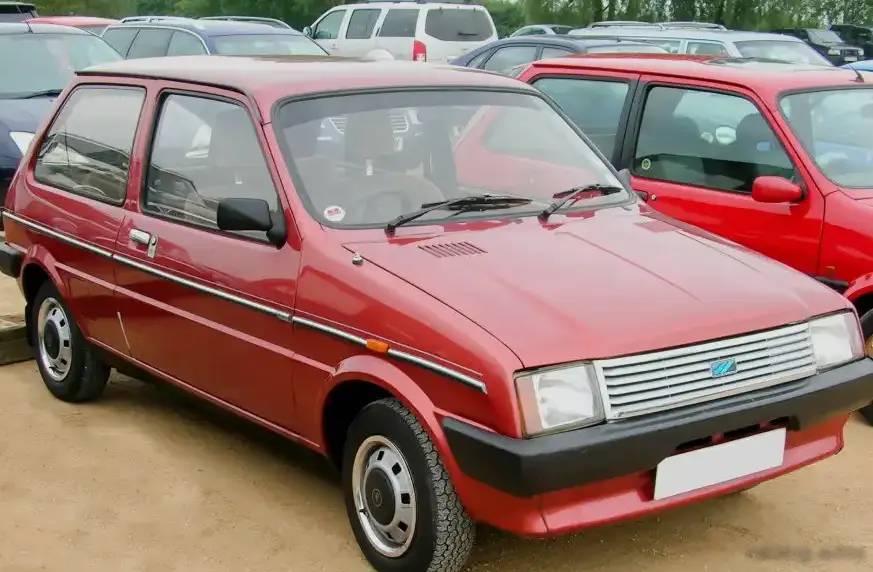
The Austin Metro 1.0, producing 45 horsepower, was a foundational model within the Austin Metro range, manufactured between 1980 and 1990. It represented the entry point into British Leyland’s (later Rover Group) supermini offering, designed as a modern replacement for the aging Mini. The Metro, internally designated ADO88, was a significant departure for British Leyland, embracing a more contemporary design and engineering approach. The 1.0-liter variant played a crucial role in establishing the Metro as a popular and affordable city car, particularly in the United Kingdom and other European markets. It was a key component of the initial launch lineup and remained a consistent seller throughout the model’s ten-year production run.
Technical Specifications
| Brand | Austin |
| Model | Metro |
| Generation | Metro |
| Type (Engine) | 1.0 (45 Hp) |
| Start of production | 1980 |
| End of production | 1990 |
| Powertrain Architecture | Internal Combustion engine |
| Body type | Hatchback |
| Fuel Type | Petrol (Gasoline) |
| Power | 45 Hp |
| Engine aspiration | Naturally aspirated engine |
| Engine Displacement | 998 cc |
| Cylinders | 4 |
| Valves per Cylinder | 2 |
| Transmission | 4-speed manual (primarily), 3-speed automatic (optional) |
| Drive Type | Front-wheel drive |
| Weight | 735 – 780 kg (depending on trim) |
| Top Speed | 88 mph (142 km/h) |
| 0-60 mph | 16.5 seconds (approx.) |
Powertrain & Engine Architecture
The Austin Metro 1.0 was powered by the A-Series engine, a long-running and extensively developed inline-four cylinder unit. Specifically, it utilized the 998cc version of the A-Series, designated as 12H463. This engine had been in production since the late 1950s, undergoing numerous revisions over the years. The 998cc variant featured a cast iron block and cylinder head, with a two-valve per cylinder configuration operated by a single overhead camshaft driven by a chain. Fuel delivery was managed by a single Zenith 34V carburetor. While relatively simple, the A-Series was known for its durability and ease of maintenance. The engine produced 45 horsepower at 6000 rpm and 57 lb-ft of torque at 3500 rpm. A four-speed manual gearbox was the standard transmission, but a three-speed automatic transmission, manufactured by Borg Warner, was offered as an optional extra, though it was less common. The automatic version significantly impacted performance, as described later. The engine’s design prioritized simplicity and reliability over outright power, making it a cost-effective choice for the entry-level Metro.
Driving Characteristics
The driving experience in the Austin Metro 1.0 was defined by its lightweight construction and modest power output. The 45 horsepower engine provided adequate, though not exhilarating, performance for urban driving. Acceleration was leisurely, and overtaking required careful planning. The four-speed manual gearbox offered a reasonable level of control, allowing drivers to keep the engine in its optimal power band. However, the optional three-speed automatic transmission noticeably dulled performance. The automatic’s gear ratios were widely spaced, resulting in sluggish acceleration and a tendency for the engine to feel strained under heavy load. The Metro’s front-wheel drive layout provided predictable handling, although the suspension – consisting of an independent front suspension with MacPherson struts and a leaf-sprung rear axle – offered a somewhat firm and occasionally bumpy ride, especially on uneven surfaces. Steering was light and responsive, making it easy to maneuver in tight city streets. The car felt nimble and easy to park, making it well-suited to its intended urban environment. The automatic transmission, while offering convenience, significantly reduced the car’s responsiveness and overall driving enjoyment.
Equipment & Trim Levels
The Austin Metro 1.0 was typically offered in basic trim levels, reflecting its position as the entry-level model. Standard equipment included cloth upholstery, a basic instrument panel with speedometer and fuel gauge, and manually operated windows and door locks. The interior was functional and utilitarian, prioritizing practicality over luxury. Optional extras included a radio, heated rear window, and upgraded interior trim. Later in the production run, higher trim levels like the ‘HLS’ offered features such as alloy wheels, a more comprehensive instrument cluster, and improved interior appointments. The base models generally featured vinyl or woven fabric seats, while the HLS models received more comfortable cloth upholstery. Exterior styling was relatively simple, with plastic wheel covers and basic chrome trim on the bumpers and window surrounds. The overall impression was one of affordability and practicality, rather than sophistication or luxury.
Chassis & Braking
The Austin Metro utilized a monocoque chassis construction, providing a relatively lightweight and rigid platform. The front suspension employed MacPherson struts with coil springs and an anti-roll bar, while the rear suspension featured a leaf spring setup. This combination provided a reasonable balance between ride comfort and handling. Braking was initially provided by front disc brakes and rear drum brakes. Later models saw the introduction of front disc and rear disc brakes on some trim levels. The braking system was generally adequate for the car’s performance, but lacked the stopping power of more modern vehicles. Steering was rack and pinion, providing light and precise control. The relatively small size and light weight of the Metro contributed to its agility in urban environments. The leaf-sprung rear suspension, while cost-effective, contributed to a somewhat firm ride quality, particularly when the car was fully loaded.
Market Reception & Comparison
The Austin Metro 1.0 was generally well-received by the British motoring press as an affordable and practical city car. Critics praised its fuel efficiency, ease of driving, and relatively low running costs. However, the 45 horsepower engine was often criticized for being underpowered, particularly when compared to rivals such as the Ford Fiesta and Vauxhall Nova. The automatic transmission version was particularly criticized for its sluggish performance and reduced fuel economy. Compared to the higher-powered Metro variants, such as the 1.3-liter models, the 1.0-liter version offered significantly less performance but at a lower purchase price. The 1.3-liter models were aimed at drivers who required more power for longer journeys or highway driving, while the 1.0-liter version was primarily targeted at urban commuters and first-time car buyers. The Metro 1.0 successfully filled a niche as a budget-friendly and economical option in the competitive supermini segment.
Legacy
The Austin Metro 1.0, despite its modest performance, played a significant role in the British automotive landscape of the 1980s. The A-Series engine proved to be remarkably durable, and many examples of the Metro 1.0 remain on the road today. While not highly sought after by collectors, the Metro 1.0 is appreciated for its simplicity, affordability, and nostalgic appeal. The car’s relatively simple mechanicals make it relatively easy to maintain and repair, contributing to its longevity. In the used car market, the Metro 1.0 typically commands modest prices, making it an attractive option for enthusiasts and those seeking a classic British car on a budget. The automatic transmission versions are generally less desirable due to their reduced performance and potential for higher maintenance costs. The Metro, as a whole, paved the way for the Rover 100 series, continuing the supermini tradition for the Rover Group. It remains a fondly remembered example of British automotive engineering from a bygone era.
