
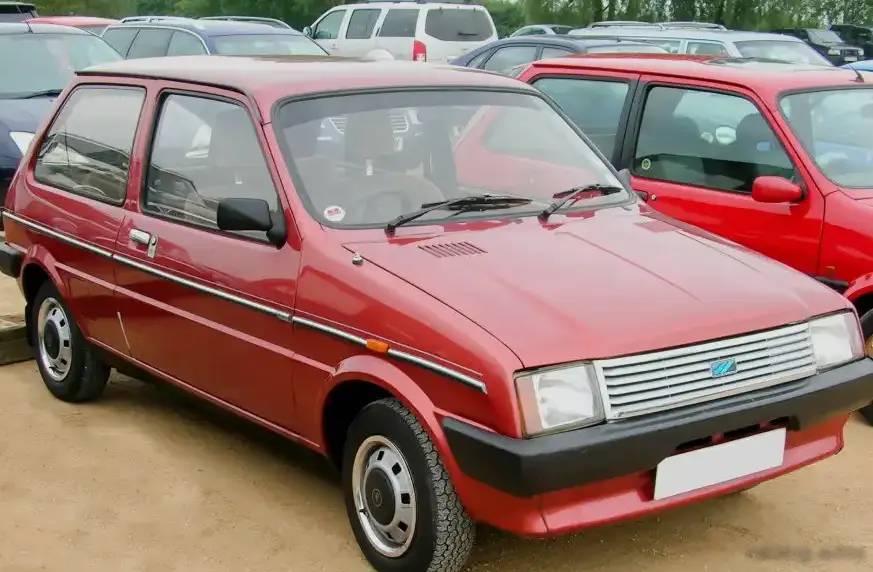
The Austin Metro 1.0 Surf HLE, produced from 1980 to 1990, represents a significant entry point into the British Leyland (later Rover Group) supermini lineup. Positioned as an affordable and economical hatchback, the Surf HLE trim, powered by a 1.0-liter engine producing 48 horsepower, was aimed at first-time buyers and those seeking a practical city car. It was a key component of the Metro’s success, which aimed to replace the aging Mini and provide a modern, albeit basic, alternative in the competitive European small car market. The Metro, internally designated ADO88, was a pivotal model for British Leyland, representing a move towards more modern design and manufacturing techniques.
Technical Specifications
| Brand | Austin |
| Model | Metro |
| Generation | Metro |
| Type (Engine) | 1.0 Surf HLE (48 Hp) |
| Start of production | 1980 |
| End of production | 1990 |
| Powertrain Architecture | Internal Combustion Engine |
| Body Type | Hatchback |
| Fuel Type | Petrol (Gasoline) |
| Power | 48 Hp |
| Engine Aspiration | Naturally Aspirated |
Powertrain & Engine Architecture
The heart of the Austin Metro 1.0 Surf HLE is the A-Series engine, a long-running and extensively developed inline-four cylinder unit. Specifically, this variant utilizes the 998cc version, designated as the 12H engine code. This engine, while relatively simple in design, was known for its durability and ease of maintenance. It features a single overhead valve (OHV) configuration with a pushrod valvetrain, and utilizes a single Zenith 36mm carburetor for fuel delivery. The carburetor, while providing adequate fuel atomization for the time, was a key factor in the engine’s relatively low power output and less-than-stellar fuel efficiency compared to later fuel-injected engines. The engine’s block is cast iron, contributing to its robustness, while the cylinder head is aluminum. The Surf HLE was exclusively offered with a four-speed manual transmission. This transmission, also a carryover from earlier British Leyland designs, was known for its long shift throws and somewhat vague feel, but was generally reliable. The transmission’s gear ratios were optimized for fuel economy and low-speed maneuverability, rather than outright performance.
Driving Characteristics
The driving experience in the Austin Metro 1.0 Surf HLE is best described as utilitarian. With only 48 horsepower on tap, acceleration is leisurely, taking approximately 18 seconds to reach 60 mph. The car’s light weight (around 1,500 lbs) helps to mitigate the lack of power, making it feel reasonably sprightly around town. The four-speed gearbox requires deliberate shifting, and the engine needs to be revved to extract the most performance. The suspension, consisting of an independent front suspension with MacPherson struts and a leaf-sprung rear axle, provides a comfortable, if somewhat bouncy, ride. Steering is rack and pinion, offering reasonable precision, but lacks significant feedback. Compared to the slightly more powerful 1.3-liter Metro variants, the 1.0 Surf HLE feels noticeably slower, particularly when carrying passengers or luggage. However, the 1.0-liter engine’s lower compression ratio and simpler design contribute to improved fuel economy and reduced engine stress.
Equipment & Trim Levels
The Surf HLE trim level represented a step up from the base Metro models, offering a few additional comfort and convenience features. Standard equipment included cloth upholstery, a basic instrument panel with speedometer and fuel gauge, and a heater. The “Surf” designation indicated a slightly more vibrant interior trim color scheme, often featuring blue or green accents. Optional extras included a radio, upgraded seat fabrics, and a sunroof. The interior was functional and durable, but lacked the refinement of more contemporary superminis. The dashboard layout was simple and straightforward, prioritizing practicality over aesthetics. The Surf HLE aimed to provide a reasonably well-equipped car at an affordable price point, appealing to budget-conscious buyers.
Chassis & Braking
The Austin Metro utilized a monocoque chassis construction, a relatively modern design for its time. The front suspension employed MacPherson struts, providing a reasonable level of ride comfort and handling. The rear suspension, however, utilized a traditional leaf spring setup, which contributed to a somewhat bumpy ride, particularly when unladen. Braking was initially provided by front disc brakes and rear drum brakes. Later models saw the introduction of rear disc brakes on some variants, but the 1.0 Surf HLE typically retained the drum brake setup. The braking system was adequate for the car’s performance, but lacked the stopping power of more modern vehicles. Steering was rack and pinion, providing reasonable precision, but lacked power assistance. The car’s relatively light weight helped to compensate for the lack of braking power and steering assistance.
Market Reception & Comparison
The Austin Metro 1.0 Surf HLE was generally well-received by the British motoring press as an affordable and practical city car. Critics praised its fuel economy, ease of maintenance, and relatively low purchase price. However, the car was also criticized for its lack of performance, basic interior, and somewhat dated design. Compared to rivals such as the Ford Fiesta and Vauxhall Nova, the Metro 1.0 Surf HLE offered a more affordable entry point, but lacked the refinement and performance of those models. The 1.3-liter Metro variants offered significantly improved performance, but at a higher price. Fuel economy for the 1.0 Surf HLE averaged around 45-50 mpg, making it an attractive option for budget-conscious drivers. Reliability was generally good, although the A-Series engine was prone to oil leaks as it aged.
Legacy
The Austin Metro, and specifically the 1.0 Surf HLE variant, holds a significant place in British automotive history. It represented a much-needed update to British Leyland’s small car offerings and provided a viable alternative to the aging Mini. While not a groundbreaking vehicle in terms of technology or performance, the Metro was a commercial success, selling over 700,000 units during its ten-year production run. Today, the Austin Metro 1.0 Surf HLE is a popular choice among classic car enthusiasts, particularly those seeking an affordable and easy-to-maintain vintage vehicle. Parts availability is generally good, and the car’s simple mechanical design makes it relatively easy to repair. The 1.0-liter engine, while not powerful, is known for its durability and reliability, making it a practical choice for everyday use. The Surf HLE’s affordability and nostalgic appeal ensure its continued popularity in the used car market.
