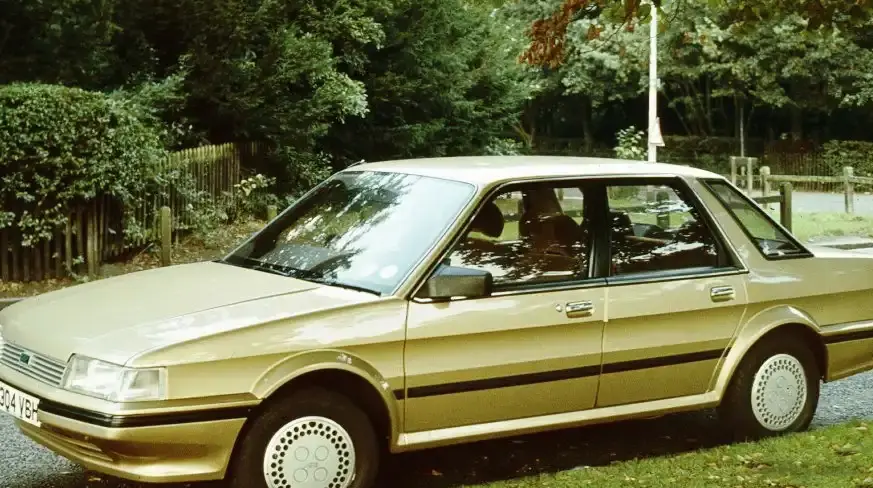
The Austin Montego 1.3, produced between 1984 and 1988, represented the entry-level offering in the XE series, a range of mid-size family cars intended to replace the aging Austin Ambassador and Morris Ital. Positioned as a practical and affordable saloon, the 1.3-liter variant aimed to provide economical transportation for families and commuters. The Montego, as a whole, was British Leyland’s attempt to modernize its image and compete with increasingly sophisticated rivals from Ford, Vauxhall, and imported manufacturers. The XE designation referred to the car’s internal project code and marked a significant investment in a new platform, though it ultimately faced challenges in terms of build quality and market perception.
Technical Specifications
| Brand | Austin |
| Model | Montego |
| Generation | Montego (XE) |
| Type (Engine) | 1.3 (68 Hp) |
| Start of Production | 1984 |
| End of Production | 1988 |
| Powertrain Architecture | Internal Combustion Engine |
| Body Type | Sedan |
| Fuel Type | Petrol (Gasoline) |
| Power | 68 Hp |
| Engine Aspiration | Naturally Aspirated |
Powertrain & Engine Architecture
The Austin Montego 1.3 was powered by the A-Series engine, a long-running and widely used inline-four cylinder petrol engine. In this application, the engine displaced 1,275 cc (77.7 cubic inches) and produced 68 horsepower. While the A-Series had a long and respected history, the version used in the Montego was a relatively basic specification. It featured a single overhead valve (OHV) configuration with a two-barrel carburetor, providing fuel delivery. The engine’s design prioritized simplicity and durability over outright performance. The Montego 1.3 was exclusively offered with a four-speed manual transmission. This transmission was chosen to keep costs down and complement the engine’s modest power output. The gearbox was a conventional design, known for its robustness but not particularly refined shifting experience. The engine’s relatively low compression ratio and conservative tuning contributed to its fuel efficiency, a key selling point for buyers in the 1980s.
Driving Characteristics
The driving experience in the Austin Montego 1.3 was characterized by its practicality rather than excitement. With 68 horsepower propelling a relatively heavy saloon, acceleration was modest. The 0-60 mph time was estimated to be around 16-18 seconds. The four-speed manual transmission required frequent shifting to maintain momentum, especially when overtaking or climbing hills. The gear ratios were spaced to prioritize fuel economy, resulting in a somewhat sluggish feel at higher speeds. Handling was adequate for everyday driving, but the Montego’s suspension was tuned for comfort rather than sporty handling. The steering was light but lacked precision, and body roll was noticeable in corners. Compared to the higher-powered 2.0-liter versions of the Montego, the 1.3 felt significantly underpowered. The 2.0-liter models offered a much more responsive driving experience, with noticeably quicker acceleration and improved cruising ability. However, the 1.3’s simplicity and lower running costs appealed to a different segment of the market.
Equipment & Trim Levels
The Austin Montego 1.3 was typically offered in a basic trim level, reflecting its position as the entry-level model. Standard equipment included cloth upholstery, a basic instrument panel, and manually operated windows and door locks. The interior was functional but lacked the refinements found in higher-spec Montegos. Optional extras were limited, but could include a radio, heated rear window, and upgraded interior trim. The exterior styling was consistent across the Montego range, with a boxy, angular design that was typical of the era. The 1.3 models often featured steel wheels with hubcaps, and relatively simple exterior trim. The dashboard layout was straightforward, with clearly labeled controls and a focus on practicality. The seats provided adequate support for everyday driving, but lacked the bolstering found in more sporting vehicles.
Chassis & Braking
The Austin Montego utilized a conventional chassis layout, with independent front suspension and a live axle rear suspension. The front suspension featured MacPherson struts, while the rear suspension employed leaf springs. This setup provided a comfortable ride, but limited handling precision. The braking system consisted of disc brakes on the front wheels and drum brakes on the rear wheels. The brakes were adequate for normal driving conditions, but lacked the stopping power of more modern systems. The Montego’s steering was a rack-and-pinion system, providing light and easy steering, but lacking in feel. The suspension components were relatively robust, but were prone to wear and tear over time. Stabilizer bars were fitted to reduce body roll, but their effectiveness was limited by the overall suspension design.
Market Reception & Comparison
The Austin Montego 1.3 received mixed reviews from automotive critics. While it was praised for its affordability and fuel economy, it was often criticized for its lack of performance and somewhat dated design. Compared to rivals such as the Ford Sierra and Vauxhall Cavalier, the Montego felt less refined and offered a less engaging driving experience. However, the Montego 1.3’s lower price point made it an attractive option for budget-conscious buyers. In terms of fuel economy, the 1.3-liter engine delivered respectable figures for its time, typically achieving around 35-40 mpg. Reliability was a concern, as with many British Leyland products of the era. The A-Series engine was generally reliable, but other components, such as the electrical system and suspension, were prone to issues. Compared to the 2.0-liter Montego, the 1.3 offered significantly lower running costs, but at the expense of performance and refinement.
Legacy
The Austin Montego 1.3, while not a resounding success, played a role in British Leyland’s attempt to modernize its product lineup. Today, the Montego 1.3 is a relatively rare sight on the roads, and examples in good condition are becoming increasingly collectible. The A-Series engine remains a popular choice for classic car enthusiasts, due to its simplicity and readily available parts. The Montego 1.3’s legacy is one of affordability and practicality, representing a period of transition for the British automotive industry. While it may not have been a class leader, it provided a functional and economical mode of transportation for many families in the 1980s. The car’s relatively simple mechanicals make it a potentially rewarding project for home mechanics, and its historical significance ensures its place in automotive history.