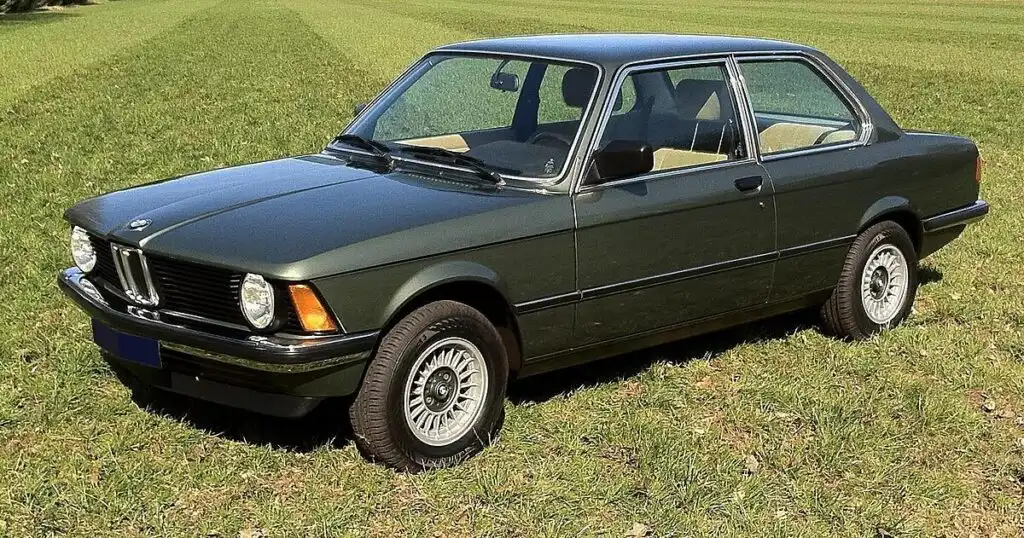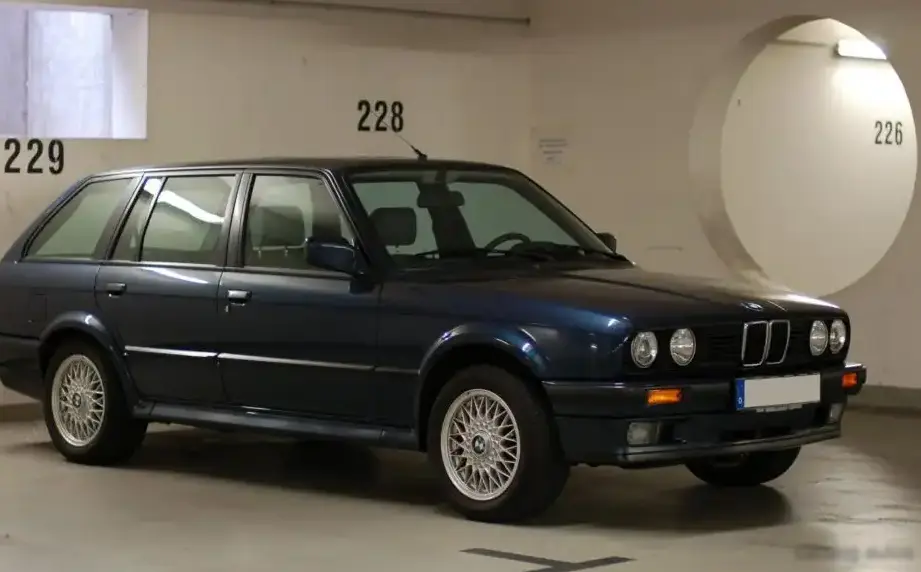
The BMW 3 Series Touring (E30) 316i, produced from 1987 to 1988, represented BMW’s entry into the compact executive estate car market. This variant, part of the E30 facelift series (often referred to as the 2.5 model due to styling cues adopted from the larger E34 5 Series), offered a more practical alternative to the popular 3 Series sedan. Positioned as the base model Touring, the 316i aimed to provide the renowned BMW driving experience at a more accessible price point, appealing to families and those needing additional cargo space without sacrificing brand prestige. It was built on the 3 Series (E30) platform, designated 1HX0.
Technical Specifications
| Brand | BMW |
| Model | 3 Series |
| Generation | 3 Series Touring (E30, facelift 1987) |
| Type (Engine) | 316i (102 Hp) |
| Start of production | 1987 |
| End of production | 1988 |
| Powertrain Architecture | Internal Combustion engine |
| Body type | Station wagon (estate) |
| Seats | 5 |
| Doors | 5 |
| Fuel Type | Petrol (Gasoline) |
| Weight-to-power ratio | 13.2 kg/Hp, 75.6 Hp/tonne |
| Weight-to-torque ratio | 9 kg/Nm, 111.1 Nm/tonne |
| Power | 102 Hp @ 5500 rpm |
| Power per litre | 63.9 Hp/l |
| Torque | 150 Nm @ 3900 rpm, 110.63 lb.-ft. @ 3900 rpm |
| Engine layout | Front, Longitudinal |
| Engine Model/Code | M10B18 |
| Engine displacement | 1596 cm3, 97.39 cu. in. |
| Number of cylinders | 4 |
| Engine configuration | Inline |
| Cylinder Bore | 84 mm, 3.31 in. |
| Piston Stroke | 72 mm, 2.83 in. |
| Compression ratio | 9.7:1 |
| Number of valves per cylinder | 2 |
| Fuel injection system | Multi-port manifold injection |
| Engine aspiration | Naturally aspirated engine |
| Engine oil capacity | 4 l, 4.23 US qt | 3.52 UK qt |
| Coolant | 6 l, 6.34 US qt | 5.28 UK qt |
| Kerb Weight | 1350 kg, 2976.24 lbs |
| Max. weight | 1810 kg, 3990.37 lbs |
| Max load | 460 kg, 1014.13 lbs |
| Trunk (boot) space – minimum | 371 l, 13.1 cu. ft |
| Fuel tank capacity | 62 l, 16.38 US gal | 13.64 UK gal |
| Length | 4321 mm, 170.12 in |
| Width | 1641 mm, 64.61 in |
| Height | 1379 mm, 54.29 in |
| Wheelbase | 2570 mm, 101.18 in |
| Front track | 1410 mm, 55.51 in |
| Rear (Back) track | 1420 mm, 55.91 in |
| Ride height (ground clearance) | 140 mm, 5.51 in |
| Drivetrain Architecture | The Internal combustion engine (ICE) drives the rear wheels of the vehicle. |
| Drive wheel | Rear wheel drive |
| Number of gears and type of gearbox | 5 gears, manual transmission |
| Front brakes | Disc |
| Rear brakes | Disc |
| Tires size | 195/65 R14 |
| Wheel rims size | 14 |
Powertrain & Engine Architecture
The heart of the 316i Touring was the M10B18 engine, a 1.6-liter inline-four cylinder unit. This engine, a descendant of BMW’s long-running M10 family, featured a cast iron block and an aluminum cylinder head. It utilized Bosch Motronic fuel injection, a significant advancement over earlier carbureted BMW engines, improving fuel efficiency and emissions. The M10B18 employed a single overhead camshaft (SOHC) operating two valves per cylinder. While not a high-performance engine, it was known for its durability and smooth operation. The 316i was exclusively offered with a 5-speed manual transmission, designed to maximize the engine’s modest power output. The transmission featured a traditional rear-wheel-drive layout, contributing to the BMW’s balanced handling characteristics.
Driving Characteristics
The 316i Touring, with its 102 horsepower and 150 Nm (110.63 lb-ft) of torque, wasn’t designed for outright speed. Acceleration from 0 to 60 mph took around 11-12 seconds, and top speed was approximately 108 mph. However, the car’s strength lay in its usability and balanced handling. The manual transmission allowed for precise control, and the rear-wheel-drive configuration provided a responsive feel. Compared to the more powerful 325i models, the 316i offered a more relaxed driving experience, prioritizing fuel economy and ease of use. The gear ratios were tuned to provide adequate acceleration in everyday driving situations, although overtaking required careful planning. The lighter weight of the 316i, compared to its larger-engined siblings, did contribute to a more nimble feel.
Equipment & Trim Levels
The 316i Touring was generally equipped with a fairly basic level of trim, reflecting its position as the entry-level model. Standard features included cloth upholstery, manual windows and door locks, and a relatively simple dashboard layout. Power steering was often an optional extra, as was air conditioning. The interior was functional and well-built, typical of BMW’s standards at the time. Optional extras included a sunroof, upgraded audio systems, and alloy wheels. The Touring body style itself added a degree of practicality, with a rear cargo area accessible via a large tailgate. The rear seats could be folded down to increase cargo capacity, making the 316i Touring a versatile vehicle for families and those with active lifestyles.
Chassis & Braking
The E30 Touring shared its chassis and suspension components with the 3 Series sedan. It featured independent suspension all around, with MacPherson struts at the front and semi-trailing arms at the rear. The suspension was tuned for a balance between comfort and handling, providing a relatively compliant ride without sacrificing stability. Brakes were disc brakes on all four wheels, offering adequate stopping power for the car’s weight and performance. Anti-lock brakes (ABS) were available as an optional extra. The 316i Touring typically featured a smaller stabilizer bar compared to the higher-performance models, contributing to a slightly softer ride. The rear drum brakes were standard on some models, while disc brakes were available as an upgrade.
Market Reception & Comparison
The 316i Touring was generally well-received by automotive critics as a practical and well-built estate car. It was praised for its handling, ride quality, and fuel efficiency. However, some critics noted that the engine lacked the power and refinement of the larger-engined 3 Series models. Compared to the 325i Touring, the 316i offered significantly less performance but at a lower price point. The 316i also offered better fuel economy than the 325i, making it a more economical choice for those who prioritized running costs. Against competitors like the Volvo 240 Estate and the Ford Sierra Estate, the 316i Touring offered a more premium driving experience and a higher level of build quality.
Legacy
The E30 316i Touring, while not the most powerful or sought-after variant of the E30 3 Series, has developed a loyal following among enthusiasts. The M10B18 engine is known for its reliability and relative simplicity, making it a relatively easy engine to maintain. However, age and mileage can lead to issues such as oil leaks and worn valve stem seals. Today, well-maintained examples of the 316i Touring are becoming increasingly collectible, particularly those with low mileage and a complete service history. The car represents a significant chapter in BMW’s history, marking the brand’s successful entry into the compact executive estate car market. Its blend of practicality, driving enjoyment, and build quality continues to appeal to enthusiasts today.