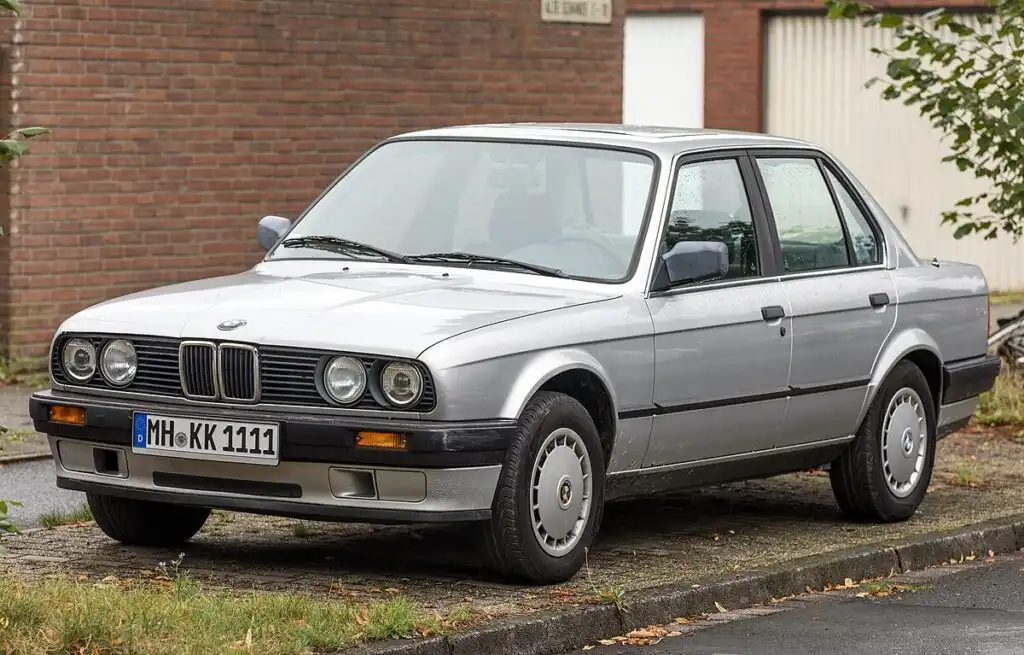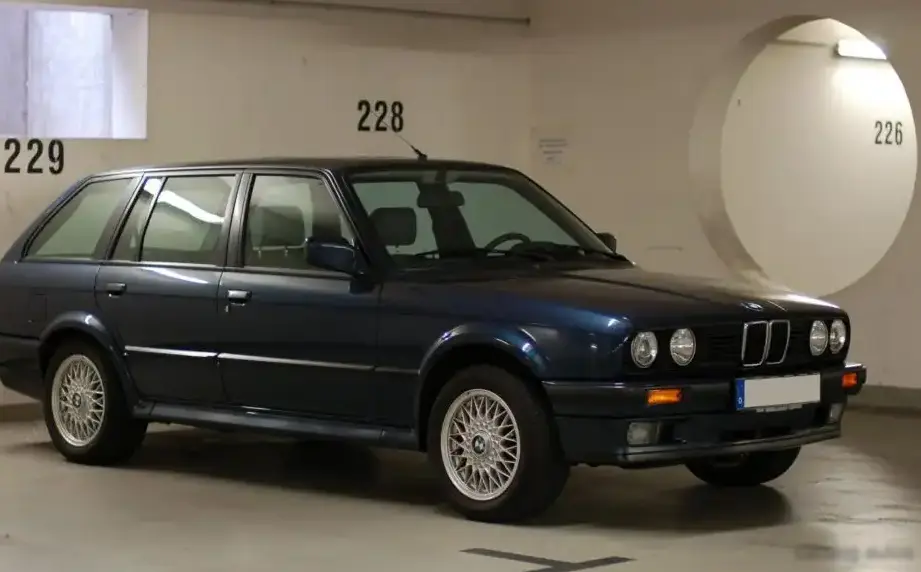
The BMW 3 Series Touring (E30) 316i, produced from 1988 to 1994, represents BMW’s entry point into the desirable compact executive estate car market. Positioned as the base model within the E30 Touring range, it offered practicality and the BMW driving experience at a more accessible price point. This variant, powered by the M40B16 engine and typically paired with a 5-speed manual transmission, was a popular choice for families and individuals seeking a versatile vehicle with BMW’s renowned build quality. The E30 Touring, introduced in 1987 after the sedan, expanded the 3 Series’ appeal, offering a blend of sporting dynamics and increased cargo capacity. The facelifted models from 1987 onwards featured subtle cosmetic updates and improvements to the interior.
Technical Specifications
| Brand | BMW |
| Model | 3 Series |
| Generation | 3 Series Touring (E30, facelift 1987) |
| Type (Engine) | 316i (99 Hp) |
| Start of production | 1988 |
| End of production | 1994 |
| Powertrain Architecture | Internal Combustion engine |
| Body type | Station wagon (estate) |
| Seats | 5 |
| Doors | 5 |
| Fuel consumption (economy) – combined | 8.6 l/100 km |
| Fuel consumption (economy) – combined | 27.4 US mpg |
| Fuel consumption (economy) – combined | 32.8 UK mpg |
| Fuel consumption (economy) – combined | 11.6 km/l |
| CO2 emissions | 204 g/km |
| Fuel Type | Petrol (Gasoline) |
| Acceleration 0 – 100 km/h | 13.9 sec |
| Acceleration 0 – 62 mph | 13.9 sec |
| Acceleration 0 – 60 mph | 13.2 sec |
| Maximum speed | 179 km/h |
| Maximum speed | 111.23 mph |
| Weight-to-power ratio | 11.8 kg/Hp |
| Weight-to-power ratio | 84.6 Hp/tonne |
| Weight-to-torque ratio | 8.3 kg/Nm |
| Weight-to-torque ratio | 120.5 Nm/tonne |
| Power | 99 Hp @ 5500 rpm |
| Power per litre | 62 Hp/l |
| Torque | 141 Nm @ 4250 rpm |
| Torque | 104 lb.-ft. @ 4250 rpm |
| Engine layout | Front, Longitudinal |
| Engine Model/Code | M40B16 |
| Engine displacement | 1596 cm3 |
| Engine displacement | 97.39 cu. in. |
| Number of cylinders | 4 |
| Engine configuration | Inline |
| Fuel injection system | Multi-port manifold injection |
| Engine aspiration | Naturally aspirated engine |
| Engine oil capacity | 4 l |
| Engine oil capacity | 4.23 US qt | 3.52 UK qt |
| Coolant | 6 l |
| Coolant | 6.34 US qt | 5.28 UK qt |
| Kerb Weight | 1170 kg |
| Kerb Weight | 2579.41 lbs |
| Max. weight | 1650 kg |
| Max. weight | 3637.63 lbs |
| Max load | 480 kg |
| Max load | 1058.22 lbs |
| Trunk (boot) space – minimum | 371 l |
| Trunk (boot) space – minimum | 13.1 cu. ft. |
| Length | 4321 mm |
| Length | 170.12 in |
| Width | 1641 mm |
| Width | 64.61 in |
| Height | 1379 mm |
| Height | 54.29 in |
| Wheelbase | 2570 mm |
| Wheelbase | 101.18 in |
| Front track | 1410 mm |
| Front track | 55.51 in |
| Rear (Back) track | 1420 mm |
| Rear (Back) track | 55.91 in |
| Ride height (ground clearance) | 140 mm |
| Ride height (ground clearance) | 5.51 in |
| Drivetrain Architecture | The Internal combustion engine (ICE) drives the rear wheels of the vehicle. |
| Drive wheel | Rear wheel drive |
| Number of gears and type of gearbox | 5 gears, manual transmission |
| Front brakes | Disc |
| Rear brakes | Drum |
| Tires size | 195/65 R14 |
| Wheel rims size | 14 |
Powertrain & Engine Architecture
The heart of the 316i Touring is the M40B16, a 1.6-liter inline-four cylinder engine. This engine, part of BMW’s M40 family, featured multi-port fuel injection and a single overhead camshaft (SOHC) valvetrain. While not a high-performance unit, the M40B16 was known for its smoothness and reasonable fuel efficiency. The engine produced 99 horsepower at 5500 rpm and 141 Nm (104 lb-ft) of torque at 4250 rpm. The engine’s longitudinal mounting and rear-wheel drive configuration were hallmarks of BMW’s engineering philosophy at the time. The standard transmission was a Getrag 265 5-speed manual, providing a direct and engaging driving experience. A 4-speed automatic transmission was also available, though it impacted performance and fuel economy.
Driving Characteristics
The 316i Touring, with its 99 hp and relatively lightweight construction, offered a balanced driving experience. Acceleration was adequate for everyday driving, with a 0-60 mph time of around 13.2 seconds. The manual transmission allowed for precise control, while the automatic, though less engaging, provided convenience. The E30’s chassis, known for its responsive handling, contributed to a feeling of agility. Compared to the more powerful 318i or 325i models, the 316i offered a more economical and relaxed driving experience. The gear ratios in the 5-speed manual were well-matched to the engine’s powerband, allowing for spirited driving on winding roads. However, fully loaded with passengers and luggage, the 316i could feel somewhat underpowered, particularly when climbing hills.
Equipment & Trim Levels
The 316i Touring typically came with a fairly basic level of equipment, reflecting its position as the entry-level model. Standard features included cloth upholstery, manual windows and door locks, and a basic stereo system. Optional extras, such as power windows, central locking, a sunroof, and upgraded audio systems, were available. Interior trim was generally functional and durable, with a focus on practicality. The rear seats could be folded down to increase cargo space, adding to the vehicle’s versatility. The dashboard layout was typical of the E30, with clearly marked gauges and intuitive controls.
Chassis & Braking
The E30 Touring utilized a MacPherson strut front suspension and a semi-trailing arm rear suspension. This setup provided a good balance of ride comfort and handling precision. The 316i typically featured disc brakes on the front wheels and drum brakes on the rear. While adequate for normal driving, the rear drum brakes were a limitation compared to the all-disc setups found on higher-spec models. Stabilizer bars were fitted to both the front and rear axles, helping to reduce body roll during cornering. The steering was unassisted, providing a direct and communicative feel.
Market Reception & Comparison
The 316i Touring was generally well-received by critics as a practical and affordable entry into the BMW range. It was praised for its build quality, handling, and fuel efficiency. However, some reviewers noted that the engine lacked the punch of its larger counterparts. Compared to the 318i, the 316i offered lower running costs but sacrificed performance. The 316i was also seen as a more sensible alternative to the sportier 325i. Fuel economy was a strong point, averaging around 27.4 US mpg in combined driving. Reliability was generally good, although regular maintenance was essential to prevent issues.
Legacy
The E30 3 Series Touring, including the 316i variant, has become a highly sought-after classic car. The M40B16 engine, while not the most powerful in the lineup, is known for its durability and relative simplicity. Parts availability is generally good, making maintenance and repairs manageable. Today, well-maintained examples of the 316i Touring command respectable prices in the used car market. The car’s combination of practicality, driving enjoyment, and classic BMW styling ensures its continued appeal to enthusiasts and collectors. The E30 Touring established the blueprint for BMW’s successful line of touring models, and the 316i played a significant role in making the concept accessible to a wider audience.