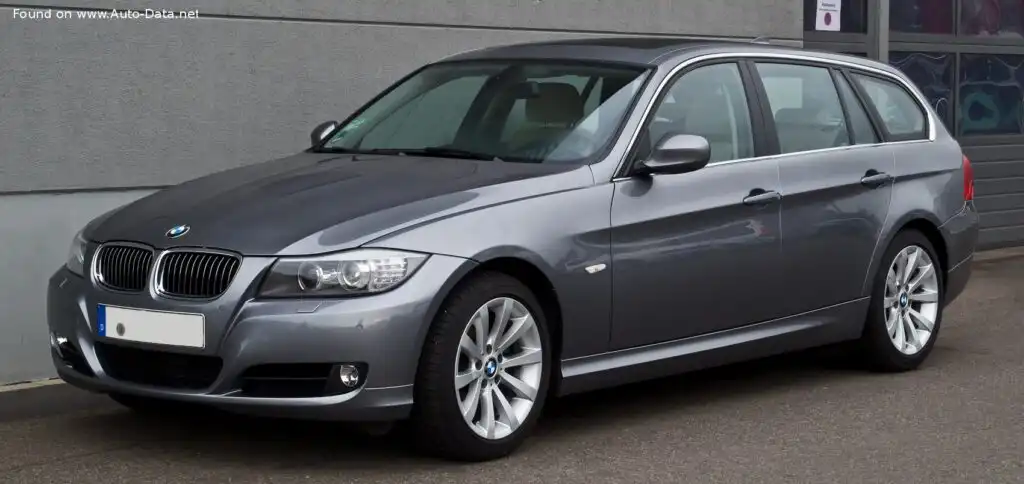
The BMW 3 Series Touring (E91) facelift, introduced in 2008, represented a mid-cycle refresh of the E91 wagon, part of the broader F30 generation of the 3 Series. The 318d variant, powered by a 2.0-liter turbocharged diesel engine producing 143 horsepower, occupied an important position in the lineup as the entry-level diesel option, appealing to buyers prioritizing fuel efficiency and practicality. Production of this specific configuration ran from 2008 to 2010, catering primarily to the European market where diesel engines held significant popularity due to favorable taxation and fuel costs. This model aimed to provide the versatility of a wagon with the economy of a smaller displacement diesel.
Technical Specifications
| Brand | BMW |
| Model | 3 Series |
| Generation | 3 Series Touring (E91 LCI, facelift 2008) |
| Type (Engine) | 318d (143 Hp) |
| Start of production | 2008 |
| End of production | 2010 |
| Powertrain Architecture | Internal Combustion engine |
| Body type | Station wagon (estate) |
| Seats | 5 |
| Doors | 5 |
| Fuel consumption (urban) | 5.8 l/100 km (40.6 US mpg, 48.7 UK mpg, 17.2 km/l) |
| Fuel consumption (extra urban) | 4.2 l/100 km (56 US mpg, 67.3 UK mpg, 23.8 km/l) |
| Fuel consumption (combined) | 4.8 l/100 km (49 US mpg, 58.9 UK mpg, 20.8 km/l) |
| CO2 emissions | 125 g/km |
| Fuel Type | Diesel |
| Acceleration 0 – 100 km/h | 9.6 sec |
| Acceleration 0 – 62 mph | 9.6 sec |
| Acceleration 0 – 60 mph | 9.1 sec |
| Maximum speed | 210 km/h (130.49 mph) |
| Emission standard | Euro 5 |
| Weight-to-power ratio | 10.5 kg/Hp, 95 Hp/tonne |
| Weight-to-torque ratio | 5 kg/Nm, 199.3 Nm/tonne |
| Power | 143 Hp @ 4000 rpm |
| Power per litre | 71.7 Hp/l |
| Torque | 300 Nm @ 1750-2500 rpm (221.27 lb.-ft. @ 1750-2500 rpm) |
| Engine layout | Front, Longitudinal |
| Engine Model/Code | N47D20C |
| Engine displacement | 1995 cm3 (121.74 cu. in.) |
| Number of cylinders | 4 |
| Engine configuration | Inline |
| Cylinder Bore | 84 mm (3.31 in.) |
| Piston Stroke | 90 mm (3.54 in.) |
| Compression ratio | 16:1 |
| Number of valves per cylinder | 4 |
| Fuel injection system | Diesel Commonrail |
| Engine aspiration | Turbocharger, Intercooler |
| Engine oil capacity | 5.2 l (5.49 US qt | 4.58 UK qt) |
| Coolant | 7.5 l (7.93 US qt | 6.6 UK qt) |
| Kerb Weight | 1505 kg (3317.96 lbs.) |
| Max. weight | 2045 kg (4508.45 lbs.) |
| Max load | 540 kg (1190.5 lbs.) |
| Trunk (boot) space – minimum | 460 l (16.24 cu. ft.) |
| Trunk (boot) space – maximum | 1385 l (48.91 cu. ft.) |
| Fuel tank capacity | 61 l (16.11 US gal | 13.42 UK gal) |
| Max. roof load | 75 kg (165.35 lbs.) |
| Permitted trailer load with brakes (12%) | 1600 kg (3527.4 lbs.) |
| Permitted trailer load without brakes | 745 kg (1642.44 lbs.) |
| Permitted towbar download | 75 kg (165.35 lbs.) |
| Length | 4527 mm (178.23 in.) |
| Width | 1817 mm (71.54 in.) |
| Width with mirrors folded | 1989 mm (78.31 in.) |
| Height | 1418 mm (55.83 in.) |
| Wheelbase | 2760 mm (108.66 in.) |
| Front track | 1506 mm (59.29 in.) |
| Rear (Back) track | 1535 mm (60.43 in.) |
| Ride height (ground clearance) | 141 mm (5.55 in.) |
| Drag coefficient (Cd) | 0.27 |
| Minimum turning circle (turning diameter) | 11.0 m (36.09 ft.) |
| Drivetrain Architecture | The Internal combustion engine (ICE) drives the rear wheels of the vehicle. |
| Drive wheel | Rear wheel drive |
| Number of gears and type of gearbox | 6 gears, manual transmission |
| Front suspension | Independent coil spring |
| Rear suspension | Independent multi-link suspension |
| Front brakes | Ventilated discs |
| Rear brakes | Ventilated discs |
| Assisting systems | ABS (Anti-lock braking system) |
| Steering type | Steering rack and pinion |
| Power steering | Electric Steering |
| Tires size | 205/55 R16 91H |
| Wheel rims size | 7J x 16 |
Powertrain & Engine Architecture
The heart of the 318d Touring was the N47D20C engine, a 2.0-liter inline-four cylinder diesel. This engine was a key component of BMW’s EfficientDynamics strategy, focusing on maximizing fuel economy and reducing emissions. The N47 featured second-generation common rail direct injection, operating at pressures up to 1,600 bar, for precise fuel delivery and optimized combustion. A variable geometry turbocharger (VGT) with an intercooler further enhanced performance and efficiency. The engine also incorporated four valves per cylinder and a timing chain for durability. The 318d was typically paired with a six-speed manual transmission, although a six-speed automatic transmission was also available. The automatic transmission offered smooth shifts but slightly impacted fuel economy compared to the manual.
Driving Characteristics
The 318d Touring, with its 143 horsepower and 300 Nm (221 lb-ft) of torque, provided adequate performance for everyday driving. Acceleration from 0 to 60 mph took around 9.1 seconds, and top speed was limited to 130 mph. While not a sports car, the engine delivered strong low-end torque, making it well-suited for overtaking and navigating city traffic. Compared to the more powerful 320d or 335i models, the 318d felt less urgent in its acceleration. However, the manual transmission offered a more engaging driving experience, while the automatic prioritized comfort and ease of use. The wagon body style did add some weight, slightly impacting handling compared to the sedan version.
Equipment & Trim Levels
The 318d Touring typically came with a reasonable level of standard equipment. This included features like air conditioning, power windows, central locking, and an audio system. Higher trim levels, such as Sport or Luxury, added features like sport seats, upgraded interior trim, and parking sensors. Optional extras included navigation systems, leather upholstery, sunroofs, and advanced driver-assistance systems. The interior design followed the typical BMW aesthetic of the time, with a driver-focused cockpit and high-quality materials. The rear seats offered ample space for passengers, and the large cargo area provided excellent practicality.
Chassis & Braking
The E91 Touring utilized BMW’s renowned chassis engineering. The front suspension featured independent coil springs and struts, while the rear employed an independent multi-link setup. This configuration provided a good balance between ride comfort and handling precision. The 318d typically came equipped with ventilated disc brakes on all four wheels, providing adequate stopping power. Anti-lock braking system (ABS) was standard, enhancing safety. The suspension was tuned to provide a comfortable ride, but it also allowed for confident cornering. Stabilizer bars were fitted front and rear to reduce body roll.
Market Reception & Comparison
The 318d Touring was well-received in Europe as a practical and fuel-efficient option. Critics praised its comfortable ride, spacious interior, and strong diesel engine. However, some reviewers noted that the engine lacked the outright performance of its more powerful siblings. Compared to the 320d, the 318d offered lower running costs but sacrificed some performance. The 318d also competed with other premium wagons, such as the Audi A4 Avant and Volvo V60, offering a similar blend of practicality and refinement. Fuel economy was a key selling point, with the 318d achieving around 49 US mpg on the combined cycle.
Legacy
The N47 engine, while generally reliable, did experience some issues with timing chain wear, particularly in early production models. Regular oil changes and preventative maintenance are crucial for ensuring the longevity of this engine. Today, the 318d Touring (E91) represents an affordable entry point into BMW ownership. It remains a popular choice for those seeking a practical, fuel-efficient, and well-built wagon. The availability of parts and a strong aftermarket support network contribute to its continued appeal in the used car market. While not a performance icon, the 318d Touring offers a compelling combination of practicality, efficiency, and BMW driving dynamics.