Technical Specifications
| Brand | BMW |
| Model | 3 Series |
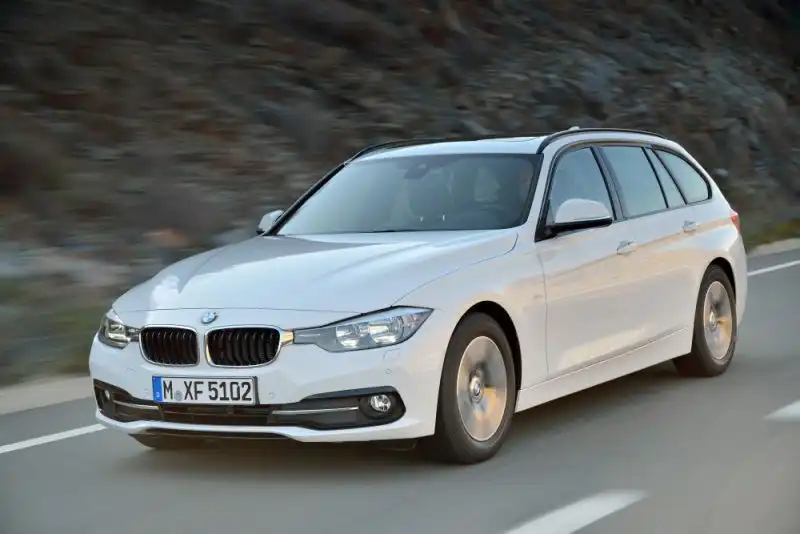
| Generation | 3 Series Touring (F31 LCI, Facelift 2015) |
| Type (Engine) | 325d (218 Hp) |
| Start of production | 2015 |
| End of production | 2016 |
| Powertrain Architecture | Internal Combustion engine |
| Body type | Station wagon (estate) |
| Seats | 5 |
| Doors | 5 |
| Fuel consumption (urban) | 6.4-6.3 l/100 km (36.8 – 37.3 US mpg) |
| Fuel consumption (extra urban) | 4.5-4.4 l/100 km (52.3 – 53.5 US mpg) |
| Fuel consumption (combined) | 5.2-5.1 l/100 km (45.2 – 46.1 US mpg) |
| CO2 emissions | 137-134 g/km |
| Fuel Type | Diesel |
| Acceleration 0 – 100 km/h | 6.9 sec |
| Acceleration 0 – 62 mph | 6.9 sec |
| Acceleration 0 – 60 mph | 6.6 sec |
| Maximum speed | 238 km/h (147.89 mph) |
| Emission standard | Euro 6 |
| Weight-to-power ratio | 7.1 kg/Hp, 141.6 Hp/tonne |
| Weight-to-torque ratio | 3.4 kg/Nm, 292.2 Nm/tonne |
| Power | 218 Hp @ 4400 rpm |
| Torque | 450 Nm @ 1500-2500 rpm (331.9 lb.-ft. @ 1500-2500 rpm) |
| Engine layout | Front, Longitudinal |
| Engine Model/Code | N47D20D |
| Engine displacement | 1995 cm3 (121.74 cu. in.) |
| Number of cylinders | 4 |
| Engine configuration | Inline |
| Cylinder Bore | 84 mm (3.31 in.) |
| Piston Stroke | 90 mm (3.54 in.) |
| Compression ratio | 16.5:1 |
| Number of valves per cylinder | 4 |
| Fuel injection system | Diesel Commonrail |
| Engine aspiration | Twin-power turbo, Intercooler |
| Engine oil capacity | 5.2 l (5.49 US qt | 4.58 UK qt) |
| Coolant | 7 l (7.4 US qt | 6.16 UK qt) |
| Kerb Weight | 1540 kg (3395.12 lbs.) |
| Max. weight | 2100 kg (4629.71 lbs.) |
| Max load | 560 kg (1234.59 lbs.) |
| Trunk (boot) space – minimum | 495 l (17.48 cu. ft.) |
| Trunk (boot) space – maximum | 1500 l (52.97 cu. ft.) |
| Fuel tank capacity | 57 l (15.06 US gal | 12.54 UK gal) |
| Max. roof load | 75 kg (165.35 lbs.) |
| Permitted trailer load with brakes (12%) | 1800 kg (3968.32 lbs.) |
| Permitted trailer load without brakes | 750 kg (1653.47 lbs.) |
| Permitted towbar download | 75 kg (165.35 lbs.) |
| Length | 4633 mm (182.4 in.) |
| Width | 1811 mm (71.3 in.) |
| Height | 1429 mm (56.26 in.) |
| Wheelbase | 2810 mm (110.63 in.) |
| Front track | 1531 mm (60.28 in.) |
| Rear (Back) track | 1572 mm (61.89 in.) |
| Ride height (ground clearance) | 140 mm (5.51 in.) |
| Drag coefficient (Cd) | 0.31 |
| Minimum turning circle (turning diameter) | 11.3 m (37.07 ft.) |
| Drivetrain Architecture | The Internal combustion engine (ICE) drives the rear wheels of the vehicle. |
| Drive wheel | Rear wheel drive |
| Number of gears and type of gearbox | 6 gears, manual transmission |
| Front suspension | Independent coil spring |
| Rear suspension | Independent multi-link suspension |
| Front brakes | Ventilated discs |
| Rear brakes | Ventilated discs |
| Assisting systems | ABS (Anti-lock braking system) |
| Steering type | Steering rack and pinion |
| Power steering | Electric Steering |
| Tires size | 225/50 R17 98W |
| Wheel rims size | 7.5J x 17 |
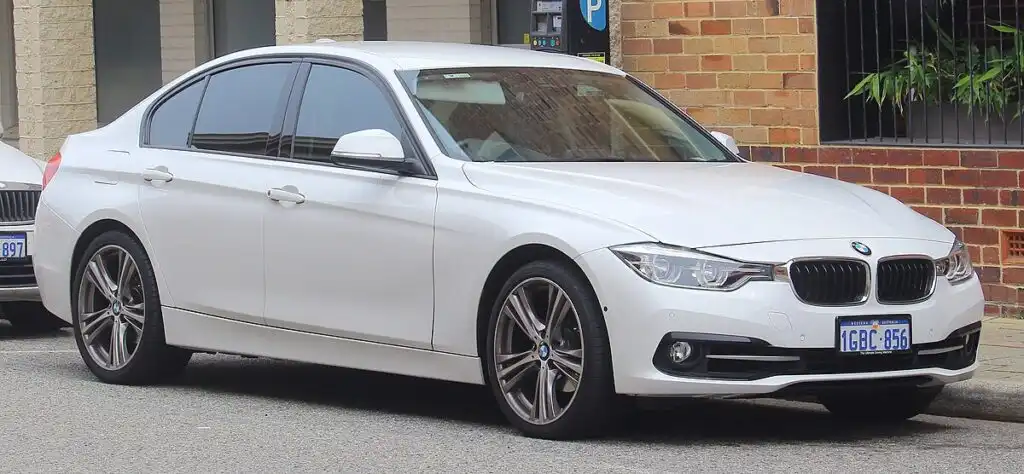
The F31 325d Touring, produced between 2015 and 2016, was a significant model in BMW’s lineup, appealing to buyers in Europe who desired a practical and efficient vehicle without compromising on driving enjoyment. Positioned as a mid-range offering, it sat between the more economical 320d and the performance-focused 330d. The “LCI” (Life Cycle Impulse) facelift brought subtle yet important updates to the exterior design, including revised headlights and taillights, along with interior enhancements centered around improved infotainment and material quality. Based on the F30 3 Series platform, the F31 Touring provided a spacious cabin and a generous cargo capacity, making it a popular choice for families and individuals with active lifestyles.
Powertrain & Engine Architecture
The 325d Touring is powered by the N47D20D, a 2.0-liter inline-four cylinder diesel engine. This engine is a key component of BMW’s EfficientDynamics strategy, engineered to deliver robust performance alongside excellent fuel economy. The N47 engine family is recognized for its advanced common-rail direct injection system, operating at pressures up to 1800 bar, ensuring precise fuel delivery and efficient combustion. The 325d version utilizes a twin-scroll turbocharger with variable geometry turbine (VGT) technology, which minimizes turbo lag and maximizes boost across a broad engine speed range. The engine also features four valves per cylinder and a durable cast iron block. A 6-speed manual transmission was standard, offering precise gear changes and a direct connection to the drivetrain. An 8-speed automatic transmission was available as an option, but the manual was preferred by driving enthusiasts for its more engaging feel.
Driving Characteristics
With 218 horsepower and 450 Nm (331.9 lb-ft) of torque, the 325d Touring offered a compelling combination of performance and efficiency. Acceleration from 0 to 60 mph took around 6.6 seconds, making it a reasonably quick wagon. The engine’s peak torque, readily available from 1500-2500 rpm, provided strong pulling power in everyday driving, simplifying overtaking maneuvers. Compared to the more powerful 330d, the 325d felt slightly less aggressive in its acceleration, but it delivered a more relaxed and fuel-efficient driving experience. The manual transmission, with its well-defined shift gate and precise action, enhanced driver involvement. The F31’s chassis, known for its balanced handling, provided a comfortable yet controlled ride, even when the vehicle was fully loaded.
Equipment & Trim Levels
The 325d Touring came standard with a comprehensive array of features, including automatic climate control, power windows and mirrors, a multi-function steering wheel, and BMW’s iDrive infotainment system. Interior upholstery typically consisted of cloth or leatherette, with full leather available as an optional upgrade. Standard safety equipment included ABS, stability control, and multiple airbags. Optional extras included a sunroof, a navigation system, a premium sound system, and parking sensors. The LCI facelift introduced updated iDrive software and improved interior trim options, elevating the overall sense of quality and refinement.
Chassis & Braking
The F31 Touring employed an independent MacPherson strut front suspension and an independent multi-link rear suspension, delivering a comfortable and controlled ride. The suspension was tuned to strike a balance between handling precision and ride comfort, making it suitable for both spirited driving and long journeys. Braking was provided by ventilated disc brakes on all four wheels, offering ample stopping power. ABS (Anti-lock Braking System) and stability control were standard features, enhancing safety and control in challenging conditions.
Market Reception & Comparison
The 325d Touring was generally well-received by automotive critics, who praised its blend of practicality, performance, and fuel economy. It was often viewed as a more sensible alternative to the sportier 330d, offering a comparable level of refinement with lower running costs. Compared to competitors like the Audi A4 Avant and the Mercedes-Benz C-Class Estate, the 325d Touring was frequently lauded for its engaging driving dynamics and spacious interior. Fuel economy was a significant strength, with combined figures averaging around 45-46 mpg. Reliability was generally good, although some owners reported issues with the diesel particulate filter (DPF) and the turbocharger.
Legacy
The F31 325d Touring has become a popular choice in the used car market, appreciated for its versatility, efficiency, and BMW’s reputation for build quality. The N47 engine, while generally reliable, requires consistent maintenance, particularly concerning the timing chain and DPF. Well-maintained examples continue to offer a compelling package for buyers seeking a premium wagon that balances practicality with driving pleasure. Its lasting appeal is a testament to BMW’s successful formula of combining performance, efficiency, and refinement in a versatile and stylish vehicle.