Technical Specifications
| Brand | BMW |
| Model | 5 Series |
| Generation | 5 Series (E12, Facelift 1976) |
| Type (Engine) | 520i (125 Hp) |
| Start of production | 1976 |
| End of production | 1979 |
| Powertrain Architecture | Internal Combustion engine |
| Body type | Sedan |
| Seats | 5 |
| Doors | 4 |
| Fuel consumption (economy) – combined | 9.5 l/100 km |
| Fuel consumption (economy) – combined | 24.8 US mpg |
| Fuel consumption (economy) – combined | 29.7 UK mpg |
| Fuel consumption (economy) – combined | 10.5 km/l |
| Fuel Type | Petrol (Gasoline) |
| Acceleration 0 – 100 km/h | 11.3 sec |
| Acceleration 0 – 62 mph | 11.3 sec |
| Acceleration 0 – 60 mph | 10.7 sec |
| Maximum speed | 181 km/h |
| Maximum speed | 112.47 mph |
| Weight-to-power ratio | 10.1 kg/Hp |
| Weight-to-power ratio | 99.2 Hp/tonne |
| Weight-to-torque ratio | 7.4 kg/Nm |
| Weight-to-torque ratio | 134.9 Nm/tonne |
| Power | 125 Hp @ 5800 rpm |
| Power per litre | 62.8 Hp/l |
| Torque | 170 Nm @ 4000 rpm |
| Torque | 125.39 lb.-ft. @ 4000 rpm |
| Engine layout | Front, Longitudinal |
| Engine Model/Code | M10B20 |
| Engine displacement | 1990 cm3 |
| Engine displacement | 121.44 cu. in. |
| Number of cylinders | 6 |
| Engine configuration | Inline |
| Cylinder Bore | 80 mm |
| Cylinder Bore | 3.15 in. |
| Piston Stroke | 66 mm |
| Piston Stroke | 2.6 in. |
| Compression ratio | 9.7:1 |
| Number of valves per cylinder | 2 |
| Fuel injection system | Multi-port manifold injection |
| Engine aspiration | Naturally aspirated engine |
| Engine oil capacity | 4.25 l |
| Engine oil capacity | 4.49 US qt |
| Engine oil capacity | 3.74 UK qt |
| Kerb Weight | 1260 kg |
| Kerb Weight | 2777.82 lbs |
| Trunk (boot) space – minimum | 440 l |
| Trunk (boot) space – minimum | 15.54 cu. ft. |
| Fuel tank capacity | 70 l |
| Fuel tank capacity | 18.49 US gal |
| Fuel tank capacity | 15.4 UK gal |
| Length | 4620 mm |
| Length | 181.89 in. |
| Width | 1690 mm |
| Width | 66.54 in. |
| Height | 1425 mm |
| Height | 56.1 in. |
| Wheelbase | 2636 mm |
| Wheelbase | 103.78 in. |
| Front track | 1406 mm |
| Front track | 55.35 in. |
| Rear (Back) track | 1442 mm |
| Rear (Back) track | 56.77 in. |
| Ride height (ground clearance) | 140 mm |
| Ride height (ground clearance) | 5.51 in. |
| Drivetrain Architecture | The Internal combustion engine (ICE) drives the rear wheels of the vehicle. |
| Drive wheel | Rear wheel drive |
| Number of gears and type of gearbox | 4 gears, manual transmission |
| Front brakes | Disc |
| Rear brakes | Drum |
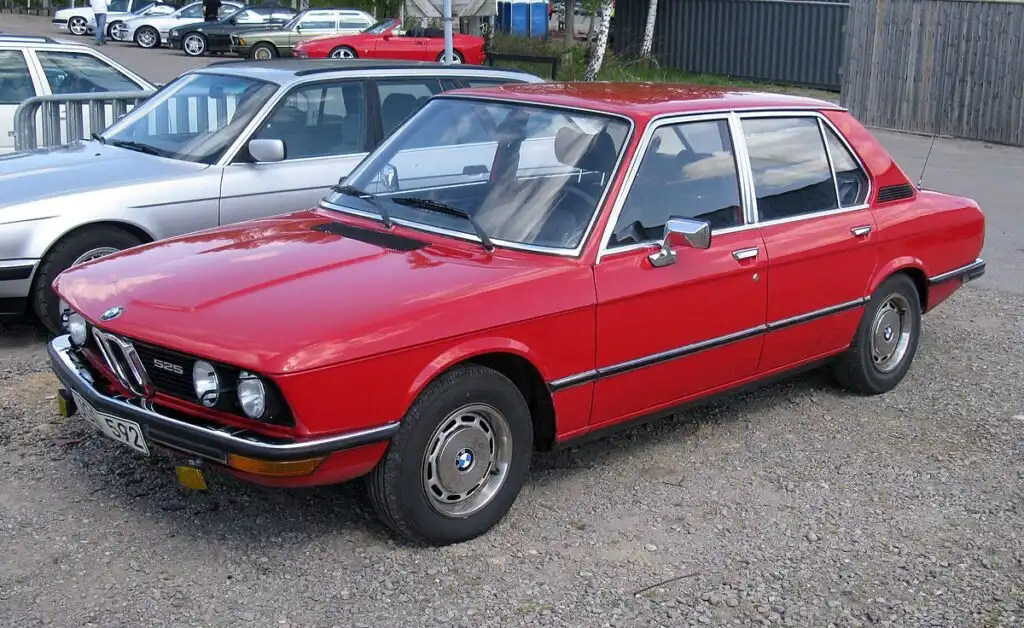
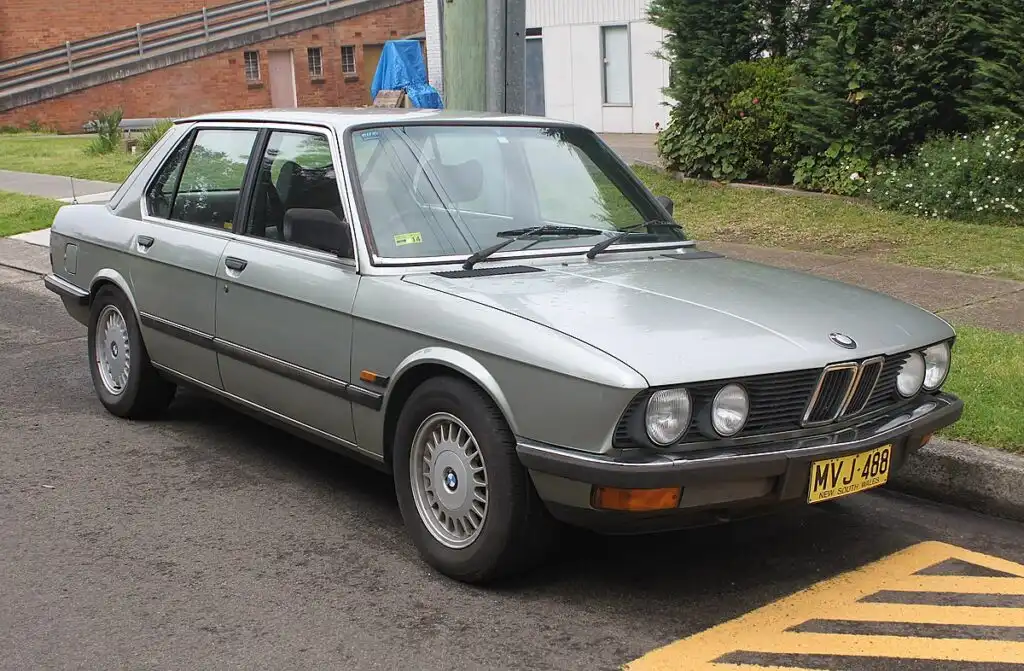
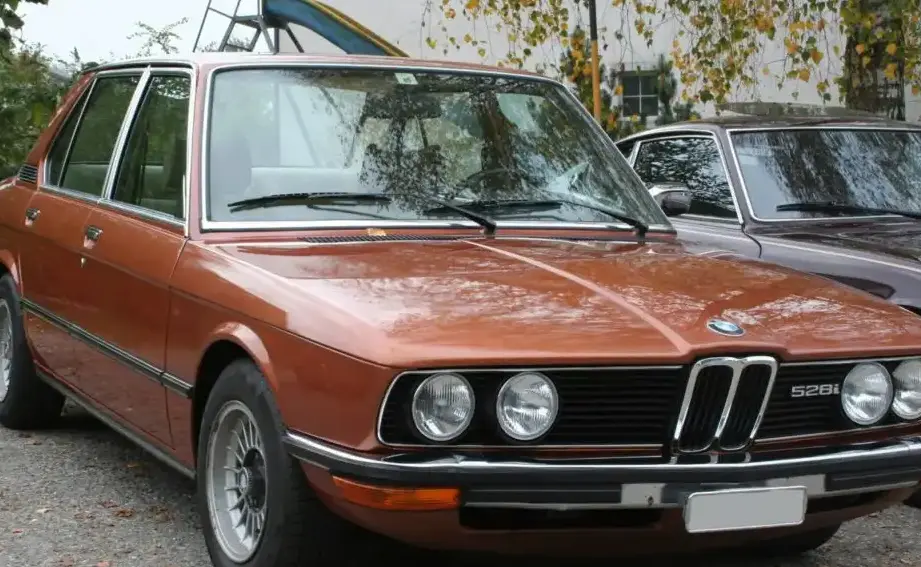
The BMW 520i, produced between 1976 and 1979 as part of the E12 5 Series facelift, represented a key entry point into the Neue Klasse executive sedan range. Positioned below the 525i and 530i models, the 520i offered a blend of BMW’s renowned driving dynamics with a more economical engine, appealing to a broader customer base. This variant was particularly significant in markets where fuel costs and taxation favored smaller displacement engines. The E12 platform, launched in 1972, was BMW’s replacement for the “New Class” sedans of the 1960s, and the 1976 facelift brought subtle styling updates and mechanical refinements.
Powertrain & Engine Architecture
The 520i was powered by the BMW M10B20 engine, a 2.0-liter inline-six cylinder engine. This engine was a development of the M10 family, known for its robust construction and smooth operation. The ‘B20’ designation indicates a displacement of 1990cc. The M10B20 featured a cast iron block and an aluminum cylinder head, employing a single overhead camshaft (SOHC) design with two valves per cylinder. Fuel delivery was handled by Bosch K-Jetronic multi-port fuel injection, a sophisticated system for its time that improved fuel efficiency and reduced emissions compared to carbureted engines. The engine produced 125 horsepower at 5800 rpm and 170 Nm (125 lb-ft) of torque at 4000 rpm. The 520i was exclusively offered with a four-speed manual transmission, delivering power to the rear wheels.
Driving Characteristics
The 520i, with its 2.0-liter engine and manual transmission, offered a different driving experience compared to its larger-engined siblings. While not as overtly powerful as the 525i or 530i, the 520i provided a balanced and engaging drive. Acceleration to 60 mph took around 10.7 seconds, and top speed was approximately 112 mph. The four-speed gearbox was well-matched to the engine’s characteristics, providing adequate ratios for both city driving and highway cruising. The relatively lighter weight of the 520i, compared to the six-cylinder models, contributed to its nimble handling. The steering was precise and communicative, typical of BMWs of this era. The 520i prioritized fuel economy and a more relaxed driving experience, making it a suitable choice for drivers who valued efficiency and refinement over outright performance.
Equipment & Trim Levels
The 520i typically came with a fairly standard level of equipment for a luxury sedan of the mid-1970s. Standard features included cloth upholstery, a basic radio, and manual windows. Optional extras included power windows, a sunroof, air conditioning, and upgraded audio systems. Interior trim was generally conservative, with a focus on functionality and durability. The dashboard layout was typical of BMWs of the period, with clearly marked gauges and a driver-focused design. The 520i was often seen as the more practical and affordable option within the 5 Series range, appealing to buyers who didn’t require the extensive luxury features offered on the higher-spec models.
Chassis & Braking
The E12 5 Series featured a robust chassis with independent suspension at all four wheels. The front suspension utilized MacPherson struts, while the rear employed a semi-trailing arm design. This setup provided a good balance of ride comfort and handling precision. The 520i was equipped with disc brakes at the front and drum brakes at the rear. While the drum brakes on the rear were a cost-saving measure, they provided adequate stopping power for the vehicle’s weight and performance. The steering system was a recirculating ball system, offering a good level of feedback and precision. Stabilizer bars were fitted to both the front and rear axles to reduce body roll during cornering.
Market Reception & Comparison
The 520i was generally well-received by automotive critics, who praised its balanced handling, comfortable ride, and fuel efficiency. It was seen as a sensible and practical choice for buyers who wanted a BMW 5 Series but didn’t need the extra power of the larger-engined models. Compared to the 525i and 530i, the 520i offered better fuel economy and a lower purchase price. However, it lacked the outright performance and prestige of its more powerful siblings. In terms of reliability, the M10B20 engine proved to be a durable and long-lasting unit, although regular maintenance was essential.
Legacy
The BMW E12 520i remains a popular classic car today, appreciated for its timeless design, engaging driving dynamics, and relatively simple mechanicals. The M10B20 engine is known for its reliability, although age and mileage can necessitate repairs. Parts availability is generally good, although some specific components may be difficult to find. The 520i represents a significant chapter in BMW’s history, showcasing the company’s commitment to building high-quality, driver-focused automobiles. In the used car market, well-maintained examples of the 520i command a respectable price, reflecting their enduring appeal and classic status.