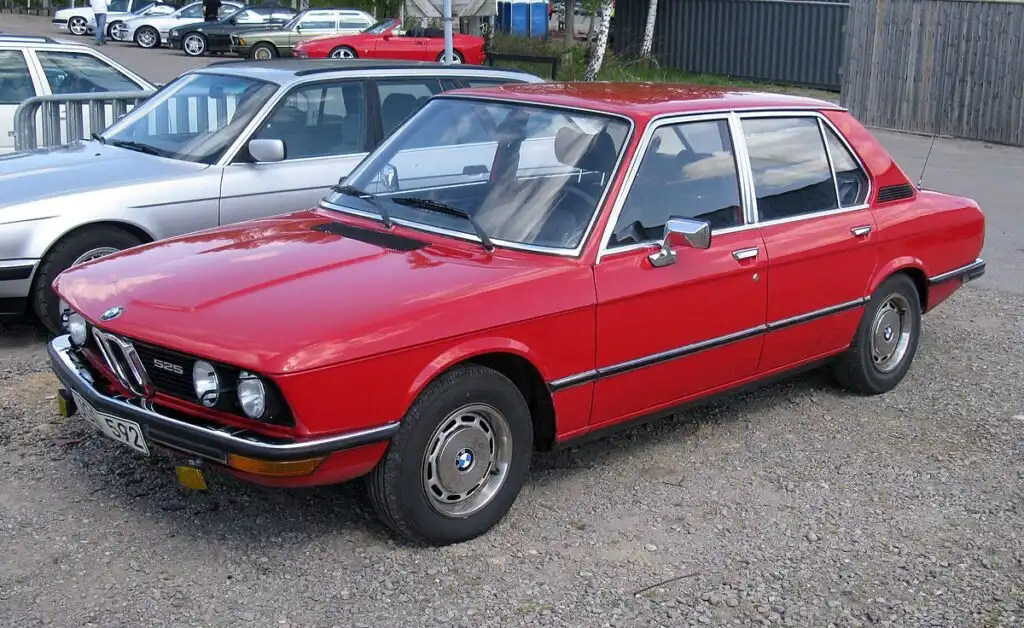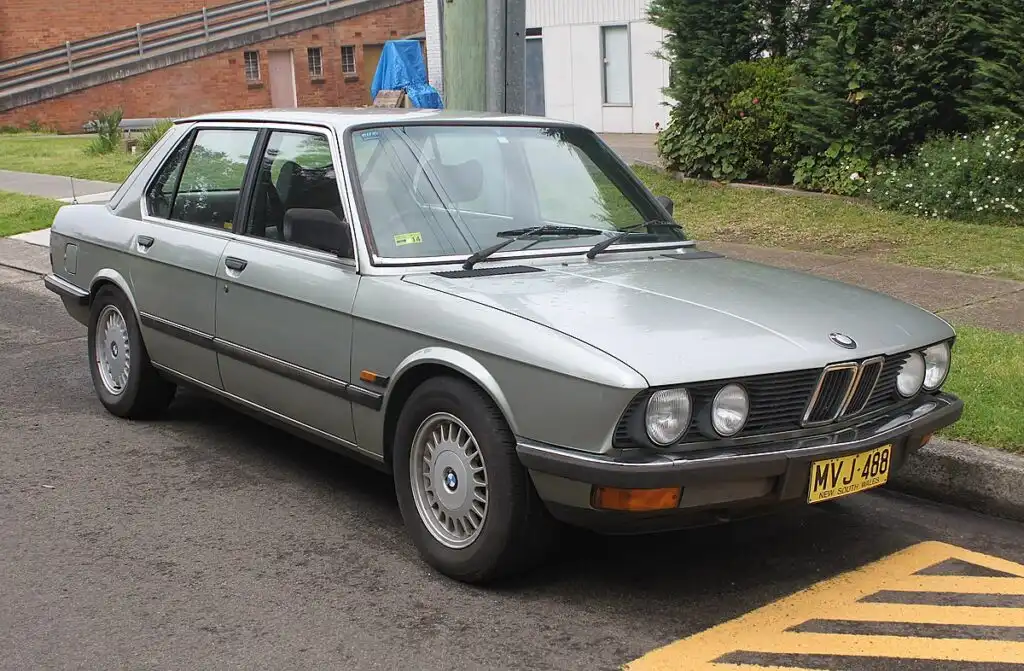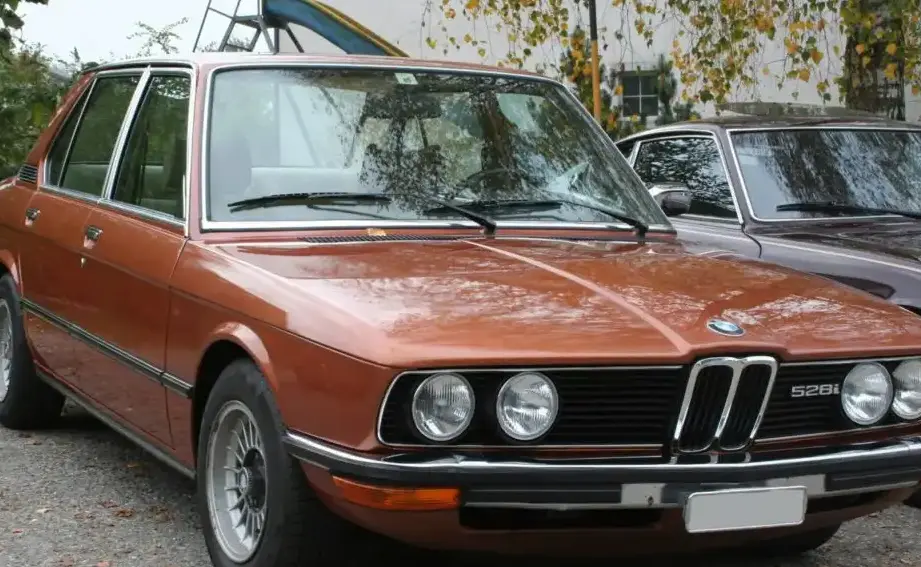
The BMW 5 Series E12, particularly the 525 model produced from 1976 to 1981, represents a pivotal moment in the evolution of BMW’s mid-size executive car. Positioned as a step up from the base 520 model, the 525 offered a significant performance increase while remaining accessible to a broader range of buyers. This facelifted version of the E12, introduced in 1976, refined the original’s design and addressed some early production issues, solidifying the 5 Series’ reputation for build quality and driving dynamics. The 525 was a key player in BMW’s expansion in the North American market, offering a blend of European sophistication and performance that appealed to a growing segment of American drivers.
Technical Specifications
| Brand | BMW |
| Model | 5 Series |
| Generation | 5 Series (E12, Facelift 1976) |
| Type (Engine) | 525 (150 Hp) |
| Start of production | 1976 |
| End of production | 1981 |
| Powertrain Architecture | Internal Combustion engine |
| Body type | Sedan |
| Seats | 5 |
| Doors | 4 |
| Fuel consumption (economy) – urban | 14.3 l/100 km (16.4 US mpg, 19.8 UK mpg, 7 km/l) |
| Fuel consumption (economy) – extra urban | 7.4 l/100 km (31.8 US mpg, 38.2 UK mpg, 13.5 km/l) |
| Fuel consumption (economy) – combined | 10.5 l/100 km (22.4 US mpg, 26.9 UK mpg, 9.5 km/l) |
| Fuel Type | Petrol (Gasoline) |
| Acceleration 0 – 100 km/h | 10.1 sec |
| Acceleration 0 – 62 mph | 10.1 sec |
| Acceleration 0 – 60 mph | 9.6 sec |
| Maximum speed | 193 km/h (119.92 mph) |
| Weight-to-power ratio | 9 kg/Hp, 111.1 Hp/tonne |
| Weight-to-torque ratio | 6.4 kg/Nm, 157 Nm/tonne |
| Power | 150 Hp @ 5800 rpm |
| Power per litre | 60.1 Hp/l |
| Torque | 212 Nm @ 4000 rpm (156.36 lb.-ft. @ 4000 rpm) |
| Engine layout | Front, Longitudinal |
| Engine Model/Code | M30B25 |
| Engine displacement | 2494 cm3 (152.19 cu. in.) |
| Number of cylinders | 6 |
| Engine configuration | Inline |
| Cylinder Bore | 86 mm (3.39 in.) |
| Piston Stroke | 71.6 mm (2.82 in.) |
| Number of valves per cylinder | 2 |
| Fuel injection system | Carburettor |
| Engine aspiration | Naturally aspirated engine |
| Engine oil capacity | 5.8 l (6.13 US qt | 5.1 UK qt) |
| Kerb Weight | 1350 kg (2976.24 lbs.) |
| Max. weight | 1810 kg (3990.37 lbs.) |
| Max load | 460 kg (1014.13 lbs.) |
| Trunk (boot) space – minimum | 440 l (15.54 cu. ft.) |
| Fuel tank capacity | 70 l (18.49 US gal | 15.4 UK gal) |
| Length | 4620 mm (181.89 in.) |
| Width | 1690 mm (66.54 in.) |
| Height | 1425 mm (56.1 in.) |
| Wheelbase | 2636 mm (103.78 in.) |
| Front track | 1406 mm (55.35 in.) |
| Rear (Back) track | 1442 mm (56.77 in.) |
| Ride height (ground clearance) | 139 mm (5.47 in.) |
| Drivetrain Architecture | The Internal combustion engine (ICE) drives the rear wheels of the vehicle. |
| Drive wheel | Rear wheel drive |
| Number of gears and type of gearbox | 5 gears, manual transmission |
| Front brakes | Disc |
| Rear brakes | Disc |
| Tires size | 175/80 R14 |
| Wheel rims size | 14 |
Powertrain & Engine Architecture
The heart of the 525 was the M30B25 engine, a 2.5-liter inline-six cylinder powerplant. This engine, a descendant of BMW’s long-running M30 family, was known for its smoothness and durability. Unlike later BMW engines, the 525 utilized a single overhead camshaft (SOHC) design with two valves per cylinder. Fuel delivery was managed by a Solex 32 PHN carburetor, a relatively simple system for the time, but one that provided adequate performance for the intended market. The M30B25 produced 150 horsepower at 5800 rpm and 212 Nm (156 lb-ft) of torque at 4000 rpm. The engine’s longitudinal front-engine layout and rear-wheel drive configuration were standard for BMW at the time, contributing to the car’s balanced handling characteristics. The 525 was exclusively offered with a 5-speed manual transmission, providing drivers with full control over the engine’s power band.
Driving Characteristics
The 525 offered a noticeably more engaging driving experience than the base 520. While not a sports car, the 2.5-liter engine provided ample power for comfortable highway cruising and spirited backroad driving. The 5-speed manual transmission allowed drivers to keep the engine in its optimal power range, resulting in responsive acceleration. The gear ratios were well-matched to the engine’s torque curve, providing good in-gear acceleration. Compared to the later 528i models, the 525 felt less urgent in its acceleration, but it offered a more balanced and predictable driving experience. The car’s relatively light weight (around 2976 lbs) contributed to its nimble handling, making it a joy to drive on winding roads.
Equipment & Trim Levels
The 525 was positioned as a mid-range offering within the E12 5 Series lineup. Standard equipment included cloth upholstery, a basic AM/FM radio, and manual windows and locks. Optional extras included power windows, central locking, a sunroof, and upgraded audio systems. Interior trim options were relatively limited, with a focus on durable materials and functional design. The dashboard layout was typical of BMWs of the era, with a clear and concise instrument cluster and logically placed controls. The 525’s interior was designed to be comfortable and functional, rather than luxurious.
Chassis & Braking
The E12 5 Series featured a robust chassis with independent suspension at all four wheels. The front suspension utilized MacPherson struts, while the rear suspension employed a semi-trailing arm design. This suspension setup provided a good balance of ride comfort and handling precision. The 525 was equipped with disc brakes on all four wheels, providing ample stopping power. The braking system was unassisted, requiring a firm pedal effort, but it was reliable and effective. The car’s relatively narrow tires (175/80 R14) provided adequate grip for the time, but they were a limiting factor in terms of cornering performance by modern standards.
Market Reception & Comparison
The 525 was generally well-received by automotive critics. It was praised for its smooth engine, balanced handling, and build quality. Compared to the 520, the 525 offered a significant performance upgrade, making it a more appealing option for drivers who enjoyed a more engaging driving experience. However, some critics noted that the carburetor-equipped engine was less fuel-efficient than the fuel-injected engines offered in some other markets. The 525’s fuel economy was rated at around 22.4 US mpg combined, which was typical for a car of its size and era. In terms of reliability, the M30B25 engine proved to be exceptionally durable, with many examples still running reliably today.
Legacy
The BMW 525 (E12) holds a significant place in BMW’s history. It helped establish the 5 Series as a benchmark for mid-size executive cars. The M30B25 engine is renowned for its longevity and relatively simple maintenance requirements. Today, well-maintained examples of the 525 are sought after by classic BMW enthusiasts. While not as collectible as some of the more high-performance E12 models, the 525 offers a compelling combination of classic BMW styling, driving dynamics, and affordability. Its robust construction and durable engine ensure that it will continue to provide years of enjoyment for its owners.