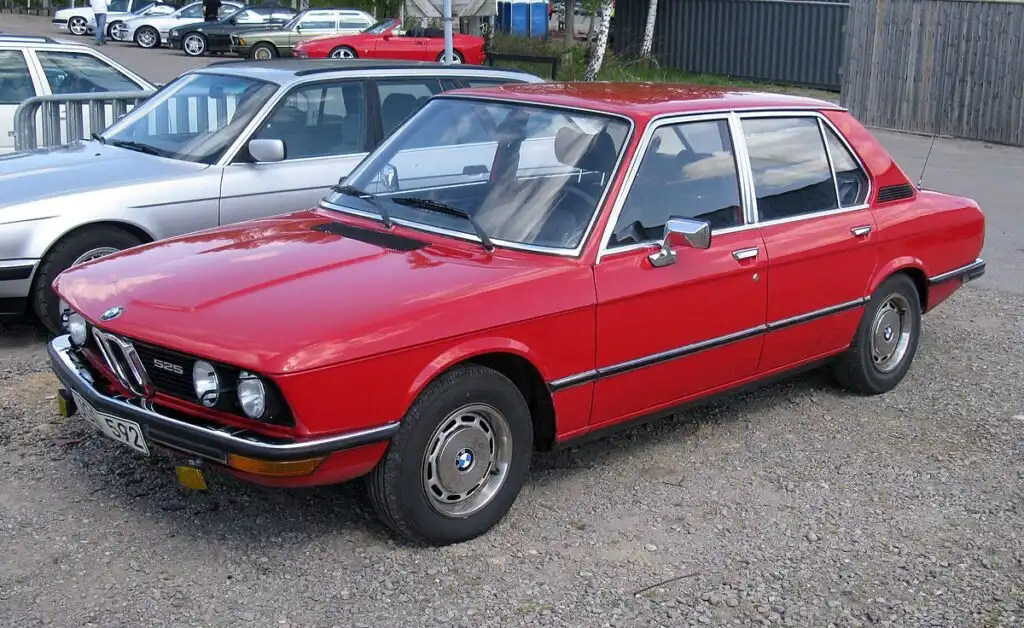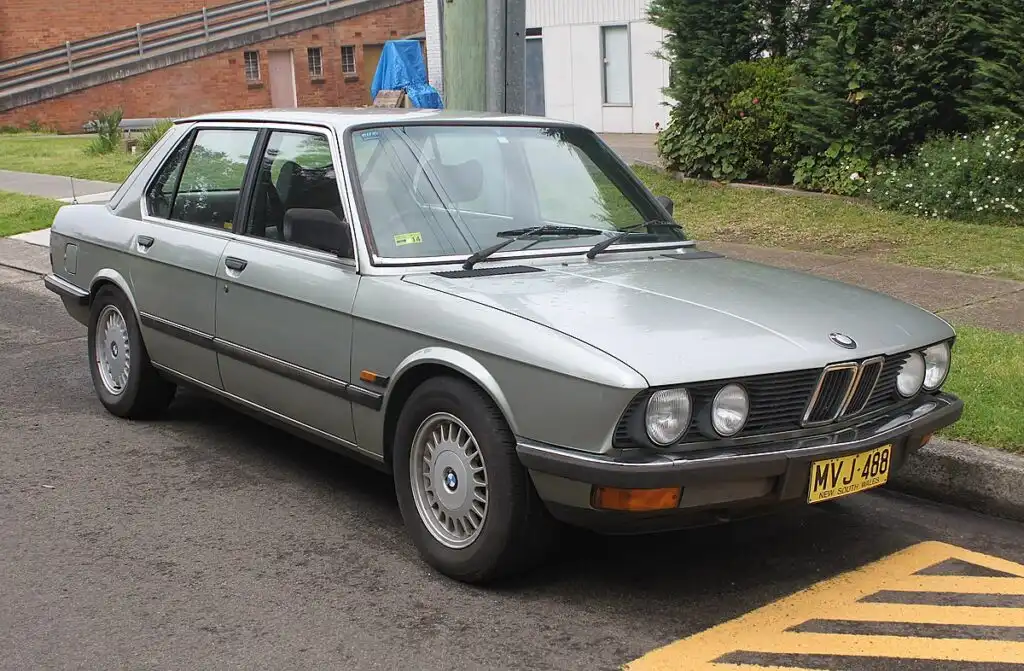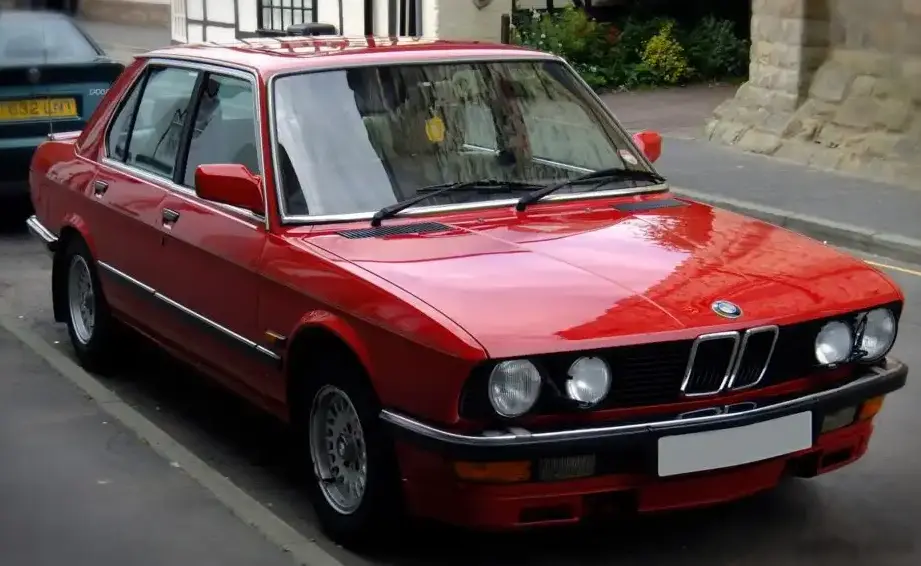
The BMW 5 Series E28 525e 2.7, produced between 1981 and 1987, represents a unique chapter in the evolution of BMW’s mid-size executive car. Introduced as part of the E28 generation (which spanned 1979-1988), the 525e was specifically engineered to meet increasingly stringent emissions regulations, particularly in the United States. While often viewed as a compromise due to its focus on economy and emissions, the 525e offered a distinct driving experience and remains a sought-after classic among BMW enthusiasts. It occupied a middle ground in the E28 lineup, positioned between the more performance-oriented 535i and the base 520i/528i models.
Technical Specifications
| Brand | BMW |
| Model | 5 Series |
| Generation | 5 Series (E28) |
| Type (Engine) | 525e 2.7 (122 Hp) |
| Start of production | 1981 |
| End of production | 1987 |
| Powertrain Architecture | Internal Combustion engine |
| Body type | Sedan |
| Seats | 5 |
| Doors | 4 |
| Fuel Type | Petrol (Gasoline) |
| Maximum speed | 180 km/h (111.85 mph) |
| Power | 122 Hp @ 4250 rpm |
| Power per litre | 45.3 Hp/l |
| Torque | 230 Nm @ 3250 rpm (169.64 lb.-ft. @ 3250 rpm) |
| Engine layout | Front, Longitudinal |
| Engine Model/Code | M20B27 |
| Engine displacement | 2693 cm3 (164.34 cu. in.) |
| Number of cylinders | 6 |
| Engine configuration | Inline |
| Cylinder Bore | 84 mm (3.31 in.) |
| Piston Stroke | 81 mm (3.19 in.) |
| Compression ratio | 22:1 |
| Number of valves per cylinder | 2 |
| Fuel injection system | Carburettor |
| Engine aspiration | Naturally aspirated engine |
| Engine oil capacity | 4.25 l (4.49 US qt | 3.74 UK qt) |
| Coolant | 12 l (12.68 US qt | 10.56 UK qt) |
| Trunk (boot) space – minimum | 460 l (16.24 cu. ft.) |
| Fuel tank capacity | 70 l (18.49 US gal | 15.4 UK gal) |
| Length | 4620 mm (181.89 in.) |
| Width | 1700 mm (66.93 in.) |
| Height | 1415 mm (55.71 in.) |
| Wheelbase | 2625 mm (103.35 in.) |
| Front track | 1430 mm (56.3 in.) |
| Rear (Back) track | 1470 mm (57.87 in.) |
| Ride height (ground clearance) | 140 mm (5.51 in.) |
| Drivetrain Architecture | The Internal combustion engine (ICE) drives the rear wheels of the vehicle. |
| Drive wheel | Rear wheel drive |
| Number of gears and type of gearbox | 5 gears, manual transmission |
| Front brakes | Disc |
| Rear brakes | Disc |
Powertrain & Engine Architecture
The heart of the 525e is the M20B27 engine, a 2.7-liter inline-six cylinder powerplant. This engine was a modified version of the M20 family, specifically tuned for reduced emissions. Unlike the fuel-injected M20 engines found in the 535i, the 525e utilized a Motronic fuel injection system with a catalytic converter. The engine featured a single overhead camshaft (SOHC) valvetrain with two valves per cylinder. The relatively low 8.0:1 compression ratio, compared to the 9.8:1 ratio of the 535i, further contributed to lower emissions but also reduced overall power output. The 5-speed manual transmission was standard, providing a relatively long-geared setup designed for fuel efficiency.
Driving Characteristics
The 525e’s driving experience differed significantly from its higher-performance siblings. While the 122 horsepower and 169.64 lb-ft of torque were adequate for everyday driving, acceleration was noticeably slower than the 535i. The long gear ratios in the manual transmission emphasized fuel economy over spirited performance. The car felt more relaxed and comfortable on the highway, but lacked the responsiveness and eagerness of the 535i. The 525e prioritized smooth operation and reduced emissions, resulting in a more subdued driving experience.
Equipment & Trim Levels
The 525e typically came equipped with a respectable level of standard features for its time. These included power windows, central locking, and a basic stereo system. Interior upholstery was typically cloth, although leather was available as an option. The dashboard layout was consistent with other E28 models, featuring a straightforward design with clearly marked gauges. Optional extras included a sunroof, air conditioning, and upgraded sound systems. The trim level was generally considered a step down from the 535i, reflecting its more affordable price point and focus on economy.
Chassis & Braking
The E28 525e shared the same chassis and suspension layout as other E28 models, featuring a MacPherson strut front suspension and a semi-trailing arm rear suspension. However, the 525e often received slightly softer suspension tuning to enhance ride comfort. Braking was accomplished via disc brakes on all four wheels, providing adequate stopping power for the car’s weight and performance. The 525e did not typically feature the larger stabilizer bars found on the 535i, contributing to a slightly more pronounced body roll during cornering.
Market Reception & Comparison
The 525e received mixed reviews upon its introduction. Critics acknowledged its fuel efficiency and reduced emissions, but often lamented its lack of performance compared to the 535i. In the US market, where emissions regulations were particularly strict, the 525e was a popular choice for buyers seeking a comfortable and economical luxury sedan. Compared to the 535i, the 525e offered significantly better fuel economy, but at the cost of performance. The 525e also proved to be more reliable than the more complex and high-strung 535i, making it a more practical choice for some buyers.
Legacy
Today, the BMW E28 525e is gaining recognition as a classic BMW. While not as highly sought after as the 535i, the 525e offers a unique and affordable entry point into the world of classic BMW ownership. The M20B27 engine is known for its durability and relative simplicity, making it a relatively easy engine to maintain. However, finding parts specific to the 525e can sometimes be challenging. The car’s focus on economy and emissions has also contributed to its longevity, with many examples still on the road today. The E28 525e represents a fascinating compromise between performance and efficiency, and remains a testament to BMW’s engineering prowess during the 1980s.