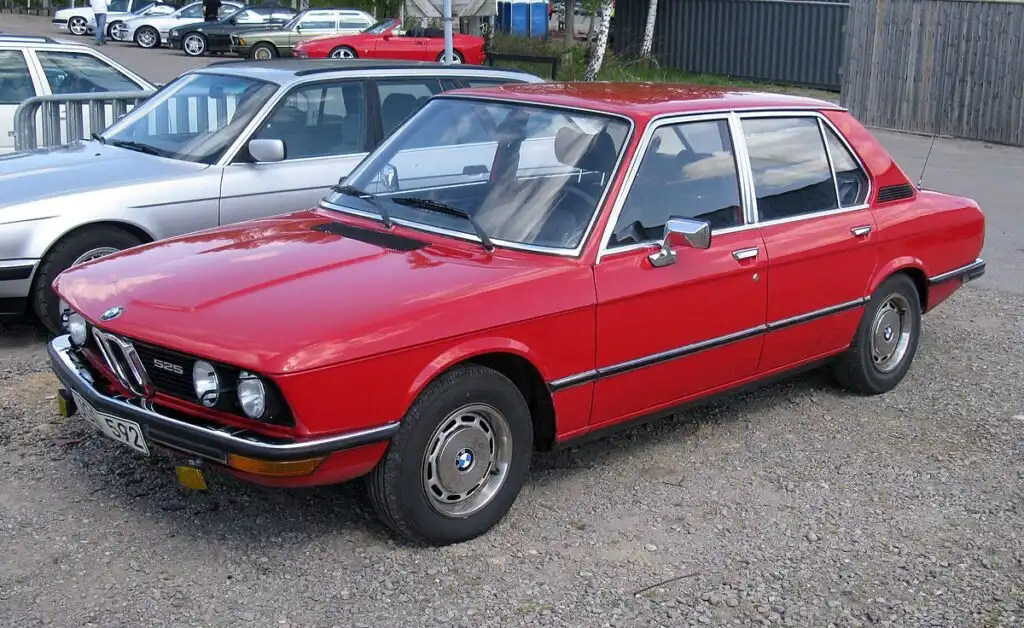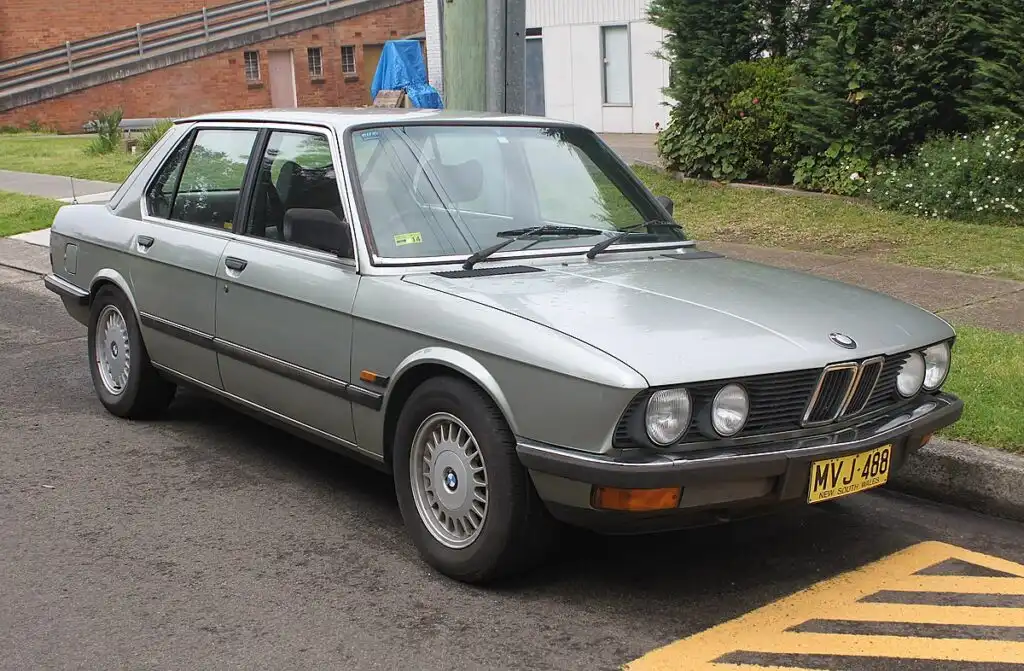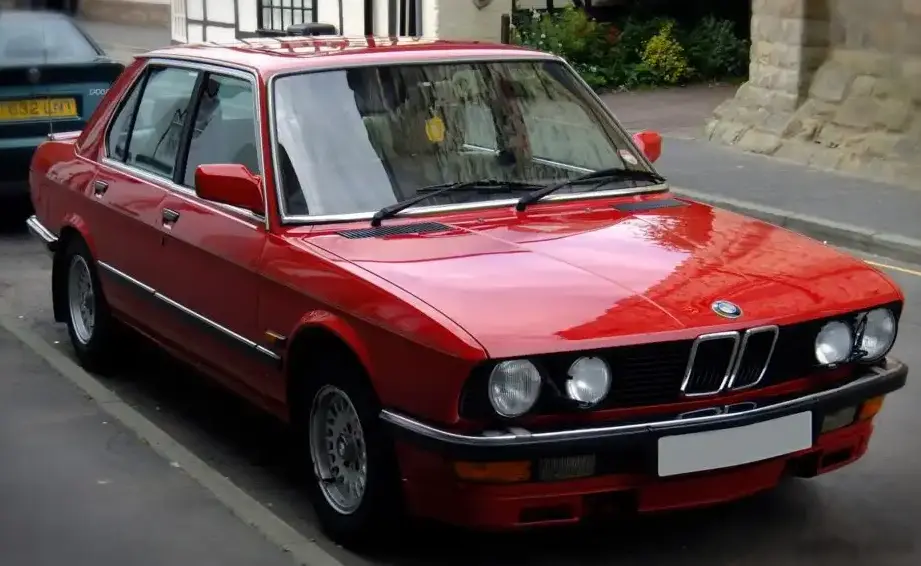
The BMW 5 Series E28 525i Automatic, produced between 1981 and 1987, represented a significant step forward for BMW’s mid-size executive car. Positioned as a comfortable and refined option within the E28 range, the 525i Automatic offered a balance between performance and ease of use, appealing to buyers who prioritized a smooth driving experience over outright sportiness. It occupied the middle ground in the lineup, slotting below the high-performance 535i/535is and above the more economical 520i. The E28 generation, internally designated as the ‘New Six’ series, was pivotal in establishing BMW’s reputation for building driver-focused, yet luxurious automobiles.
Technical Specifications
| Brand | BMW |
| Model | 5 Series |
| Generation | 5 Series (E28) |
| Type (Engine) | 525i (150 Hp) Automatic |
| Start of production | 1981 |
| End of production | 1987 |
| Powertrain Architecture | Internal Combustion engine |
| Body type | Sedan |
| Seats | 5 |
| Doors | 4 |
| Fuel Type | Petrol (Gasoline) |
| Power | 150 Hp @ 5800 rpm |
| Power per litre | 60.1 Hp/l |
| Torque | 208 Nm @ 4000 rpm / 153.41 lb.-ft. @ 4000 rpm |
| Engine layout | Front, Longitudinal |
| Engine Model/Code | M30B25 |
| Engine displacement | 2494 cm3 / 152.19 cu. in. |
| Number of cylinders | 6 |
| Engine configuration | Inline |
| Cylinder Bore | 84 mm / 3.31 in. |
| Piston Stroke | 75 mm / 2.95 in. |
| Compression ratio | 8.8:1 |
| Number of valves per cylinder | 2 |
| Fuel injection system | Multi-port manifold injection |
| Engine aspiration | Naturally aspirated engine |
| Engine oil capacity | 4.3 l / 4.54 US qt | 3.78 UK qt |
| Coolant | 10.5 l / 11.1 US qt | 9.24 UK qt |
| Trunk (boot) space – minimum | 460 l / 16.24 cu. ft. |
| Fuel tank capacity | 70 l / 18.49 US gal | 15.4 UK gal |
| Length | 4620 mm / 181.89 in. |
| Width | 1700 mm / 66.93 in. |
| Height | 1415 mm / 55.71 in. |
| Wheelbase | 2625 mm / 103.35 in. |
| Front track | 1430 mm / 56.3 in. |
| Rear (Back) track | 1470 mm / 57.87 in. |
| Ride height (ground clearance) | 140 mm / 5.51 in. |
| Drivetrain Architecture | The Internal combustion engine (ICE) drives the rear wheels of the vehicle. |
| Drive wheel | Rear wheel drive |
| Number of gears and type of gearbox | 4 gears, automatic transmission |
| Front brakes | Disc |
| Rear brakes | Disc |
Powertrain & Engine Architecture
The heart of the 525i Automatic is the M30B25 engine, a 2.5-liter inline-six cylinder powerplant. This engine is a descendant of BMW’s long-running M30 family, known for its smoothness and durability. The B25 variant featured a Bosch Motronic fuel injection system, a significant advancement over earlier carbureted BMW engines, improving fuel efficiency and reducing emissions. The engine utilized a single overhead camshaft (SOHC) design with two valves per cylinder. The automatic transmission paired with the M30B25 was a four-speed unit, designed to provide comfortable and effortless shifting. This transmission, while not known for its rapid acceleration, prioritized smooth operation and ease of driving, making it ideal for city commuting and long highway journeys.
Driving Characteristics
The 525i Automatic offered a distinctly different driving experience compared to its manual transmission counterpart or the more powerful 535i. The automatic transmission, while smooth, resulted in a slight performance deficit. Acceleration was adequate, but not particularly brisk, with the 0-60 mph time estimated around 9.5-10.5 seconds. The gear ratios were optimized for fuel economy and comfortable cruising, rather than aggressive acceleration. Compared to the 535i, the 525i felt less eager to rev and lacked the same level of responsiveness. However, the automatic transmission made the 525i significantly easier to drive in stop-and-go traffic, and the smooth power delivery of the M30B25 engine provided a relaxed and refined driving experience.
Equipment & Trim Levels
The 525i Automatic came reasonably well-equipped for its time. Standard features typically included power windows, central locking, and a basic stereo system. The interior was typically finished in cloth upholstery, although leather was available as an option. The dashboard layout was functional and straightforward, with clearly marked gauges and controls. Optional extras included a sunroof, air conditioning, and upgraded sound systems. The 525i Automatic was often specified with comfort-oriented options, reflecting its target audience of buyers who valued convenience and refinement.
Chassis & Braking
The E28 5 Series featured a robust chassis with independent suspension at all four wheels. The front suspension utilized MacPherson struts, while the rear employed a semi-trailing arm design. This setup provided a good balance between ride comfort and handling. The 525i Automatic was equipped with disc brakes on all four wheels, providing adequate stopping power for its weight class. Anti-lock braking system (ABS) was available as an option, further enhancing safety. Stabilizer bars were fitted front and rear to reduce body roll during cornering.
Market Reception & Comparison
The 525i Automatic was generally well-received by automotive critics. It was praised for its comfortable ride, refined engine, and ease of use. However, some critics noted that the automatic transmission dulled the driving experience compared to the manual version. Compared to the 535i, the 525i offered a more affordable entry point into the 5 Series range, while still providing a luxurious and well-equipped vehicle. Fuel economy was a strong point for the 525i, particularly compared to the more powerful 535i. Reliability was generally good, although like all cars of this era, regular maintenance was essential.
Legacy
The E28 525i Automatic has become a sought-after classic among BMW enthusiasts. The M30B25 engine is known for its durability and relatively simple maintenance requirements. While finding well-maintained examples can be challenging, the 525i Automatic offers a unique blend of classic BMW styling, comfortable driving dynamics, and relative affordability. The automatic transmission, while not favored by purists, has contributed to the longevity of many examples, as it has been less prone to abuse than the manual transmission. Today, the E28 525i Automatic represents a piece of BMW history, embodying the brand’s commitment to building driver-focused, yet luxurious automobiles.