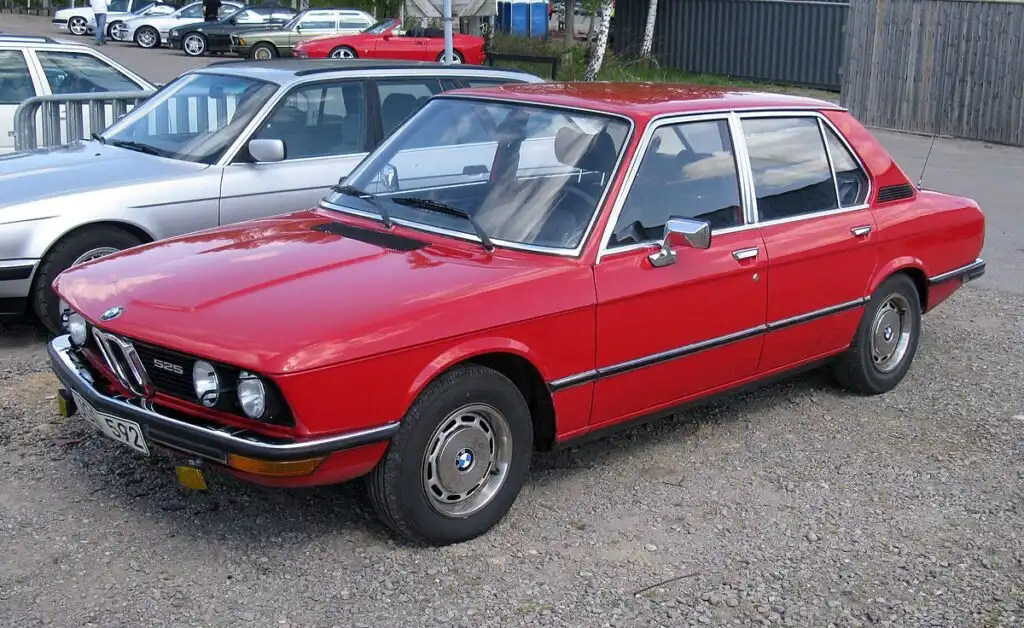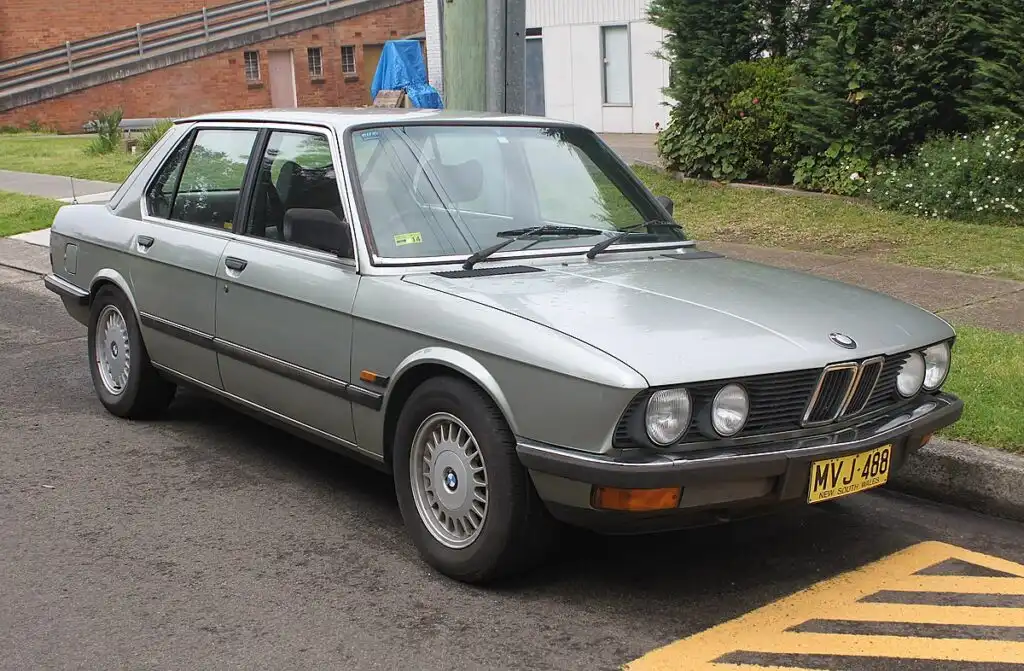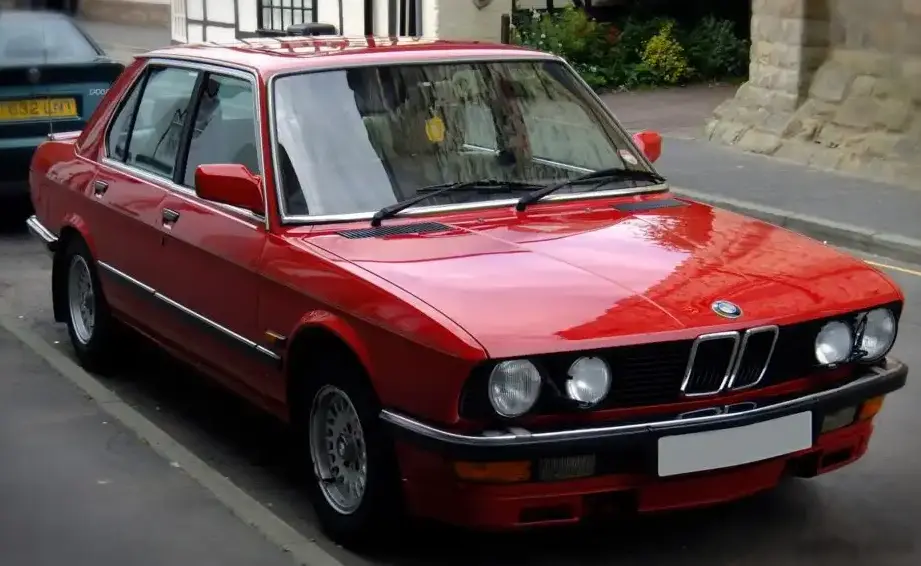
The BMW 5 Series E28 528i, produced between 1981 and 1987, represents a pivotal moment in the evolution of BMW’s mid-size executive car. Positioned as the performance variant within the E28 range, it offered a significant step up in power and driving experience compared to the base 525e. The E28 generation itself was a landmark model, establishing the 5 Series as a serious contender in the luxury sports sedan segment, and the 528i, with its potent inline-six engine, became a favorite among enthusiasts. It was primarily marketed in Europe and North America, offering a blend of luxury, performance, and BMW’s renowned driving dynamics.
Technical Specifications
| Brand | BMW |
| Model | 5 Series |
| Generation | 5 Series (E28) |
| Type (Engine) | 528i (184 Hp) |
| Start of production | 1981 |
| End of production | 1987 |
| Powertrain Architecture | Internal Combustion engine |
| Body type | Sedan |
| Seats | 5 |
| Doors | 4 |
| Fuel consumption (urban) | 14.7 l/100 km (16 US mpg, 19.2 UK mpg, 6.8 km/l) |
| Fuel consumption (extra urban) | 7 l/100 km (33.6 US mpg, 40.4 UK mpg, 14.3 km/l) |
| Fuel consumption (combined) | 9 l/100 km (26.1 US mpg, 31.4 UK mpg, 11.1 km/l) |
| Fuel Type | Petrol (Gasoline) |
| Acceleration 0 – 100 km/h | 8.4 sec |
| Acceleration 0 – 62 mph | 8.4 sec |
| Acceleration 0 – 60 mph | 8 sec |
| Maximum speed | 215 km/h (133.59 mph) |
| Weight-to-power ratio | 7.2 kg/Hp, 139.4 Hp/tonne |
| Weight-to-torque ratio | 5.6 kg/Nm, 178 Nm/tonne |
| Power | 184 Hp @ 5800 rpm |
| Power per litre | 66 Hp/l |
| Torque | 235 Nm @ 4300 rpm (173.33 lb.-ft. @ 4300 rpm) |
| Engine layout | Front, Longitudinal |
| Engine Model/Code | M30B28 |
| Engine displacement | 2788 cm3 (170.13 cu. in.) |
| Number of cylinders | 6 |
| Engine configuration | Inline |
| Cylinder Bore | 84 mm (3.31 in.) |
| Piston Stroke | 84 mm (3.31 in.) |
| Compression ratio | 10.2:1 |
| Number of valves per cylinder | 4 |
| Fuel injection system | Multi-port manifold injection |
| Engine aspiration | Naturally aspirated engine |
| Engine oil capacity | 4.3 l (4.54 US qt | 3.78 UK qt) |
| Coolant | 10.5 l (11.1 US qt | 9.24 UK qt) |
| Kerb Weight | 1320 kg (2910.1 lbs.) |
| Trunk (boot) space – minimum | 460 l (16.24 cu. ft.) |
| Fuel tank capacity | 70 l (18.49 US gal | 15.4 UK gal) |
| Length | 4620 mm (181.89 in.) |
| Width | 1700 mm (66.93 in.) |
| Height | 1415 mm (55.71 in.) |
| Wheelbase | 2625 mm (103.35 in.) |
| Front track | 1430 mm (56.3 in.) |
| Rear (Back) track | 1470 mm (57.87 in.) |
| Ride height (ground clearance) | 140 mm (5.51 in.) |
| Drivetrain Architecture | Rear wheel drive |
| Number of gears and type of gearbox | 5 gears, manual transmission |
| Front brakes | Disc |
| Rear brakes | Disc |
Powertrain & Engine Architecture
The heart of the 528i is the M30B28 engine, a 2.8-liter inline-six cylinder powerplant. This engine was a significant upgrade over the 525e’s Eta engine, featuring a higher compression ratio (10.2:1) and a more aggressive camshaft profile. The M30B28 utilized Bosch L-Jetronic multi-port fuel injection, a system known for its reliability and relatively precise fuel delivery. The engine’s valvetrain employed a single overhead camshaft (SOHC) design, operating four valves per cylinder. The engine’s robust construction and relatively simple design contributed to its longevity and ease of maintenance. The standard transmission was a Getrag 265 five-speed manual, providing precise shifts and enhancing the driving experience. While an automatic transmission was available, the manual was favored by enthusiasts for its responsiveness.
Driving Characteristics
The 528i offered a noticeably more engaging driving experience than its 525e sibling. The increased horsepower and torque, combined with the responsive manual transmission, resulted in quicker acceleration – 0 to 60 mph in around 8 seconds – and a more confident feel on the open road. The rear-wheel-drive layout and well-tuned suspension provided balanced handling and predictable cornering. Compared to the later 535i and 540i models, the 528i offered a lighter, more nimble feel. The automatic transmission, while offering convenience, did diminish some of the engine’s responsiveness and resulted in slightly slower acceleration times. The gear ratios were optimized for a balance of fuel economy and performance, but the manual transmission allowed the driver to fully exploit the engine’s powerband.
Equipment & Trim Levels
The 528i typically came equipped with a relatively generous level of standard features for its time, including power windows, central locking, and a basic stereo system. Interior upholstery was typically cloth, although leather was available as an option. Dashboard configuration was straightforward and functional, with clearly marked gauges and easy-to-use controls. Optional extras included a sunroof, air conditioning, upgraded sound systems, and sport seats. The 528i was often specified with the “Sport” package, which included features like a limited-slip differential, sport suspension, and more aggressive styling cues.
Chassis & Braking
The E28 528i featured a robust chassis with independent suspension at all four wheels. The front suspension utilized MacPherson struts, while the rear employed a semi-trailing arm design. This setup provided a comfortable ride while maintaining good handling characteristics. Braking was handled by disc brakes on all four wheels, offering ample stopping power for the car’s weight and performance. Anti-lock braking system (ABS) was available as an option, enhancing safety in slippery conditions. Stabilizer bars were fitted front and rear, further reducing body roll during cornering.
Market Reception & Comparison
The 528i was generally well-received by automotive critics, who praised its performance, handling, and build quality. It was often seen as a more rewarding driver’s car than the 525e, which was criticized for its relatively low power output. Compared to other performance sedans of the era, such as the Mercedes-Benz 190E 2.3-16, the 528i offered a more sporting driving experience. Fuel economy was reasonable for a performance car of the 1980s, averaging around 26 mpg in combined driving. Reliability was generally good, although maintenance costs could be higher than those of some competitors due to the BMW’s more complex engineering.
Legacy
The E28 528i has become a sought-after classic among BMW enthusiasts. The M30B28 engine is known for its durability and relatively simple maintenance requirements, making it a reliable powerplant even today. Well-maintained examples command a premium in the used car market. The E28 generation, and the 528i in particular, helped solidify BMW’s reputation as a manufacturer of high-performance, luxury vehicles. Its influence can still be seen in modern BMW 5 Series models, which continue to prioritize driving dynamics and refinement.