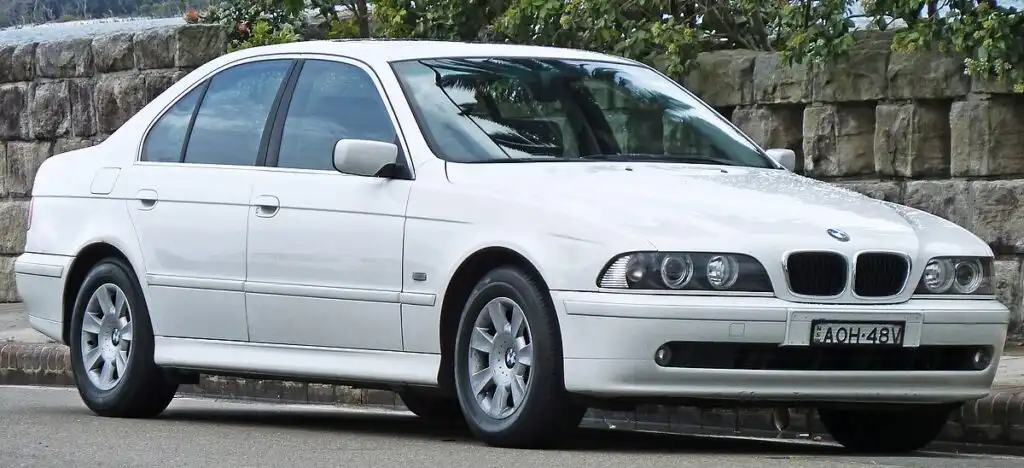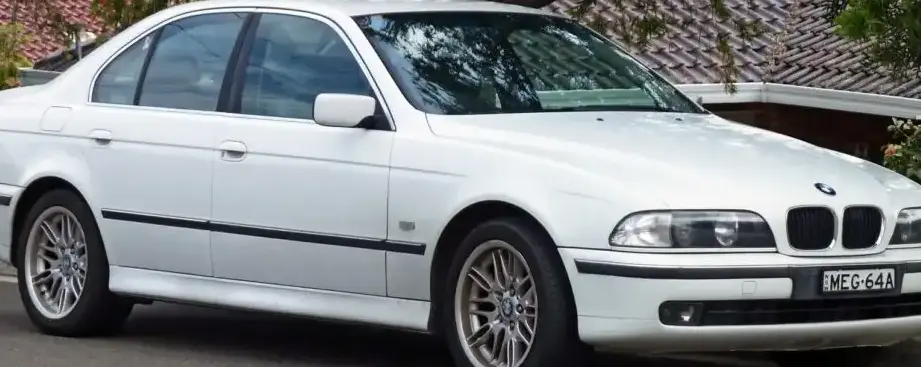
The BMW 530d Automatic, produced between 1998 and 2000, was a key variant within the E39 generation of the BMW 5 Series. Representing BMW’s foray into mainstream diesel power for the executive sedan market, the 530d aimed to offer a blend of performance, fuel efficiency, and refinement. Positioned as a mid-range offering, it sat between the petrol-powered 528i and the higher-performance 540i, as well as the more economical 525tds. This model was primarily targeted at European markets where diesel engines were favored for their lower running costs and torque characteristics, though a limited number were imported to North America as grey market vehicles.
Technical Specifications
| Brand | BMW |
| Model | 5 Series |
| Generation | 5 Series (E39) |
| Type (Engine) | 530d (184 Hp) Automatic |
| Start of production | 1998 |
| End of production | 2000 |
| Powertrain Architecture | Internal Combustion engine |
| Body type | Sedan |
| Seats | 5 |
| Doors | 4 |
| Fuel consumption (urban) | 11.7 l/100 km (20.1 US mpg) |
| Fuel consumption (extra urban) | 6.4 l/100 km (36.8 US mpg) |
| Fuel consumption (combined) | 8.8 l/100 km (26.7 US mpg) |
| Fuel Type | Diesel |
| Acceleration 0 – 100 km/h | 8.4 sec |
| Acceleration 0 – 62 mph | 8.4 sec |
| Acceleration 0 – 60 mph | 8 sec |
| Maximum speed | 225 km/h (139.81 mph) |
| Emission standard | Euro 3 |
| Weight-to-power ratio | 8.6 kg/Hp |
| Weight-to-torque ratio | 4 kg/Nm |
| Power | 184 Hp @ 4000 rpm |
| Torque | 390 Nm @ 1750 rpm (287.65 lb.-ft. @ 1750 rpm) |
| Engine layout | Front, Longitudinal |
| Engine Model/Code | M57D30 |
| Engine displacement | 2926 cm3 (178.56 cu. in.) |
| Number of cylinders | 6 |
| Engine configuration | Inline |
| Cylinder Bore | 84 mm (3.31 in.) |
| Piston Stroke | 88 mm (3.46 in.) |
| Compression ratio | 18:1 |
| Number of valves per cylinder | 4 |
| Fuel injection system | Diesel Commonrail |
| Engine oil capacity | 6.5 l (6.87 US qt | 5.72 UK qt) |
| Coolant capacity | 9.2 l (9.72 US qt | 8.09 UK qt) |
| Kerb Weight | 1575 kg (3472.28 lbs.) |
| Max. weight | 2115 kg (4662.78 lbs.) |
| Max load | 540 kg (1190.5 lbs.) |
| Trunk (boot) space – minimum | 460 l (16.24 cu. ft.) |
| Fuel tank capacity | 70 l (18.49 US gal | 15.4 UK gal) |
| Length | 4775 mm (187.99 in.) |
| Width | 1800 mm (70.87 in.) |
| Height | 1435 mm (56.5 in.) |
| Wheelbase | 2830 mm (111.42 in.) |
| Front track | 1512 mm (59.53 in.) |
| Rear track | 1526 mm (60.08 in.) |
| Drivetrain Architecture | Rear wheel drive |
| Number of gears | 5 |
| Gearbox type | Automatic transmission |
| Front suspension | Wishbone |
| Rear suspension | Several levers and rods |
| Front brakes | Disc |
| Rear brakes | Disc |
| Assisting systems | ABS (Anti-lock braking system) |
| Steering type | Steering rack and pinion |
| Power steering | Hydraulic |
| Tires size | 225/65 R15W |
| Wheel rims size | 15 |
INTRODUCTION
The E39 5 Series, launched in 1995, represented a significant step forward for BMW in terms of design, technology, and driving dynamics. The introduction of the 530d in 1998 marked a pivotal moment, bringing a modern diesel engine to the core of the 5 Series lineup. This variant was designed to appeal to drivers seeking a refined, comfortable, and economical long-distance cruiser. The 530d utilized BMW’s then-new M57D30 engine, a 3.0-liter inline-six diesel, paired exclusively with a five-speed automatic transmission. Production continued until 2000, with minor revisions throughout its lifespan.
Powertrain & Engine Architecture
The heart of the 530d is the M57D30 engine, a 2926cc inline-six diesel. This engine employed a sophisticated common rail direct injection system, delivering fuel at extremely high pressures for improved combustion efficiency and reduced emissions. The M57D30 featured four valves per cylinder and a single turbocharger with an intercooler, boosting power output to 184 horsepower at 4000 rpm and a substantial 390 Nm (287.65 lb-ft) of torque at just 1750 rpm. This torque peak, available at low engine speeds, was a defining characteristic of the engine. The five-speed automatic transmission (typically the ZF 5HP19) was chosen for its smoothness and ability to handle the engine’s torque. While not known for blistering acceleration, the transmission was programmed for comfortable cruising and efficient gear changes.
Driving Characteristics
The 530d Automatic offered a distinctly different driving experience compared to its petrol-powered siblings or even the manual diesel variants. The automatic transmission, while smooth, did slightly diminish the sense of driver involvement. Acceleration from 0-60 mph took around 8 seconds, respectable for the era, but noticeably slower than the 528i or 540i. However, the 530d excelled in mid-range acceleration, utilizing its abundant torque to provide effortless overtaking capabilities. The gear ratios were optimized for fuel economy and relaxed highway cruising. The engine was relatively quiet for a diesel, though some engine noise was still present, particularly under hard acceleration. The overall driving experience was one of refined comfort and relaxed power delivery.
Equipment & Trim Levels
The 530d Automatic typically came well-equipped, reflecting its position as a mid-range offering. Standard features included automatic climate control, power windows and mirrors, central locking, and a basic audio system. Upholstery was typically cloth, though leather was available as an option. Optional extras included a premium sound system, sunroof, navigation system, heated seats, and upgraded alloy wheels. Trim levels were relatively simple, with most customization occurring through the selection of individual options. The interior design followed the E39’s understated elegance, with a focus on functionality and driver ergonomics.
Chassis & Braking
The 530d shared the E39’s robust chassis and suspension setup. Front suspension utilized a MacPherson strut design, while the rear employed a multi-link setup, providing a comfortable ride and good handling characteristics. Brakes were disc brakes all around, providing ample stopping power. ABS (Anti-lock Braking System) was standard. Due to the added weight of the diesel engine compared to the petrol variants, the 530d sometimes featured slightly stiffer suspension components to maintain handling balance. Stabilizer bars were used front and rear to reduce body roll during cornering.
Market Reception & Comparison
The 530d was generally well-received by automotive critics, particularly in Europe. It was praised for its fuel efficiency, strong torque, and comfortable ride. However, some critics noted the slightly slower acceleration compared to the petrol models. Compared to the 525tds, the 530d offered significantly more power and refinement, justifying its higher price tag. Against the 528i and 540i, the 530d provided a more economical alternative, albeit with a slight compromise in performance. Fuel economy was a major selling point, with the 530d consistently achieving better mileage than its petrol counterparts.
Legacy
The M57D30 engine proved to be remarkably durable and reliable, and many 530d models have accumulated high mileage without major mechanical issues. The engine’s robust construction and relatively simple design contribute to its longevity. Today, the E39 530d Automatic is a sought-after classic, particularly among diesel enthusiasts. Well-maintained examples command reasonable prices in the used car market. While finding parts can sometimes be challenging, the M57D30’s widespread use in other BMW models ensures a relatively good supply of components. The 530d represents a significant chapter in BMW’s history, demonstrating the brand’s ability to produce a refined and capable diesel-powered executive sedan.