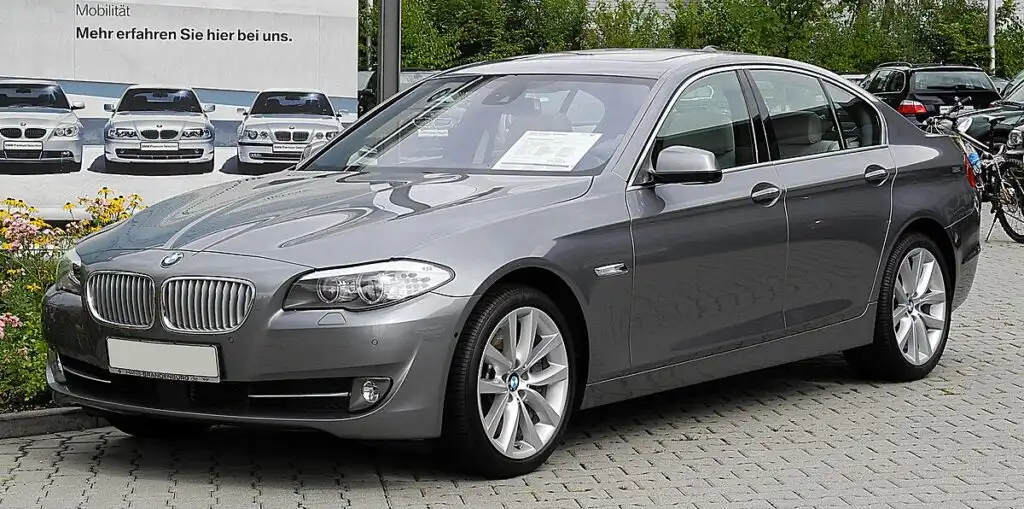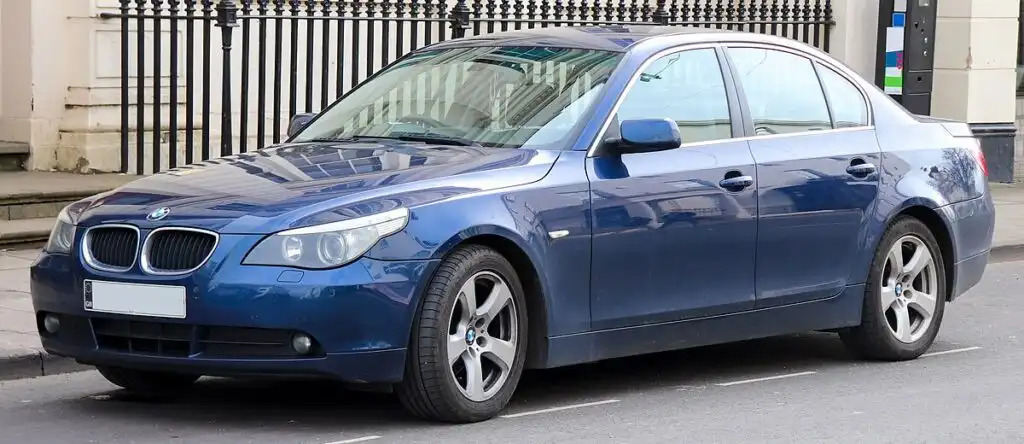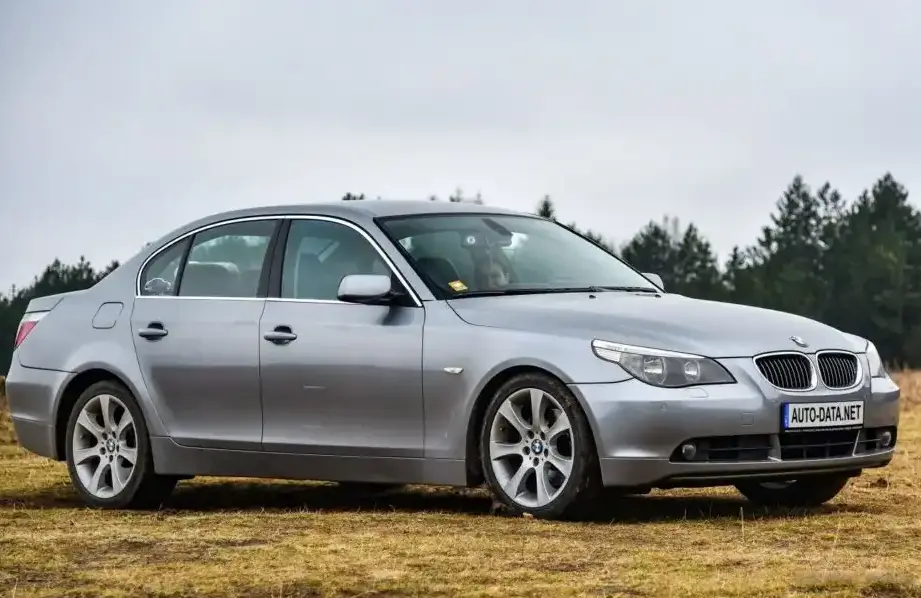
The BMW 5 Series (E60) 520d, producing 163 horsepower, was a key variant in the E60 generation, produced from September 2005 to March 2007. Positioned as an entry-level diesel offering within the 5 Series range, it aimed to provide a balance of fuel efficiency, reasonable performance, and BMW’s signature driving experience. This model played a significant role in expanding the 5 Series’ appeal to a broader customer base, particularly in Europe where diesel engines were – and continue to be – highly favored. The 520d utilized BMW’s then-current diesel technology, offering a more economical alternative to the petrol-powered variants while still delivering a respectable level of performance for everyday driving.
Technical Specifications
| Brand | BMW |
| Model | 5 Series |
| Generation | 5 Series (E60) |
| Type (Engine) | 520d (163 Hp) |
| Start of production | September, 2005 |
| End of production | March, 2007 |
| Powertrain Architecture | Internal Combustion engine |
| Body type | Sedan |
| Seats | 5 |
| Doors | 4 |
| Fuel consumption (economy) – urban (NEDC) | 8 l/100 km (29.4 US mpg, 35.3 UK mpg, 12.5 km/l) |
| Fuel consumption (economy) – extra urban (NEDC) | 4.7 l/100 km (50 US mpg, 60.1 UK mpg, 21.3 km/l) |
| Fuel consumption (economy) – combined (NEDC) | 5.9 l/100 km (39.9 US mpg, 47.9 UK mpg, 16.9 km/l) |
| CO2 emissions (NEDC) | 158 g/km |
| Fuel Type | Diesel |
| Acceleration 0 – 100 km/h | 8.6 sec |
| Acceleration 0 – 62 mph | 8.6 sec |
| Acceleration 0 – 60 mph | 8.2 sec |
| Maximum speed | 223 km/h (138.57 mph) |
| Emission standard | Euro 4 |
| Weight-to-power ratio | 9.3 kg/Hp, 107.9 Hp/tonne |
| Weight-to-torque ratio | 4.4 kg/Nm, 225.2 Nm/tonne |
| Power | 163 Hp @ 4000 rpm |
| Power per litre | 81.7 Hp/l |
| Torque | 340 Nm @ 2000-2750 rpm (250.77 lb.-ft. @ 2000-2750 rpm) |
| Engine layout | Front, Longitudinal |
| Engine Model/Code | M47D20TU2 |
| Engine displacement | 1995 cm3 (121.74 cu. in.) |
| Number of cylinders | 4 |
| Engine configuration | Inline |
| Cylinder Bore | 84 mm (3.31 in.) |
| Piston Stroke | 90 mm (3.54 in.) |
| Compression ratio | 17:1 |
| Number of valves per cylinder | 4 |
| Fuel injection system | Diesel Commonrail |
| Engine aspiration | Turbocharger, Intercooler |
| Valvetrain | DOHC |
| Engine oil capacity | 5.5 l (5.81 US qt | 4.84 UK qt) |
| Coolant | 8 l (8.45 US qt | 7.04 UK qt) |
| Kerb Weight | 1510 kg (3328.98 lbs.) |
| Max. weight | 2050 kg (4519.48 lbs.) |
| Max load | 540 kg (1190.5 lbs.) |
| Trunk (boot) space – minimum | 520 l (18.36 cu. ft.) |
| Fuel tank capacity | 70 l (18.49 US gal | 15.4 UK gal) |
| Max. roof load | 100 kg (220.46 lbs.) |
| Permitted trailer load with brakes (8%) | 1800 kg (3968.32 lbs.) |
| Permitted trailer load with brakes (12%) | 1800 kg (3968.32 lbs.) |
| Permitted trailer load without brakes | 750 kg (1653.47 lbs.) |
| Permitted towbar download | 90 kg (198.42 lbs.) |
| Length | 4841 mm (190.59 in.) |
| Width | 1846 mm (72.68 in.) |
| Width including mirrors | 2030 mm (79.92 in.) |
| Height | 1468 mm (57.8 in.) |
| Wheelbase | 2888 mm (113.7 in.) |
| Front track | 1558 mm (61.34 in.) |
| Rear (Back) track | 1582 mm (62.28 in.) |
| Front overhang | 852 mm (33.54 in.) |
| Rear overhang | 1101 mm (43.35 in.) |
| Drag coefficient (Cd) | 0.28 |
| Minimum turning circle (turning diameter) | 11.4 m (37.4 ft.) |
| Drivetrain Architecture | The Internal combustion engine (ICE) drives the rear wheels of the vehicle. |
| Drive wheel | Rear wheel drive |
| Number of gears and type of gearbox | 6 gears, manual transmission |
| Front suspension | Spring Strut, Transverse stabilizer |
| Rear suspension | Independent multi-link spring suspension with stabilizer |
| Front brakes | Ventilated discs, 310×24 mm |
| Rear brakes | Ventilated discs, 320×20 mm |
| Assisting systems | ABS (Anti-lock braking system) |
| Steering type | Steering rack and pinion |
| Power steering | Hydraulic Steering |
| Tires size | Front wheel tires: 225/55 R16; 225/50 R17; 245/45 R17; 245/40 R18; 245/35 R19Rear wheel tires: 225/55 R16; 225/50 R17; 245/45 R17; 245/40 R18; 275/35 R18; 275/30 R19 |
| Wheel rims size | Front wheel rims: 7J x 16; 7.5J x 17; 8J x 17; 8J x 18; 8J x 19Rear wheel rims: 7J x 16; 7.5J x 17; 8J x 17; 8J x 18; 9J x 18; 9.5J x 19 |
Powertrain & Engine Architecture
The heart of the 520d was the M47D20TU2, a 2.0-liter inline-four cylinder diesel engine. This engine was a significant evolution of BMW’s diesel technology, featuring common rail direct injection and a variable geometry turbocharger. The common rail system, operating at extremely high pressures, allowed for precise fuel metering and optimized combustion, contributing to both power and efficiency. The turbocharger, with its adjustable vanes, provided a broader torque curve and minimized turbo lag. The engine utilized a double overhead camshaft (DOHC) valvetrain with four valves per cylinder, further enhancing its breathing and performance. The M47D20TU2 was known for its relatively robust construction, though early versions did experience some issues with glow plug durability and injector sealing. The engine produced 163 horsepower at 4000 rpm and 340 Nm (250.77 lb-ft) of torque between 2000 and 2750 rpm. This torque output was a key characteristic, providing strong pulling power from low engine speeds.
Driving Characteristics
The 520d, with its 163 hp and manual transmission, offered a comfortable and efficient driving experience. Acceleration from 0-60 mph took around 8.2 seconds, which was adequate for everyday driving but noticeably slower than the more powerful 530d or 535d models. The strength of the 520d lay in its mid-range torque, making it easy to overtake and maintain highway speeds without excessive gear changes. The six-speed manual transmission was well-matched to the engine, providing precise shifts and a good overall feel. Compared to the automatic transmission option, the manual offered a more engaging driving experience and slightly improved fuel economy. However, the automatic was favored by many drivers for its convenience, particularly in urban environments.
Equipment & Trim Levels
The 520d typically came equipped with a respectable level of standard features, including automatic climate control, power windows, power mirrors, and a basic audio system. Upholstery was generally cloth, though leather options were available. Common optional extras included a sunroof, upgraded audio systems, navigation, and parking sensors. Trim levels varied depending on the market, but generally followed a progression from base to Sport and Luxury packages. The Sport package added features like sport seats, a sport suspension, and unique alloy wheels, while the Luxury package focused on enhanced interior trim and comfort features.
Chassis & Braking
The E60 5 Series featured a sophisticated chassis design, with a MacPherson strut front suspension and a multi-link rear suspension. This setup provided a good balance of ride comfort and handling precision. The 520d typically came equipped with ventilated disc brakes on all four wheels, providing ample stopping power. Anti-lock braking system (ABS) was standard. Stabilizer bars were fitted front and rear to reduce body roll during cornering. The suspension tuning was generally geared towards comfort, but the 520d still offered a reasonably engaging driving experience, particularly when equipped with the optional sport suspension.
Market Reception & Comparison
The 520d was generally well-received by automotive critics, who praised its fuel efficiency and comfortable ride. However, some reviewers noted that the engine lacked the outright performance of its larger displacement counterparts. Compared to the 530d, the 520d offered significantly lower running costs but at the expense of performance. The 520d also competed with other premium mid-size sedans, such as the Audi A6 and Mercedes-Benz E-Class, offering a compelling alternative for buyers prioritizing fuel economy and value. Fuel economy figures of around 39.9 US mpg combined were a major selling point, particularly in Europe where fuel prices were high.
Legacy
The M47D20TU2 engine, found in the 520d, proved to be a relatively reliable unit when properly maintained. However, as with any diesel engine, it was susceptible to issues related to fuel quality and infrequent oil changes. Common problems included glow plug failures, injector issues, and turbocharger wear. Today, the E60 520d represents an affordable entry point into BMW ownership. Well-maintained examples can still provide years of reliable service, but potential buyers should be aware of the potential maintenance costs associated with a diesel engine of this age. The 520d’s blend of efficiency, comfort, and BMW’s driving dynamics continues to make it a popular choice in the used car market.