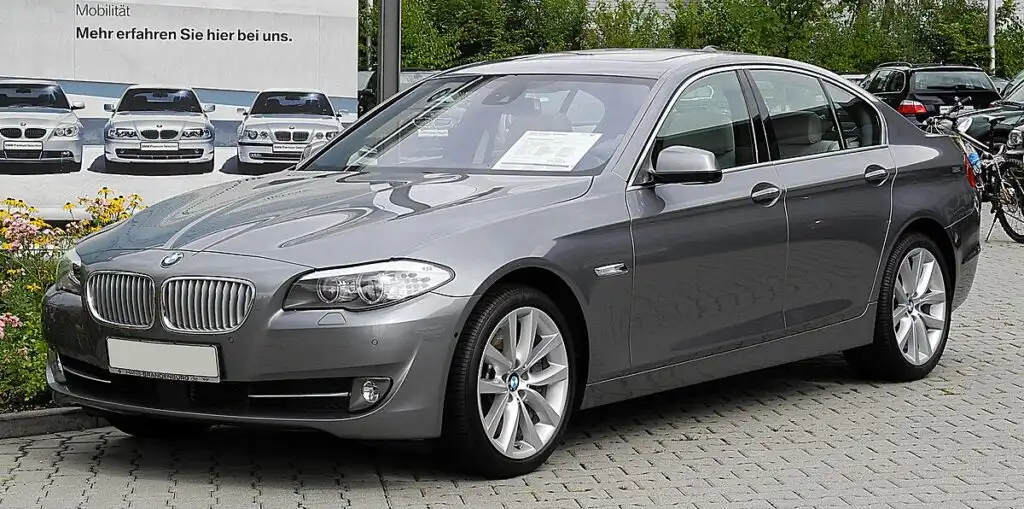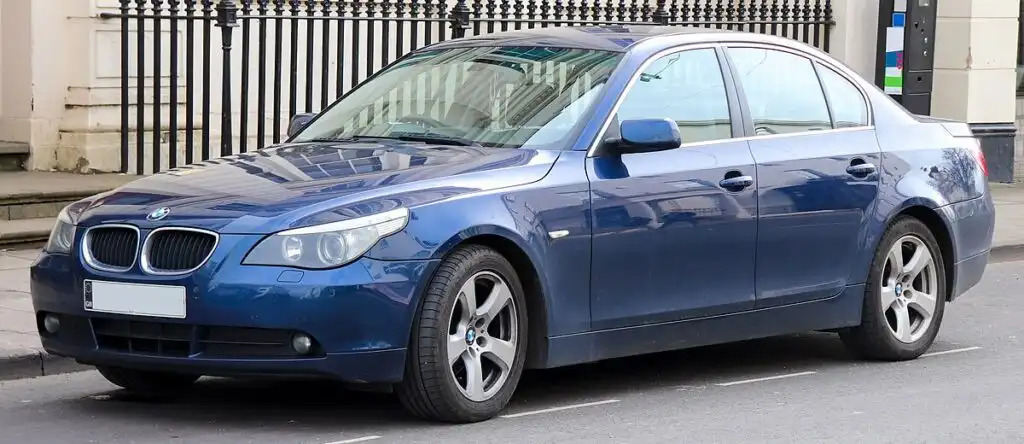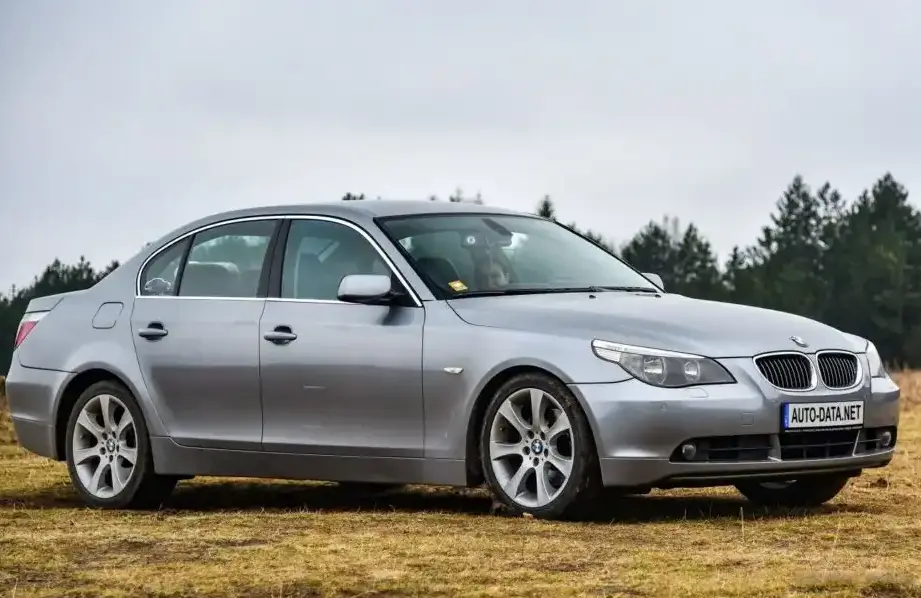
The BMW 5 Series (E60) 520d Steptronic, produced from September 2005 to March 2007, represented an entry point into the sixth generation (E60) of BMW’s flagship executive sedan. This variant combined a 2.0-liter four-cylinder diesel engine with a six-speed automatic transmission, marketed as “Steptronic.” Positioned as a fuel-efficient and relatively affordable option within the 5 Series lineup, it catered to buyers prioritizing economy and comfort over outright performance. The E60 generation, known for its controversial but distinctive Chris Bangle-designed styling, aimed to blend luxury, technology, and driving dynamics, and the 520d Steptronic offered a taste of that experience to a broader audience.
Technical Specifications
| Brand | BMW |
| Model | 5 Series |
| Generation | 5 Series (E60) |
| Type (Engine) | 520d (163 Hp) Steptronic |
| Start of production | September, 2005 |
| End of production | March, 2007 |
| Powertrain Architecture | Internal Combustion engine |
| Body type | Sedan |
| Seats | 5 |
| Doors | 4 |
| Fuel consumption (economy) – urban (NEDC) | 9.3 l/100 km (25.3 US mpg, 30.4 UK mpg, 10.8 km/l) |
| Fuel consumption (economy) – extra urban (NEDC) | 5.5 l/100 km (42.8 US mpg, 51.4 UK mpg, 18.2 km/l) |
| Fuel consumption (economy) – combined (NEDC) | 6.9 l/100 km (34.1 US mpg, 40.9 UK mpg, 14.5 km/l) |
| CO2 emissions (NEDC) | 185 g/km |
| Fuel Type | Diesel |
| Acceleration 0 – 100 km/h | 8.7 sec |
| Acceleration 0 – 62 mph | 8.7 sec |
| Acceleration 0 – 60 mph | 8.3 sec |
| Maximum speed | 223 km/h (138.57 mph) |
| Emission standard | Euro 4 |
| Weight-to-power ratio | 9.3 kg/Hp, 107.2 Hp/tonne |
| Weight-to-torque ratio | 4.5 kg/Nm, 223.7 Nm/tonne |
| Power | 163 Hp @ 4000 rpm |
| Power per litre | 81.7 Hp/l |
| Torque | 340 Nm @ 2000-2750 rpm (250.77 lb.-ft. @ 2000-2750 rpm) |
| Engine layout | Front, Longitudinal |
| Engine Model/Code | M47D20TU2 |
| Engine displacement | 1995 cm3 (121.74 cu. in.) |
| Number of cylinders | 4 |
| Engine configuration | Inline |
| Cylinder Bore | 84 mm (3.31 in.) |
| Piston Stroke | 90 mm (3.54 in.) |
| Compression ratio | 17:1 |
| Number of valves per cylinder | 4 |
| Fuel injection system | Diesel Commonrail |
| Engine aspiration | Turbocharger, Intercooler |
| Valvetrain | DOHC |
| Engine oil capacity | 5.5 l (5.81 US qt | 4.84 UK qt) |
| Coolant | 8.6 l (9.09 US qt | 7.57 UK qt) |
| Kerb Weight | 1520 kg (3351.03 lbs.) |
| Max. weight | 2060 kg (4541.52 lbs.) |
| Max load | 540 kg (1190.5 lbs.) |
| Trunk (boot) space – minimum | 520 l (18.36 cu. ft.) |
| Fuel tank capacity | 70 l (18.49 US gal | 15.4 UK gal) |
| Max. roof load | 100 kg (220.46 lbs.) |
| Permitted trailer load with brakes (8%) | 1800 kg (3968.32 lbs.) |
| Permitted trailer load with brakes (12%) | 1800 kg (3968.32 lbs.) |
| Permitted trailer load without brakes | 750 kg (1653.47 lbs.) |
| Permitted towbar download | 90 kg (198.42 lbs.) |
| Length | 4841 mm (190.59 in.) |
| Width | 1846 mm (72.68 in.) |
| Width including mirrors | 2030 mm (79.92 in.) |
| Height | 1468 mm (57.8 in.) |
| Wheelbase | 2888 mm (113.7 in.) |
| Front track | 1558 mm (61.34 in.) |
| Rear (Back) track | 1582 mm (62.28 in.) |
| Front overhang | 852 mm (33.54 in.) |
| Rear overhang | 1101 mm (43.35 in.) |
| Drag coefficient (Cd) | 0.28 |
| Minimum turning circle (turning diameter) | 11.4 m (37.4 ft.) |
| Drivetrain Architecture | The Internal combustion engine (ICE) drives the rear wheels of the vehicle. |
| Drive wheel | Rear wheel drive |
| Number of gears and type of gearbox | 6 gears, automatic transmission Steptronic |
| Front suspension | Spring Strut, Transverse stabilizer |
| Rear suspension | Independent multi-link spring suspension with stabilizer |
| Front brakes | Ventilated discs, 310×24 mm |
| Rear brakes | Ventilated discs, 320×20 mm |
| Assisting systems | ABS (Anti-lock braking system) |
| Steering type | Steering rack and pinion |
| Power steering | Hydraulic Steering |
| Tires size | Front wheel tires: 225/55 R16; 225/50 R17; 245/45 R17; 245/40 R18; 245/35 R19Rear wheel tires: 225/55 R16; 225/50 R17; 245/45 R17; 245/40 R18; 275/35 R18; 275/30 R19 |
| Wheel rims size | Front wheel rims: 7J x 16; 7.5J x 17; 8J x 17; 8J x 18; 8J x 19Rear wheel rims: 7J x 16; 7.5J x 17; 8J x 17; 8J x 18; 9J x 18; 9.5J x 19 |
Powertrain & Engine Architecture
The heart of the 520d Steptronic was the M47D20TU2, a 2.0-liter inline-four diesel engine. This engine was a key component of BMW’s strategy to offer more fuel-efficient options. It featured common rail direct injection, delivering fuel at extremely high pressure for improved combustion efficiency and reduced emissions. The engine utilized a variable geometry turbocharger (VGT) and an intercooler to boost power and torque. The DOHC valvetrain, with four valves per cylinder, further enhanced breathing and performance. The “TU2” designation indicated an updated version of the M47 engine, incorporating improvements to the fuel injection system and engine management software. The six-speed Steptronic automatic transmission was designed to provide smooth and efficient gear changes, contributing to the car’s overall refinement. It featured adaptive shift programs, adjusting shift points based on driving style and conditions.
Driving Characteristics
The 520d Steptronic offered a comfortable and relaxed driving experience. With 163 horsepower and 340 Nm (250 lb-ft) of torque, acceleration was adequate for everyday driving, achieving 0-60 mph in around 8.3 seconds. However, it wasn’t a particularly sporty performer compared to higher-powered 5 Series variants like the 530i or 535i. The Steptronic transmission, while smooth, could sometimes feel hesitant during quick downshifts. The gear ratios were optimized for fuel economy rather than outright acceleration. Compared to the six-speed manual version of the 520d, the automatic offered greater convenience but slightly reduced responsiveness. The engine delivered its peak torque between 2000 and 2750 rpm, providing good mid-range punch for overtaking maneuvers.
Equipment & Trim Levels
The 520d Steptronic typically came standard with features such as automatic climate control, power windows, power mirrors, a multi-function steering wheel, and a basic audio system. Upholstery was usually cloth, although leather options were available. Optional extras included a premium sound system, navigation system, sunroof, heated seats, and parking sensors. Trim levels varied depending on the market, but generally, the 520d Steptronic was positioned as a well-equipped but not overly luxurious model. It served as a stepping stone to the more premium trims like the 530d and 535d.
Chassis & Braking
The E60 5 Series featured a sophisticated chassis design. The 520d Steptronic utilized a MacPherson strut front suspension with a transverse stabilizer and an independent multi-link rear suspension, also with a stabilizer. This setup provided a good balance between comfort and handling. The braking system consisted of ventilated disc brakes on all four wheels, providing adequate stopping power. ABS (Anti-lock Braking System) was standard. Due to the lower weight compared to six-cylinder models, the 520d generally required slightly less aggressive braking components.
Market Reception & Comparison
The 520d Steptronic was generally well-received by critics as a practical and fuel-efficient option within the 5 Series range. It was praised for its comfortable ride, refined interior, and reasonable running costs. However, some reviewers noted that the engine lacked the punch of its larger counterparts. Compared to the 525i or 530i, the 520d offered significantly better fuel economy but less performance. The 520d also competed with other diesel-powered executive sedans from Audi and Mercedes-Benz, offering a similar blend of efficiency and comfort. Its fuel economy figures of around 34.1 US mpg combined were a major selling point.
Legacy
The M47D20 engine, found in the 520d Steptronic, proved to be a relatively reliable unit, although some owners have reported issues with the glow plugs, fuel injectors, and turbocharger over time. The Steptronic automatic transmission is generally durable, but regular fluid changes are crucial for maintaining its longevity. Today, the E60 520d Steptronic represents an affordable entry point into BMW ownership. While not a performance icon, it offers a comfortable and refined driving experience, making it a popular choice for those seeking a practical and economical executive sedan. Its relatively simple diesel engine and automatic transmission make it easier and less expensive to maintain compared to some of the more complex 5 Series variants.