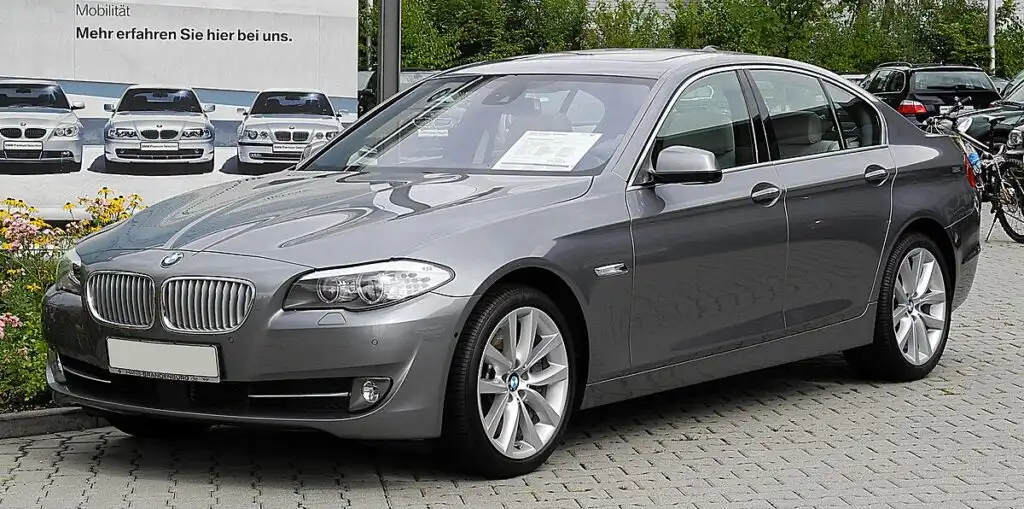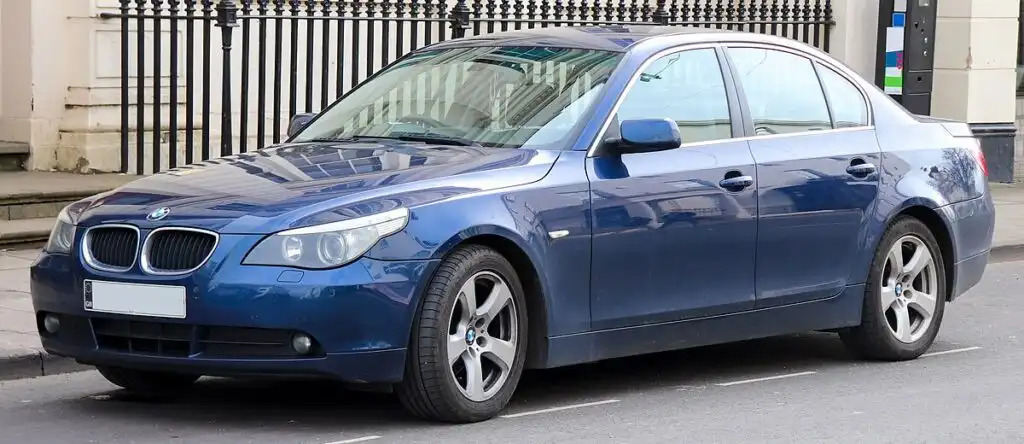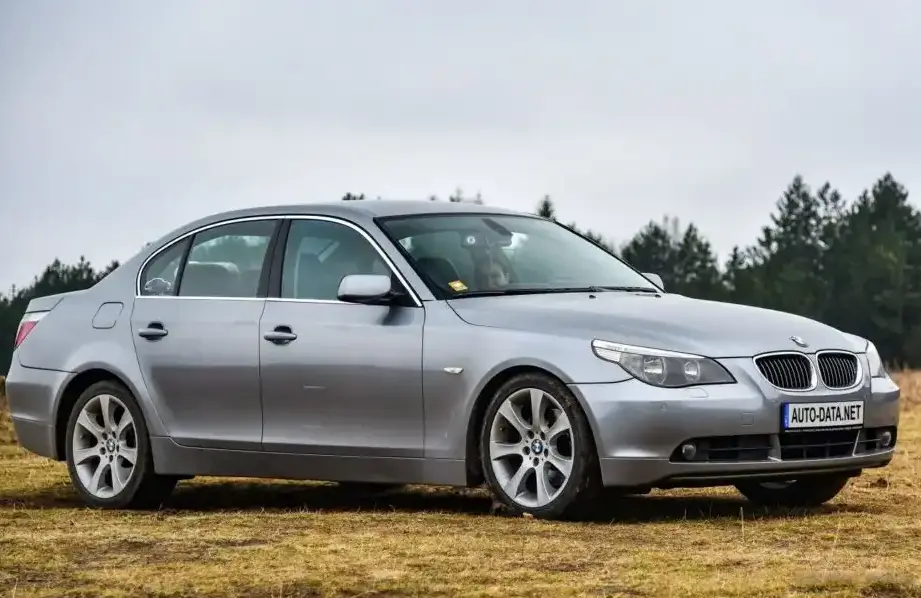
The BMW 5 Series (E60) 525d, produced from March 2004 to March 2007, represented a significant step forward in diesel technology for the executive sedan segment. Positioned as a mid-range offering within the E60 5 Series lineup, it aimed to provide a balance of performance, fuel efficiency, and refinement. This variant utilized BMW’s advanced diesel engine technology, offering a compelling alternative to the gasoline-powered models and laying the groundwork for the increasing popularity of diesel engines in the North American market, despite their relatively limited presence at the time. The 525d was primarily marketed in Europe and other regions where diesel fuel was more prevalent and economically advantageous.
Technical Specifications
| Brand | BMW |
| Model | 5 Series |
| Generation | 5 Series (E60) |
| Type (Engine) | 525d (177 Hp) |
| Start of production | March, 2004 |
| End of production | March, 2007 |
| Powertrain Architecture | Internal Combustion engine |
| Body type | Sedan |
| Seats | 5 |
| Doors | 4 |
| Fuel consumption (economy) – urban (NEDC) | 9.3 l/100 km (25.3 US mpg, 30.4 UK mpg, 10.8 km/l) |
| Fuel consumption (economy) – extra urban (NEDC) | 5.3 l/100 km (44.4 US mpg, 53.3 UK mpg, 18.9 km/l) |
| Fuel consumption (economy) – combined (NEDC) | 6.7 l/100 km (35.1 US mpg, 42.2 UK mpg, 14.9 km/l) |
| CO2 emissions (NEDC) | 179 g/km |
| Fuel Type | Diesel |
| Acceleration 0 – 100 km/h | 8.1 sec |
| Acceleration 0 – 62 mph | 8.1 sec |
| Acceleration 0 – 60 mph | 7.7 sec |
| Maximum speed | 230 km/h (142.92 mph) |
| Emission standard | Euro 4 |
| Weight-to-power ratio | 9 kg/Hp, 111.7 Hp/tonne |
| Weight-to-torque ratio | 4 kg/Nm, 252.4 Nm/tonne |
| Power | 177 Hp @ 4000 rpm |
| Power per litre | 70.9 Hp/l |
| Torque | 400 Nm @ 2000-2750 rpm (295.02 lb.-ft. @ 2000-2750 rpm) |
| Engine layout | Front, Longitudinal |
| Engine Model/Code | M57D25TU |
| Engine displacement | 2497 cm3 (152.38 cu. in.) |
| Number of cylinders | 6 |
| Engine configuration | Inline |
| Cylinder Bore | 82 mm (3.23 in.) |
| Piston Stroke | 78.8 mm (3.1 in.) |
| Compression ratio | 17:1 |
| Number of valves per cylinder | 4 |
| Fuel injection system | Diesel Commonrail |
| Engine aspiration | Turbocharger, Intercooler |
| Valvetrain | DOHC |
| Engine oil capacity | 8.25 l (8.72 US qt | 7.26 UK qt) |
| Coolant | 9.6 l (10.14 US qt | 8.45 UK qt) |
| Kerb Weight | 1585 kg (3494.33 lbs.) |
| Max. weight | 2145 kg (4728.92 lbs.) |
| Max load | 560 kg (1234.59 lbs.) |
| Trunk (boot) space – minimum | 520 l (18.36 cu. ft.) |
| Fuel tank capacity | 70 l (18.49 US gal | 15.4 UK gal) |
| Max. roof load | 100 kg (220.46 lbs.) |
| Permitted trailer load with brakes (8%) | 2000 kg (4409.25 lbs.) |
| Permitted trailer load with brakes (12%) | 2000 kg (4409.25 lbs.) |
| Permitted trailer load without brakes | 750 kg (1653.47 lbs.) |
| Permitted towbar download | 90 kg (198.42 lbs.) |
| Length | 4841 mm (190.59 in.) |
| Width | 1846 mm (72.68 in.) |
| Width including mirrors | 2030 mm (79.92 in.) |
| Height | 1468 mm (57.8 in.) |
| Wheelbase | 2888 mm (113.7 in.) |
| Front track | 1558 mm (61.34 in.) |
| Rear (Back) track | 1582 mm (62.28 in.) |
| Front overhang | 852 mm (33.54 in.) |
| Rear overhang | 1101 mm (43.35 in.) |
| Drag coefficient (Cd) | 0.28 |
| Minimum turning circle (turning diameter) | 11.4 m (37.4 ft.) |
| Drivetrain Architecture | The Internal combustion engine (ICE) drives the rear wheels of the vehicle. |
| Drive wheel | Rear wheel drive |
| Number of gears and type of gearbox | 6 gears, manual transmission |
| Front suspension | Spring Strut, Transverse stabilizer |
| Rear suspension | Independent multi-link spring suspension with stabilizer |
| Front brakes | Ventilated discs, 310×24 mm |
| Rear brakes | Ventilated discs, 320×20 mm |
| Assisting systems | ABS (Anti-lock braking system) |
| Steering type | Steering rack and pinion |
| Power steering | Hydraulic Steering |
| Tires size | Front wheel tires: 225/55 R16; 225/50 R17; 245/45 R17; 245/40 R18; 245/35 R19Rear wheel tires: 225/55 R16; 225/50 R17; 245/45 R17; 245/40 R18; 275/35 R18; 275/30 R19 |
| Wheel rims size | Front wheel rims: 7J x 16; 7.5J x 17; 8J x 17; 8J x 18; 8J x 19Rear wheel rims: 7J x 16; 7.5J x 17; 8J x 17; 8J x 18; 9J x 18; 9.5J x 19 |
Powertrain & Engine Architecture
The heart of the 525d is the M57D25TU, a 2.5-liter inline-six diesel engine. This engine is a direct descendant of BMW’s highly regarded M57 series, known for its robust construction and refined operation. The ‘TU’ designation indicates a technical update, incorporating improvements to the fuel injection system and turbocharging. The M57D25TU utilizes a second-generation common rail direct injection system, delivering fuel at extremely high pressures (1600 bar) for optimized combustion. This system, coupled with a variable geometry turbocharger (VGT), allowed for a broad torque curve and responsive acceleration. The engine also features double overhead camshafts (DOHC) and four valves per cylinder, contributing to its efficient breathing and power output. The 6-speed manual transmission was standard, providing precise gear changes and a direct connection to the engine. An optional 6-speed automatic transmission was also available, offering convenience and smooth shifts, though at the expense of some performance.
Driving Characteristics
The 525d, with its 177 horsepower and 295 lb-ft of torque, offered a distinctly different driving experience compared to its gasoline-powered siblings. While not as outright quick as the 530i, the 525d excelled in providing strong, usable torque from low engine speeds. This made it particularly well-suited for everyday driving and long-distance cruising. The manual transmission allowed for greater driver control, while the automatic version prioritized comfort and ease of use. The automatic transmission’s gear ratios were tuned for fuel efficiency, sometimes resulting in a slight delay in downshifts when demanding immediate acceleration. Compared to the higher-output 535d, the 525d felt less urgent, but its lighter weight and efficient engine contributed to better fuel economy.
Equipment & Trim Levels
The 525d typically came standard with a respectable level of equipment, including automatic climate control, power windows and mirrors, a multi-function steering wheel, and a basic audio system. Interior upholstery was typically cloth, with leather options available as an upgrade. Optional extras included a premium sound system, navigation system, sunroof, and sport seats. Trim levels varied depending on the market, but generally offered packages that bundled popular options together. The overall interior design was typical of BMW at the time – functional, well-built, and focused on the driver.
Chassis & Braking
The E60 5 Series featured a sophisticated chassis design, utilizing a MacPherson strut front suspension and a multi-link rear suspension. This setup provided a good balance of ride comfort and handling precision. The 525d typically came equipped with ventilated disc brakes on all four wheels, providing ample stopping power. Anti-lock braking system (ABS) was standard. Stabilizer bars were fitted front and rear to reduce body roll during cornering. The suspension tuning was generally geared towards comfort, but the 525d still offered a reasonably engaging driving experience.
Market Reception & Comparison
The 525d was generally well-received by automotive critics, who praised its fuel efficiency, refined engine, and comfortable ride. However, some reviewers noted that it lacked the outright performance of its gasoline-powered counterparts. Compared to the 530i, the 525d offered significantly better fuel economy, but at the cost of approximately one second in 0-60 mph acceleration. Against the 535d, the 525d was noticeably slower, but also more affordable to purchase and operate. The 525d’s reliability was generally good, although, like all modern diesel engines, it was susceptible to issues with the fuel injection system and turbocharger if not properly maintained.
Legacy
The BMW E60 525d represents a pivotal moment in BMW’s diesel strategy. It demonstrated that a diesel-powered executive sedan could offer a compelling combination of performance, efficiency, and refinement. Today, well-maintained examples of the 525d are sought after by enthusiasts who appreciate their fuel economy and robust construction. The M57D25TU engine is known for its durability, but regular maintenance, including oil changes and fuel filter replacements, is crucial to ensure long-term reliability. The 525d remains a viable option for those seeking a comfortable and economical luxury sedan, offering a unique driving experience that blends BMW’s traditional values with the benefits of modern diesel technology.