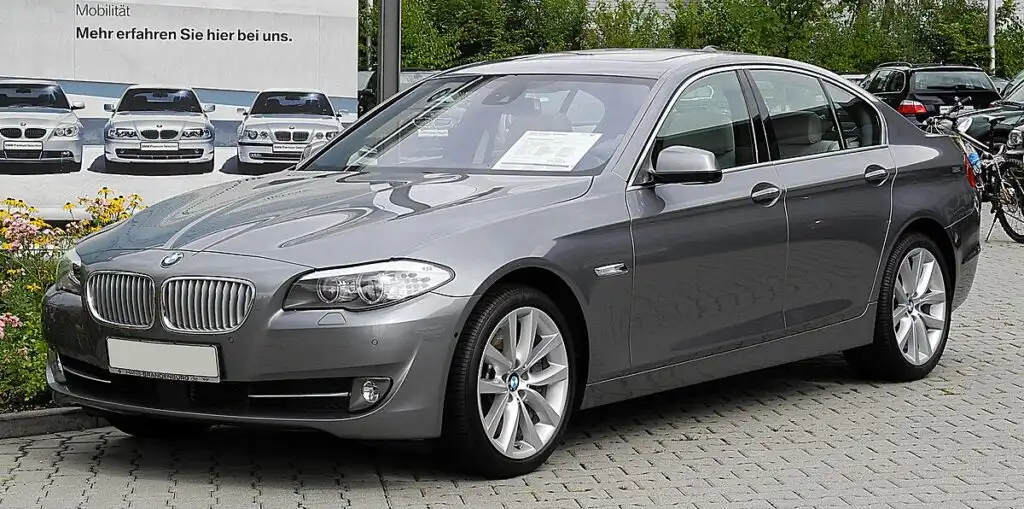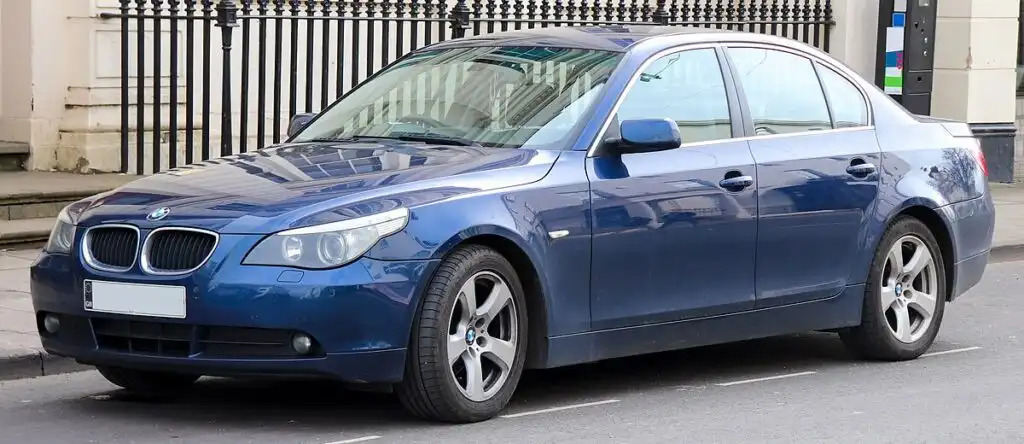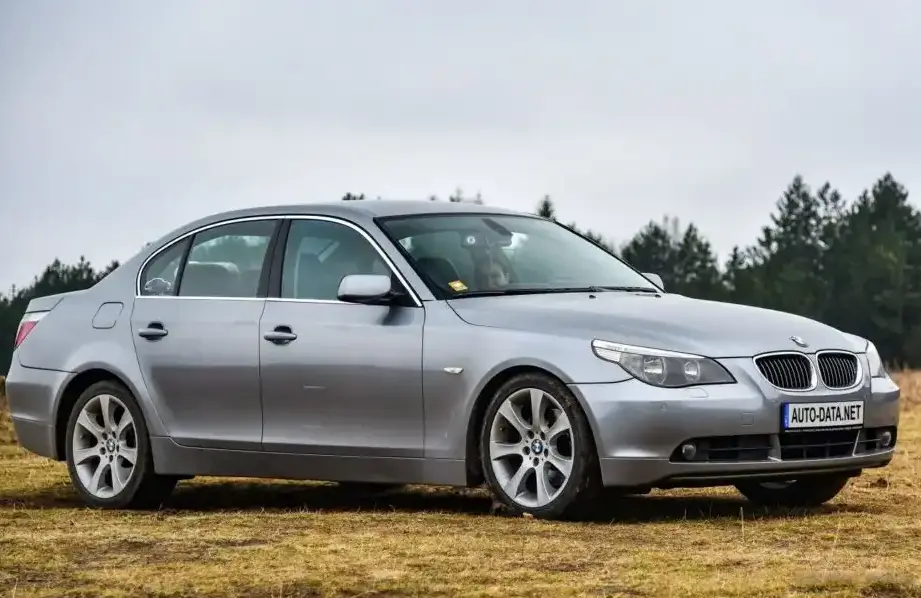
The BMW 5 Series (E60) 530d, equipped with the M57D30TU engine producing 218 horsepower, was a key variant in the E60 generation produced between March 2004 and July 2005. Positioned as a mid-range offering within the 5 Series lineup, it bridged the gap between the more economical 525d and the higher-performance 535d. This model represented BMW’s commitment to diesel technology, offering a blend of performance, efficiency, and refinement that appealed to European buyers, and increasingly, to those in North America seeking alternatives to gasoline engines. The 530d was primarily a European market vehicle, though a growing number were imported to the US as grey market vehicles.
Technical Specifications
| Brand | BMW |
| Model | 5 Series |
| Generation | 5 Series (E60) |
| Type (Engine) | 530d (218 Hp) DPF |
| Start of production | March, 2004 |
| End of production | July, 2005 |
| Powertrain Architecture | Internal Combustion engine |
| Body type | Sedan |
| Seats | 5 |
| Doors | 4 |
| Fuel consumption (economy) – urban (NEDC) | 9.5 l/100 km (24.8 US mpg, 29.7 UK mpg, 10.5 km/l) |
| Fuel consumption (economy) – extra urban (NEDC) | 5.5 l/100 km (42.8 US mpg, 51.4 UK mpg, 18.2 km/l) |
| Fuel consumption (economy) – combined (NEDC) | 6.9 l/100 km (34.1 US mpg, 40.9 UK mpg, 14.5 km/l) |
| CO2 emissions (NEDC) | 184 g/km |
| Fuel Type | Diesel |
| Acceleration 0 – 100 km/h | 7.1 sec |
| Acceleration 0 – 62 mph | 7.1 sec |
| Acceleration 0 – 60 mph | 6.7 sec |
| Maximum speed | 245 km/h (152.24 mph) |
| Emission standard | Euro 4 |
| Weight-to-power ratio | 7.3 kg/Hp, 136.7 Hp/tonne |
| Weight-to-torque ratio | 3.2 kg/Nm, 313.5 Nm/tonne |
| Power | 218 Hp @ 4000 rpm |
| Power per litre | 72.8 Hp/l |
| Torque | 500 Nm @ 2000 rpm (368.78 lb.-ft. @ 2000 rpm) |
| Engine layout | Front, Longitudinal |
| Engine Model/Code | M57D30TU |
| Engine displacement | 2993 cm3 (182.64 cu. in.) |
| Number of cylinders | 6 |
| Engine configuration | Inline |
| Cylinder Bore | 84 mm (3.31 in.) |
| Piston Stroke | 90 mm (3.54 in.) |
| Compression ratio | 17:1 |
| Number of valves per cylinder | 4 |
| Fuel injection system | Diesel Commonrail |
| Engine aspiration | Turbocharger, Intercooler |
| Valvetrain | DOHC |
| Engine oil capacity | 7.75 l (8.19 US qt | 6.82 UK qt) |
| Coolant | 9.6 l (10.14 US qt | 8.45 UK qt) |
| Kerb Weight | 1595 kg (3516.37 lbs.) |
| Max. weight | 2155 kg (4750.96 lbs.) |
| Max load | 560 kg (1234.59 lbs.) |
| Trunk (boot) space – minimum | 520 l (18.36 cu. ft.) |
| Fuel tank capacity | 70 l (18.49 US gal | 15.4 UK gal) |
| Max. roof load | 100 kg (220.46 lbs.) |
| Permitted trailer load with brakes (8%) | 2000 kg (4409.25 lbs.) |
| Permitted trailer load with brakes (12%) | 2000 kg (4409.25 lbs.) |
| Permitted trailer load without brakes | 750 kg (1653.47 lbs.) |
| Permitted towbar download | 90 kg (198.42 lbs.) |
| Length | 4841 mm (190.59 in.) |
| Width | 1846 mm (72.68 in.) |
| Width including mirrors | 2030 mm (79.92 in.) |
| Height | 1468 mm (57.8 in.) |
| Wheelbase | 2888 mm (113.7 in.) |
| Front track | 1558 mm (61.34 in.) |
| Rear (Back) track | 1582 mm (62.28 in.) |
| Front overhang | 852 mm (33.54 in.) |
| Rear overhang | 1101 mm (43.35 in.) |
| Drag coefficient (Cd) | 0.28 |
| Minimum turning circle (turning diameter) | 11.4 m (37.4 ft.) |
| Drivetrain Architecture | The Internal combustion engine (ICE) drives the rear wheels of the vehicle. |
| Drive wheel | Rear wheel drive |
| Number of gears and type of gearbox | 6 gears, manual transmission |
| Front suspension | Spring Strut, Transverse stabilizer |
| Rear suspension | Independent multi-link spring suspension with stabilizer |
| Front brakes | Ventilated discs, 324×30 mm |
| Rear brakes | Ventilated discs, 320×20 mm |
| Assisting systems | ABS (Anti-lock braking system) |
| Steering type | Steering rack and pinion |
| Power steering | Hydraulic Steering |
| Tires size | Front wheel tires: 225/55 R16; 225/50 R17; 245/45 R17; 245/40 R18; 245/35 R19Rear wheel tires: 225/55 R16; 225/50 R17; 245/45 R17; 245/40 R18; 275/35 R18; 275/30 R19 |
| Wheel rims size | Front wheel rims: 7J x 16; 7.5J x 17; 8J x 17; 8J x 18; 8J x 19Rear wheel rims: 7J x 16; 7.5J x 17; 8J x 17; 8J x 18; 9J x 18; 9.5J x 19 |
Powertrain & Engine Architecture
The heart of the 530d is the M57D30TU, a 3.0-liter inline-six diesel engine. This engine is a direct descendant of BMW’s long-running M57 series, known for its durability and strong low-end torque. The ‘TU’ designation signifies a technical update, incorporating improvements to the fuel injection system and turbocharger. The M57D30TU utilizes a second-generation common rail direct injection system, delivering fuel at extremely high pressures (up to 1600 bar) for optimized combustion. A variable geometry turbocharger (VGT) with intercooling further enhances performance and responsiveness. The engine features double overhead camshafts (DOHC) and four valves per cylinder, contributing to its efficient breathing. The engine’s robust construction and careful engineering allowed it to reliably produce 500 Nm (368.78 lb-ft) of torque from as low as 2000 rpm. The 530d was typically paired with a 6-speed manual transmission, though a 6-speed automatic transmission was also available, impacting acceleration slightly.
Driving Characteristics
The 530d offered a distinctly different driving experience compared to its gasoline-powered siblings. The abundant low-end torque of the diesel engine provided strong acceleration without the need for frequent gear changes. While not as outright quick as the 535d, the 530d felt effortlessly capable in everyday driving situations. The manual transmission version offered precise shifts and a more engaging driving experience, while the automatic provided smooth and comfortable gear changes. The automatic transmission, while convenient, did slightly diminish acceleration times. The 530d’s rear-wheel drive configuration contributed to balanced handling, though traction could be a concern in slippery conditions. The suspension, tuned for comfort, provided a compliant ride, absorbing bumps and imperfections in the road surface effectively.
Equipment & Trim Levels
The 530d typically came well-equipped, reflecting its mid-range positioning. Standard features included automatic climate control, power windows and mirrors, a multi-function steering wheel, and a basic audio system. Upholstery was typically cloth or leatherette, with full leather available as an option. Optional extras included a premium sound system, navigation system, sunroof, and sport seats. Trim levels varied slightly depending on the market, but generally, the 530d offered a good balance of comfort and convenience features.
Chassis & Braking
The E60 5 Series utilized a MacPherson strut front suspension and a multi-link rear suspension, providing a good balance of ride comfort and handling. The 530d, being a mid-range model, typically featured slightly smaller wheels and tires compared to the higher-performance variants. Braking systems consisted of ventilated disc brakes on all four wheels, providing ample stopping power. Anti-lock braking system (ABS) was standard, enhancing safety and control. Stabilizer bars were fitted front and rear to reduce body roll during cornering.
Market Reception & Comparison
The 530d was generally well-received by automotive critics, who praised its fuel efficiency, strong torque, and refined driving experience. It was often seen as a sensible alternative to the more expensive and less fuel-efficient gasoline models. Compared to the 525d, the 530d offered a significant performance upgrade, while being more affordable than the 535d. The 530d’s diesel engine required regular maintenance, including oil changes and diesel particulate filter (DPF) servicing, which could be costly. However, the engine’s robust construction generally resulted in good long-term reliability.
Legacy
The BMW E60 530d, particularly the M57D30TU-powered versions, have developed a reputation for being durable and reliable vehicles. The M57 engine is known to withstand high mileage with proper maintenance. Today, these cars can be found on the used car market at relatively affordable prices. The diesel particulate filter (DPF) remains a potential point of failure, and regular servicing is crucial to ensure its longevity. Despite its age, the E60 530d continues to offer a compelling combination of performance, efficiency, and comfort, making it a popular choice for those seeking a well-built and capable executive car.